 Monday, May 18Monday, May 18
Ryanair’s cabin baggage policy for summer 2026 has been updated, with passengers now facing potential charges of up to €75 at the gate if their bag exceeds size limits. The airline has tightened enforcement of its carry-on rules, requiring travelers to double-check their luggage before arriving at the airport .
A Croatia Airlines Airbus A220-300 veered off the runway during an aborted takeoff at Split Airport (SPU) on 17.05.2026, resulting in the aircraft hitting a signboard. All 130 passengers on board were reported safe, with no injuries confirmed. The incident is under investigation, and Split Airport operations were temporarily affected .

Gulf airlines win support of Europes airports, travel bodies in subsidies row
gdeltproject.org · about 5 hours ago
Croatia Airlines A220 veers off runway in Split A Croatia Airlines Airbus A220-300 veered off the runway during an aborted takeoff from Split Airport (SPU) in…
europesays.com · about 5 hours ago
Europe expects busy summer | Travelnews Passenger traffic across Europes airports remained steady in March, with ACI Europe expecting stable demand during the northern…
europesays.com · about 7 hours ago
Croatian airline plane skids off runway in Split and hits signboard, 130 passengers on board Croatian airline plane skids off runway in Split, hits billboard, 130 passengers on board News Express newspaper 17/05/2026…
europesays.com · about 10 hours ago
![Flying Ryanair this summer? Your cabin bag could cost you €75 at the gate Anyone flying with Ryanair soon may want to check their cabin bag twice before heading to the airport. The airlines […]](https://euroweeklynews.com/wp-content/uploads/2026/05/ryanair-gate-1024x683.jpg?type=local)
Flying Ryanair this summer? Your cabin bag could cost you €75 at the gate Anyone flying with Ryanair soon may want to check their cabin bag twice before heading to the airport. The airlines […]
euroweeklynews · about 10 hours ago

Looking for a quieter side of Croatia? Explore Mljet National Park, a stunning island paradise filled with turquoise salt lakes, forest trails, kayaking routes, and peaceful coastal scenery far from the crowds of Dubrovnik and Split. #Croatia #Europe #Island #SummerVacation Posted into Croatia, Layer by Layer @croatia-layer-by-layer-CareyOnTravels
mastodon bot · about 11 hours ago
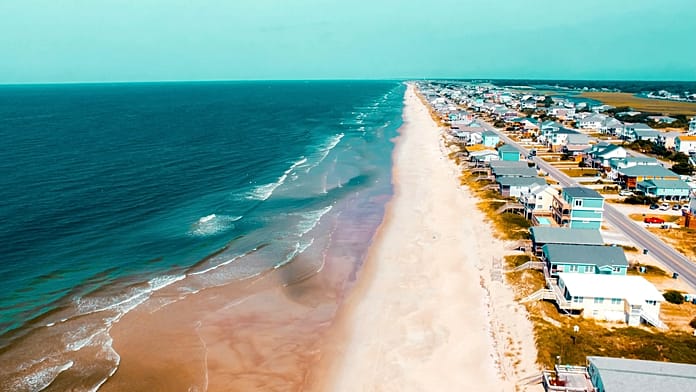
Adult playcations emerge as the defining US summer travel trend, according to Airbnb Short-haul playcations are shaping US summer travel, as adults flock to unexpected destinations built around active hobbies and hands-on experiences.
euronews · about 12 hours ago
📰 Japans Pokémon travel trend flies high with new themed airportA regional airport in Japan is getting a Pokémon-inspired makeover as part of post-earthquake recovery efforts. #UKNews #Europe
mastodon bot · about 12 hours ago
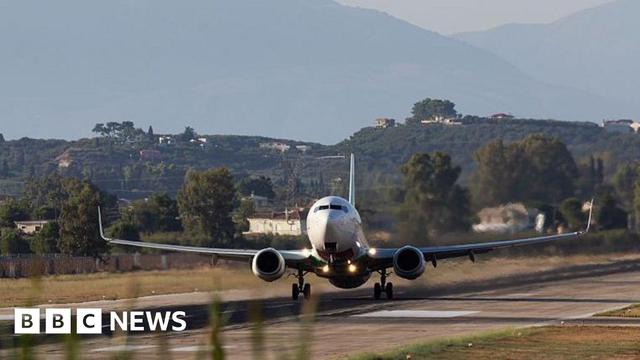
European air fares set to rise due to high jet fuel costs📰 Original title: Higher Europe air fares inevitable, says industry head🤖 IA: Its not clickbait ✅👥 Users: Its not clickbait ✅View full AI summary: #airtravel #fuelprices #europe
mastodon bot · about 12 hours ago

Green card for the planet? Fifas World Cup is on pace to be a climate catastrophe The 2022 World Cup failed to deliver on its environmental promises. From air travel emissions to heat-related dangers, the 2026 edition will be even worseSoccer fans are increasingly watching preparations for the 2026 World Cup through their fingers. The most popular sporting event on the planet is awash in controversy, whether its the eye-watering ticket prices, the question of Irans participation while the president of one of the host countries threatens war crimes against it, or the role that US Immigration and Customs Enforcement may or may not play in policing the event. And yet, lost in the political pyrotechnics is a fiasco that carries as much long-term peril as any: the tournaments staggering contribution to runaway climate change.The 2026 World Cup is not only the most politically combustible tournament in modern history, but it is also on track to be the most polluting World Cup ever, with total greenhouse gas emissions hitting nearly two times the historical average. Scientists conservatively project that the tournament will generate around 9m tons of carbon dioxide equivalent. Air travel comprises approximately 7.7m tons of this carbon budget, and more than four times that of the average for tournaments held between 2010 and 2022. The researchers note that the worst-case upper estimate for air transport is about 13.7m tons of CO2. That may sound bad, but thats just because World Cup emissions have never been worse. Continue reading...
theguardian · about 14 hours ago

Boomers have the space. Millennials have the kids Empty nesters are sitting on Americas family-size homes.Why it matters: The people who have the space arent necessarily the ones who need it — and thats making a tight housing market even tighter.By the numbers: Compared to millennials with kids, boomer empty nesters own nearly twice the share of homes with three-plus bedrooms (28).Millennial parents own 16 and Gen Z parents own less than 1 of large homes, according to a Redfin analysis of the latest census data, from 2024.Zoom in: The highest shares of millennial families who own large homes are in Austin, Texas, Columbus, Ohio, and Minneapolis, at roughly 19.The lowest are in Los Angeles (11), Miami (13) and San Jose, California (13).And empty-nester boomers own more than 30 of large homes in Memphis, Tennessee, Cleveland and Pittsburgh.The big picture: Older homeowners have plenty of reasons to age in place.Many are mortgage-free or locked into low mortgage rates.Boomers may also want to stay put to remain near family, keep their routines or avoid packing up decades of belongings.Meanwhile, millennial families run into both supply and affordability challenges when trying to move into larger homes, per Redfin.There arent enough family-size homes on the market, while high home prices and mortgage rates have priced many younger buyers out.Yes, but: Millennials have gained ground — from owning around 5 of large U.S. homes in 2014 to 16 in 2024 — partly by buying homes once owned by the Silent Generation, per Redfin.Boomer empty nesters who own large homes barely budged in that time.What were watching: Whether more large homes hit the market as more homeowners start to give up their low mortgage rates.
axios · about 14 hours ago
Croatia Airport News: Over 130 Passengers Safe After Runway Incident in Split Over 130 Passengers Safe After Runway Incident in Split, Photo: Croatia Week Croatia Airport News A Croatia Airlines…
europesays.com · about 15 hours ago