Loading…
 Wednesday, September 9Wednesday, September 9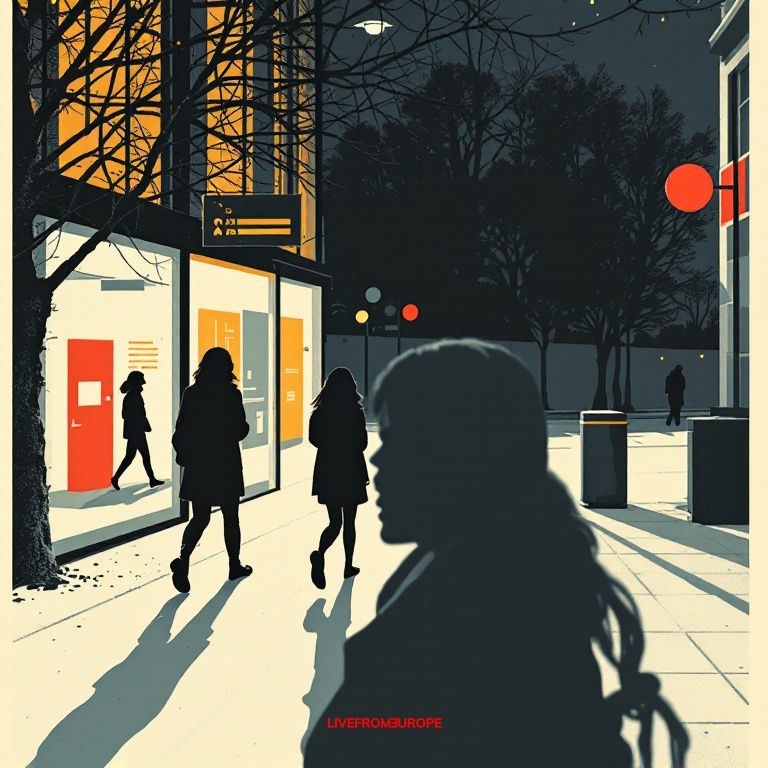
A 28-year-old Estonian woman’s research into public safety has revealed how fear reshapes daily life in Tallinn and beyond. A master’s thesis published today shows that many women in Estonia adjust their movements, avoid travelling alone after dark, and curtail routines because of perceived risks in public spaces. The study, based on mobility data and surveys, suggests that women’s sense of safety is strongly influenced not only by their own experiences but also by the presence—or absence—of others in streets, parks, and public transport.
“Fear is a silent planner,” said the researcher, whose identity has not been disclosed. “Women report taking longer routes, waiting for companions, or skipping evening activities simply because they do not feel secure.” The findings come amid broader discussions about gender equality and urban safety in Estonia, where public discourse has increasingly focused on lighting, policing, and community presence as factors in women’s mobility.
The thesis, completed at the University of Tartu, analysed anonymised movement patterns of 1,200 women aged 18 to 45 over a six-month period. It found that 68% reported altering their routines due to safety concerns, with 42% avoiding certain neighbourhoods after sunset. The study also highlighted a generational divide: younger women were more likely to use navigation apps to track safe routes, while older respondents relied on word-of-mouth advice from friends and family.
Experts say the findings reflect a wider European trend. In Slovakia, for example, foreign workers are increasingly filling labour gaps as demographic decline strains the local workforce, while in North Macedonia, public mourning continues for Vlado Janevski, a cultural icon whose music once united communities across borders . Yet even in stable societies, personal security remains a barrier to full participation in public life.
The Estonian researcher’s work has prompted calls for policy responses. The Ministry of the Interior has signalled interest in reviewing street lighting in high-risk areas, while women’s rights groups are urging the government to expand night-time public transport and community safety patrols. “This isn’t just about crime statistics,” said a spokesperson for the Estonian Women’s Network. “It’s about whether women feel they belong in the spaces they move through every day.”
For now, the 28-year-old researcher plans to present her findings to local municipalities and seek funding for a follow-up study on interventions that could restore confidence. Her work underscores a simple truth: in a society that values equality, safety is not a luxury—it is a prerequisite for freedom.
Follow us for live European news
6 further sources not geolocated

Leave it to the beavers: Natures engineers return and rebuild Slovakias wetlands As drought tightens its grip on Slovakia, one unlikely ally is quietly transforming the landscape.
spectator.sme.sk · 2 months ago

How did an English teacher end up making videos about Slovakia? James Blore moved to Košice in 1998 to teach English. Nearly three decades later, strangers recognise him from videos about Slovak food, culture and the experience of never quite feeling like an insider.
spectator.sme.sk · 2 months ago

Europe: Something Old, Something New, Something Borrowed, and Something Blue
gdeltproject.org · 2 months ago
Research: Fear also causes Estonian women to alter their movements Many women avoid traveling alone after dark and adjust their daily routines because of safety concerns. A recent masters thesis suggests that peoples sense of safety is also shaped by whether others are present in public spaces and whether help is available if needed.
news.err · 2 months ago
Study: Estonian residents are becoming increasingly non‑religious A new survey on religion shows that traditional church‑based religiosity in Estonia is continuing to decline, and most Estonian residents do not consider themselves followers of any religion. The study also found that attitudes toward religion differ sharply between Estonians and Russian‑speaking residents.
news.err · 2 months ago

North Macedonia Grieves for Musical Legend Vlado Janevski Thousands pay tribute to much-loved singer whose ballads became part of the soundtrack of peoples lives in North Macedonia, and who was the independent countrys first-ever Eurovision contestant.
balkaninsight · 2 months ago

I was an adult when I realised that when reading about Charlemagne in English, its the same guy I learned about in history class when I was 14 (Karl Suur in Estonian). Heres how Charlemagne is called in some different languages in Europe. #Europe
mastodon bot · 2 months ago
Kdo bo soustvaril podobo slovenskih športnic in športnikov? Olimpijski komite Slovenije je po razpisu prejel enajst predlogov za oblikovanje slovenske olimpijske kolekcije Los Angeles 2028. Strokovna komisija je na podlagi predstavitev v ožji izbor uvrstila tri finaliste.
rtv slovenia · 2 months ago
"Nič več ameriški John, ki poskuša govoriti slovensko, ampak naš slovenski Janez" Veliki jezikovni model za slovenščino GaMS že dobiva prve praktične uporabe v medicini, industriji, kulturni dediščini in informatiki. Predstavlja tudi korak k razvoju umetne inteligence za slovenščino in krepitvi tehnološke suverenosti Slovenije.
rtv slovenia · 2 months ago

Avós a bordo: quando nem o céu é o limite Conheça o projeto do Centro Social Paroquial Padre Avelino que levou idosos às nuvens, mostrando que pequenos gestos comunitários rasgam sorrisos na terceira idade. Envelhecer não é deixar de sonhar.
observador · 2 months ago

Foreign workers are keeping Slovakias labour market afloat Layoffs are making headlines, but demographic decline and labour shortages mean companies will keep looking abroad.
spectator.sme.sk · 2 months ago
Slavic Women for Marriage: Traditions and Modern Lifestyle - CU Independent Why Slavic Women Are Unique Partners for Marriage
gdeltproject.org · 2 months ago
🇧🇬 Bulgarias milk farmers falter in former yoghurt empire "When the countryside starts being fed by the city, you can write off the whole country," says Emil Deliev, as he leads his cows out to pasture in the Eastern Rhodopes in Bulgaria, where dairy farms are disappearing one after the other.
bluesky_AFP English · 2 months ago

You can outgrow a belief without outgrowing the people who gave it to you. www.vox.com/future-perfe...
bluesky_Vox · 2 months ago
Meet the woman helping Croatian retirees travel, exercise and thrive in their golden years By Hana Klain While many people see retirement as a time to slow down, Karolina Muža proves the exact opposite... The post Meet the woman helping Croatian retirees travel, exercise and thrive in their golden years first appeared on Croatia Week.
croatia week · 2 months ago
Eestlaste Starship kolib ülikoolilinakutest ära – tudengid jäävad roboteid taga igatsema Eestlaste loodud ettevõte Starship Technologies kullerrobotid on Ameerika ülikoolilinnakutes toitu vedanud juba aastast 2019. Nüüd on otsustanud firma hakata oma masinaid rakendama laiemal turul, kuid üliõpilased jäävad neid igatsema.
postimees · 2 months ago

Vapaavuorelta tyly kuitti Harkimolle: Keskittyköön omiin hankkeisiinsa
iltalehti · 2 months ago
Carolina, 49, anses inte längre vara svensk medborgare: Skräckfilm Hon är född i Sverige, uppväxt här, har skaffat barn och företag, innan hon för 15 år sedan flyttade utomlands.Nu anses Carolina inte längre vara svensk medborgare.– Det är som en skräckfilm, säger hon.
expressen · 2 months ago
Ce spune despre sănătatea ta faptul că îți place ceapa. Descoperirea surprinzătoare a cercetătorilor Alimentația și sănătatea sunt strâns legate, dar detaliile pot fi neclare, având în vedere numeroasele variabile implicate. Cu cât oamenii de știință reușesc să clarifice mai bine lucrurile, cu atât mai mult putem prelua controlul asupra sănătății noastre prin ceea ce mâncăm și bem. Acum, un nou studiu realizat de o echipă internațională de cercetători a adus la lumină câteva descoperiri interesante în acest domeniu. Acestea se referă în mod specific la ceapă. Echipa a constatat că faptul de a aprecia mirosul și gustul cepei era asociat cu un risc mai mic de a dezvolta diabet de tip 2 sau de a suferi de hipertensiune arterială, potrivit Science Alert.
digi24 · 2 months ago
‚Připomíná průmyslový náhon. Povodí Labe chce úpravami koryta vrátit řece v Liberci přírodní podobu Povodí Labe připravuje úpravy koryta Lužické Nisy v Liberci, které mají řece ve městě vrátit přírodní charakter. Momentálně řeka v Liberci připomíná spíš průmyslový náhon, řekl generální ředitel Povodí Labe Marián Šebesta. Povodí chce upravit koryto v místech, kde loni Liberecký kraj dokončil úpravy nábřeží a vybudoval náplavku s pobytovými schody a přístupem do vody. Příští týden naváže další etapou úprav podél Nisy město Liberec.
irozhlas.cz · 2 months ago
Han tar ansvar för att återförtrolla världen Precis allt ryms i Viktor Johanssons poesi: det lekande barnet, filmjölksanimationer, dödsångest. Stefan Eklund läser en diktsamling som väljer det mjuka framför det hårda.
svenska dagbladet · 2 months ago
Veteranen zoeken in Drenthe naar een middeleeuws slagveld uit 1227 Aan de Slag bij Ane (1227) hebben Groningen en Drenthe veel autonomie te danken. Een groot ridderleger werd toen verslagen door de heer van Coevorden. Maar het slagveld zou wel eens bij Holthone kunnen liggen. Archeologen, amateurs én veteranen doen er nu gezamenlijk onderzoek.
nrc · 2 months ago

Je crois en la force du livre : Moon Jae-in, lancien président devenu libraire Son mandat achevé en 2022, lancien chef dÉtat sud-coréen rêvait dune retraite paisible : il est devenu gérant dune librairie dans sa région natale. Un projet destiné à changer le monde à travers lamour et la culture du livre, rapportent, enthousiastes les presses nippone et sud-coréenne.
courrier international · 2 months ago