 Sunday, June 7Sunday, June 7
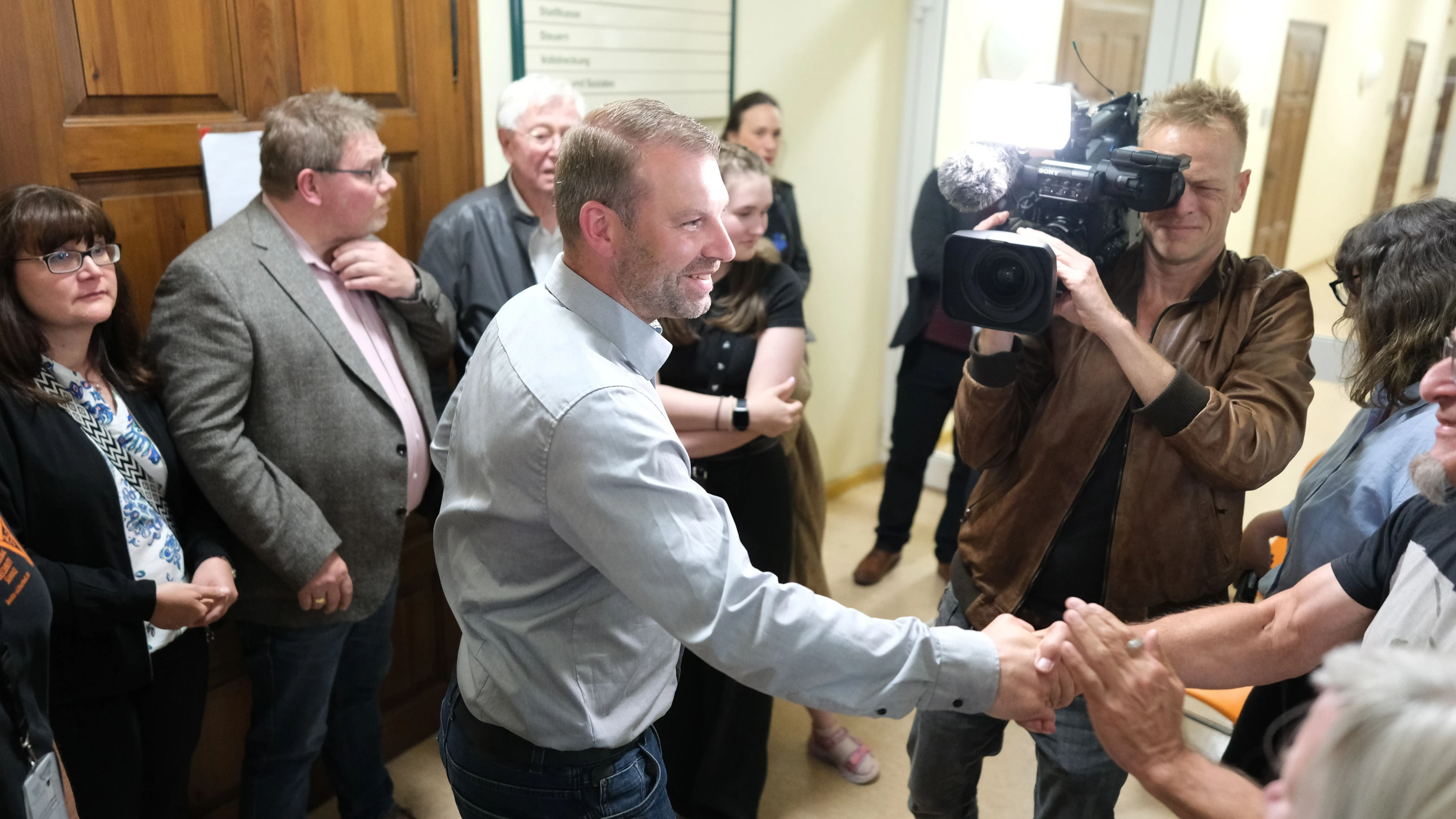
Marcus Hoffmann of the Christian Democratic Union (CDU) has been elected Oberbürgermeister of Aue-Bad Schlema in Saxony, narrowly defeating Stefan Hartung of the far-right “Freie Sachsen” in Sunday’s runoff vote. Hoffmann secured the office with a margin of just over 500 votes, delivering a decisive setback to the far-right party in a region where it had campaigned aggressively.
The final tally saw Hoffmann finish ahead of Hartung by 512 votes out of more than 18,000 cast, according to provisional results reported by multiple outlets. The margin underscores the tightness of the contest in the Erzgebirge town, where Hartung’s party had sought to capitalize on local discontent ahead of the June 7 runoff. “This result shows that voters in Aue-Bad Schlema have chosen stability and responsibility over division and extremism,” Hoffmann told reporters after the result was confirmed.
The vote capped a two-week campaign marked by intense door-to-door canvassing and last-minute rallies. Hartung, a former local councilor, had campaigned on a platform critical of migration and energy policy, drawing national attention to the race. His defeat is the second consecutive setback for the “Freie Sachsen” in municipal elections this year, following losses in smaller towns across Saxony.
Political observers noted that Hoffmann’s victory reflects broader trends in eastern Germany, where mainstream parties have sought to counter far-right advances through targeted grassroots campaigns. “The CDU’s ground game clearly paid off,” said political scientist Dr. Elena Vogt of the University of Leipzig. “In a region where the far right has been gaining ground, this sends a strong signal.”
The result also comes amid heightened scrutiny of far-right activity in Saxony, where the “Freie Sachsen” has been classified as a suspected extremist organization by the state’s domestic intelligence service. Interior Minister Nancy Faeser welcomed the outcome, calling it “a victory for democracy.”
Hoffmann, 48, a former city planner, will take office on July 1, succeeding outgoing mayor Rolf Schmidt, who did not seek re-election. His first priorities include addressing housing shortages and revitalizing local industry, issues that dominated the campaign. Hartung has not yet conceded publicly, but his party has indicated it will request a recount.
With the far-right’s electoral momentum stalled in Aue-Bad Schlema, the result is likely to influence strategy ahead of next year’s state elections in Saxony. For now, however, the focus remains on the new mayor’s transition and the challenges ahead in a town still grappling with economic transition and demographic change.

Saalfeld-Rudolstadt: Stichwahl nötig - SPD-Amtsinhaber bei Landratswahl vorn
die zeit · about 3 hours ago
Deutschland-Liveblog: CDU-Kandidat siegt in Aue-Bad Schlema knapp gegen Rechtsextremisten Nur gut 500 Stimmen Abstand +++ Bundesratspräsident Bovenschulte kritisiert Bundesregierung +++ Unfälle mit Cannabis am Steuer werden in Statistik erfasst +++ alle Entwicklungen im Liveblog
faz · about 3 hours ago
Sachsen: CDU-Kandidat gewinnt OB-Wahl ganz knapp gegen Rechtsextremen Mit nur einigen Stimmen zu wenig ist der Kandidat der rechtsextremen „Freien Sachsen beim Rennen um die Wahl zum Oberbürgermeister in Aue-Bad Schlema gescheitert. CDU-Kandidat Hoffmann übernimmt das Amt.
sueddeutsche · about 3 hours ago

CDU-Kandidat gewinnt Oberbürgermeister-Wahl gegen Rechtsextremen Der CDU-Kandidat Marcus Hoffmann hat die mit Spannung erwartete Oberbürgermeisterwahl in Aue-Bad Schlema gewonnen. Hoffmann setzte sich in der Stichwahl gegen seinen Herausforderer Stefan Hartung von den rechtsextremen „Freien Sachsen durch.
welt.de · about 4 hours ago
Wahl in Aue-Bad Schlema: CDU-Kandidat gewinnt OB-Wahl gegen Rechtsextremen Marcus Hoffmann von der CDU hat die Oberbürgermeisterwahl in Aue-Bad Schlema gewonnen. Im zweiten Wahlgang setzte er sich gegen den Kandidaten der rechtsextremen „Freien Sachsen durch.
tagesspiegel · about 4 hours ago
Wahlen: CDU-Kandidat gewinnt OB-Wahl in Aue gegen Rechtsextremen Die Oberbürgermeisterwahl in Aue-Bad Schlema ist entschieden: CDU-Kandidat Marcus Hoffmann setzte sich in der Stichwahl gegen den Kandidaten der rechtsextremen „Freien Sachsen durch.
handelsblatt · about 4 hours ago
Landratswahl: Stichwahl bei Landratswahl wahrscheinlich
die zeit · about 4 hours ago
Oberbürgermeisterwahl: CDU-Kandidat gewinnt OB-Wahl in Aue gegen Rechtsextremen
die zeit · about 4 hours ago
Sachsen: Rechtsextremist Stefan Hartung unterliegt gegen CDU bei OB-Wahl in Aue Im erzgebirgischen Aue-Bad Schlema wird Marcus Hoffmann von der CDU neuer Oberbürgermeister. Er gewann knapp vor dem rechtsextremen Kandidaten der Freien Sachsen.
die zeit · about 4 hours ago
Landratswahl: Stichwahl entscheidet über Landrat von Saalfeld-Rudolstadt
die zeit · about 4 hours ago

Wspólny kandydat KO i PSL na prezydenta Krakowa? Nieoficjalnie: To kierowca rajdowy Rafał Sonik będzie prawdopodobnie wspólnym kandydatem Koalicji Obywatelskiej i PSL na prezydenta Krakowa - ustaliło nieoficjalnie RMF FM.
gazeta.pl · about 4 hours ago