
SpaceX aborts Starship test flight after engine failure in Texas: next attempt expected next week

SpaceX aborted the launch of its latest Starship test flight on July 16, 2026, due to some of the vehicle’s engines failing to ignite. The launch was scheduled for 6:45 p.m. Eastern from the company’s Starbase test site in Texas. This was the 13th test flight for Starship and the second flight for the upgraded version, Starship V3.
Elon Musk, SpaceX's Chief Executive, stated on social media that the next launch attempt would hopefully be in a few days. He later added that to ensure a good flight, two Raptor engines would be removed and replaced, with the most probable launch timing being early next week.
The Starship is intended for future orbital missions and is a key part of SpaceX's plans to carry astronauts to the Moon and eventually to Mars. The rocket system is the largest ever built, standing taller than the Statue of Liberty in New York. It consists of two parts: the approximately 70-meter-long Super Heavy booster and the 50-meter Starship upper stage. Both parts are designed to be reusable after returning to Earth.
This test flight, like the previous one on May 22, was a suborbital test flight. However, this mission was notable for carrying 20 functioning Starlink V3 satellites, which were to be deployed once Starship reached space. These satellites are larger and more powerful than the current Starlink satellites and are optimized to launch on Starship.
The Starship program has seen several test flights with varying degrees of success. The first test flight in April 2023 ended in an explosion, but subsequent tests have shown progress, with the upper stage reaching the edge of space and landing in the Indian Ocean.
SpaceX recently completed the largest initial public offering (IPO) in history, although the stock price has since fallen below the offering price. Despite this, the company remains focused on its space exploration goals.
The Starship plays a crucial role in the plans of both SpaceX and NASA, which aims to return astronauts to the Moon by the end of 2028. SpaceX's iterative testing process is part of its approach to technological advancement.
Follow us for live European news
- 4
- 2
- 2
- 1
- 1
- 1
- 1
- 1
- 1
4 further sources not geolocated
Articles
SpaceX blaast testvlucht Starship op het laatste moment af
de morgen · about 4 hours ago
SpaceX scrubs Starship launch after some of its engines didnt start "Now offloading propellant. Next launch attempt hopefully in a few days."
ars technica · about 4 hours ago

VAATA VIDEOT ⟩ Muski hiigelrakett möirgas, suitses ja jäi siis lihtsalt paigale – plahvatusest jäi puudu mõni sekund Maailma suurima raketi järjekordne katselend jõudis stardini lähemale kui kunagi varem, kuid viimasel hetkel muutus kõik. Esialgu paistis, et tehnilised ja ilmastikuolud soosivad ettevõtmist täielikult. Ometi sekkus automaatne turvasüsteem hetkel, mil õhkutõusuni jäi vaid murdosa sekundist. Mis sundis süsteemi katkestama missiooni, mille edu näis juba käeulatuses? Vastus heidab valgust nii Starshipi tehnilistele väljakutsetele kui ka selle kesksele rollile tulevastes Kuumissioonides.
postimees · about 4 hours ago
Greek drone maker ALTUS-LSA targets live-fire trials for first combat UAV by end-2026
gdeltproject.org · about 4 hours ago
Inimesed tegi kosmoses midagi, mida meditsiin oli oodanud aastakümneid Aastakümneid oli ultraheli ainus usaldusväärne meditsiiniline kuvamismeetod, mis oli astronautide jaoks kosmoselennu ajal kättesaadav. Nüüd on aga hakatud testima röntgeni kasutamise võimalusi ilmaruumis viibides. SpaceXi 2025. aasta missiooni käigus tehti mitmeid ülesvõtteid meeskonnaliikmete kehaosadest röntgeni abil, kuid tulevikus on vaja kompaktsemaid ning töökindlamaid tehnoloogiaid.
postimees · about 4 hours ago

Elon Musk contraint de reporter le vol de Starship : "Prochaine tentative de lancement, espérons-le, dans quelques jours" Le géant spatial dElon Musk joue gros avec ce nouveau test, destiné à valider plusieurs améliorations avant de futures missions, notamment vers la Lune. ...
la libre · about 4 hours ago
SpaceX: Rakete Starship muss Testflug vor Start abbrechen Mit seiner Riesen-Rakete will Elon Musk zum Mars. Zwölf Tests gab es bereits, mit unterschiedlichen Ergebnissen. Ein weiterer konnte nun nicht wie geplant stattfinden. Was ging schief?
handelsblatt · about 4 hours ago
Uppskjutning av jätteraket avblåst
svenska dagbladet · about 4 hours ago

US to take lead in probe into Ryanair Boeing 737 engine failure over Greece reut.rs/4vARfhA
bluesky_Reuters · about 4 hours ago
Riesen-Rakete von SpaceX muss Testflug vor Start abbrechen Elon Musk zufolge war der Grund für den Abbruch, dass einige der Triebwerke nicht gezündet haben. Der nächste Startversuch soll in ein paar Tagen stattfinden.
die presse · about 4 hours ago
SpaceX: Starship muss Testflug vor Start abbrechen
orf.at · about 5 hours ago
SpaceX aborts Starship Flight 13 launch attempt SpaceX aborted the launch of its latest Starship test flight July 16 when some of the vehicles engines failed to ignite. The post SpaceX aborts Starship Flight 13 launch attempt appeared first on SpaceNews.
spacenews · about 5 hours ago

Als der Countdown auf Null zählt, bleibt Musks Riesenrakete einfach stehen Eine Sprecherin kündigte ein „garantiertes Spektakel an. Die Starship-Rakete sollte erstmals eine Nutzlast in den Weltraum transportieren. Doch dann wird der Start im letzten Moment abgebrochen.
welt.de · about 5 hours ago
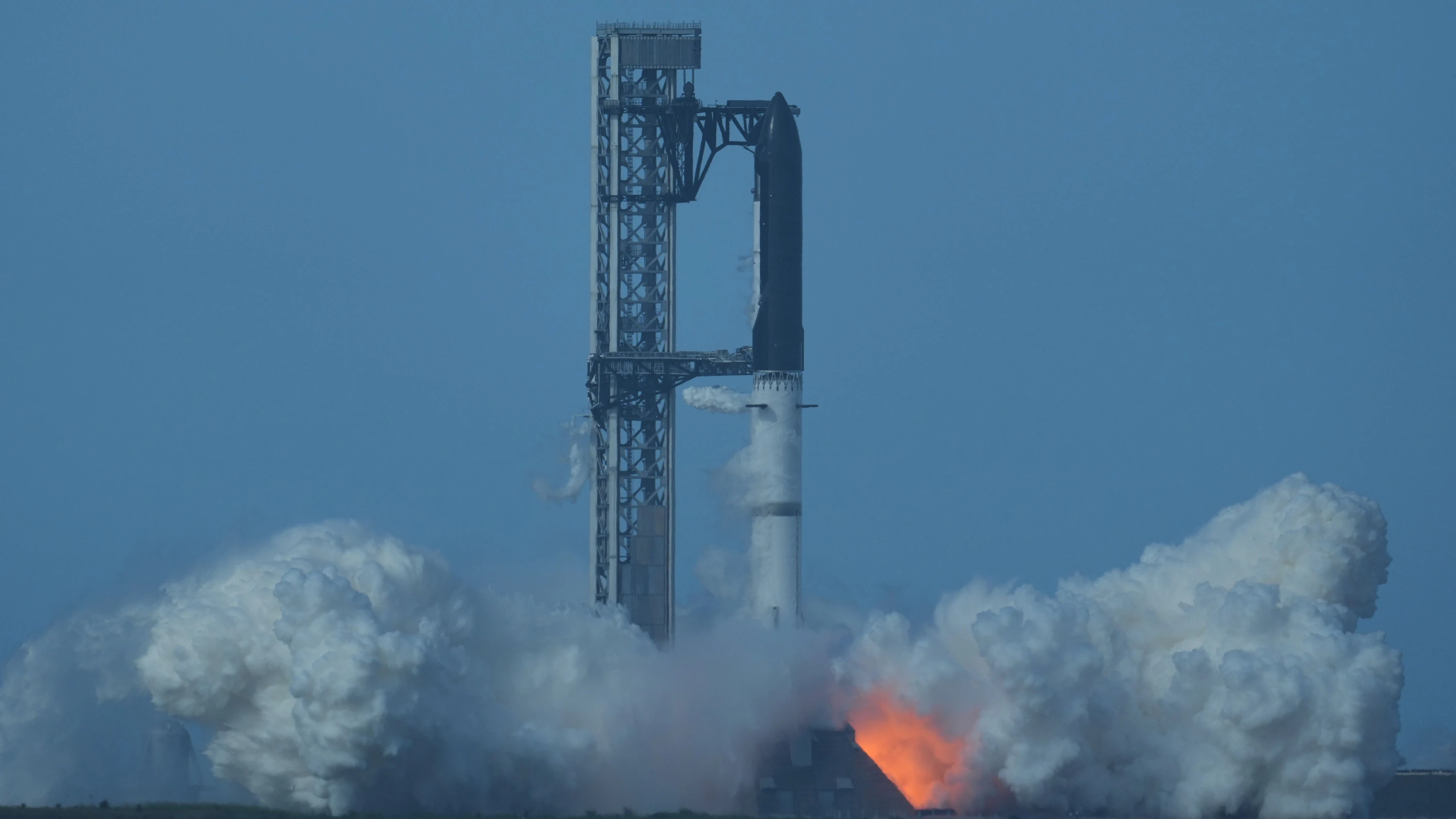
Spacex: Erster Starship-Testflug seit Börsengang abgebrochen Das Raumfahrtunternehmen SpaceX musste den Testflug seiner Starship-Rakete in letzter Sekunde abbrechen. Laut Elon Musk seien einige der Triebwerke nicht gestartet.
faz · about 5 hours ago
VAATA OTSE ⟩ SpaceX teeb uue Starshipi katselennu: pardal on esmakordselt uue põlvkonna Starlinki satelliidid SpaceX teeb ööl vastu reedet järjekordse Starshipi katselennu, kuid seekord on missioonil eriline eesmärk. Esimest korda saadab ettevõte kosmosesse 20 järgmise põlvkonna Starlink V3 satelliiti, mis peaksid lühiajaliselt looma ühenduse olemasoleva satelliidivõrguga.
postimees · about 6 hours ago
Acteur Ryan Hurst geblesseerd geraakt: productie God of War stilgelegd De productie van de Prime Video-serie God of War is stilgelegd. Entertainmentwebsite TMZ meldt op basis van bronnen dat hoofdrolspeler Ryan Hurst (50) zijn biceps heeft gescheurd tijdens een stunt en geopereerd moet worden.
rtl nieuws · about 6 hours ago

SpaceX calls off Starship test flight due to startup issue with engines
news.yahoo.com · about 8 hours ago

SpaceX Starship rocket aborts before liftoff in 13th flight test attempt reut.rs/4vTW85P
bluesky_Reuters · about 8 hours ago
Space X, fallisce il test sul razzo Starship: stop improvviso. Musk: Problema ai motori Sarebbe stato il primo volo dopo il debutto da record dellazienda in borsa. Prossimo tentativo tra qualche giorno
corriere · about 8 hours ago
SpaceX: Starship-Testflug in letzter Sekunde abgebrochen Zum ersten Mal seit dem SpaceX-Börsengang sollte eine Starship-Rakete in Texas abheben. Kurz vor dem Start wurde der 13. Testflug jedoch automatisch unterbrochen.
die zeit · about 8 hours ago

Lentokoneeseen tuli vika lähtökiihdytyksessä Turun lentokentällä
iltalehti · about 8 hours ago
Nature study identifies a new way to spot nuclear weapons in orbit NEW YORK — A study published last week in Nature Astronomy has proposed a new satellite design and technique to detect thermonuclear warheads in space. Funded in part by the […] The post Nature study identifies a new way to spot nuclear weapons in orbit appeared first on SpaceNews.
spacenews · about 9 hours ago
SpaceX launches 21 satellites for military data network With the launch of 21 York Space Systems satellites, the Space Development Agency has now placed half of its planned Tranche 1 Transport Layer constellation in orbit The post SpaceX launches 21 satellites for military data network appeared first on SpaceNews.
spacenews · about 9 hours ago