 Thursday, May 21Thursday, May 21
Trump’s 2028 GOP Purge and Intraparty Tensions President Donald Trump is expanding his campaign to punish Republican lawmakers who have opposed him, targeting several high-profile figures ahead of the 2028 elections. Trump’s recent primary victories—including the defeat of Rep. Thomas Massie (R-Ky.), a frequent critic—have reinforced his dominance over the GOP. He has since identified additional Republicans for potential primary challenges, including Rep. Lauren Boebert (R-Colo.), whom he criticized on Truth Social as "weak-minded" for supporting Massie and advocating for the release of the Epstein files. Trump also took aim at Sen. Rand Paul (R-Ky.) for backing Massie and opposing his policies, including a 2024 bill and his decision to strike Iran. Other targets include Rep. Warren Davidson (R-Ohio), who faced White House pressure for opposing a Trump-backed bill, and Rep. Brian Fitzpatrick (R-Pa.), whom Trump attacked for voting against his tax and spending legislation and opposing a $220 million request to fund a White House ballroom. While White House officials downplayed the likelihood of a primary challenge against Fitzpatrick, Trump’s allies have warned that dissent within the party will not be tolerated .
Trump’s political operation, led by advisers Chris LaCivita and Tony Fabrizio, played a decisive role in Massie’s defeat, with strategists crediting their "devastating" ads for the outcome. However, his aggressive targeting of GOP incumbents risks alienating lawmakers in a narrowly divided Congress, where Republicans hold slim majorities. Sen. Bill Cassidy (R-La.), who voted to convict Trump in his 2021 impeachment, failed to advance in his Senate primary and has vowed to oppose parts of Trump’s legislative agenda in his final months in office. Trump must also decide whether to challenge Rep. Nancy Mace (R-S.C.) in her June 9 gubernatorial primary after she joined Massie and Boebert in pushing for the release of Epstein files .
GOP Resistance to Trump’s Legislative Priorities Trump’s focus on intraparty revenge has coincided with growing Republican opposition to his legislative agenda, particularly his $1.8 billion "anti-weaponization fund", designed to compensate individuals claiming political persecution, including Jan. 6 defendants. The fund, created as part of a settlement with the IRS, has faced bipartisan backlash. Rep. Brian Fitzpatrick (R-Pa.) announced plans to "kill" the fund, while Rep. Kevin Kiley (R-Calif.) signaled support for a Democratic-led discharge petition to impose restrictions. Sen. Mike Rounds (R-S.D.) acknowledged that Senate Republicans are exploring ways to regulate the fund, with outgoing Sen. Bill Cassidy (R-La.) calling it a "slush fund" lacking accountability. House Speaker Mike Johnson (R-La.) urged party unity, but lawmakers like Rep. Don Bacon (R-Neb.) warned that a "yes-man mentality" would harm the GOP .
The fund has also drawn legal challenges. Capitol Police officers Harry Dunn and Daniel Hodges, who defended the Capitol on Jan. 6, filed lawsuits to block payouts to rioters, arguing the fund rewards criminal behavior. Democrats, led by Rep. Jamie Raskin (D-Md.), are advancing legislation to defund the program, with Fitzpatrick indicating potential GOP support .
Separately, Trump’s request for $1 billion in additional Secret Service funding, including $220 million for a White House ballroom, was rejected by Senate Republicans, who instead advanced a $70 billion border security package. The ballroom funding, framed as a security measure, faced skepticism from lawmakers in both parties .
Trump’s Foreign Policy Under Scrutiny House Democrats are advancing a war powers resolution to limit Trump’s ability to engage in military action against Iran, with at least one Republican expected to support the measure. The push reflects broader concerns about Trump’s foreign policy, including his support for Israel’s actions in Gaza. International human rights lawyer Reed Brody accused Trump of "aspiring to dictatorship" and called for his prosecution by international courts over the Iran conflict and Gaza policies .
Midterm Risks and Party Divisions Trump’s primary victories have weakened the GOP’s electoral prospects, with analysts warning that his focus on revenge could cost the party Senate seats. The defeat of Cassidy in Louisiana and the potential loss of other Trump-critical incumbents may leave Republicans vulnerable in competitive races. Rep. Don Bacon (R-Neb.) criticized Trump’s approach, stating that lawmakers should not "report to any person" in Washington .
> Background: **Trumps influence reshapes GOP as Cassidy loses primary over impeachment vote.** — *3 days ago*
![Trump eyes more GOP targets for revenge in 2028 Fresh off his takedowns of GOP dissenters in this months primaries, President Trump is already making a list of Republicans who could be on his 2028 chopping block.Why it matters: Trumps string of primary wins over GOP adversaries has reaffirmed his dominance over the party — and now hes looking to extend that influence after he leaves office in January 2029.What theyre saying: Do not ever doubt President Trump and his political power. F**k around, find out, White House communications director Steven Cheung wrote on X Tuesday after Trump-backed Ed Gallrein unseated Rep. Thomas Massie (R-Ky.), a frequent critic of the president.Zoom in: Massies loss followed a weekend in which another of Trumps longtime targets — Sen. Bill Cassidy (R-La.), who drew Trumps wrath five years ago by voting to convict him for his role in the Jan. 6 riot — failed to make a runoff for the Senate seat.This week, Trump hasnt been shy about identifying possible future targets in his party:1. Colorado Rep. Lauren Boebert. Trump took to Truth Social over the weekend to solicit a primary challenger to Boebert, whom he called weak-minded and very difficult.The president was infuriated that Boebert had campaigned for Massie. I knew the risks when I agreed to stand by my friend Thomas Massie, Boebert said in response.Boebert also ran afoul of the presidents team by calling for the release of the Epstein files and for backing then-Virginia Rep. Bob Good against a Trump-endorsed primary challenger in 2024.2. Kentucky Sen. Rand Paul. Trump repeatedly attacked Paul for supporting Massie, who shares the senators libertarian instincts.The president also has criticized Paul for voting against Trumps big, beautiful bill and opposing his decision to attack Iran.3. Ohio Rep. Warren Davidson. Davidson is another GOP House member whom the White House has signaled could be targeted. White House Press Secretary Karoline Leavitt said last year the president believed Davidson should face a primary challenge for initially opposing the bill. Davidson, however, ended up without a serious Republican challenger this year.But Davidson continues to frustrate the White House, most recently by backing Massies reelection.4. Pennsylvania Rep. Brian Fitzpatrick. Trump on Wednesday tore into Fitzpatrick — who represents a swing suburban Philadelphia district that Democrat Kamala Harris won in 2024 — for vot[ing] against me all the time.You know what happens with that? It doesnt work out well, Trump added.Fitzpatrick and Massie were the only two House Republicans to vote against Trumps tax and spending megabill. More recently, Fitzpatrick has opposed Trumps request for up to $220 million to help fund the presidents controversial White House ballroom. White House Deputy Chief of Staff James Blair played down the idea that Trump would try to unseat Fitzpatrick, who as a vulnerable incumbent faces pressure to show independence from his party.Trump has a long history with Congressman Fitzpatrick and I think the president understands very clearly that there are some things he disagrees on, Blair told CNNs Jake Tapper.I think [Fitzpatrick will] be successful in the fall ... The president does allow for disagreement within the party but there are some things that, you know, hes not gonna allow for disagreement on.Between the lines: Trump is increasingly confident he can boot anyone who crosses him, and he has the backing of a sophisticated and well-funded political operation that he lacked during his first term.Trumps anti-Massie super PAC was led by Chris LaCivita and Tony Fabrizio, who were senior advisers on his 2024 campaign.Trumps political operation was critical to the win. Their ads were absolutely devastating and immensely impactful, said Kentucky-based GOP strategist Jake Cox.Yes, but: Trumps eagerness to target Republicans up for election in 2028 isnt without risk. The president has narrow congressional majorities that could disappear this year, and cant afford to alienate too many GOP lawmakers.Cassidy, for example, has made clear that in his last months in office he plans to oppose several pieces of Trumps legislative agenda. Whats next: Trump must decide whether he wants to oppose Rep. Nancy Mace (R-S.C.) — who co-led a push with Massie and Boebert to force the release of the Epstein files — in the June 9 primary for South Carolina governor.](https://images.axios.com/szd552PkzaduYwtd8dG4zhCFLtY=/0x0:7739x4353/1366x768/2026/05/21/1779322624207.jpg)
Trump eyes more GOP targets for revenge in 2028 Fresh off his takedowns of GOP dissenters in this months primaries, President Trump is already making a list of Republicans who could be on his 2028 chopping block.Why it matters: Trumps string of primary wins over GOP adversaries has reaffirmed his dominance over the party — and now hes looking to extend that influence after he leaves office in January 2029.What theyre saying: Do not ever doubt President Trump and his political power. F**k around, find out, White House communications director Steven Cheung wrote on X Tuesday after Trump-backed Ed Gallrein unseated Rep. Thomas Massie (R-Ky.), a frequent critic of the president.Zoom in: Massies loss followed a weekend in which another of Trumps longtime targets — Sen. Bill Cassidy (R-La.), who drew Trumps wrath five years ago by voting to convict him for his role in the Jan. 6 riot — failed to make a runoff for the Senate seat.This week, Trump hasnt been shy about identifying possible future targets in his party:1. Colorado Rep. Lauren Boebert. Trump took to Truth Social over the weekend to solicit a primary challenger to Boebert, whom he called weak-minded and very difficult.The president was infuriated that Boebert had campaigned for Massie. I knew the risks when I agreed to stand by my friend Thomas Massie, Boebert said in response.Boebert also ran afoul of the presidents team by calling for the release of the Epstein files and for backing then-Virginia Rep. Bob Good against a Trump-endorsed primary challenger in 2024.2. Kentucky Sen. Rand Paul. Trump repeatedly attacked Paul for supporting Massie, who shares the senators libertarian instincts.The president also has criticized Paul for voting against Trumps big, beautiful bill and opposing his decision to attack Iran.3. Ohio Rep. Warren Davidson. Davidson is another GOP House member whom the White House has signaled could be targeted. White House Press Secretary Karoline Leavitt said last year the president believed Davidson should face a primary challenge for initially opposing the bill. Davidson, however, ended up without a serious Republican challenger this year.But Davidson continues to frustrate the White House, most recently by backing Massies reelection.4. Pennsylvania Rep. Brian Fitzpatrick. Trump on Wednesday tore into Fitzpatrick — who represents a swing suburban Philadelphia district that Democrat Kamala Harris won in 2024 — for vot[ing] against me all the time.You know what happens with that? It doesnt work out well, Trump added.Fitzpatrick and Massie were the only two House Republicans to vote against Trumps tax and spending megabill. More recently, Fitzpatrick has opposed Trumps request for up to $220 million to help fund the presidents controversial White House ballroom. White House Deputy Chief of Staff James Blair played down the idea that Trump would try to unseat Fitzpatrick, who as a vulnerable incumbent faces pressure to show independence from his party.Trump has a long history with Congressman Fitzpatrick and I think the president understands very clearly that there are some things he disagrees on, Blair told CNNs Jake Tapper.I think [Fitzpatrick will] be successful in the fall ... The president does allow for disagreement within the party but there are some things that, you know, hes not gonna allow for disagreement on.Between the lines: Trump is increasingly confident he can boot anyone who crosses him, and he has the backing of a sophisticated and well-funded political operation that he lacked during his first term.Trumps anti-Massie super PAC was led by Chris LaCivita and Tony Fabrizio, who were senior advisers on his 2024 campaign.Trumps political operation was critical to the win. Their ads were absolutely devastating and immensely impactful, said Kentucky-based GOP strategist Jake Cox.Yes, but: Trumps eagerness to target Republicans up for election in 2028 isnt without risk. The president has narrow congressional majorities that could disappear this year, and cant afford to alienate too many GOP lawmakers.Cassidy, for example, has made clear that in his last months in office he plans to oppose several pieces of Trumps legislative agenda. Whats next: Trump must decide whether he wants to oppose Rep. Nancy Mace (R-S.C.) — who co-led a push with Massie and Boebert to force the release of the Epstein files — in the June 9 primary for South Carolina governor.
axios · about 3 hours ago

„Donald Trump din Bangladesh. Un bivol a devenit vedetă pe internet pentru asemănarea sa cu președintele SUA Un bivol albinos din Bangladesh, botezat „Donald Trump datorită coamei sale blonde, a devenit o adevărată senzație pe rețelele sociale, atrăgând zilnic vizitatori la o fermă de la periferia capitalei Dacca, înainte de sacrificiul programat la finalul lunii, relatează AFP.
adevarul · about 4 hours ago
Bangladesh: Albino buffalo nicknamed Donald Trump becomes unlikely star attraction An albino buffalo nicknamed Donald Trump draws huge crowds near Dhaka ahead of Eid al-Adha, as visitors flock to see its rare blond coat.
euronews · about 5 hours ago
Motivul pentru care doi polițiști americani îl dau în judecată pe Donald Trump. Ce acuzațiile îi aduc președintelui SUA Doi polițiști americani, Harry Dunn și Daniel Hodges, au deschis un proces împotriva președintelui Donald Trump și a administrației sale, susținând că un fond de 1,8 miliarde de dolari creat pentru despăgubirea victimelor incidentelor armate.
adevarul · about 6 hours ago
„Vânătorul de dictatori îl acuză pe Trump de crime internaționale: „Este un dictator aspirant Avocatul american Reed Brody, cunoscut la nivel internațional drept „vânătorul de dictatori, susține că președintele american Donald Trump ar trebui judecat de instanțe internaționale pentru războiul din Iran și pentru sprijinul acordat Israelului în conflictul din Gaza.
adevarul · about 9 hours ago
![Trumps priorities are in deep trouble after his revenge tour Congressional Republicans are countering President Trumps meddling in their primaries with a revenge tour of their own.Why it matters: Politically, Trump had a successful week, picking winners and settling scores. Legislatively, its turning into a disaster.💣 Hes on the edge of an Iran war rebuke: House Democrats are one step closer to finally getting a successful Iran war powers vote as their last holdout plans to flip and at least one Republican says they may follow suit.💰 His anti-weaponization fund is taking heat: Republicans in both chambers put him on notice that the nearly $1.8 billion carveout will be subject to legislative scrutiny.🕺 And the ballroom money is out (for now), but theres still an open question about whether any of the other funding for the Secret Service will survive.🛑 Zoom in: The anti-weaponization fund is kryptonite for Republicans, and they are exploring ways to restrict — or regulate — it, according to one GOP senator.Questions about the fund — where the money is coming from and whom it can be paid to — were repeatedly raised during a closed-door Senate GOP lunch on Wednesday.Theres going to be an attempt to address the questions that are out there on it, agrees Sen. Mike Rounds (R-S.D.). He adds that the questions and potential amendments would be coming from our side rather than from Democrats.Outgoing Sen. Bill Cassidy (R-La.) called it a $1.8 billion fund for the President and his allies to pay whomever they wish with no legal precedent or accountability.🔪 In the House, Rep. Brian Fitzpatrick (R-Pa.) says he will try to kill the fund.Rep. Kevin Kiley (R-Calif.) says he will likely sign a discharge petition from Rep. Jamie Raskin (D-Md.) to force a vote to impose restrictions on the fund.🤗 Between the lines: House Speaker Mike Johnson brushed aside concerns about party conformity on Wednesday. He told reporters that lawmakers shouldnt be trying to carve out their own lane and do something thats destructive.You have to give up your personal preferences sometimes, because youre in a deliberative body, Johnson added.👎 But Johnsons members are pushing back: A yes-man mentality, its not good for the president, its not good for our party, not good for Congress, retiring Rep. Don Bacon (R-Neb.) tells Axios.We dont report to any party or any person here in D.C., says Fitzpatrick, who was the target of barbs from Trump today over failing to be in lock-step.Fitzpatrick says hes not worried about Trump finding a primary challenger to run against him.He should make his case and not threaten [Fitzpatrick], Bacon tells Axios about Trump.⚡️ Whats next: Senate GOP leaders are expected Wednesday evening to release the text of a roughly $70 billion package to fund ICE and Border Patrol for the next 3 1/2 years.Were focused on a very narrow bill, Rounds says.Democrats are preparing amendments aimed at imposing restrictions on the anti-weaponization money — what they are calling a slush fund.The vote-a-rama could begin as soon as Thursday.](https://images.axios.com/_QjVLb4ff2wKNLV3odtn9lKsP38=/0x599:5750x3833/1366x768/2026/05/21/1779322682455.jpeg)
Trumps priorities are in deep trouble after his revenge tour Congressional Republicans are countering President Trumps meddling in their primaries with a revenge tour of their own.Why it matters: Politically, Trump had a successful week, picking winners and settling scores. Legislatively, its turning into a disaster.💣 Hes on the edge of an Iran war rebuke: House Democrats are one step closer to finally getting a successful Iran war powers vote as their last holdout plans to flip and at least one Republican says they may follow suit.💰 His anti-weaponization fund is taking heat: Republicans in both chambers put him on notice that the nearly $1.8 billion carveout will be subject to legislative scrutiny.🕺 And the ballroom money is out (for now), but theres still an open question about whether any of the other funding for the Secret Service will survive.🛑 Zoom in: The anti-weaponization fund is kryptonite for Republicans, and they are exploring ways to restrict — or regulate — it, according to one GOP senator.Questions about the fund — where the money is coming from and whom it can be paid to — were repeatedly raised during a closed-door Senate GOP lunch on Wednesday.Theres going to be an attempt to address the questions that are out there on it, agrees Sen. Mike Rounds (R-S.D.). He adds that the questions and potential amendments would be coming from our side rather than from Democrats.Outgoing Sen. Bill Cassidy (R-La.) called it a $1.8 billion fund for the President and his allies to pay whomever they wish with no legal precedent or accountability.🔪 In the House, Rep. Brian Fitzpatrick (R-Pa.) says he will try to kill the fund.Rep. Kevin Kiley (R-Calif.) says he will likely sign a discharge petition from Rep. Jamie Raskin (D-Md.) to force a vote to impose restrictions on the fund.🤗 Between the lines: House Speaker Mike Johnson brushed aside concerns about party conformity on Wednesday. He told reporters that lawmakers shouldnt be trying to carve out their own lane and do something thats destructive.You have to give up your personal preferences sometimes, because youre in a deliberative body, Johnson added.👎 But Johnsons members are pushing back: A yes-man mentality, its not good for the president, its not good for our party, not good for Congress, retiring Rep. Don Bacon (R-Neb.) tells Axios.We dont report to any party or any person here in D.C., says Fitzpatrick, who was the target of barbs from Trump today over failing to be in lock-step.Fitzpatrick says hes not worried about Trump finding a primary challenger to run against him.He should make his case and not threaten [Fitzpatrick], Bacon tells Axios about Trump.⚡️ Whats next: Senate GOP leaders are expected Wednesday evening to release the text of a roughly $70 billion package to fund ICE and Border Patrol for the next 3 1/2 years.Were focused on a very narrow bill, Rounds says.Democrats are preparing amendments aimed at imposing restrictions on the anti-weaponization money — what they are calling a slush fund.The vote-a-rama could begin as soon as Thursday.
axios · about 12 hours ago
US police officers sue Trump over $1.8bn anti-weaponisation fund Officers Harry Dunn and Daniel Hodges say the fund will likely be used to reward rioters who attacked the US Capitol.
aljazeera · about 13 hours ago

Ballroom wont be funded after Senate GOP drops $1 billion Trump security request
news.yahoo.com · about 15 hours ago
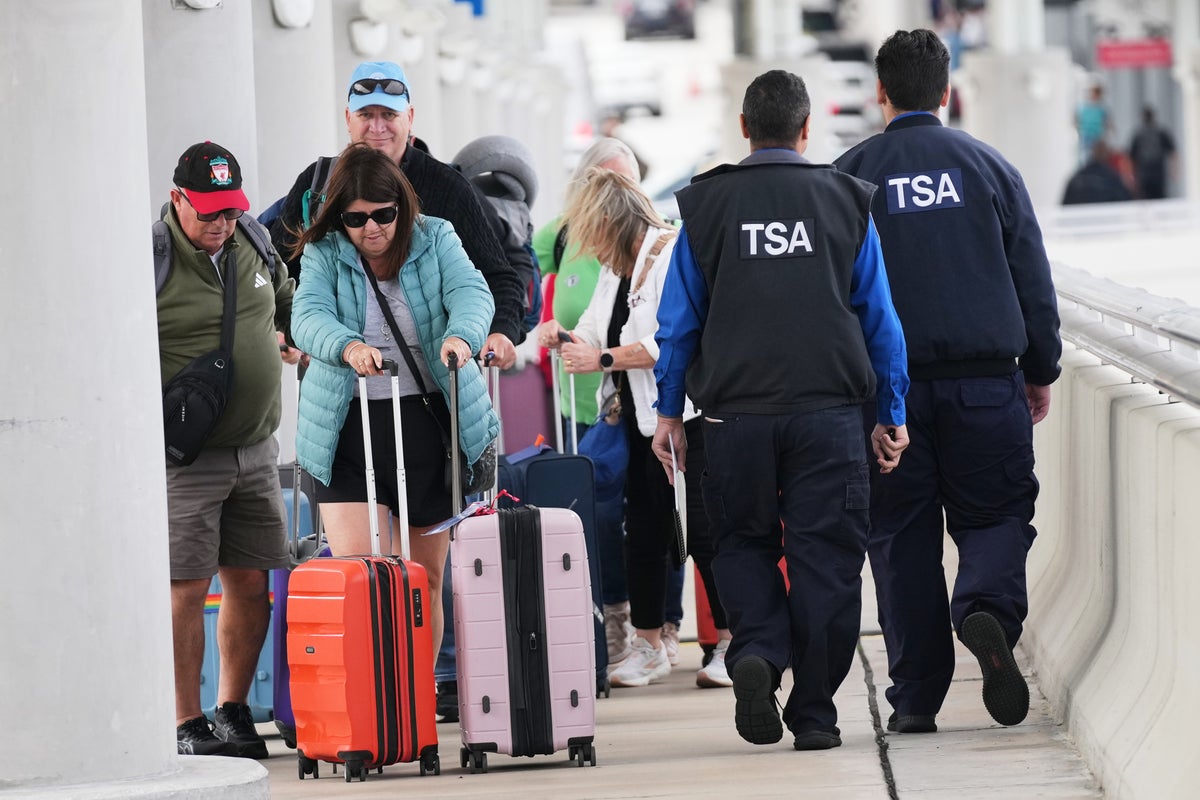
House committee discusses modernizing the TSA as Trump seeks to privatize airport screening A House committee has discussed the future of the Transportation Security Administration as the Trump administration lobbies to replace TSA officers with private contractors
independent · about 16 hours ago
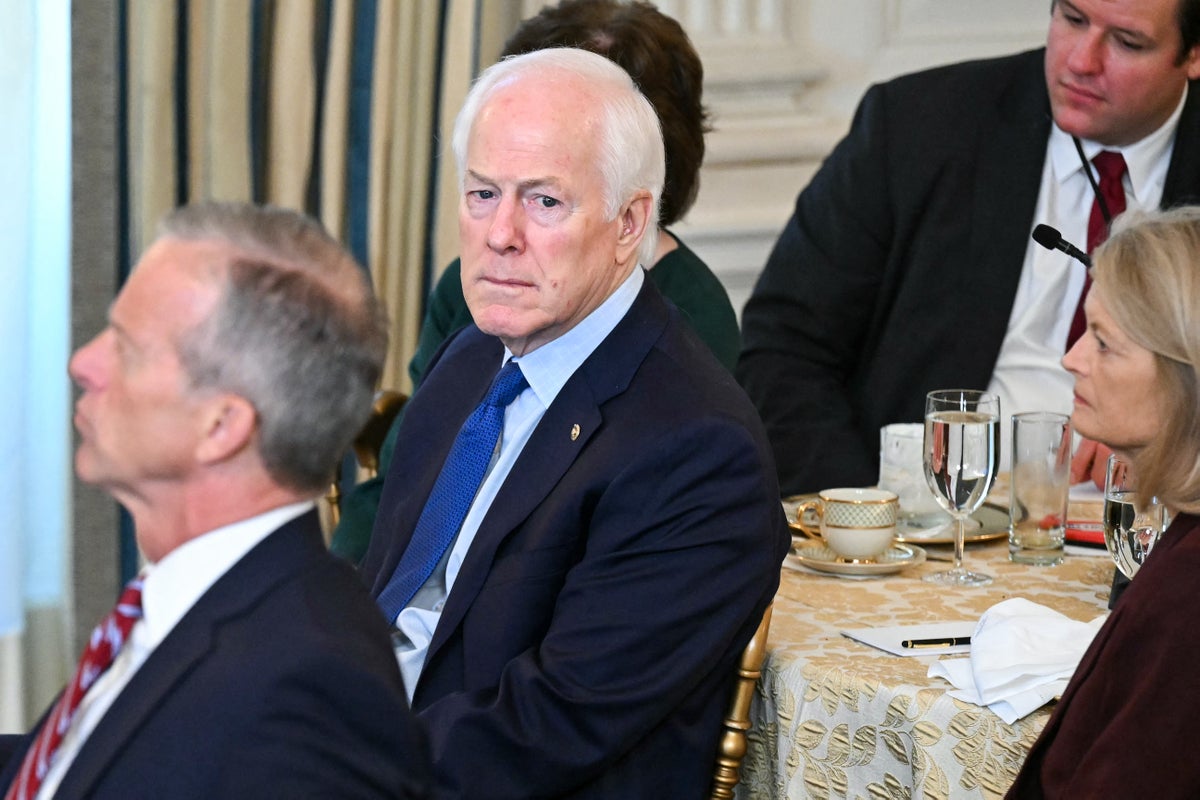
Trump got his revenge on disloyal Republicans in primaries. It leaves his party weaker in the midterms Trumps singular focus on exacting revenge already put one Senate seat at risk. Eric Garcia reveals how he now risks putting another one at risk
independent · about 17 hours ago
![Democrats move to shut down Trumps $1.8 billion anti-weaponization fund The top Democrat on the House Judiciary Committee is introducing legislation that would block a $1.8 billion fund to pay people who say they were the targets of politically-motivated prosecutions.Why it matters: Rep. Jamie Raskin (D-Md.) could garner GOP support for the effort, with Rep. Brian Fitzpatrick (R-Pa.) telling reporters on Wednesday he will try to kill the fund.Were going to write a letter to the [attorney general] to start, but were considering a legislative option, Fitzpatrick said.Raskin is eyeing a discharge petition as a backup option to force a vote on his measure if House Republican leadership blocks it from coming to the floor, a spokesperson confirmed to Axios.Driving the news: The bill, a copy of which was shared with Axios, stipulates that no Federal funds may be used to create or make payments to fund the Trump administrations Anti-Weaponization Fund.The fund is the result of a settlement between Trump and the IRS, reached after Trump sued the agency over the leaking of his tax returns.The fund would allow anyone who has accused the federal government of politically motivated lawfare — such as Jan. 6 defendants — to seek compensation.Two law enforcement officers who were at the Capitol on Jan. 6, 2021, have sued to dissolve it.A Justice Department spokesperson did not immediately respond to a request for comment.](https://images.axios.com/xJ2d0TuDpvLHrhWvewe9DVK1N9Y=/0x367:6530x4040/1366x768/2026/05/20/1779303635110.jpeg)
Democrats move to shut down Trumps $1.8 billion anti-weaponization fund The top Democrat on the House Judiciary Committee is introducing legislation that would block a $1.8 billion fund to pay people who say they were the targets of politically-motivated prosecutions.Why it matters: Rep. Jamie Raskin (D-Md.) could garner GOP support for the effort, with Rep. Brian Fitzpatrick (R-Pa.) telling reporters on Wednesday he will try to kill the fund.Were going to write a letter to the [attorney general] to start, but were considering a legislative option, Fitzpatrick said.Raskin is eyeing a discharge petition as a backup option to force a vote on his measure if House Republican leadership blocks it from coming to the floor, a spokesperson confirmed to Axios.Driving the news: The bill, a copy of which was shared with Axios, stipulates that no Federal funds may be used to create or make payments to fund the Trump administrations Anti-Weaponization Fund.The fund is the result of a settlement between Trump and the IRS, reached after Trump sued the agency over the leaking of his tax returns.The fund would allow anyone who has accused the federal government of politically motivated lawfare — such as Jan. 6 defendants — to seek compensation.Two law enforcement officers who were at the Capitol on Jan. 6, 2021, have sued to dissolve it.A Justice Department spokesperson did not immediately respond to a request for comment.
axios · about 17 hours ago
Police sue to block Jan 6 rioters from payouts via Trumps Anti-Weaponization Fund Two police officers who defended the US Capitol from a pro-Trump mob on January 6, 2021, filed suit Wednesday to block those who took part in the violence from receiving payouts from a new fund totaling nearly $1.8 billion. The fund, destined for Trump allies claiming political prosecution, was created this week in exchange for President Donald Trump dropping his $10 billion lawsuit against the IRS.
france24 · about 17 hours ago