 Monday, May 18Monday, May 18
Cuba has reportedly acquired over 300 military drones from Iran and Russia since 2023, storing them in strategic locations across the island. According to classified U.S. intelligence shared with *Axios*, Cuban officials have begun discussing potential drone attacks targeting the U.S. naval base at Guantanamo Bay, American military vessels, and possibly Key West, Florida—located just 90 miles from Havana. These discussions are framed as contingency plans amid deteriorating U.S.-Cuba relations rather than an imminent threat .
The drones vary in capability, with Cuban officials recently requesting additional hardware from Russia. U.S. intelligence intercepts suggest Cuba is studying Iran’s drone warfare tactics, particularly its resistance to U.S. countermeasures. The presence of Iranian military advisers in Havana, alongside Russian and Chinese signals intelligence (SIGINT) facilities on the island, has heightened U.S. concerns. Defense Secretary Pete Hegseth described Cuba’s proximity to U.S. shores as "highly problematic" during a congressional hearing .
The potential drone threat is compounded by Cuba’s alleged role in supporting Russia’s war in Ukraine, with an estimated 5,000 Cuban soldiers deployed to fight alongside Russian forces—some of whom have reportedly briefed Cuban military leaders on drone effectiveness. Russia has paid Cuba approximately $25,000 per soldier for their deployment, further deepening military ties between the two nations .
U.S. officials, including CIA Director John Ratcliffe, have warned Cuba against hostile actions, framing the drone program as a pretext for potential U.S. military responses. Ratcliffe’s recent visit to Cuba included demands to end the regime’s support for adversarial activities in the Western Hemisphere. Meanwhile, the U.S. is preparing to unseal an indictment against Raúl Castro for the 1996 downing of a Brothers to the Rescue plane, with additional sanctions against Cuba expected .
While U.S. intelligence does not believe Cuba poses an imminent threat, the discussions around drone warfare reflect escalating tensions. Officials emphasize Cuba’s lack of conventional military capacity—such as operational fighter jets—but stress the risks posed by its proximity to U.S. territory and its alliances with Iran, Russia, and China . The situation is further strained by Cuba’s humanitarian and energy crisis, exacerbated by a de facto U.S. blockade on oil imports .

India jewellery exports fall 9.07 per cent in April to Rs 20.82 crore amid geopolitical tensions NEW DELHI: Indias exports of jewellery fell in April 9.07 per cent amid geopolitical tensions in Middle East…
europesays.com · about 5 hours ago

Cuba stockpiles drones and creates list of American targets amid U.S. blockade and takeover threats, report says Cuba is in the midst of a humanitarian and energy crisis after months of a de facto U.S. blockade on oil imports
independent · about 5 hours ago
Qatar gas exports halted as Strait of Hormuz remains closed amid conflict ## Market Snapshot The market for Strait of Hormuz traffic returning to normal by July 31 is currently…
europesays.com · about 6 hours ago
Indias Trade Gap Widens as Geopolitics Push Oil Prices Higher Geopolitical tensions in West Asia, driving up crude oil prices, are not just an external shock for India.…
europesays.com · about 7 hours ago
JUST IN: 🇨🇺 Cuba acquires more than 300 military drones and begins discussing plans to attack Guantanamo Bay and US military vessels, Axios reports. @BRICSNews
telegram bot · about 10 hours ago
#ME Traffic in the Strait of Hormuz is increasing as Iran allows vessels to pass if they coordinate with the Iranian military, while excluding those connected to its adversaries. Subscribe to @OSINTdefender Chat room
telegram bot · about 10 hours ago
🇨🇺❌🇺🇸- According to classified intelligence shared with Axios, Cuba has acquired more than 300 drones and has begun internally discussing plans to potentially use them against the U.S. base at Guantanamo Bay, American naval vessels, and possibly Key West, Florida. ➡️ Since 2023, the variously capable drones have been purchased from Iran and Russia and are kept in key locations throughout the island. Cuban officials have asked Russia for more drones and military hardware in the last month. ➡️ U.S. officials also note the presence of Iranian military advisers in Havana, as well as Russian and Chinese signals intelligence facilities on the island. ➡️ Up to 5,000 Cuban soldiers are estimated to have fought for Russia in Ukraine, with Russia paying approximately $25,000 per soldier deployed. Some of those soldiers are believed to have briefed Cuban military leaders on the effectiveness of drone warfare. @GeoPWatch
telegram bot · about 11 hours ago
JUST IN - Cuba acquires over 300 military drones and is reportedly discussing plans to use them to attack U.S. base in Guantanamo Bay, U.S. military vessels and possibly Key West. @disclosetv
telegram bot · about 12 hours ago
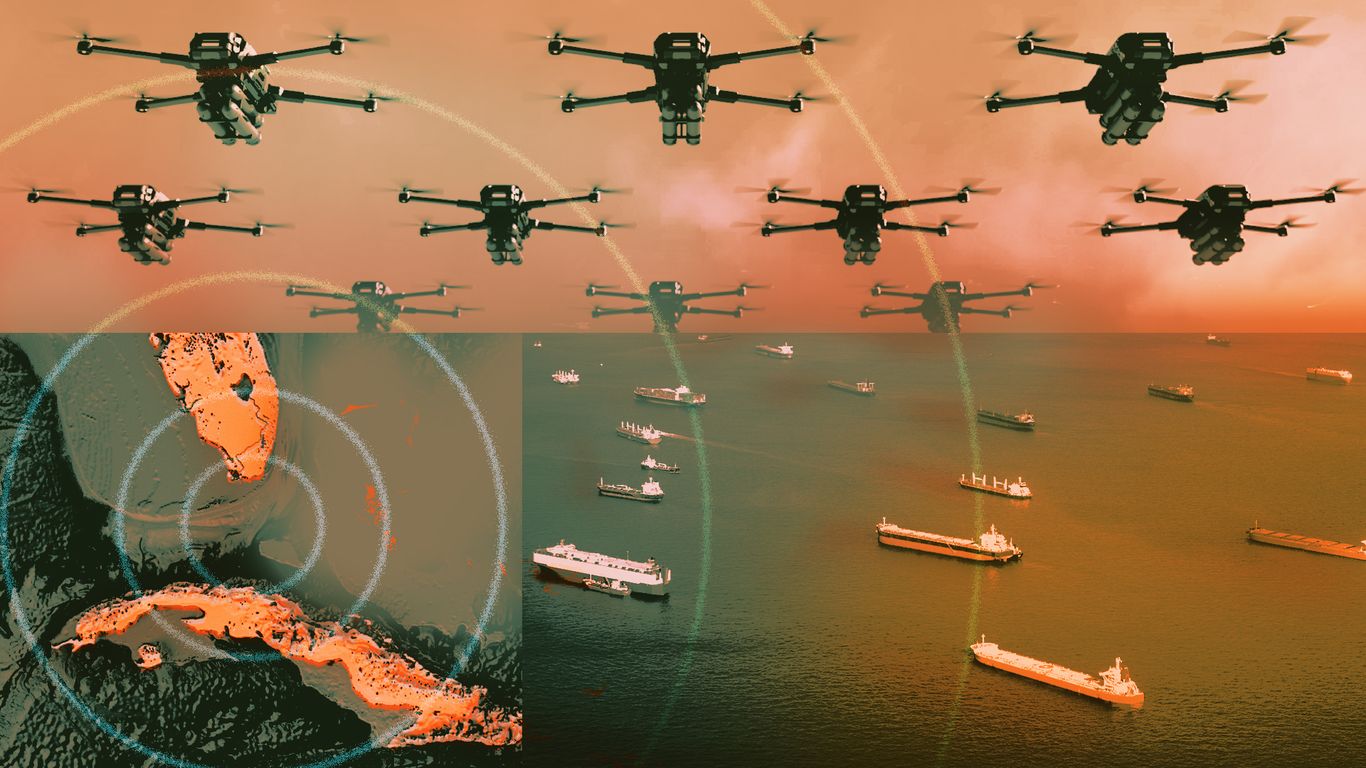
Exclusive: U.S. eyes attack-drone threat from Cuba Cuba has acquired more than 300 military drones and recently began discussing plans to use them to attack the U.S. base at Guantanamo Bay, U.S. military vessels and possibly Key West, Fla., 90 miles north of Havana, according to classified intelligence shared with Axios.Why it matters: The intelligence — which could become a pretext for U.S. military action — shows the degree to which the Trump administration sees Cuba as a threat because of developments in drone warfare and the presence of Iranian military advisers in Havana, a senior U.S. official said.When we think about those types of technologies being that close, and a range of bad actors from terror groups to drug cartels to Iranians to the Russians, its concerning, the official said.Its a growing threat.Driving the news: CIA Director John Ratcliffe traveled to Cuba on Thursday and bluntly warned officials there against engaging in hostilities. He also urged them to scrap their totalitarian government to end crippling U.S. sanctions, a CIA official told Axios.Director Ratcliffe made clear that Cuba can no longer serve as a platform for adversaries to advance hostile agendas in our hemisphere, that official said.The Western Hemisphere cannot be our adversaries playground.On Wednesday, the Department of Justice plans to unseal an indictment of Cubas de facto leader, Raul Castro, for allegedly ordering the 1996 downing of a plane flown by a Miami-based aid group called Brothers to the Rescue.More sanctions against the island nation could be announced this week.A spokesperson for Cuba could not be reached Saturday for comment.Zoom in: Cuba has been acquiring attack drones of varying capabilities from Russia and Iran since 2023, and has stashed them in strategic locations across the island, U.S. officials say.Within the past month, Cuban officials have sought more drones and military equipment from Russia, the senior U.S. official said. The official cited intelligence intercepts that also indicated Cuban intelligence officials are trying to learn about how Iran has resisted us.Russia and China have high-tech espionage facilities for collecting signals intelligence (called SIGINT) in Cuba.Weve long been concerned that a foreign adversary using that kind of location that close to our shores is highly problematic, Defense Secretary Pete Hegseth told Rep. Mario Diaz-Balart, a Miami Republican, during a congressional hearing Tuesday. In response to Diaz-Balart, Hegseth also confirmed Castros complicity in ordering the Brothers to the Rescue shootdown.The big picture: The concerns about drone attacks on U.S. forces have been heightened by Irans use of the unmanned aircraft in its response to the U.S. attacks that began Feb. 28. Irans drones have damaged American bases in the Middle East, helped close the Strait of Hormuz and menaced neighboring Persian Gulf states, along with missile attacks.U.S. officials estimate that as many as 5,000 Cuban soldiers have fought for Russia in its invasion of Ukraine, and that some informed the islands military leaders about the effectiveness of drone warfare. Russia has paid Cubas government about $25,000 for each soldier deployed in Ukraine, U.S. officials estimate.Theyre part of the Putin meat grinder. Theyre learning about Iranian tactics. Its something we have to plan for, the senior official said.Zoom out: The Castro regime is closer than ever to falling since it seized power in the 1959 revolution that brought it into conflict with the U.S., thanks largely to U.S. sanctions and the Marxist regimes financial mismanagement.Cuba is classified as a state sponsor of terror by the U.S. and its considered the head of the snake, exporting revolutionary Marxism throughout Latin America.One former Cuban ally, Venezuelas Nicolas Maduro, was removed from power in a Jan. 3 raid by the U.S. Since Maduros ouster, the U.S. has begun normalizing relations with Venezuela — and learned more about Cubas drone program.Reality check: U.S. officials dont believe Cuba is an imminent threat, or actively planning to attack American interests. But U.S intelligence indicates the islands military officials have been discussing drone warfare plans in case hostilities erupt as relations with the U.S. continue to deteriorate.Cuba doesnt have the ability to close the Straits of Florida in the same way Iran has brought shipping to a standstill in the Strait of Hormuz. U.S. officials also dont believe Cuba is as much of a military threat as it was during the 1962 Cuban Missile CrisisNo ones worried about fighter jets from Cuba. Its not even clear they have one that can fly, the senior U.S. official said.But its worth noting how close they are — 90 miles, the official added. Its not a reality we are comfortable with.
axios · about 12 hours ago
Iran Launches Hormuz Safe Insurance Platform as Maritime Tensions Deepen in Strait of Hormuz Tehrans new crypto-based shipping insurance initiative emerges amid U.S. naval blockade, growing sanctions pressure, and fears over global…
europesays.com · about 14 hours ago
Cuba faces an energy crisis as the U. S. continues to block oil shipments What we know: TAMPA, Fla – Cubas economy is crippled, and its infrastructure has been crumbling. The nation…
europesays.com · about 15 hours ago
Al Jazeera reports from Strait of Hormuz on Irans plan to manage shipping Al Jazeeras Tohid Asadi reports from the strait and explains Tehrans newest plan to manage shipping.
aljazeera · about 15 hours ago