 Wednesday, May 20Wednesday, May 20
Hungary’s new Prime Minister, Péter Magyar, has prioritized strengthening ties with Poland and reviving the Visegrád Group (V4) as a key foreign policy objective. During his first official foreign trip to Poland on 20 May 2026, Magyar met with Polish Prime Minister Donald Tusk and President Karol Nawrocki in Warsaw, signaling a strategic reset in bilateral relations after years of tension under Viktor Orbán’s government. Magyar described Poland as a "role model" for Hungary in areas such as restoring the rule of law, recovering frozen EU funds, and combating corruption, while Tusk reciprocated by praising Hungary’s return to European collaboration and offering support to reduce its dependence on Russian energy .
Magyar explicitly linked his visit to Poland with plans to revitalize the V4, proposing its expansion to include other Central and Southeast European countries, such as Romania. He suggested that the group could adopt a more flexible, issue-based approach to cooperation, aligning with other EU members as needed to regain influence in Brussels. The Hungarian PM also expressed hope for a V4 leaders’ summit in Budapest by the end of June, framing the bloc’s revival as a counterbalance to past divisions under Orbán .
The visit underscored a broader shift in Hungary’s foreign policy, with Magyar emphasizing Hungary’s commitment to being a "partner" to Poland, Slovakia, and the Czech Republic. Discussions with Polish officials covered economic cooperation, regional security, and energy independence, with Tusk pledging assistance in diversifying Hungary’s energy sources away from Russia. The symbolic choice of Poland for Magyar’s first trip—including a stop in Kraków—was widely interpreted as a deliberate move to distance Hungary from its previous pro-Kremlin stance and reassert its European orientation .
Separately, Magyar conditioned Hungary’s support for Ukraine’s EU accession on the protection of the Hungarian minority in Transcarpathia, calling it a "sine qua non" for progress. This stance reflects ongoing negotiations between Budapest and Kyiv to resolve a long-standing dispute over minority rights, which had previously led Hungary to veto Ukraine’s EU integration efforts. Reports indicate that both countries are now engaged in talks to address the issue, potentially unlocking Kyiv’s accession path .

Péter Magyar vrea România în Grupul de la Visegrad: planul surpriză al premierului maghiar care poate schimba harta Europei Premierul ungar Péter Magyar a declarat miercuri, 20 mai, la Varșovia, că își dorește relansarea Grupului de la Visegrad (V4) și extinderea acestuia prin includerea unor state din Europa Centrală și din Balcanii de Vest, inclusiv România.
adevarul · about 3 hours ago
Did you write that down? 700 settlements, not five big cities!-Tusk inspired by Magyars nationwide tour The head of the Polish government gave a special gift to the Hungarian PM, and Hungarian ministers are posting one after another about their talks with their Polish counterparts.
telex.hu · about 5 hours ago

Hungarian PMs First Foreign Trip to Poland Proves More Than Symbolic Reset Six weeks after his Tisza movement upended Hungarian politics, Peter Magyar arrived in Poland on his first official foreign trip – a visit carefully designed to signal both democratic realignment and regional ambition.
balkaninsight · about 7 hours ago
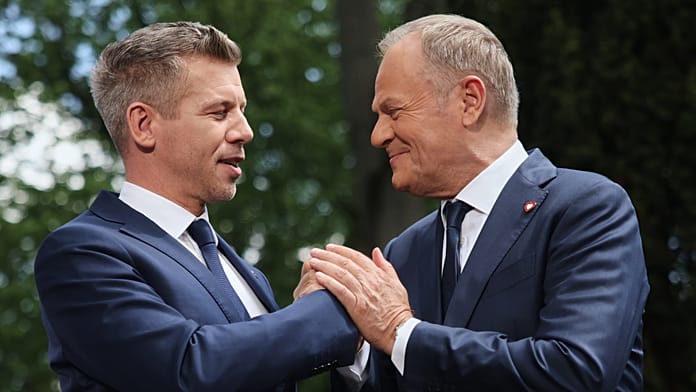
Visegrád group eyes revival with post-Orbán Hungary A revival of the Visegrád group is on the cards as Hungarys new PM Péter Magyar moves to reset relations with his neighbours. Whether the V4 can reclaim real clout in Brussels is another question — the bloc plans to align on issues case by case, pulling in other European countries as needed.
euronews · about 8 hours ago
À Varsovie, la visite de Peter Magyar signe le retour de la Hongrie dans la collaboration européenne Peter Magyar effectue sa première visite à létranger depuis son entrée en fonction et il a choisi de passer deux jours en Pologne pour resserrer les liens entre Varsovie et Budapest, après les seize ans de gouvernement de Viktor Orban. Après avoir visité Cracovie mardi 20 mai, il sest rendu mercredi à Varsovie en train pour rencontrer son homologue Donald Tusk et le président Karol Nawrocki. De quoi souligner le retour dune Hongrie résolument européenne.
rfi.fr · about 8 hours ago
Premierul Peter Magyar condiționează sprijinul pentru aderarea Ucrainei la UE de protejarea minorității din Transcarpatia: „O condiție sine qua non Prim-ministrul Ungariei, Peter Magyar, a declarat miercuri, 20 mai, la Varșovia, că progresul Ucrainei în procesul de aderare la Uniunea Europeană depinde de soluționarea situației drepturilor minorității maghiare din această țară.
adevarul · about 9 hours ago
Péter Magyar holds talks with Polish head of state on economic cooperation and regional security President Karol Nawrocki welcomed the new Hungarian prime minister following his meeting with PM Donald Tusk.
telex.hu · about 9 hours ago
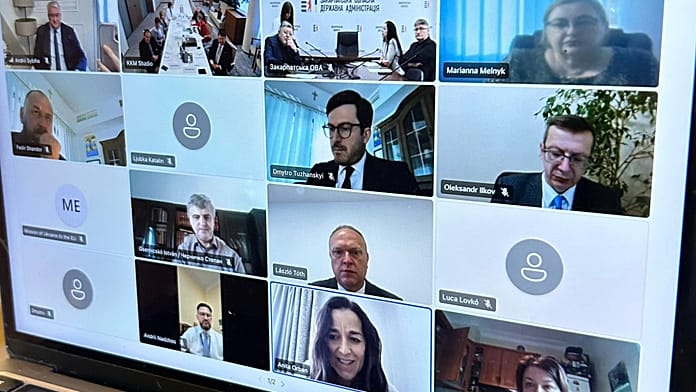
Ukraine and Hungary move to resolve deadlock over minority rights that has stalled Kyivs EU bid After years of difficult relations, Hungary and Ukraine are holding talks on the rights of the Hungarian minority in the war-torn country — a longstanding point of contention between the two countries and a major reason behind Budapests veto of Kyivs EU accession bid.
euronews · about 10 hours ago
Hungarian PM Magyar looks to revive — and expand — Visegrad group With pro-Kremlin Viktor Orbán out of the way, Hungary and Poland are seeking to rebuild Central Europes diplomatic heft.
politico.eu · about 10 hours ago

Hungarys Magyar praises Poland as role model on visit to Warsaw
news.yahoo.com · about 11 hours ago
Tusk hails Hungarys return to Europe as Magyar visits Poland on first foreign trip as PM Magyar said that his government can learn from Poland on restoring the rule of law, recovering frozen EU funds, and fighting corruption.
notes from poland · about 11 hours ago
Magyar: Hungary will be a partner to Poland, Slovakia, and the Czech Republic The Hungarian PM said it was no coincidence that he had chosen Poland for his first official visit, at his joint press conference with the Polish PM, and expressed his hope that the V4 leaders can meet in Budapest at the end of June. Tusk offered his assistance in helping Hungary become independent from Russian energy sources.
telex.hu · about 11 hours ago