
Volunteer rescuers dig for survivors as Venezuela quake death toll reaches 3,342
Story Timeline
3 months · 8 summary articles
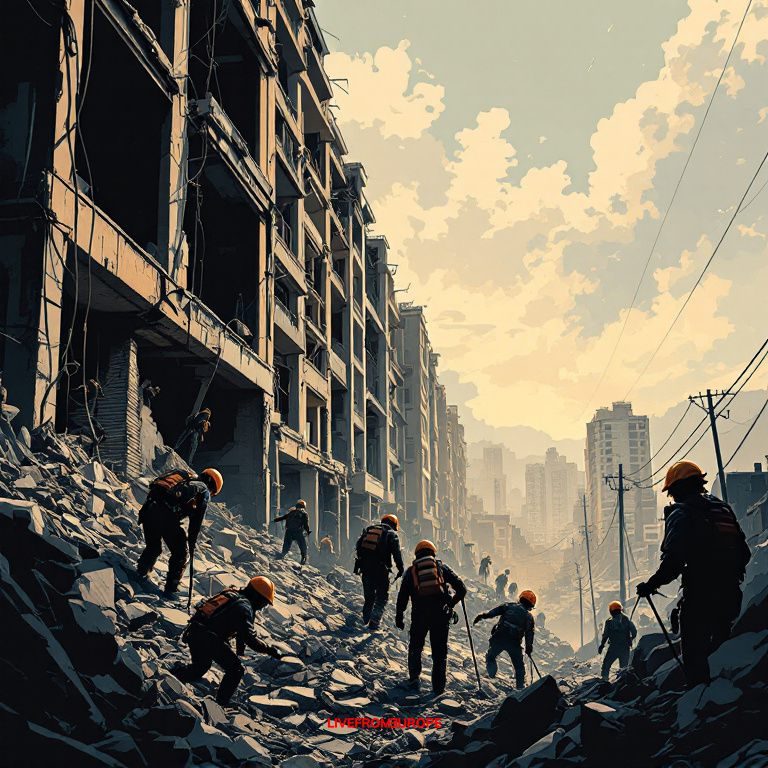
As dawn broke over Venezuela’s shattered northern coast on Monday, volunteer rescuers known as *topos*—or "moles"—dug deeper into the rubble of the collapsed Residencia Costa Brava apartment building in La Guaira, their bodies contorted as they crawled through narrow gaps in search of survivors. The death toll from the twin earthquakes that struck on 24 June has now reached 3,342, with 16,740 injured and 17,345 people homeless, according to Venezuela’s Communication and Information Ministry . Yet the true scale of the disaster may be far worse: the United Nations estimates up to 50,000 people remain missing, buried beneath the wreckage of nearly 200 collapsed buildings .
The volunteer *topos*—many of them unpaid and risking their lives—have become the face of Venezuela’s fractured response. Darwin Rodríguez, a 32-year-old motorbike mechanic nicknamed *Culebrita* ("Little Snake") for his ability to slip into tight spaces, worked through the night alongside Esnaider Meléndez, a 35-year-old father who left his wife and four children in Caracas to join the search. "This isn’t about money. It’s about saving lives," Meléndez said . Their efforts have pulled 6,462 survivors from the ruins, but hope is fading. Adolfo Guedes, whose daughter is feared trapped under the Costa Brava rubble, wept as he watched the volunteers prepare to enter the wreckage. "I want you to tell this story so the world knows what we Venezuelans are made of, brother," he pleaded .
The international community has scrambled to assist, with 4,088 foreign rescue workers deployed alongside 29,567 Venezuelan personnel and 27,482 volunteers . Portugal, one of the hardest-hit nations in terms of foreign casualties, has confirmed 96 Portuguese and Portuguese-Venezuelan deaths, including 17 children, with 60 still missing . The Portuguese rescue mission is based in Catia la Mar, La Guaira, a coastal hub with a large Portuguese diaspora.
Yet criticism of Venezuela’s government response persists. Acting President Delcy Rodríguez—who assumed power after Nicolás Maduro’s ousting in January—has faced public backlash, with residents in some neighborhoods booing her during damage assessments . Experts warn that years of economic crisis have gutted public health and emergency systems, leaving the armed forces "prepared to respond to riots but not the main threat of natural disasters," said Ángel Rangel Sánchez, a former head of Venezuela’s civil defense agency . The United Nations has dispatched 10,000 body bags and estimated direct damages at $6.7 billion, with broader economic disruptions likely to compound the crisis .
As rescue teams transition from search-and-rescue to recovery, the government has distributed 9,585 metric tons of food and 669,008 liters of water, while establishing 79 temporary camps for the displaced . Yet the psychological toll is incalculable. In La Guaira, lines of graves have been dug for more than 150 unidentified victims, a stark reminder of the disaster’s lingering shadow . With 995 aftershocks recorded since the initial tremors—measuring 7.2 and 7.5 magnitude—fears of further collapses and landslides persist . For the *topos* and the families they serve, the work is no longer about hope, but about closure.
Follow us for live European news
- 2
- 2
- 1
- 1
- 1
- 1
3 further sources not geolocated
Articles

You need to be brave: Venezuelas moles search for earthquake victims
bluesky_The Guardian · 3 months ago

Iberia retoma voos regulares para a Venezuela Os voos de regresso a Madrid farão uma escala técnica em Santo Domingo, na República Dominicana
observador · 3 months ago

Une cité maya inexplorée découverte dans le sud du Mexique Au terme dune expédition à travers la jungle quasiment impénétrable de lÉtat de Campeche, des chercheurs ont découvert une cité maya dont lexistence navait jusquici jamais été confirmée. Intacte et dépourvue de traces de pillage, elle pourrait livrer de précieux indices sur cette civilisation.
courrier international · 3 months ago

Spanien erwartet erstmals 100 Millionen Touristen aus dem Ausland Spanien rechnet heuer erstmals mit 100 Millionen Gästen aus dem Ausland. Im Vorjahr wurde die Marke mit 96,8 Millionen Touristinnen und Touristen nur knapp verfehlt.
die presse · 3 months ago

The earthquakes have laid bare many Venezuelans dissatisfaction with their government.
bluesky_Foreign Policy · 3 months ago

Sobe para 96 número de portugueses e lusodescendentes mortos Os sismos registados na Venezuela em 24 de junho causaram pelo menos 3.342 mortos e 16.740 feridos
observador · 3 months ago
Venezuela quake death toll climbs to 3,342, over 16,700 injured Venezuelas Communication and Information Ministry said Sunday the death toll from powerful twin earthquakes that struck northern Venezuela last month has climbed to 3,342 with more than 16,700 people injured, as international rescue teams join ongoing relief efforts amid hundreds of aftershocks.
yenisafak · 3 months ago
🇻🇪 ⚠️ Graves dug for more than 150 unidentified quake victims in Venezuela Lines of graves are prepared for unidentified victims of the twin earthquakes that struck Venezuela on June 24. At least 3,300 people are confirmed to have died and more than 16,700 were injured as a result of the quakes
bluesky_AFP English · 3 months ago

Porque é que vivem tantos portugueses na Venezuela? Cerca de meio milhão de portugueses vivem na Venezuela, sobretudo madeirenses. A Rádio Observador foi descobrir porque surge esta comunidade.
observador · 3 months ago
Τα 8 πρωτοφανή γεωδυναμικά φαινόμενα των δίδυμων σεισμών στην Βενεζουέλα
protothema · 3 months ago
Dammbruch nach Starkregen in Südchina
orf.at · 3 months ago
Taifun Maysak: Heftige Überschwemmungen in China und Indien Im Südwesten Chinas mussten Hunderte Menschen vor dem Taifun Maysak in Sicherheit gebracht werden. Im westindischen Bundesstaat Maharashtra leiden die Menschen unter schweren Monsunregenfluten.
faz · 3 months ago
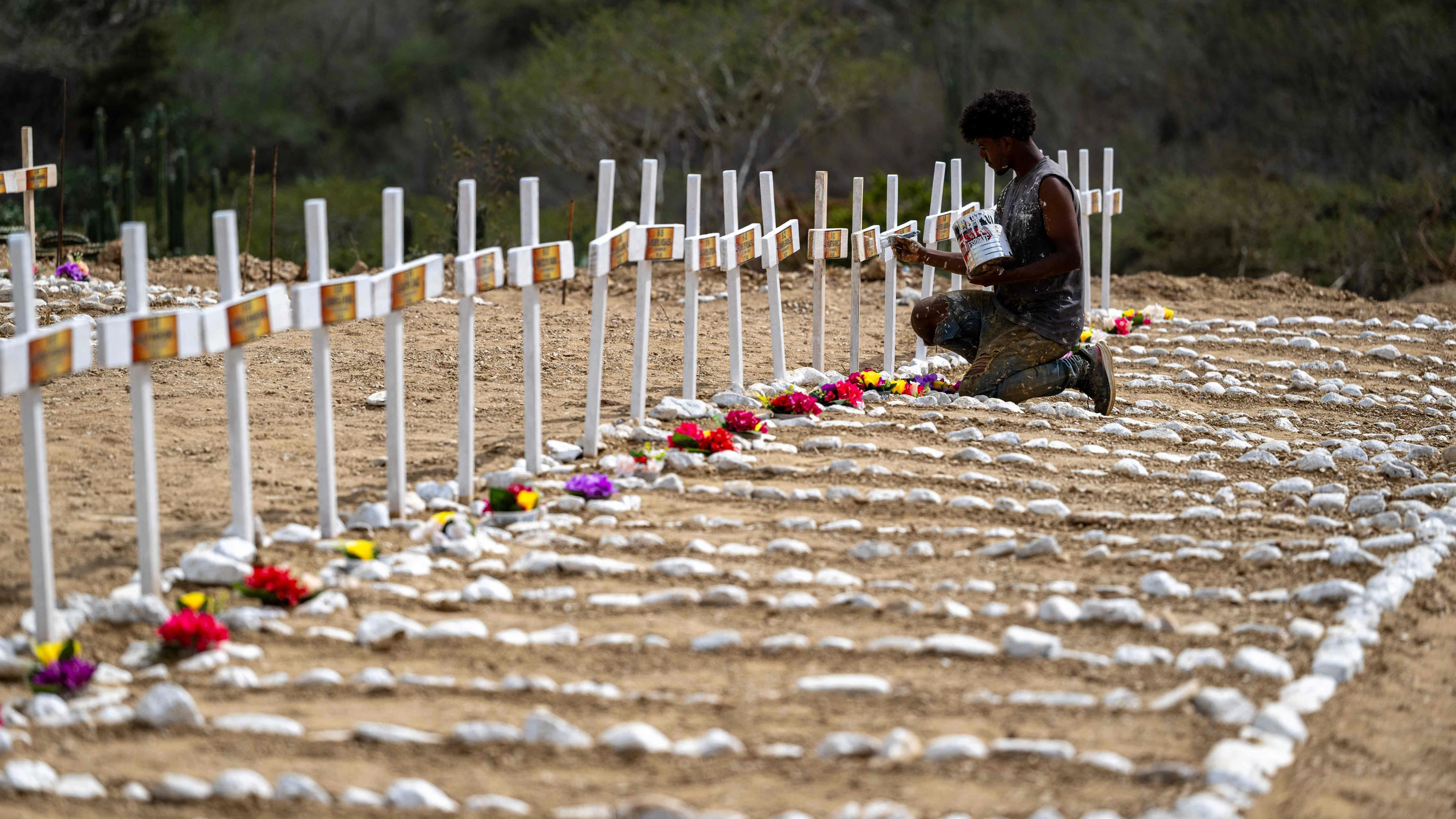
Erdbeben in Venezuela: Die Zahl der Toten steigt immer weiter In Venezuela gibt es keine Hoffnung mehr, weitere Überlebende zu finden. Die Räumungsarbeiten beginnen. Und die Vereinten Nationen gehen von bis zu 50.000 Vermissten aus.
faz · 3 months ago
Venezuelans mobilise to deal with earthquakes consequences: FRANCE 24 reports As more than ten days have passed since Venezuela was struck by twin earthquakes, the death toll remains uncertain, with an official balance of at least 3,342 people killed. On the northern coastal part of the country, the hardest-hit region, survivors and volunteers from across the country are taking matters into their own hands : treating the injured, finding shelter, searching for the missing. FRANCE 24s Pascale Mariani and Maxime Pluvinet spoke to residents
france24 · 3 months ago
Earthquake damage threatens Venezuelas beach tourism centers The earthquakes that hit Venezuela in late June have devastated seaside towns where tourism has been a vital economic lifeline for an already struggling population. Also, tanker traffic picks up through the Strait of Hormuz, and Europe seeks to convince the US that its boosting defence spending.
france24 · 3 months ago