
TRENDING — Ukraine rejects German EU associate membership proposal, demands full accession
Ukraine rejects German proposal for "associate EU membership," insisting on full accession process
Ukrainian President Volodymyr Zelenskyy has formally dismissed Germany’s suggestion to grant Ukraine "associate membership" in the European Union, arguing the status would leave Kyiv without a voice in the bloc. In a letter to EU leaders, Zelenskyy called the proposal "incorrect" and reiterated Ukraine’s demand to begin formal accession negotiations immediately, as reported by *Adevărul* . His stance aligns with a broader push: in a separate statement, Zelenskyy declared the time "right" for Ukraine to start the EU membership process, framing the move as critical amid ongoing battlefield struggles with Russia .
The dispute underscores tensions within the EU over Ukraine’s integration timeline. While Germany’s proposal aimed to offer Kyiv a symbolic foothold in the bloc, Zelenskyy’s rejection reflects fears of a two-tier Europe, where Ukraine would remain a second-class member. The debate comes as Lithuania’s foreign minister warns that the EU’s recent loan deal for Ukraine—backed by €50 billion in joint borrowing—has merely postponed a looming fight over whether to seize frozen Russian assets to fund Kyiv’s war effort .
Military and diplomatic coordination intensifies on NATO’s eastern flank Romania and Lithuania are deepening military cooperation to bolster NATO’s eastern defenses, with Defense Minister Radu Miruță announcing joint efforts to strengthen air defense and regional coordination after talks with his Lithuanian counterpart, Robertas Kaunas. Miruță framed the collaboration as a "daily, real effort" to counter Russian aggression, emphasizing the need for sustained investment in the alliance’s eastern flank . Meanwhile, Sweden’s defense minister, Pål Jonson, endorsed Ukraine’s NATO membership bid, arguing Kyiv’s battle-tested army and expanding defense industry would strengthen the alliance—even as opposition from some members, including Hungary, persists .
UK-EU relations stall as aid cuts deepen Ukraine’s vulnerability The UK’s proposal for a single-market-in-goods deal with the EU has been rejected, further straining post-Brexit relations as Prime Minister Rishi Sunak seeks to "put Britain at the heart of Europe" . The setback coincides with warnings that cuts to foreign aid by the UK, Germany, and France could contribute to over 11.5 million preventable deaths by 2030, with UK development spending projected to fall 45% between 2020 and 2026. The reductions threaten to undermine Ukraine’s humanitarian and reconstruction efforts, as Europe’s leading donors scale back support .
Background and outlook Zelenskyy’s push for full EU membership reflects Ukraine’s strategic pivot toward Western institutions as a bulwark against Russian dominance. The EU’s internal divisions—exemplified by Germany’s associate membership proposal—highlight the bloc’s struggle to balance enlargement with institutional cohesion. Meanwhile, NATO’s eastern members are accelerating defense integration, with Romania’s Iernut gas power plant project, delayed for a decade, now declared a "national emergency" to reduce energy dependence on Russia . As the EU and NATO prepare for critical summits, the interplay between Ukraine’s accession ambitions, frozen asset debates, and transatlantic defense commitments will shape Europe’s security architecture for years to come.
> Background: **Czechia tightens refugee rules as Germany proposes EU associate status for Ukraine.** — *2 days ago*
Articles

Radu Miruță, după discuțiile cu omologul lituanian: „Flancul Estic este un efort real, zilnic România și Lituania își coordonează eforturile pentru întărirea Flancului Estic, a transmis ministrul Apărării Radu Miruță, după discuțiile cu omologul său, Robertas Kaunas, privind cooperarea militară și apărarea aeriană.
adevarul · 5 days ago
Lithuania calls for frozen Russian assets to return to Ukraine funding debate Lithuanias foreign minister says the EU loan deal only postponed the fight over whether to tap frozen Russian assets to fund Ukraine and pressure Moscow.
politico.eu · 5 days ago
EU reportedly nixes UK pitch for single market in goods The proposal comes as Britains embattled prime minister has vowed to put his country at the heart of Europe again.
politico.eu · 5 days ago
Estonian game studio ZA/UM releases new computer game Zero Parades Estonian studio ZA/UM released a new video game this week, Zero Parades: For Dead Spies. The studios 2019 hit Disco Elysium was also created by the same team.
news.err · 5 days ago
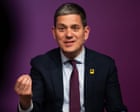
UK needs national consensus over rejoining EU, David Miliband says Ex-foreign secretary urges reset at higher dosage after officials revealed to have pitched single market for goodsThe UK needs a national consensus about rejoining the European Union, David Miliband has said, in response to revelations that the UK government pitched the creation of a single market for goods with the EU to the bloc.The former foreign secretary, who is now president of the International Rescue Committee, said he thought the UK needed a reset of its relations with the EU at a much higher dosage than the government was planning. Continue reading...
theguardian · 5 days ago
Zelenski respinge propunerea Germaniei privind statutul de „membru asociat al Ucrainei în UE: „Ar fi incorect să rămânem fără voce Președintele ucrainean Volodimir Zelenski afirmă, într-o scrisoare transmisă liderilor Uniunii Europene, că propunerea Germaniei de a acorda Ucrainei statutul de „membru asociat al UE este „incorectă, întrucât ar lăsa Kievul fără voce în cadrul blocului comunitar.
adevarul · 5 days ago
Zelenskyy says time is right for Ukraine to start process of joining EU His comments come as both Kyiv and Moscow try to advance their interests on the battlefield.
aljazeera · 5 days ago
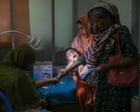
UK, German and French aid cuts will take devastating toll on most vulnerable, says study As Europes leading donor countries slash budgets, the result could be more than 11.5m preventable deaths, report suggestsCuts to foreign aid budgets by the UK, France and Germany could contribute to more than 11.5 million preventable deaths by the end of the decade, according to a new report, which warns that Europe is abandoning its role as a pillar of global health and development.Three separate studies within the report reveal the extent to which the nations have slashed their foreign aid budgets, and illustrate the impact worldwide. UK official development assistance (ODA) spending is projected to fall by 45 between 2020 and 2026, Germanys by 37 between 2023 and 2026, and Frances by 30 over the same period, according to the research.This report was a collaboration with European newspapers El Pais and Le Monde Continue reading...
theguardian · 5 days ago
Sweden backs Ukraines path to NATO, defense minister says Swedens Defense Minister Pål Jonson said Kyivs battle-tested army and fast-growing defense industry would strengthen the alliance, even as some NATO members remain opposed.
politico.eu · 5 days ago
Lovitură în energie: centrala de la Iernut, proiect blocat timp de 10 ani, devine urgență națională. Bolojan anunță că Romgaz preia finalizarea lucrărilor Premierul interimar Ilie Bolojan a anunțat aprobarea, în ședința de Guvern a memorandumului privind finalizarea centralei pe gaz de la Iernut, un proiect energetic întârziat de peste un deceniu și considerat acum „de extremă urgență.
adevarul · 5 days ago
Magyar to visit Brussels next week to discuss unfreezing funds for Hungary Hungarian Foreign Minister Anita Orbán said several days of talks with Brussels over the frozen funds had already taken place at expert level in recent days.
politico.eu · 5 days ago
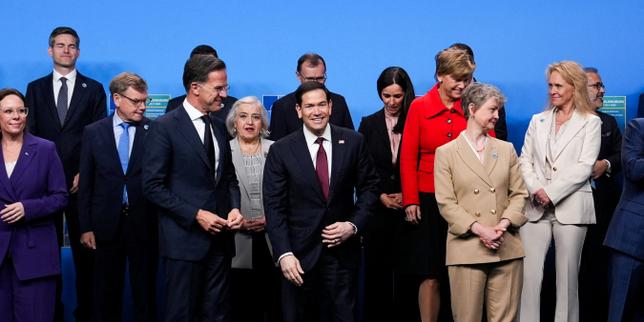
Europe seeks to defuse Trump criticism ahead of NATO summit in Ankara Disoriented by a flurry of announcements regarding the stationing of US troops on the continent, European foreign ministers sought to convince Marco Rubio of their efforts to take greater responsibility for collective defense and to help reopen the Strait of Hormuz.
le monde · 5 days ago