 Sunday, June 21Sunday, June 21
6 hours · 2 summary articles
French police uncover lost Picasso in drug raid: theft and money laundering probe launched
French police uncover unknown Picasso painting during drugs raid
French police conducting a drugs raid in a Paris suburb on Saturday made an extraordinary discovery: a long-lost painting by Pablo Picasso, recovered during an investigation that has now expanded to include charges of theft and money laundering. The canvas, confirmed as an authentic work by the Spanish master, was found in a private residence in Clichy-sous-Bois, a northeastern district of the capital, during an operation targeting suspected narcotics trafficking.
The breakthrough came on Friday, 20 June 2026, when officers executed a search warrant as part of an ongoing drugs case. Instead of the expected contraband, they uncovered the unsigned but authenticated Picasso, which experts believe dates from the artist’s Rose or early Cubist period. A preliminary assessment by the French Ministry of Culture’s art crime unit concluded the work is genuine, though its provenance remains under scrutiny. Investigators have opened a formal inquiry into possible theft and the laundering of cultural property, with detectives tracing its chain of custody back several decades.
The discovery has sent shockwaves through France’s art world and law enforcement circles. Interior Minister Gérald Darmanin, speaking to reporters in Paris on Sunday, called the find “a remarkable chapter in our fight against organised crime and the illicit trafficking of cultural goods.” He confirmed that the painting will be held in secure custody at the Louvre while investigators pursue leads, including whether it was smuggled into France during the 20th century or removed from a private collection under suspicious circumstances.
The raid in Clichy-sous-Bois was part of a broader anti-narcotics operation that has already led to multiple arrests, including two individuals detained on suspicion of drug trafficking and money laundering. Police sources said the Picasso was found hidden behind a false wall in a bedroom, wrapped in protective plastic and accompanied by forged export documents. Forensic teams are now examining the materials and digital traces to establish how long the painting had been in the residence and who may have handled it.
The case coincides with a separate government initiative announced on Friday to introduce unannounced drug testing for high-ranking civil servants and ministers. The policy, part of a 50-point national strategy to curb drug trafficking and abuse, was framed as a preventive measure to protect public institutions from infiltration by organised crime. Critics, however, have questioned its effectiveness and potential for abuse, with opposition lawmakers calling it a “symbolic gesture” that diverts attention from deeper structural issues.
Meanwhile, the Picasso recovery has renewed calls for stricter controls on private art collections in France. Culture Minister Rachida Dati told *Le Figaro* on Sunday that the government is reviewing legislation to require mandatory registration of high-value works held in private hands, a move aimed at closing loopholes exploited by traffickers. The ministry is also expected to convene an emergency meeting with Interpol’s art crime unit to coordinate a Europe-wide search for any other missing Picassos.

"Utilisés dans un cadre médical, les psychédéliques ont un potentiel thérapeutique immense Cest une première en Belgique francophone. Avec son livre événement, la neuropsychiatre Caroline Depuydt innove en explorant le potentiel des thérapies assistées par psychédéliques (psilocybine, LSD, ayahuasca, mescaline…) dans le traitement de la dépression, des traumatismes ou encore des addictions. De quoi redonner de lespoir à ceux qui nen ont plus. ...
la libre · about 3 hours ago
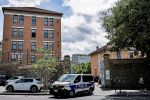
Polizei findet bei Drogenrazzia in Pariser Vorort Picasso-Gemälde Nach dem überraschenden Fund wurden Ermittlungen wegen Diebstahls und Hehlerei eingeleitet. Das Gemälde wurde als echter Picasso bestätigt
der standard · about 3 hours ago
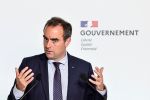
Unangekündigte Drogentests für französische Regierungsbeamte Auslöser für die Anordnung von Drogentests war ein von der Regierung erarbeiteter Plan gegen Drogenhandel, in dem die Tests ein Unterpunkt von insgesamt rund 50 Maßnahmen sind
der standard · about 3 hours ago

Letade efter narkotika – hittade Picassomålning Fransk polis gjorde en husrannsakan i samband med ett narkotikafall. Då sprang de på något riktigt oväntat – en Picassomålning.Nu pågår en utredning om stöld och häleri.
expressen · about 3 hours ago
Cest parfois difficile daimer les voisins français Cette semaine, dans notre newsletter consacrée à ce que la presse étrangère écrit de meilleur et de pire sur lHexagone : lhomme de palais.
courrier international · about 3 hours ago
Französische Polizei findet bei Drogenrazzia Picasso-Werk
orf.at · about 3 hours ago
Zank über Drogentests in französischen Ministerien
orf.at · about 3 hours ago
Prima terapia genica iniettata nel cervello contro una rara forma di epilessia: il paziente è un bimbo di 8 mesi Un neonato di soli otto mesi è diventato il primo essere umano al mondo a ricevere una terapia genica sperimentale iniettata direttamente nel cervello. Lintervento senza precedenti, eseguito allo Schneider Childrens Medical Center in Israele, è servito a correggere una rarissima e devastante forma di epilessia genetica che non lasciava speranze al piccolo. A un […] Larticolo Prima terapia genica iniettata nel cervello contro una rara forma di epilessia: il paziente è un bimbo di 8 mesi proviene da Il Fatto Quotidiano.
il fatto quotidiano · about 3 hours ago