
Boris Vuji takes over as ECB Vice-President amid eurozone policy tensions
Boris Vujčić takes over as ECB Vice-President today, succeeding Luis de Guindos after an eight-year term marked by crisis management and banking union advocacy.
The European Central Bank (ECB) confirms Vujčić’s appointment as its 37th Vice-President, effective 31 May 2026, following de Guindos’ departure. In his final interview with *Expansión*, de Guindos praised Vujčić as a "pro-European, experienced central banker" with the "qualities to be an excellent ECB Vice-President" . The ECB credited de Guindos with maintaining price stability amid "significant challenges," including inflationary pressures and the pandemic, while pushing for a "simplified, resilient, and truly single banking union" .
Vujčić, the outgoing Governor of the Croatian National Bank, assumes the role as the ECB navigates a complex economic landscape, including divergent monetary policies among eurozone members. His appointment coincides with rising tensions between national central banks and the ECB, notably over France’s recent nomination of Emmanuel Moulin—a close ally of President Emmanuel Macron—to head the Banque de France. German media warn of potential conflicts with Berlin and the ECB over Moulin’s perceived political alignment .
De Guindos’ tenure, which began in 2018, was defined by his role in steering the ECB through the eurozone’s sovereign debt crisis aftermath and the COVID-19 economic shock. His successor inherits a mandate to balance monetary policy with financial stability, particularly as wage growth in Central Europe—including the Czech Republic, where expat-heavy Prague sees salaries averaging €2,024 monthly—adds inflationary pressures . The ECB’s leadership transition occurs as cross-border economic disparities persist, with expat communities like Prague’s reporting high retention rates due to cultural and professional opportunities, according to Jerome Dumetz, Vice-President for International Affairs at Unicorn University .
Vujčić’s first major test will be the ECB’s June policy meeting, where markets expect further clarity on interest rate trajectories amid uneven eurozone recovery. His background in emerging market economics—Croatia adopted the euro in 2023—may offer fresh perspectives on integrating non-core economies into the bloc’s monetary framework.
- sueddeutsche
- gazeta.pl
Articles

I wish my successor Boris Vujčić the best of luck, Vice-President Luis de Guindos tells Andres Stumpf in an interview with Expansión. As a pro-European, experienced central banker, he has all the qualities to be an excellent ECB Vice-President www.ecb.europa.eu/press/inter/...
bluesky bot · 7 days ago

Luis de Guindos finishes his term of office as ECB Vice-President today. He contributed to maintaining price stability during a period of significant challenges, while also advocating for simplification, resilience and a truly single banking union in the EU. Thank you, Luis!
bluesky bot · 7 days ago

A new chapter for the ECBs leadership. Luis de Guindos concludes his term as Vice-President and Boris Vujčić prepares to succeed him, marking continued commitment to delivering on our mandate.
bluesky bot · 7 days ago

Prague Tends to be a Place Where Expats Ask to Extend Their Stay, Says University Academic Jerome Dumetz, Vice-president for International Affairs at Unicorn University, has spent decades at the intersection of management and cross-cultural communication. Teaching, consulting, and writing about why cultural differences still matter more than we assume. We sat down with him to talk about international education in Prague, what makes Czech culture distinctive, and why learning never really stops. Youve dedicated most of your career to cross-cultural communication. What drew you to this field? It all started with my own background – studying and working across different countries, including humanitarian projects and plenty of travel for its own sake. After business school in France, I continued in the Netherlands, which is actually where many of the key authors in this field come from. I discovered it as a student, when it was still quite new, and it stuck with me. It sits at the crossroads of management and sociology, which I find endlessly interesting. And why does it still matter today? Because the world is not as international as we like to say. It is a bit of a cliché to say so. Regional and national cultures are still very strong. Just look at the top songs on Spotify per country –... The post Prague Tends to be a Place Where Expats Ask to Extend Their Stay, Says University Academic appeared first on Prague Morning.
prague morning · 7 days ago
Profil: „Immer wenn ich einen neuen Posten antrete, ist eine Krise aufgetaucht Emmanuel Moulin, ein Vertrauter von Präsident Emmanuel Macron, übernimmt die Führung der französischen Notenbank. Und schon bahnt sich ein Konflikt mit Berlin an – und womöglich auch mit der Europäischen Zentralbank.
sueddeutsche · 7 days ago
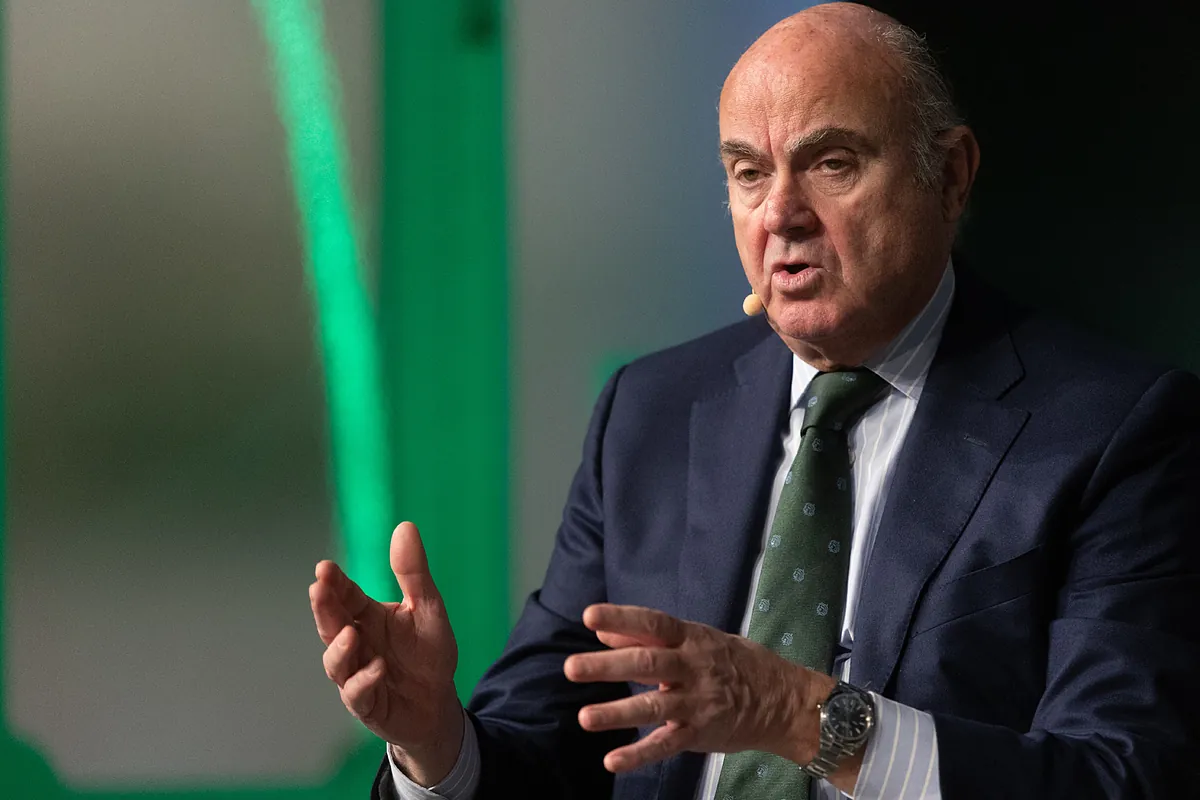
Guindos acaba su mandato como vicepresidente del BCE y le releva mañana Boris Vuji
gdelt bot · 7 days ago

Były szef BBN ma radę dla Grodeckiego. "Proszę przestać wybrzydzać" Generał w stanie spoczynku, Stanisław Koziej, polecił Bartoszowi Grodeckiemu, aby zaczął wspierać realizację programu SAFE. "Bo inaczej ściągnie pan nasze BBN na dno" - napisał były szef Biura Bezpieczeństwa Narodowego.
gazeta.pl · 7 days ago
Average Czech Salaries Reach €2,024 per Month, Overtaking Slovakia The average salary in Czechia has climbed above the €2,000 mark, placing the country ahead of Slovakia and narrowing the gap with Poland in the race for higher wages across Central Europe. According to a new analysis by consulting firm Forvis Mazars, employees in the Czech private sector earn an average of €2,024 per month this year, equivalent to roughly CZK 48,967. That represents a year-on-year increase of 9 percent, making the Czech Republic one of the fastest-growing wage markets in the region. Among the countries of the Visegrad Group (V4), only Poland reports higher average earnings. Polish private-sector wages reached €2,156 this year, up 8 percent compared with the previous year. The Czech Republics performance places it ahead of Slovakia, where the average monthly salary stands at €1,569. Wage growth there has been considerably slower, rising by just 3 percent over the past year. Hungary recorded growth comparable to the Czech Republic. Average private-sector salaries increased by 9 percent to €1,948, according to the report. The findings come from Forvis Mazars annual review of tax systems and labor market indicators across 22 countries in Central and Eastern Europe. The report highlights the continuing upward pressure on wages across the... The post Average Czech Salaries Reach €2,024 per Month, Overtaking Slovakia appeared first on Prague Morning.
prague morning · 7 days ago