
Lithuania and Latvia deepen defence and education ties ahead of NATO summit and EU budget talks
Story Timeline
3 months · 4 summary articles
Lithuania and Latvia deepen defence and education ties as NATO summit and EU budget talks loom
Lithuania’s President Gitanas Nausėda and Foreign Minister Kęstutis Budrys will travel to Ankara on Tuesday for a two-day NATO summit, where Vilnius will press its record defence investments and call for stronger European security responsibility alongside continued support for Ukraine. The Lithuanian delegation will highlight the deployment of a German brigade and the creation of a national division, while Budrys joins sessions focused on implementing The Hague commitments, including raising defence spending to 5 percent of GDP and reinforcing air defence and other military capabilities. The summit, running July 7–8, will also address NATO’s evolving role under US leadership and the Alliance’s nuclear deterrence posture.
In parallel, Lithuania’s incoming Prime Minister-designate Mindaugas Sinkevičius has named Brussels as one of his first foreign destinations, signalling a push for a more active role in negotiations on the European Union’s next long-term budget. Sinkevičius said he aims to reach an agreement with President Nausėda on representation at the European Council, arguing that the EU’s multi-annual financial framework directly affects Lithuania. “The European Commission’s initial proposals do not meet Lithuania’s requirements,” he said, adding that he intends to attend certain European Council meetings to provide specific input on the new financial perspective.
Latvia, meanwhile, will use next week’s EU General Affairs Council meeting in Brussels to press for additional funding for eastern border countries, sustained support for security and defence, and continued financing for the Connecting Europe Facility, which includes the Rail Baltica railway project. Riga will also host a meeting of the Friends of Cohesion Group to coordinate a joint approach to defending cohesion funding and the Common Agricultural Policy. “Latvia supports reducing the administrative burden on businesses while ensuring new legislative initiatives do not add costs,” the Foreign Ministry said. The meeting on July 14 will also cover EU competitiveness, support for Ukraine, and the simplification of EU legislation.
On the education front, Vilnius University and the University of Latvia have awarded their first joint master’s degree, marking the completion of a new cross-border Baltic studies programme. The diploma was conferred on Baltic linguistics graduate Dovilė Gavelytė, who defended a thesis on manipulative and causative constructions across Lithuanian, Latvian, Livonian and Estonian. The joint degree combines Vilnius University’s Baltic linguistics programme with the University of Latvia’s Latvian language, literature and culture track, requiring students to spend their first year at their home institution before moving to the partner country for their third semester. Applicants must demonstrate at least B1-level proficiency in both Lithuanian and Latvian.
Elsewhere, Lithuania’s defence ministry confirmed that Merko Statyba has secured financing for the second phase of the Rūdninkai military base, being built for German troops stationed in Lithuania. Contracts signed earlier this year between the defence ministry and the Estonian-owned builder have now come into full effect, ensuring continued progress on the campus.
The flurry of activity comes as Lithuania faces scrutiny from the European Commission, which has launched infringement proceedings over alleged deficiencies in the country’s money-laundering rules. Vilnius has also reaffirmed its stance that sanctions relief for Belarus can only be considered after democratic changes occur in Minsk. Parliament speaker Juozas Ošlakas said Lithuania will not discuss easing sanctions until Belarus undergoes genuine political reform.
As NATO leaders gather in Ankara and EU budget negotiations intensify in Brussels, Lithuania and Latvia are positioning themselves at the forefront of both defence and educational cooperation, underscoring the Baltic states’ growing role in shaping Europe’s security and economic future.
Follow us for live European news
- 2
- 1
- 1
- 1
3 further sources not geolocated
Articles
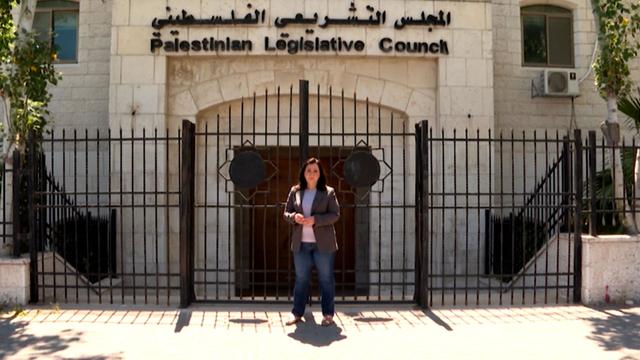
⚡ NEWSPalestine announces first legislative elections in 20 yearsPalestinian authorities have announced the scheduling of the first legislative elections in two decades. This significant political development aims to restore democratic processes and address governance challenges within the Palestinian...📰 #Israel #Geopolitics #GeoWire
mastodon bot · 3 months ago
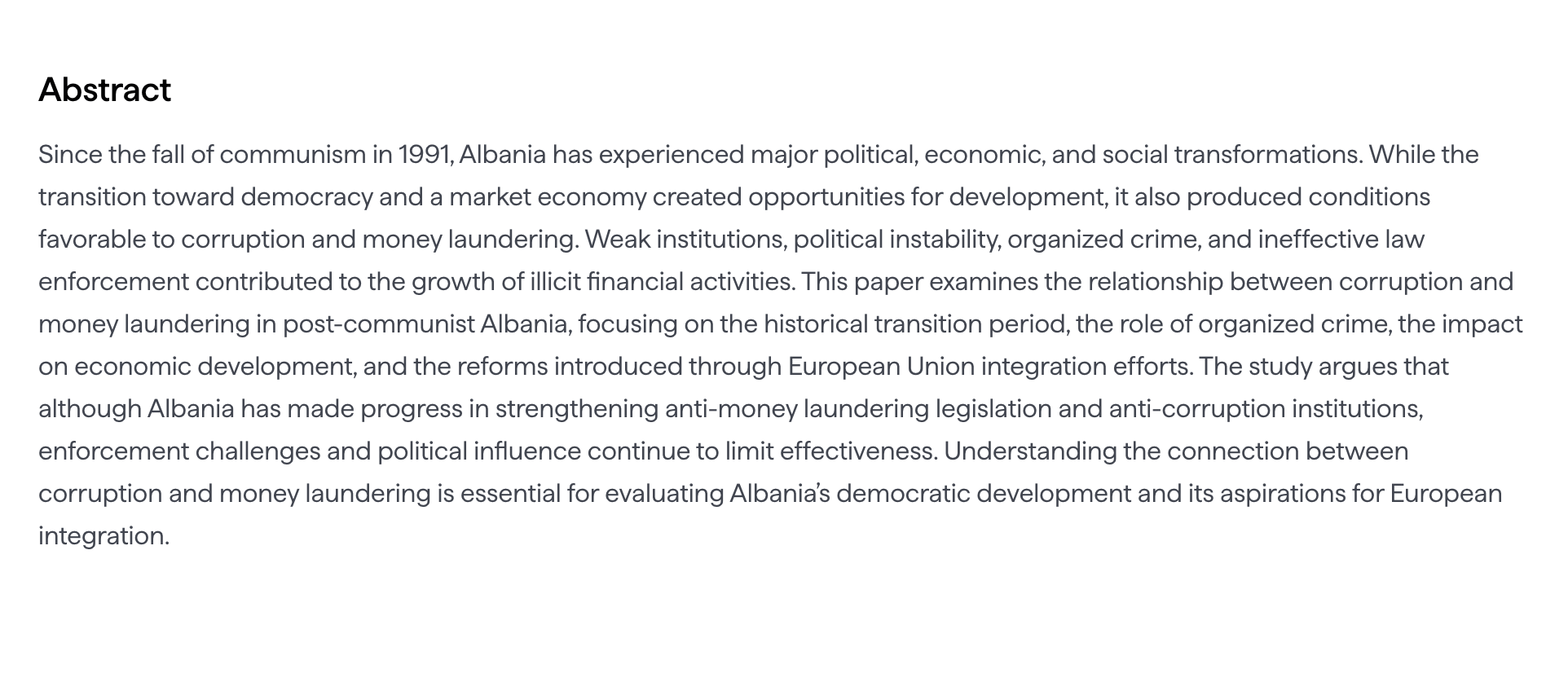
"Corruption and money laundering in post-communist Albania" #Corruption #Balkans #Europe #FlamingoRevolution
mastodon bot · 3 months ago

First ministry moved out of Ljubljana in decentralisation drive Slovenia has formally moved the seat of one of its ministries from the capital Ljubljana to Maribor, launching what the government says is the first concrete step in a broader effort to decentralise state administration and spread well-paying public sector jobs more evenly across the country. The ...
the slovenia times · 3 months ago
Hydrogenera and Stargate Hydrogen sign agreement for industrial hydrogen projects - The Baltic Times Hydrogenera and Stargate Hydrogen have signed a framework cooperation agreement to collaborate on industrial hydrogen projects across Europe. Mo......
baltic times · 3 months ago
Warsaw-Tallinn bus that also carried Latvian passengers crashes into a ditch in Lithuania - The Baltic Times TALLINN - Early Monday morning, a Flixbus coach operating on the Warsaw-Tallinn route, which also carried Latvian passengers, crashed into a dit......
baltic times · 3 months ago
Braze discusses strategic partnership and support for Ukraine during US visit - The Baltic Times RIGA - During her visit to the U.S. this week, Foreign Minister Baiba Braze (New Unity) discussed strengthening the strategic partnership betwee......
baltic times · 3 months ago
Estonia leads first UN global dialogue on artificial intelligence - The Baltic Times TALLINN - The UNs first Global Dialogue on AI Governance, co-chaired by Estonia and El Salvador, is taking place in Geneva on Monday and Tu......
baltic times · 3 months ago
Baltic private forest organizations call for cooperation in forestry policy - The Baltic Times TALLINN - Private forest owners organizations from Latvia, Lithuania, and Estonia have sent a joint appeal to the governments of the Baltic......
baltic times · 3 months ago
Estonia to Help Armenia Enhance Anti-Corruption Efforts in Municipalities - The Baltic Times TALLINN – The Estonian Centre for International Development (EstDev) and the non-profit organization Transparency International Estonia ha......
baltic times · 3 months ago
Baurum to develop the Constanta project with approximately 90 apartments in a historic building in central Riga - The Baltic Times Latvian real estate developer Baurum has opened reservations for residences in its "Constanta" project, located in the histori......
baltic times · 3 months ago
Latvia and Norway are united by extensive cooperation - Mierina - The Baltic Times RIGA - Latvia and Norway are united by extensive cooperation, including at the parliamentary level, said Saeima Speaker Daiga Mierina (Greens/Fa......
baltic times · 3 months ago
Latvia to emphasize importance of funding for eastern border region and Rail Baltica at EU General Affairs Council meeting - The Baltic Times RIGA - At the meeting of the next EU General Affairs Council, Latvia will emphasize, during discussions on the next EU multiannual budget, the n......
baltic times · 3 months ago
Lithuanias interior minister nominee backs EU migrant contributions over relocations - The Baltic Times VILNIUS - Lithuanias interior minister nominee Martynas Katelynas said on Tuesday he supported paying financial contributions for all migra......
baltic times · 3 months ago
Tsikhanouskaya expects Lithuania to maintain principled Belarus policy - The Baltic Times VILNIUS - Belarusian opposition leader Sviatlana Tsikhanouskaya said on Tuesday she expected Lithuanias new government to continue a princi......
baltic times · 3 months ago
Lithuanias PM-designate seeks active role in EU budget talks - The Baltic Times VILNIUS - Lithuanias Prime Minister-designate Mindaugas Sinkevicius has named Brussels as one of his first foreign destinations, saying he ......
baltic times · 3 months ago
Lithuanias parliament speaker says Belarus sanctions relief needs democratic change - The Baltic Times VILNIUS - Lithuania can only discuss easing sanctions against Belarus after democratic changes take place in the country, parliament speaker Juo......
baltic times · 3 months ago
Nauseda urged unity as Lithuania marked Statehood Day - The Baltic Times VILNIUS - Lithuanian President Gitanas Nauseda called for national unity on Monday as the country marked Statehood Day and National Anthem Day, ......
baltic times · 3 months ago
Lithuanian president, foreign minister head to Ankara for NATO summit - The Baltic Times VILNIUS - Lithuanian President Gitanas Nauseda and Foreign Minister Kestutis Budrys will travel to Ankara on Tuesday for a NATO summit. ......
baltic times · 3 months ago
Former President Valdis Zatlers and international experts to seek a way out of polarization in society at the LAMPA Conversation Festival - The Baltic Times On July 11, the international panel discussion Light through the Crack: Conversation in a Polarised Society will take place as par......
baltic times · 3 months ago
Tallinn Botanic Garden to Rose Days – one of Estonias largest rose collections is blooming - The Baltic Times From 18 to 26 July, the Tallinn Botanic Garden is hosting Rose Days in the recently renovated rosarium. During peak blooming season, vis......
baltic times · 3 months ago
More than 90 honorary consuls from 44 countries to meet in Riga next week - The Baltic Times RIGA - From July 13 to 15, the Foreign Ministry will host the 12th meeting of Latvian honorary consuls, which will be attended by more than 90 L......
baltic times · 3 months ago
Vilnius and Latvia universities award first joint masters degree - The Baltic Times VILNIUS - The Faculty of Philology at Vilnius University and the Faculty of Humanities at the University of Latvia have awarded their first join......
baltic times · 3 months ago
Lithuanian national among suspects detained in Spain tobacco factory crackdown - The Baltic Times VILNIUS - A major international law enforcement operation in Spain has dismantled six illegal tobacco factories and led to the detention of doze......
baltic times · 3 months ago
EU launches infringement action against Lithuania over money laundering rules - The Baltic Times VILNIUS - The European Commission has launched infringement proceedings against Lithuania and three other European Union member states for faili......
baltic times · 3 months ago
ELi rahvaarv kasvas taas, Eestis oli üks suurimaid langusi Euroopa Liidu rahvaarv kasvas 2025. aastal viiendat aastat järjest 452 miljoni inimeseni peamiselt positiivse rändesaldo toel. Eesti kuulus koos Läti ja Ungariga suurima rahvaarvu langusega liikmesriikide hulka.
postimees · 3 months ago
EU states do not need consensus to hold Israel accountable As foreign ministers meet on Gaza and the West Bank, national governments cannot hide behind EU paralysis.
aljazeera · 3 months ago
Nearly 3,000 basic‑school graduates still without a confirmed study place There are currently more than 4,100 available places in upper secondary schools and vocational institutions across Estonia.
news.err · 3 months ago
Exports rise 9 percent in May as trade deficit narrows Exports of goods from Estonia increased by 9 percent year on year in May, Statistics Estonia reported.
news.err · 3 months ago
Protesters in Ljubljana demand Slovenia leave Nato Ljubljana protest calls for Slovenias immediate withdrawal from Nato, sanctions against the US and Israel, and the redirection of military spending towards public services.
intellinews · 3 months ago
Vilnius and Latvia universities confer first joint masters degree Vilnius University and the University of Latvia have awarded their first joint masters degree, marking the completion of a new cross-border Baltic studies programme.
lrt · 3 months ago