 Thursday, May 28Thursday, May 28
NASA awards $20 billion in contracts to four private firms to develop lunar rovers and drones for its permanent moon base, marking the first concrete step toward establishing a human settlement on the lunar south pole by the early 2030s.
The agency selected Lunar Outpost, Astrolab, Firefly Aerospace, and Blue Origin—Jeff Bezos’ space venture—to design and deliver autonomous MoonFall rovers and drones under multi-million-dollar agreements, as announced on May 26. These vehicles will support infrastructure construction, resource mapping, and crew mobility for the Artemis Base Camp, a project NASA aims to begin assembling before the end of the current U.S. presidential term. Blue Origin secured the largest single contract, worth $468 million, while SpaceX was notably absent from this initial round of commercial partnerships .
The contracts form the first phase of NASA’s $20 billion lunar base initiative, which targets the moon’s south pole due to its water ice deposits—critical for life support and fuel production. Officials say the rovers and drones will arrive ahead of crewed missions, with the goal of enabling astronauts to live and work on the surface for extended periods by 2030 or shortly after .
While NASA accelerates its plans, China remains a formidable competitor in the new space race, with its own lunar base ambitions targeting the same region. The U.S. agency’s timeline hinges on sustained funding and the success of the Artemis program, which last year completed its first crewed lunar flyby in over 50 years . Separately, SpaceX secured a $2.29 billion contract from the U.S. Space Force this week to develop a military space data network, underscoring its expanding role in national security space operations .

NASA oficiálne predstavila prvú fázu ambiciózneho plánu na vybudovanie trvalej ľudskej základne na Mesiaci NASA prepisuje dejiny dobývania vesmíru a prechádza od teoretických plánov k realite. Len niekoľko týždňov po triumfe misie Artemis 2 uzavrela agentúra masívne kontrakty so štyrmi technologickými lídrami. Súkromný sektor má za úlohu vyvinúť a na južný pól Mesiaca dopraviť flotilu lunárnych roverov a autonómnych dronov MoonFall.
aktuality.sk · 1 day ago
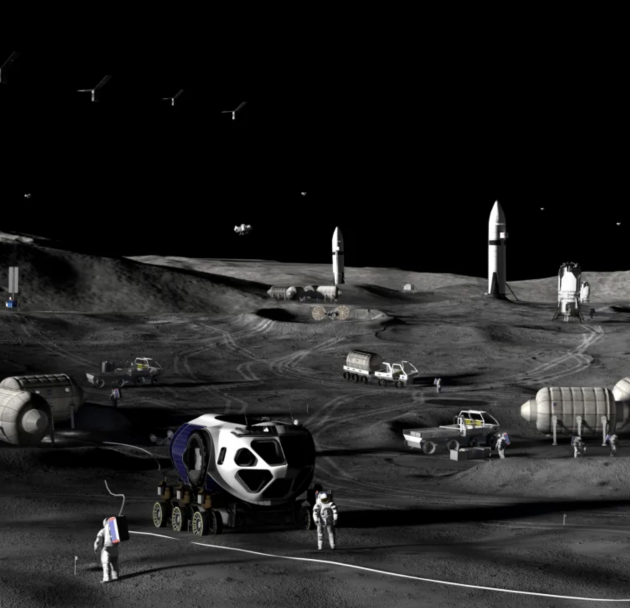
Want to move to the moon? Nasa has unveiled plans for its first moon base The lunar outpost could see people living and working on the moon within six years.
thejournal · 1 day ago

Så kan USA:s permanenta månbas byggas NASA har släppt bilder på hur man ska bygga den permanenta bas som planeras på månens sydpol. Målet är att påbörja projektet innan Trump avgår som president. Men Kina kan hinna före i den nya rymdkapplöpningen.
dagens nyheter · 1 day ago
Lander, Rover, Drohnen: NASA konkretisiert Mondpläne
orf.at · 1 day ago
Nasa planerar att bygga bas på månen Nasa planerar att upprätta en permanent bas på månen. Förhoppningen är att kunna husera astronauter på basen någon gång efter 2030.
svenska dagbladet · 1 day ago

NASA picks Blue Origin, other space firms for moon missions reut.rs/4uBFnMM
bluesky bot · 1 day ago
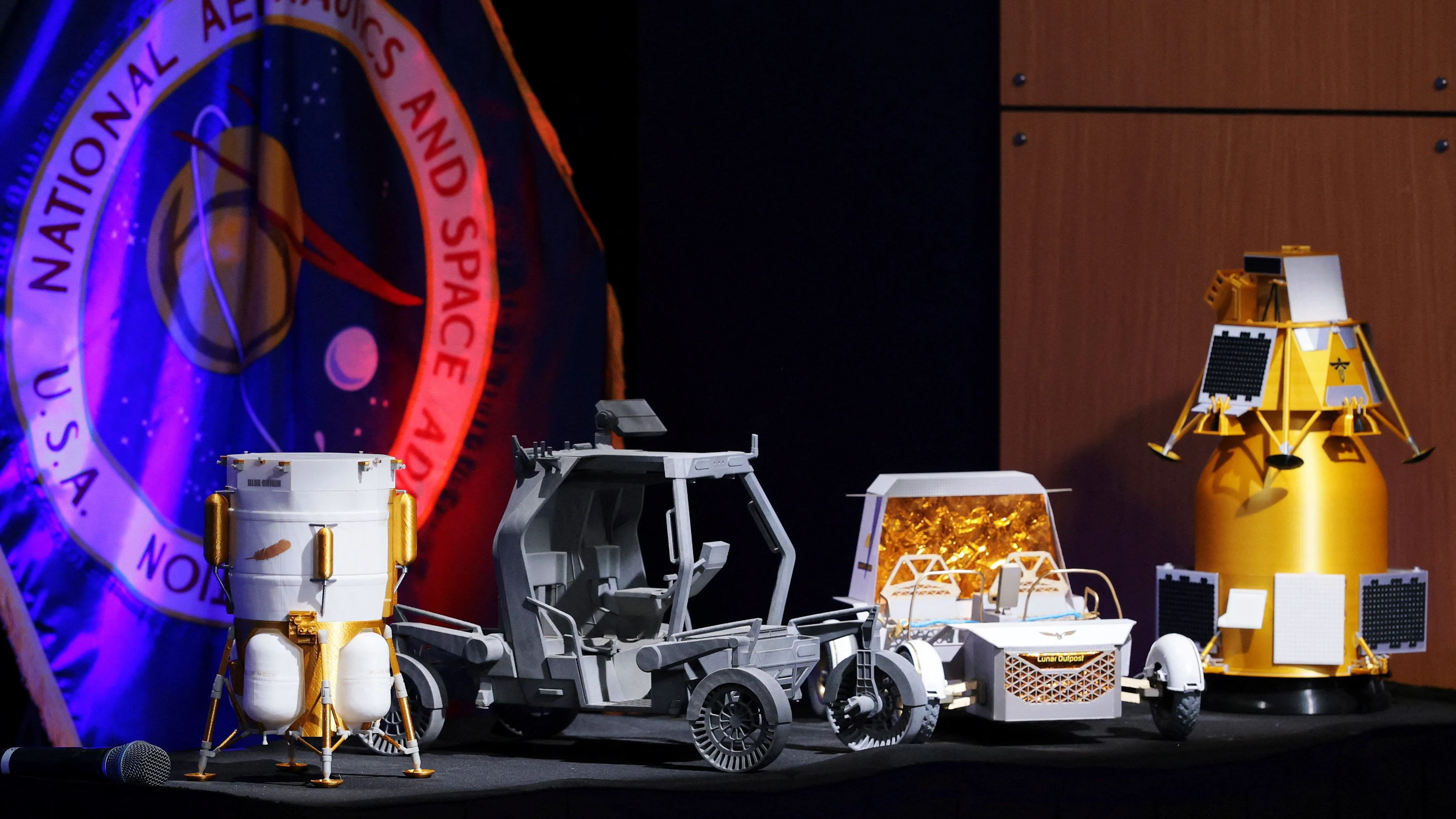
Mondfahrzeuge und mehr: NASA vergibt Aufträge für Mondmissionen an Privatunternehmen Lunar Outpost, Astrolab, Firefly Aerospace – so heißen die Firmen, die für Hunderte Millionen Dollar Mondfahrzeuge und weitere Technologie bauen sollen. Auch Jeff Bezos Bulke Origin erhält einen NASA-Auftrag.
faz · 1 day ago

US Space Force awards SpaceX $2.29 billion contract for military space data network reut.rs/4e5wKE9
bluesky bot · 2 days ago
Bezoss Blue Origin secures $468mn in Nasa Moon Base contracts SpaceX absent from first round of commercial agreements for US space agencys $20bn project
financial times · 2 days ago
SpaceX wins $2.29 billion Space Force contract for military data network The contract is for the development of the U.S. Space Forces Space Data Network backbone The post SpaceX wins $2.29 billion Space Force contract for military data network appeared first on SpaceNews.
spacenews · 2 days ago
NASA selects four companies for initial moon base awards NASA announced May 26 the first contracts associated with its plans to develop a lunar base, picking four companies to develop and deliver landers and drones to the moon. The post NASA selects four companies for initial moon base awards appeared first on SpaceNews.
spacenews · 2 days ago