 Monday, May 18Monday, May 18
President Donald Trump is set to meet with Chinese President Xi Jinping in Beijing this week to discuss critical issues, including AI security norms, trade, Taiwan, and Iran, amid heightened geopolitical tensions. The meeting marks the first U.S. presidential visit to China since 2017 and is framed as a high-stakes opportunity to address shared challenges, though analysts suggest Xi may hold the upper hand in negotiations .
AI Security and Guardrails
A key focus of the Trump-Xi discussions will be AI governance and cybersecurity, as both nations race for supremacy in the field. U.S. officials aim to establish a channel of communication to discuss AI safety norms, recognizing the dual-use nature of advanced AI systems as economic engines, intelligence tools, and potential cyber weapons. However, cooperation remains fraught: the U.S. has accused China of industrial-scale campaigns to copy American AI models, while China allegedly used U.S. AI models like Claude for espionage. The Pentagon’s Mythos and China’s DeepSeek exemplify the competitive—and potentially adversarial—AI landscape. Past U.S.-China AI talks under the Biden administration were criticized as symbolic, with Beijing sending non-technical representatives. This meeting will test whether future discussions can become substantive, with U.S. officials emphasizing the need for technical experts to participate .
Taiwan and Regional Security
The Pentagon and U.S. lawmakers have expressed concerns that Trump’s eagerness for a deal with China could undermine Taiwan’s security. Senator Elissa Slotkin, a former Pentagon official, warned that Trump might "fall into a trap" by making concessions on Taiwan in exchange for other priorities, such as trade or AI cooperation. Taiwan remains a central point of contention, with China signaling its intent to prioritize the issue during the summit .
Trade and Economic Tensions
Trump’s weakened domestic position—due to Iran-related oil price spikes, shrinking political support, and economic pressures—may limit his leverage in trade negotiations. While the U.S. and China have maintained a tentative trade truce, unresolved disputes over tariffs, supply chains, and industrial policy persist. Analysts suggest Xi may exploit Trump’s vulnerabilities to secure concessions, though both sides have incentives to avoid further escalation .
Iran and Global Stability
The Iran conflict looms over the summit, with Trump dismissing Tehran’s peace proposal as "totally unacceptable" and describing the current ceasefire as "on life support." China, which has positioned itself as a mediator in the Middle East, is expected to push for de-escalation, though its influence remains limited. The war’s impact on global oil prices and supply chains will likely feature in discussions, as both nations seek to stabilize markets .
> Background: **Trumps Beijing Visit to Tackle Trade Taiwan and Iran Tensions** — *12 hours ago*
Trumps China trip collides with AI security fears As the U.S. and China barrel ahead in their quest for AI supremacy, their race could come at the expense of global cybersecurity.Why it matters: The U.S. and China both have an interest in preventing each other from weaponizing AI tools against them or letting rogue systems into the wild. But it remains to be seen whether they can hold a productive dialogue around AI security norms or trust the other to abide by them.Driving the news: President Trump is expected to discuss AI guardrails with Chinese President Xi Jinping in Beijing this week, U.S. officials told reporters Sunday.We want to take this opportunity with the leaders meeting to open up a conversation and see if we should establish a channel of communication on AI matters, one official said.Between the lines: The U.S. is using export controls to slow Chinas AI progress, but U.S. officials increasingly recognize that the two countries may still need shared rules of the road for how the technology is deployed.Chinese models like DeepSeek are the primary competitors to U.S. models.Advanced AI systems are increasingly viewed in both Washington and Beijing as economic engines, intelligence tools and potential cyber weapons. That makes cooperation harder, but also more urgent.Sixteen business executives, including Elon Musk and Tim Cook, are reportedly joining Trump on the trip — but CEOs from leading AI firms arent on the list.The big picture: The visit comes as U.S. AI companies wrestle with how to safely release increasingly powerful models that are exceptionally good at finding and exploiting software vulnerabilities.The White House has been embroiled in a monthlong back-and-forth over how to regulate those rollouts, after more than a year of denouncing such regulation.Meanwhile, the White House accused China last month of running industrial-scale campaigns to distill and copy American AI models.Yes, but: Its hard for either country to call for restraint around AI-enabled cyber operations when both are actively testing the offensive cyber capabilities of frontier models — potentially to use against each other.In November, Anthropic accused Beijing of using Claude to automate parts of a broader espionage campaign targeting about 30 global organizations. The National Security Agency, which is behind many U.S. espionage campaigns, is already testing out Mythos.The topic is important enough and dangerous enough that we should be having engagement with China on this, Melanie Hart, senior director of the Atlantic Councils Global China Hub and a former State Department official, told reporters.However, the Chinese government used previous meetings on AI safety held under the Biden administration primarily to gather information about the United States, rather than to be serious about AI guardrails, Hart said.During those talks, Beijing often sent representatives from the foreign ministry who lacked technical AI expertise, she added.What to watch: Dont expect a single visit to reshape U.S. AI policy overnight. Instead, Hart said, the trip is more likely to determine whether future U.S.-China discussions on AI security become substantive or remain largely symbolic.From there, we then need to judge who shows up for the China side, she said. We want to see the technical experts showing up at the table. Thats how well know that thats actually real.Go deeper: Trumps legacy week
axios · 5 days ago

📰 Trumps Beijing trip should make Taiwan nervous, Slotkin saysThe Senate Armed Services member and former Pentagon official warned the president could easily fall into a trap due to his eagerness to strike a deal with China. #UKNews #Europe
mastodon bot · 5 days ago

Chinese people divided ahead of Trump-Xi summit in Beijing Residents in Beijing shared mixed opinions ahead of the upcoming meeting between US President Donald Trump and Chinese President Xi Jinping, with some hoping for improved ties and others expressing skepticism.
euronews · 5 days ago

The brutal Melania Trump joke that was cut from Kevin Harts Netflix roast The ruthless joke was cut as President Donald Trump and Melania Trump have called for late-night host Jimmy Kimmel to be fired over a joke he made about the first lady
independent · 6 days ago
A weakened Trump to test Chinas appetite for deal-making A quagmire in Iran, sky-high oil prices and shrinking support at home: when US President Donald Trump belatedly travels to China this week, his position has weakened. Still, he is hoping for any deal. Nervous Europeans are watching.
euronews · 6 days ago
![Trump faces uphill climb on suspending gas tax President Trumps endorsement of suspending federal gas taxes pushes the idea higher on the political radar, but it still faces long odds.Why it matters: Some Republicans rushed to introduce bills, and a few Democrats have already endorsed the idea — but there are still serious obstacles that could keep Trumps comments from becoming reality.The federal tax is 18.3 cents for gasoline and 24.3 cents for diesel (with another .1 cent fee for addressing leaking underground tanks).A few dynamics to watch following Trumps comments to CBS News...📜 Capitol Hill. Trump needs Congress to act, and the immediate signs are mixed. GOP lawmakers including Sen. Josh Hawley (R-Mo.) quickly promised legislation, but Senate Majority Leader John Thune was noncommittal.Ive not in the past obviously been a fan of that idea. But you know Ive got some colleagues out there who think its a good idea and so well hear them out, he told reporters.Thune noted the revenue loss could hurt the Highway Trust Fund, and said the best thing [that] can happen for gas prices is for the [Strait of Hormuz] to get opened up again.💪 The White House political operation. Its hard to know whether its something Trumps team will truly push, or instead one of his frequent musings, or something in between.🗳️ Its a 2028 thing. Several potential White House hopefuls have now pushed to temporarily nix the tax.They would be Sen. Mark Kelly (D-Ariz.), Hawley, and Kentucky Gov. Andy Beshear.🤷 The politics and plans remain in flux. Senate Minority Leader Chuck Schumer (D-N.Y.) isnt exactly shooting down the idea, but in a floor speech Monday, he took the position that its not enough.[L]ets not pretend 18-cents of gas tax relief per gallon makes up for the damage Trump created with this war, Schumer said. Eighteen cents isnt a dollar-fifty — which is how much the price of gas has gone up since the war started.The best way to lower costs is to end this illegal war.Aides to House Speaker Mike Johnson (R-La.) and House Minority Leader Hakeem Jeffries (D-N.Y.) didnt respond to requests for comment.💵 The numbers are daunting. One reason a waiver has never happened — despite surfacing often when prices spike — is the budget impact is big even while consumer relief is modest.The revenue effect and loss to the Highway Trust Fund — which supports roads, bridges and transit — depends on the duration and how its structured.For instance, Kellys plan would divert other monies to the fund. But a holiday of any length is expensive for Uncle Sam.The research firm ClearView Energy Partners said a hypothetical gas tax waiver from May 15 to Nov. 30 would cost nearly $14 billion. Add in other fuels, and the price climbs a lot more.The bottom line: The high costs and revenue loss for highways might ordinarily produce lethal sticker shock on Capitol Hill, ClearView said in a client note.But in a mid-term election year where both parties are in no-holds barred pursuit of Congressional control, we cannot wholly rule it out.Sign up here for Axios Future of Energy newsletter.](https://images.axios.com/F1Z91pXJ6sk0geIG8XRjW8yMpDE=/0x0:1920x1080/1366x768/2026/03/19/1773930450231.jpeg)
Trump faces uphill climb on suspending gas tax President Trumps endorsement of suspending federal gas taxes pushes the idea higher on the political radar, but it still faces long odds.Why it matters: Some Republicans rushed to introduce bills, and a few Democrats have already endorsed the idea — but there are still serious obstacles that could keep Trumps comments from becoming reality.The federal tax is 18.3 cents for gasoline and 24.3 cents for diesel (with another .1 cent fee for addressing leaking underground tanks).A few dynamics to watch following Trumps comments to CBS News...📜 Capitol Hill. Trump needs Congress to act, and the immediate signs are mixed. GOP lawmakers including Sen. Josh Hawley (R-Mo.) quickly promised legislation, but Senate Majority Leader John Thune was noncommittal.Ive not in the past obviously been a fan of that idea. But you know Ive got some colleagues out there who think its a good idea and so well hear them out, he told reporters.Thune noted the revenue loss could hurt the Highway Trust Fund, and said the best thing [that] can happen for gas prices is for the [Strait of Hormuz] to get opened up again.💪 The White House political operation. Its hard to know whether its something Trumps team will truly push, or instead one of his frequent musings, or something in between.🗳️ Its a 2028 thing. Several potential White House hopefuls have now pushed to temporarily nix the tax.They would be Sen. Mark Kelly (D-Ariz.), Hawley, and Kentucky Gov. Andy Beshear.🤷 The politics and plans remain in flux. Senate Minority Leader Chuck Schumer (D-N.Y.) isnt exactly shooting down the idea, but in a floor speech Monday, he took the position that its not enough.[L]ets not pretend 18-cents of gas tax relief per gallon makes up for the damage Trump created with this war, Schumer said. Eighteen cents isnt a dollar-fifty — which is how much the price of gas has gone up since the war started.The best way to lower costs is to end this illegal war.Aides to House Speaker Mike Johnson (R-La.) and House Minority Leader Hakeem Jeffries (D-N.Y.) didnt respond to requests for comment.💵 The numbers are daunting. One reason a waiver has never happened — despite surfacing often when prices spike — is the budget impact is big even while consumer relief is modest.The revenue effect and loss to the Highway Trust Fund — which supports roads, bridges and transit — depends on the duration and how its structured.For instance, Kellys plan would divert other monies to the fund. But a holiday of any length is expensive for Uncle Sam.The research firm ClearView Energy Partners said a hypothetical gas tax waiver from May 15 to Nov. 30 would cost nearly $14 billion. Add in other fuels, and the price climbs a lot more.The bottom line: The high costs and revenue loss for highways might ordinarily produce lethal sticker shock on Capitol Hill, ClearView said in a client note.But in a mid-term election year where both parties are in no-holds barred pursuit of Congressional control, we cannot wholly rule it out.Sign up here for Axios Future of Energy newsletter.
axios · 6 days ago
Trump to head to China for high-stakes talks with Xi – US politics live Meeting comes amid tentative trade truce but Iran, Taiwan and tensions over global supply chains will be complicating factorsSign up for the Breaking News US emailOn the Iran war, Donald Trump said the ongoing fragile ceasefire was on life support after dismissing Tehrans peace proposal as totally unacceptable.I would call it the weakest, right now, after reading that piece of garbage they sent us – I didnt even finish reading it, he told reporters in the Oval Office yesterday. Continue reading...
theguardian · 6 days ago
Debate: Trump to visit Xi: rapprochement between US and China? After postponing his trip due to the Iran conflict, US President Donald Trump is now set to travel to Beijing for a state visit on Wednesday. His talks with Chinese President and party leader Xi Jinping are likely to focus on the issues of Iran and Taiwan, as well as trade and artificial intelligence. The media look at what divides the two superpowers, but also what they have in common.
eurotopics.net · 6 days ago
First US visit to China since 2017 amid geopolitical tension China says it is ready to work with the United States in the pursuit of more stability globally, ahead of this weeks meeting between leaders Xi Jinping and Donald Trump. The White House has said the visit - the first of an American president to China since 2017 - is of tremendous symbolic significance. The war in Iran is likely to be top of the agenda, with Beijing also signalling that they want Taiwan to be central to discussions.
france24 · 6 days ago
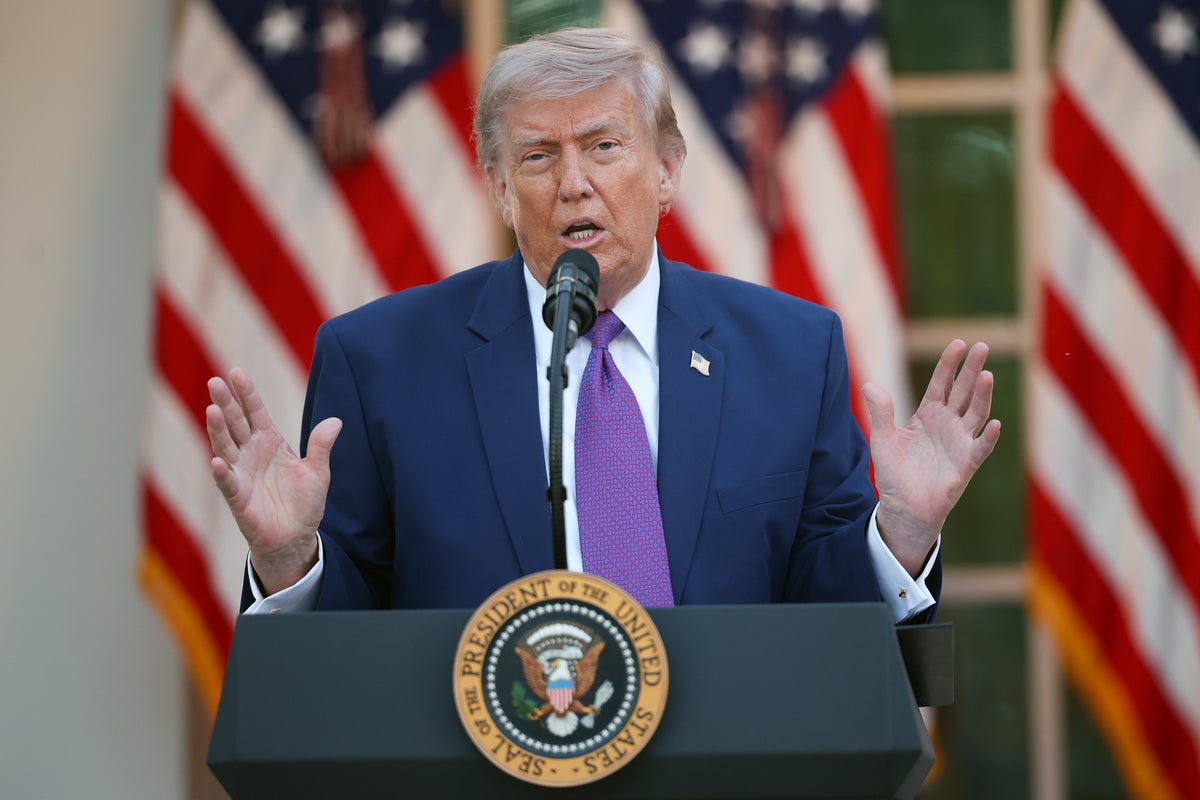
Trump says the White House was a s*** house before his renovations President Trump said that First Lady Melania Trump told him not to use foul language during his speech
independent · 6 days ago
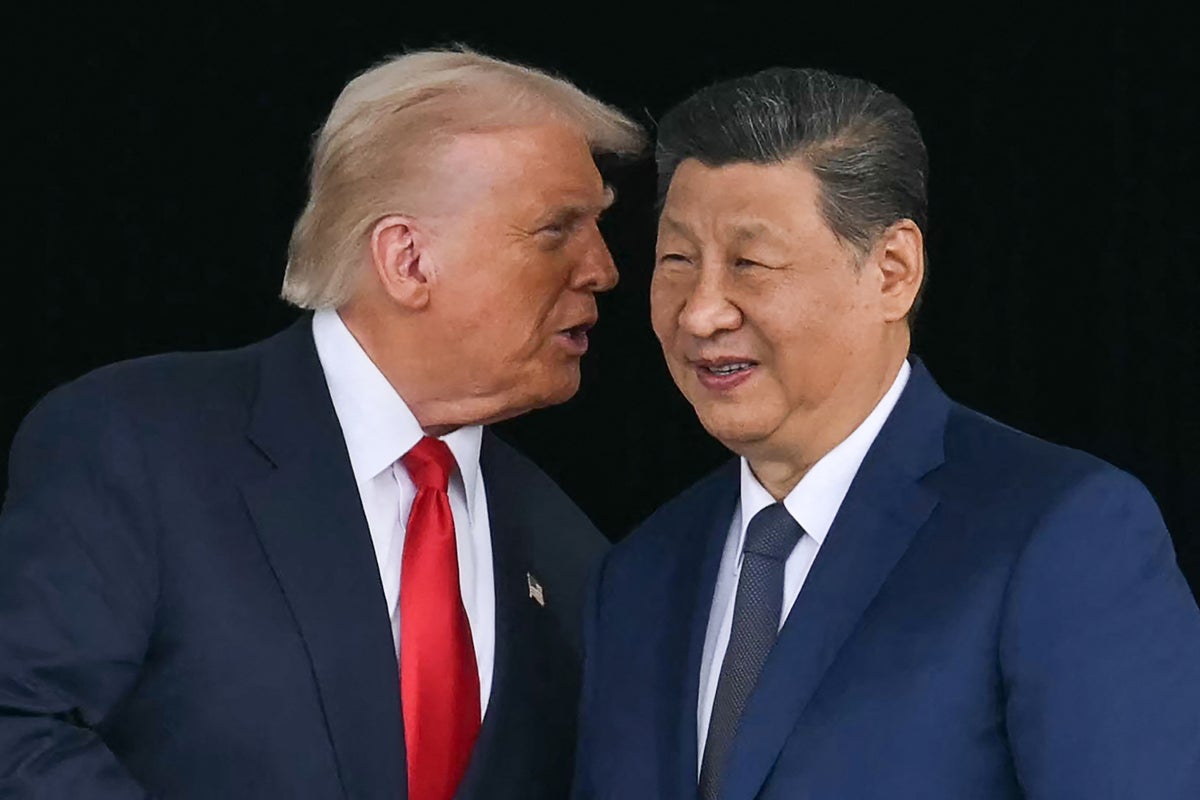
What Trump and Xi will discuss during China visit – and what could go wrong Analysts tell Shweta Sharma that Xi appears to have the upper hand on trade, Iran and Taiwan, but Trump still has plenty to gain from talks in Beijing
independent · 6 days ago
Trump and Xi: The history of encounters between two superpower leaders US President Donald Trump and Chinese President Xi Jinping have met six times since 2017.
aljazeera · 6 days ago

Chinese students anxious and angry after Rubio vows to revoke visas
news.yahoo.com · 12 months ago

China condemns US decision to revoke student visas Foreign ministry hits back at political and discriminatory move announced by Marco RubioUS politics live – latest updatesChina has lodged a protest over the US declaration that it will aggressively revoke the visas of Chinese students studying at US universities.Chinas ministry of foreign affairs told reporters on Thursday that it had formally objected with Washington over Wednesdays announcement by Marco Rubio, the secretary of state. Continue reading...
theguardian · 12 months ago
Marco Rubio says the US will revoke Chinese student visas Secretary of State Marco Rubio said Wednesday the U.S. will begin revoking the visas of some Chinese students, including those studying in critical fields. China is the second-largest country of origin for international students in the United States, behind only India. In the 2023-2024 school year, more than 270,000 international students were from China, making up roughly a quarter of all foreign students in the United States.
france24 · 12 months ago
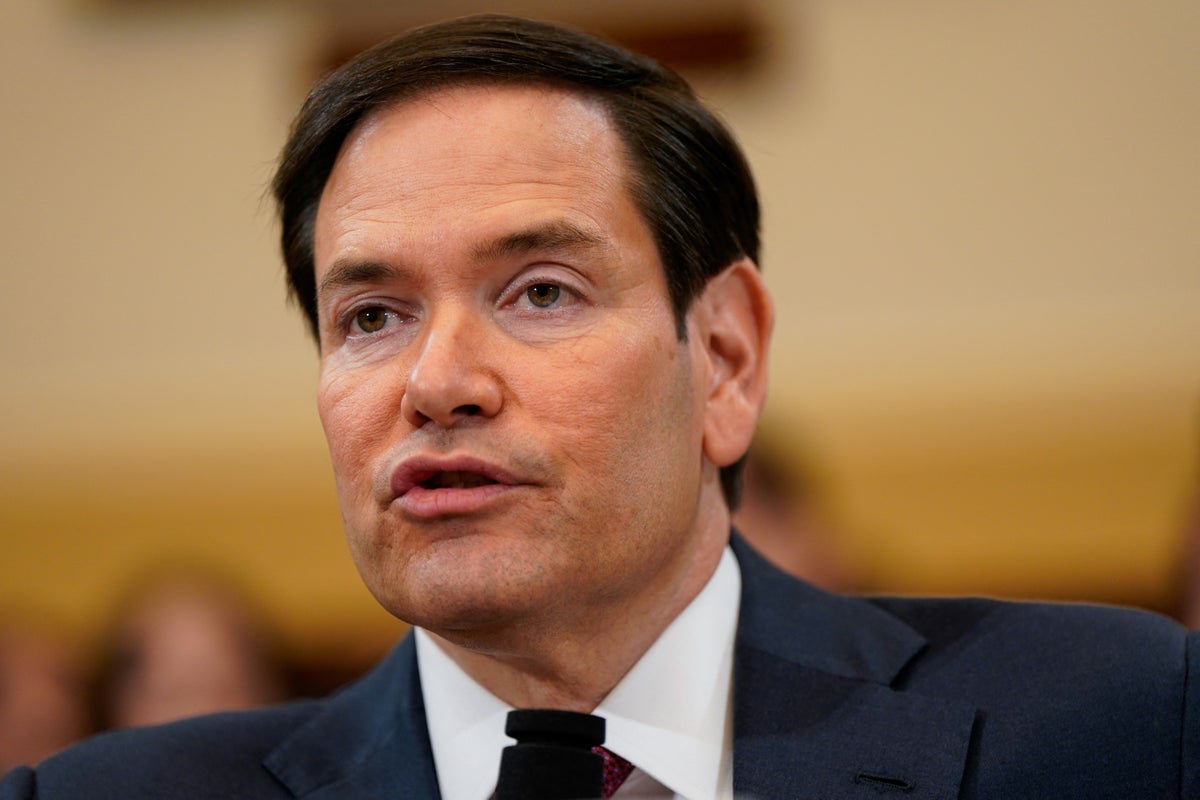
Marco Rubio announces US will aggressively revoke Chinese studentss visas Secretary of State Marco Rubio announced late Wednesday that the U.S. will aggressively revoke visas of Chinese students.
independent · 12 months ago
Trump move to aggressively revoke Chinese student visas part of wider crackdown The Trump administration said on Wednesday it would begin aggressively revoking visas for Chinese students, particularly those it claims are linked to the Communist Party or sensitive fields of study. The move is part of a wider crackdown on foreign students and elite universities in the US says FRANCE 24 correspondent Wassim Cornet.
france24 · 12 months ago
Trump administration to aggressively revoke Chinese student visas The Trump administration says it will aggressively revoke visas for Chinese students, particularly those it claims are linked to the Communist Party or sensitive fields of study, in its latest crackdown on elite universities and international education. The move could jeopardise a major source of revenue for US higher education and further strain ties with Beijing.
france24 · 12 months ago

US will aggressively revoke visas of Chinese students, Rubio says The announcement from the secretary of state is the latest in the Trump administrations widening campaign against US universities President Donald Trumps administration has said it will aggressively revoke visas of Chinese students, one of the largest sources of revenue for American universities, in the latest attack on US higher education.The announcement by secretary of state Marco Rubio came after China criticised his departments decision a day earlier to suspend visa appointments for students worldwide at least temporarily. Continue reading...
theguardian · 12 months ago
US to aggressively revoke visas of Chinese students Secretary of state says move will enhance scrutiny on applications from China and Hong Kong
financial times · 12 months ago
Marco Rubio says US will begin revoking visas of Chinese students The US will also enhance scrutiny of all future visa applications from China and Hong Kong, the State Department said.
aljazeera · 12 months ago
Marco Rubio announces US will begin yanking visas of Chinese students Secretary of State Marco Rubio announced late Wednesday that the U.S. will aggressively revoke visas of Chinese students.
independent · 12 months ago

US says it will start revoking visas for Chinese students
news.yahoo.com · 12 months ago
US to aggressively revoke visas for Chinese students, Rubio says – live US secretary of state says administration also to revise criteria for all visa applications from China and Hong KongThe vice-president, JD Vance, is scheduled to deliver the keynote address at the Bitcoin 2025 Conference in Vegas, which will set out the Trump administrations turbocharged approach to the US crypto industry.If you cast your minds back, its the same conference Trump spoke at last year in Nashville calling for America to become a bitcoin superpower and the crypto capital of the planet under his leadership.At 4:30pm ET, Trumps sons Eric and Donald Trump Jr will speak at the very same conference in Vegas. Its presumably an industry they feel invested in, given they back a major Bitcoin venture themselves, per Reuters. And it comes just a day after a separate family-linked business, the Trump Media & Technology Group, announced its intention to raise $2.5bn to invest in bitcoin, as the Wall Street Journal reports. And that in turn came after Trump offered out exclusive VIP dinner invites to the 220 top buyers of his personal $Trump memecoin, as an incentive to buy more stock. Its all head-spinning stuff for a president of the United States. Continue reading...
theguardian · 12 months ago