
Nigeria summons South Africa envoy after two citizens killed in anti-migrant violence

Story Timeline
7 days · 2 summary articles
Nigeria summons South Africa envoy after two citizens killed in anti-migrant violence
Hardline anti-immigrant groups enforce June 30 deadline as thousands flee South Africa
Continuation
Nigeria has summoned [South Africa’s](en.wikipedia.org) ambassador after two Nigerian citizens were killed in separate incidents amid a surge in anti-migrant violence, as Pretoria faces mounting criticism over its handling of foreign nationals. The foreign ministry in Abuja confirmed the deaths on Sunday, identifying Emeka Charles Iroegbu and Musa Yunana Joe as the victims, both killed on 28 June. The ministry described the killings as part of a broader pattern of intolerance, warning that all options remain on the table if the violence continues.
Iroegbu, a Nigerian national, reportedly died in Pretoria after being arrested by Tshwane Metro police officers on drug possession charges. South African authorities claim he collapsed during the arrest and was declared dead at the scene, a version disputed by Abuja. “Our investigation is underway,” a police watchdog told the BBC on Monday . Nigeria’s foreign ministry rejected the police account, stating Iroegbu was killed “using gruesome interrogation techniques.” Joe, a shop owner in eMalahleni, was shot dead outside his store by an unidentified assailant the same day, according to Abuja.
The deaths come as South Africa grapples with escalating anti-immigrant protests, with protesters blaming foreigners for taking jobs and straining public services. Since late June, authorities have repatriated some 25,000 migrants, including 700 Nigerians, as tensions rise across the country. Ghana also reported a fatality last week, though Pretoria dismissed the claim as “false information” .
Meanwhile, in Sudan, the United Nations has warned that the city of El Obeid in North Kordofan risks becoming “another El Fasher,” the Darfur capital devastated by paramilitary Rapid Support Forces (RSF) attacks last year. The International Organization for Migration said El Obeid, home to 500,000 civilians, faces imminent catastrophe as RSF drone strikes intensify, destroying critical infrastructure including markets, hospitals, and water systems . A local journalist told *taz* that fuel prices have surged from 33,000 to 150,000 Sudanese pounds per litre—nearly €250—while food convoys are routinely bombed. “The last WFP food delivery was destroyed,” said Ahmed Awad, a project leader for Plan International in El Obeid .
The RSF, a UAE-backed proxy force fighting Sudan’s military government, has systematically targeted civilian areas, according to witnesses. “Schools, markets, and water treatment plants lie in ruins,” the journalist said, adding that children are particularly vulnerable. Plan International is distributing food and hygiene kits, but Awad warned the aid effort is collapsing under the siege .
In a separate crisis, the Democratic Republic of Congo’s Ebola outbreak has claimed over 500 lives since mid-May, with health workers threatening to strike over unpaid benefits and dangerous conditions. The Ministry of Health reported 1,561 cases and 506 deaths as of Sunday, with the Bundibugyo virus strain complicating containment efforts. Frontline workers in Ituri province issued a 24-hour strike notice, citing “unpaid benefits since the outbreak’s inception” and “arrogance” from Kinshasa-based teams . The UN has warned the outbreak could push nearly 1 million people into poverty and cost Africa billions in economic losses .
As South Africa’s diplomatic row with Nigeria deepens, the RSF’s assault on El Obeid and Congo’s Ebola crisis underscore the fragility of regional stability, with civilians bearing the brunt of each disaster.
Follow us for live European news
- 1
- 1
- 1
- 1
- 1
- 1
- 1
- 1
3 further sources not geolocated
Articles

Nigeria says two citizens killed as anti-migrant violence surged in South Africa reut.rs/4eMQtZW
bluesky_Reuters · about 2 hours ago

De zoektocht naar goud maakt de ebola-uitbraak in Oost-Congo moeilijk te bedwingen In Oost-Congo werken honderdduizenden mensen in ambachtelijke mijnen. Nu daar een snelgroeiende ebola-uitbraak rondwaart, botst de bestrijding van het virus op een economie die niet zomaar stilvalt. „Als we deze uitbraak nu niet stoppen, wordt het de grootste ebola-uitbraak ooit.
nrc · about 2 hours ago
El-Obeid under siege by RSF: Could this be Sudans next el-Fasher? UN warns of catastrophe in el-Obeid after RSF atrocities in el-Fasher last year.
aljazeera · about 2 hours ago

#BREAKING Confirmed death toll from DR Congo Ebola outbreak tops 500: WHO
bluesky_AFP English · about 2 hours ago
Cholera kills 30, infects 800 in Sudans West Kordofan: Group Dar Hamar Emergency Room said 30 people have died from cholera and another 800 have been infected since June 20 in Sudans West Kordofan state, appealing to international humanitarian organizations and health authorities for urgent medical intervention to contain the spreading epidemic before it worsens.
yenisafak · about 2 hours ago
UN migration agency warns El Obeid could become another El Fasher The International Organization for Migration warned on Sunday that Sudans El Obeid risks becoming "another El Fasher" as Rapid Support Forces intensify drone attacks on the North Kordofan capital, threatening 500,000 civilians already facing severe humanitarian shortages.
yenisafak · about 2 hours ago
Neue Zuspitzung in Sudans Krieg: Todesfalle in der Wüste El Obeid ist die aktuelle Frontstadt in Sudans Krieg. Blutige Angriffe der RSF-Miliz nehmen zu. Die UN warnt vor „Massengräueln an Hunderttausenden. mehr...
taz.de · about 2 hours ago
Sudans people subject to relentless drone strikes in El Obeid Continue reading Sudans people subject to relentless drone strikes in El Obeid at The European Sting - Critical News & Insights on European Politics, Economy, Foreign Affairs, Business & Technology - europeansting.com.
european sting · about 2 hours ago
Σουδάν: Τουλάχιστον 330 παιδιά έχουν σκοτωθεί ή τραυματιστεί στον πόλεμο φέτος, σύμφωνα με τη UNICEF Ο πόλεμος μεταξύ του στρατού και των Δυνάμεων Ταχείας Υποστήριξης (ΔΤΥ/ RSF) ξέσπασε τον Απρίλιο του 2023 και έχει προκαλέσει, σύμφωνα με εκτιμήσεις ανθρωπιστικών οργανώσεων, πάνω από 200.000 θανάτους
protothema · about 2 hours ago
Dødstallet i DR Congo er nu over 500 efter ebolaudbrud
dr.dk · about 2 hours ago

Nigeria says two nationals killed in South Africa amid rise of anti-migrant attacks
news.yahoo.com · about 2 hours ago

Nigeria says two citizens killed in South Africa amid rise in xenophobic violence Nigeria said the deaths come at a time when foreigners in South Africa have been unduly targeted
independent · about 2 hours ago
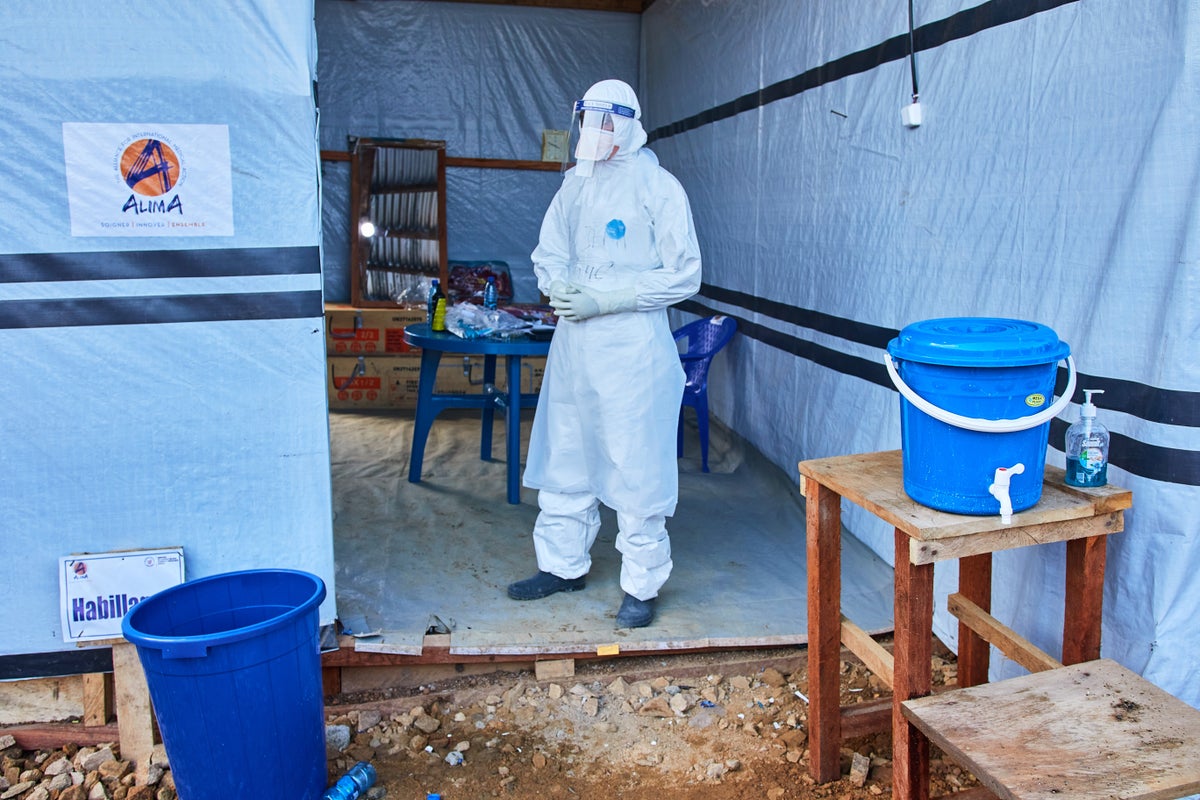
Congo Ebola outbreak death toll surpasses 500 as frontline workers threaten strike The strike threat emerges just days after clinical trials commenced, raising significant concerns about their potential disruption
independent · about 2 hours ago