 Thursday, May 28Thursday, May 28
Bristol’s Marsh Street—dubbed the city’s worst for potholes—remains a 200-metre obstacle course of crumbling tarmac, exposing Britain’s £18.6bn road repair crisis as councils struggle to keep pace with decay.
The road, linking an office block to a Thai restaurant in Bristol’s historic centre, is riddled with dozens of cracks, divots, and holes, some revealing three layers of exposed road structure beneath. Cyclists navigate it as an "assault course," while buses and cars endure a relentless jolt, according to *The Guardian*’s on-the-ground reporting . Local authorities fix a pothole in the UK every 17 seconds, yet the backlog of repairs has ballooned to a record £18.6bn—up from £12bn in 2023—due to years of underfunding, extreme weather, and rising material costs.
Bristol City Council, which oversees Marsh Street, has faced particular scrutiny. The road’s degradation mirrors a nationwide trend: councils in England and Wales filled 1.4 million potholes in 2025 alone, but the number of reported defects surged by 22% over the same period. In Bristol, the council’s highways budget has been slashed by 40% since 2010, forcing officials to prioritise "emergency" repairs over preventative maintenance. "We’re firefighting," a council spokesperson told *The Guardian*, "but the fire keeps getting bigger" .
The crisis has become a political flashpoint. Opposition parties have seized on potholes as a symbol of government neglect, with the Liberal Democrats calling for a £10bn "pothole fund" in their 2026 manifesto. Meanwhile, the Department for Transport has pledged £8.3bn over 11 years to local authorities, but critics argue the funding is "too little, too late." In Bristol, residents have launched a petition demanding immediate resurfacing of Marsh Street, which has seen a 300% increase in complaints since 2020.
Experts warn the problem will worsen. Climate change is accelerating road deterioration, with freeze-thaw cycles and heavier rainfall eroding surfaces faster than ever. The Asphalt Industry Alliance estimates that at current funding levels, it would take 12 years to clear the backlog—by which time the cost could exceed £25bn. For now, Marsh Street remains a stark reminder of Britain’s crumbling infrastructure, with no quick fix in sight.

Neighborhood watch programs are fading in the age of Ring and Nextdoor Americas classic neighborhood watch programs are fading as AI-powered apps turn neighborhoods into digital watch zones.Why it matters: The automation of neighborhood safety with tools like Amazons Ring and the Nextdoor app is quietly dismantling one of the countrys most basic forms of civic life: neighbors who actually know each other.Whats replacing it is faster, smarter — and far more detached.Shared videos of suspicious strangers and wildlife alerts are in; out are block captains, porch meetings and See Something, Say Something signs.Zoom in: Ring doorbells stream constant footage, allowing users to post it all on an app as alerts.Nextdoor posts flag suspicious strangers and lets users shame dog walkers who dont pick up poop.License plate readers are cropping up in thousands of communities, alarming privacy advocates.Meanwhile, as surveillance technology spreads, neighborhood watch programs are being dismantled.Ann Arbor, Michigan removed more than 600 neighborhood watch signs this year after officials said they encouraged racial profiling and made some residents feel unwelcome.The decline has been quieter in other places. Law enforcement officials say many programs simply fade as volunteer participation dries up and younger residents opt out.What theyre saying: Scant data exists on the programs demise, but National Sheriffs Association executive director Justin Smith tells Axios the drop is real, as neighbors switch from actively watching out for each other to watching screens. We actually lose communication, and we lose that sense of community, Mary Dodge, professor of criminal justice at the University of Colorado Denver School of Public Affairs, tells Axios.Neighborhood watch once depended on what researchers call collective efficacy — people knowing each other well enough to act together. Now, Dodge said, people dont need to know their neighbors at all. Zoom out: The decline of the neighborhood watch comes as Americans spend more time at home, even as they become strangers to their neighbors.In 2012, 51 of young Americans regularly engaged with neighbors, according to an AEI report reviewed by Axios Josephine Walker. That number has plummeted to 25 today.By contrast, 56 of seniors socialize with neighbors, a seven-point drop since 2012.Flashback: Neighborhood watch programs emerged in the late 1960s as part of a push toward community policing — the idea that crime prevention depends on residents working with police.The National Sheriffs Association formalized the program in 1972, and it spread nationwide as a low-cost way to deter crime.Yes, but: The new system is better at catching crime — and worse at building trust.Smith said law enforcement can gather all the data collected by apps and analyze it by using AI to crack cases that used to take months, if not years, to solve. At the same time, law enforcement is losing its human intelligence on the ground.Friction point: The old neighborhood watch had its own problems, like racial profiling and suspicion of outsiders. The new version hasnt solved that, and may have scaled it.I saw a person of color walking through my neighborhood, and I dont like it. That is not reliable information, said Dodge, who has studied Nextdoor.Apps like Nextdoor often amplify those kinds of posts, mixing legitimate safety concerns with bias, misinformation and, at times, outright hostility, she said.Nextdoor did not immediately respond to Axios. The bottom line: In the past, solving a neighborhood crime meant talking to the person on the porch. Now it means pulling footage, scanning data — and letting AI connect the dots.
axios · 5 days ago

More than 18,000 public e-car charging points in Switzerland Thousands of publicly accessible electric car charging stations can be found around Switzerland. However, the number and capacity utilisation varies greatly from canton to canton. +Get the most important news from Switzerland in your inbox According to figures from the Swiss Federal Office of Energy, there were a total of 18,284 charging points at 8,535 locations in Switzerland as of April 2026. This means there are just over 2.1 charging points at an average location. As expected, canton Zurich has the most charging points in absolute terms, with a total of 2,692, putting it well ahead of second-placed canton Bern with 1,891 charging points and Vaud with 1,590. Appenzell Inner Rhodes (31), Appenzell Outer Rhodes (77) and Obwalden (109) have the fewest opportunities to charge an electric car in public. + New Swiss electric cars regain traction but miss targets Meanwhile, canton Zug has the most battery electric vehicles (BEV) per charging point. There are 53 BEVs per publicly ...
swissinfo · 5 days ago
Traffic jam at Gotthard tunnel hits 20km The traffic jam in front of the Gotthard road tunnel in Switzerland is continuing to grow rapidly on Saturday morning. In the early hours it was already 10km. Shortly before 10am the traffic jam in front of the north portal had already doubled in length. +Get the most important news from Switzerland in your inbox According to the TCS website, road users will have to allow for an extra three hours and 20 minutes travelling time. As the popular alternative route on the A13 via the San Bernardino tunnel is already congested over a length of 17 kilometres, the TCS recommends taking a diversion via the A9 Simplon or the Lötschberg car transport. The Federal Roads Office (Astra) had expected a high volume of traffic over the Whitsun weekend. The record was 28 kilometres in 2018 – also at Whitsun. Adapted from German by AI/ts How we work We select the most relevant news for an international audience and use automatic translation tools to translate them into English. A journalist then ...
swissinfo · 5 days ago
BYDs long and winding road towards the F1 grid Also in todays newsletter: the spygate scandal rocking English football
financial times · 5 days ago
Irlande: à Cork, la transformation durable des anciens docks de la ville Deuxième ville de la République dIrlande après la capitale Dublin, Cork est en train de vivre une transformation à léchelle dune génération. Un plan de réaménagement des anciens docks, dun montant de 353 millions deuros, finance la construction des logements, des services, des parcs, des transports, mais aussi dun système anti-inondation. Avec pour mot dordre : la durabilité.
rfi.fr · 6 days ago
Plans to bring back the Groningen-Norway ferry will cost €75 million An expansion of Eemshaven that will include a new ferry terminal for planned passenger and freight routes to Norway is to cost 75 million euros, with completion targeted for early 2028, RTV Noord
nltimes.nl · 6 days ago
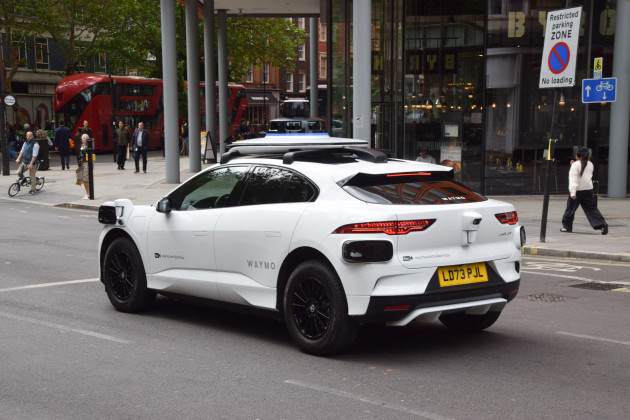
Motoring: Should we trust self-driving cars? In theory, removing the human from the loop should make roads significantly safer. But is that the reality?
thejournal · 6 days ago

There is no great master plan: anxiety as UK homes, roads and railways sink into the sea Increasing coastal erosion has hit communities livelihoods and put lifestyles under threatThe remains of the road linking two towns in south Devon lie crumbled on the foreshore in a mess of tarmac, steel and concrete.The dramatic coastal road, known as the Slapton Line, has an environmentally protected freshwater lake on one side and the sea on the other, and links the towns of Kingsbridge and Dartmouth. But this year, winter storms demolished a section of the A road between Torcross and Slapton, which is at the frontline of rising sea levels and coastal erosion, fulfilling a destiny that was predicted more than 30 years ago, but that has not been prepared for. Continue reading...
theguardian · 6 days ago

The pothole puzzle: the bumpy ride to fixing Britains broken roads Councils fix a pothole every 17 seconds – but getting on top of the repair backlog would cost £18.6bn. Why is it so hard to solve a problem that drives the nation crazy?Marsh Street in the historic centre of Bristol is a modest little stretch of road with an office block at one end, a Thai restaurant at the other, and an almighty mess in between.Along its length of 200 metres or so, the tarmac surface of the road is pockmarked with many dozens of cracks, patches, divots and holes. In some spots where the surface has worn away, three or more layers of road structure are exposed beneath. What is a bouncy enough ride in a bus or car is even more of an assault course for cyclists, a number of whom weave carefully down its length as they cut through the city centre. Continue reading...
theguardian · 6 days ago
Politics of potholes: why Bristol cant fix its broken roads overnight Marsh Street has been cited as Bristols worst for potholes. But its just one of many crumbling roads in Britain as councils face repairs backlogs and lack of fundsMarsh Street in the historic centre of Bristol is a modest little stretch of road with an office block at one end, a Thai restaurant at the other, and an almighty mess in between.Along its length of 200 metres or so, the tarmac surface of the road is pockmarked with many dozens of cracks, patches, divots and holes. In some spots where the surface has worn away, three or more layers of road structure are exposed beneath. What is a bouncy enough ride in a bus or car is even more of an assault course for cyclists, a number of whom weave carefully down its length as they cut through the city centre. Continue reading...
theguardian · 6 days ago
Krk Bridge: Once Ranked Among the Largest in the World May the 23rd, 2026 – Krk Bridge isnt exactly a bridge youd consider to be massive or particularly amazing in the modern day, but once upon a time, it was the envy of Europe. When it opened back in 1980, the spectacular bridge connecting the island of Krk to the mainland was not only one ... Read more The post Krk Bridge: Once Ranked Among the Largest in the World appeared first on Total Croatia.
total croatia news · 6 days ago
Is There Too Much Construction on the Croatian Coast? May the 23rd, 2026 – There is plenty of construction along the Croatian coast, with some of it having not exactly been legal in the past. With cranes now as common as palm trees, the question is, is there too much of it going on? From Istria to southern Dalmatia, new apartment blocks, villas and ... Read more The post Is There Too Much Construction on the Croatian Coast? appeared first on Total Croatia.
total croatia news · 6 days ago