
Toronto air quality worst globally as Canadian wildfire smoke blankets city, disrupts events
Toronto experienced the worst air quality in the world on Wednesday as smoke from devastating wildfires in Canada blanketed the city, turning skies orange and prompting health warnings. The Canadian environmental agency rated Toronto's air quality index at 10+, categorizing it as "very high risk." The Swiss technology company IQAir, which measures air quality, ranked Toronto first on its global list of cities with the worst air quality, surpassing Kinshasa and Delhi.
The smoke from the wildfires, which are burning hundreds of kilometers away in the northwest of Ontario, has also drifted into the northeastern United States, affecting cities like New York City. Authorities in New York issued warnings and advised residents to avoid strenuous outdoor activities. The air quality index in New York City reached 180 on Wednesday evening, classified as "unhealthy" by the US Environmental Protection Agency.
Canadian officials reported that 835 wildfires were burning across the country on Wednesday, with 112 of them out of control. The fires have already burned an area of 1.9 million hectares. Despite the fires being in sparsely populated areas, the smoke has caused significant disruptions in major cities.
In Toronto, the poor air quality led to the cancellation of the FIFA Fanfest and a public viewing event for the World Cup match between England and Argentina. Authorities advised residents to stay indoors and avoid outdoor activities. The dangerous conditions are expected to persist until Thursday night.
Experts attribute the increasing frequency and severity of wildfires to climate change. Greg Evans, a professor at the University of Toronto, stated, "I expect this to happen more frequently in the coming decades, so cities and residents need to prepare for this in the future."
The smoke contains microscopic particles known as PM2.5s, which can exacerbate medical conditions, particularly in vulnerable populations such as children, the elderly, and those with preexisting conditions like asthma or lung disease. Health experts recommend limiting outdoor activities to reduce exposure to these particles.
The wildfires and the resulting smoke have also coincided with a heat wave in the region, with temperatures exceeding 90 degrees Fahrenheit in many areas. This combination of extreme heat and poor air quality poses additional health risks.
The smoke is expected to continue affecting the Northeast US on Thursday, with conditions potentially worsening in some areas. Cities like Duluth, Minnesota, have seen their air quality index exceed 500, categorized as "hazardous" and considered unsafe for everyone.
Canadian authorities have issued mandatory evacuation orders for some areas in northwestern Ontario, although the fires themselves do not pose a direct threat to major cities. The situation highlights the far-reaching impact of wildfires, even in areas not directly affected by the flames.
The wildfires in Canada are part of a growing trend of increasingly severe wildfires driven by climate change. Experts warn that such events are likely to become more frequent and intense in the coming decades, necessitating better preparation and response strategies from cities and residents.
The smoke from the wildfires has turned skies hazy from Minnesota to New York, with particularly dramatic images emerging from Toronto, where commuters went to work under orange skies on Wednesday morning. The region is also dealing with a heat wave, with temperatures well above 90 degrees Fahrenheit in many areas and an even higher heat index.
On Wednesday evening, the air quality index in New York City topped out at 180, putting the city's air squarely in the “unhealthy” category as defined by the US Environmental Protection Agency. Other places were even worse off, with Duluth, Minnesota, seeing its AQI top out above 500. Anything over 301 is labeled “hazardous” and considered unsafe for everyone.
Smoky conditions are expected to worsen in parts of the Northeast US on Thursday, including New York. The wildfire smoke blanketing the area contains microscopic particles of matter known as PM2.5s—shorthand for particles that are smaller than 2.5 micrometers, or 30 times smaller than the width of a human hair. Exposure to PM2.5s can trigger or worsen a number of medical conditions, especially in vulnerable populations.
Nicholas Nassikas, a pulmonologist and assistant professor of medicine at Harvard Medical School, says that he would tell his patients with preexisting conditions, like asthma or lung disease, to limit their time outside. Children “have a faster breathing rate—they just breathe more,” says Nassikas, while the elderly, who often have compounding conditions and may live in less well ventilated homes and senior centers, are also at risk.
Jennifer Stowell, an assistant professor at the University of Maryland’s School of Public Health, says that even healthy adults may want to take precautions on days when the air quality index goes over 100: “At the very least, it is important to limit your time outdoors to reduce your overall exposure.” she says.
The wildfires themselves are burning in thinly populated areas hundreds of kilometers from Toronto and do not pose a direct threat to the cities. However, the smoke has caused significant disruptions and health concerns.
The Canadian government reported that as of Wednesday, there were around 835 fires burning across the country, with 112 of them out of control. So far, an area of 1.9 million hectares has been burned.
Experts believe that such events will become more frequent due to climate change. Greg Evans, a professor at the University of Toronto, said, “I expect that this will happen more frequently in the coming decades, so cities and residents need to prepare for this in the future.”
The smoke from the wildfires has also affected the Midwest and Northeast US, with cities across the region issuing air quality warnings. The smoke has turned skies hazy from Minnesota to New York, with particularly dramatic images emerging from Toronto, where commuters went to work under orange skies on Wednesday morning.
The region is also dealing with a heat wave, with temperatures well above 90 degrees Fahrenheit in many areas and an even higher heat index. On Wednesday evening, the air quality index in New York City topped out at 180, putting the city's air squarely in the “unhealthy” category as defined by the US Environmental Protection Agency.
Other places were even worse off, with Duluth, Minnesota, seeing its AQI top out above 500. Anything over 301 is labeled “hazardous” and considered unsafe for everyone.
Smoky conditions are expected to worsen in parts of the Northeast US on Thursday, including New York. The wildfire smoke blanketing the area contains microscopic particles of matter known as PM2.5s—shorthand for particles that are smaller than 2.5 micrometers, or 30 times smaller than the width of a human hair.
Exposure to PM2.5s can trigger or worsen a number of medical conditions, especially in vulnerable populations. Nicholas Nassikas, a pulmonologist and assistant professor of medicine at Harvard Medical School, says that he would tell his patients with preexisting conditions, like asthma or lung disease, to limit their time outside.
Children “have a faster breathing rate—they just breathe more,” says Nassikas, while the elderly, who often have compounding conditions and may live in less well ventilated homes and senior centers, are also at risk.
Jennifer Stowell, an assistant professor at the University of Maryland’s School of Public Health, says that even healthy adults may want to take precautions on days when the air quality index goes over 100: “At the very least, it is important to limit your time outdoors to reduce your overall exposure.” she says.
The wildfires themselves are burning in thinly populated areas hundreds of kilometers from Toronto and do not pose a direct threat to the cities. However, the smoke has caused significant disruptions and health concerns.
The Canadian government reported that as of Wednesday, there were around 835 fires burning across the country, with 112 of them out of control. So far, an area of 1.9 million hectares has been burned.
Experts believe that such events will become more frequent due to climate change. Greg Evans, a professor at the University of Toronto, said, “I expect that this will happen more frequently in the coming decades, so cities and residents need to prepare for this in the future.”
Follow us for live European news
- 3
- 2
- 1
- 1
- 1
- 1
- 1
- 1
- 1
3 further sources not geolocated
Articles
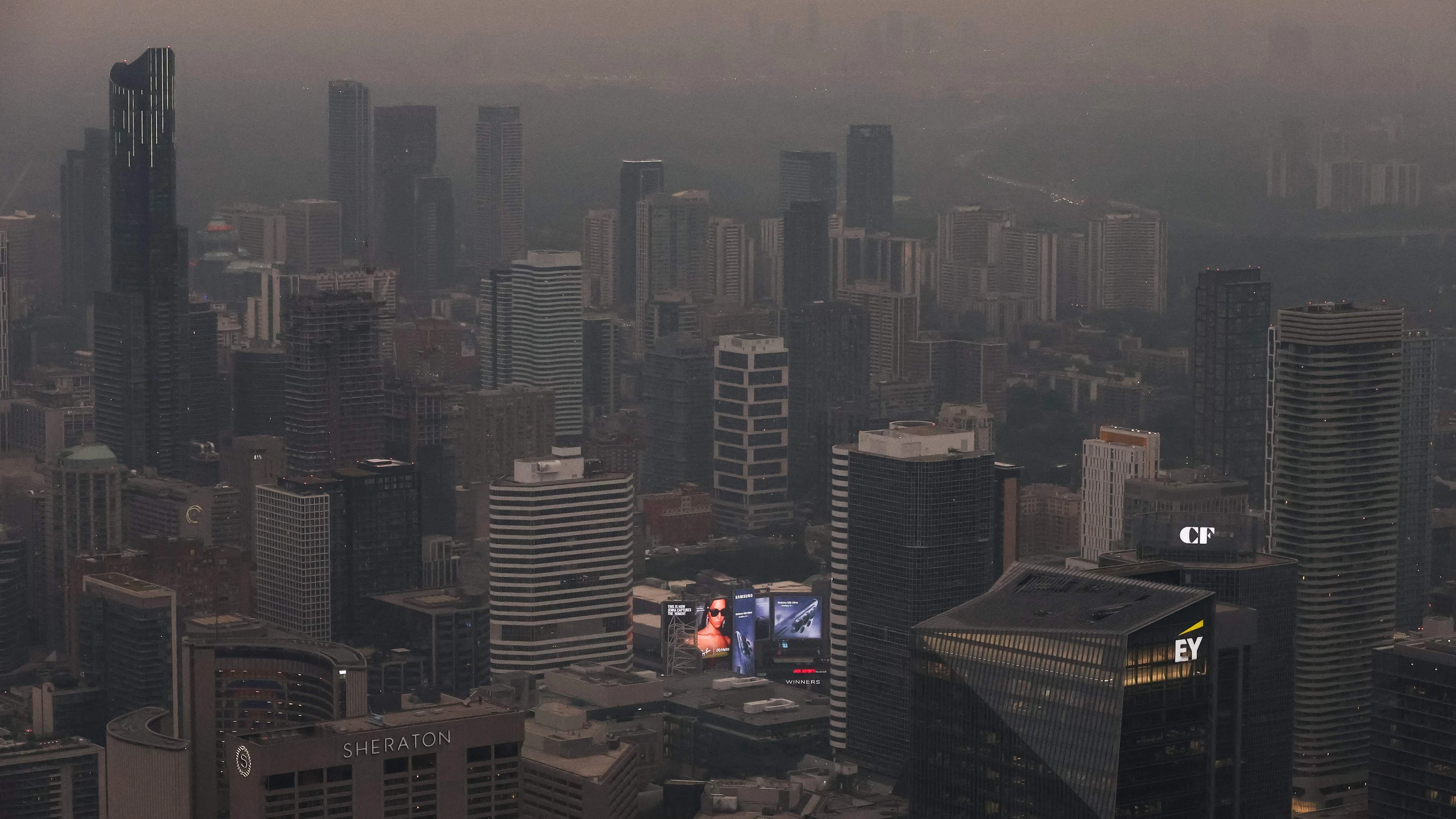
Schlechte Luft: Rauch von Waldbränden legt sich über Toronto und New York Rauchschwaden, dunkler Himmel und schlechte Luftqualität: Nach Angaben der Regierung brannten am Mittwoch in Kanada rund 835 Feuer, von denen 112 als außer Kontrolle galten.
faz · about 3 hours ago

Smoke From Canadas Wildfires Turns Skies Sickly Orange Across the Eastern US Roughly 100 fires are raging out of control in Ontario, sending smoke streaming 1,000 miles to the south and east.
wired.com · about 3 hours ago
Gestoppte KI-Rechenzentren: New York wehrt sich KI-Rechenzentren verschlingen viel Energie und pusten Dreck in die Luft. Deshalb stoppt der US-Staat New York den Bau neuer Zentren. Es ist ein Vorbild auch für Deutschland. mehr...
taz.de · about 3 hours ago
I quartieri di Napoli più colpiti da tumore ai polmoni sono quelli vicino a porto e aeroporto: è ora di agire Il monitoraggio del Ministero della Salute sui Lea (Livelli Essenziali di Assistenza) per la Campania evidenzia una sufficienza strappata per il rotto della cuffia. La Regione ha raggiunto la soglia minima di adempimento nei servizi sanitari essenziali, ma restano profonde criticità. I punti chiave del report dicono che la Campania supera appena la sufficienza e […] Larticolo I quartieri di Napoli più colpiti da tumore ai polmoni sono quelli vicino a porto e aeroporto: è ora di agire proviene da Il Fatto Quotidiano.
il fatto quotidiano · about 3 hours ago
Ilmastokriisi | Maastopalot ovat värjänneet Toronton oranssiksi Kanadassa leviää yli 800 maastopaloa. Ilmanlaatu on heikentynyt miljoonakaupungissa merkittävästi.
helsingin sanomat · about 3 hours ago
Wildfire smoke engulfs Toronto, Canada and turns its skies orange Wildfire smoke turned skies orange over Toronto and the rest of Ontario.
aljazeera · about 3 hours ago
Rauch von Waldbränden legt sich über Toronto und New York Toronto wurde in einer globalen Rangliste der Städte mit der schlechtesten Luft auf den ersten Platz gesetzt.
die presse · about 4 hours ago
JUST IN - Manhattan air polluted by wildfires from Canada @insiderpaper
telegram_Insider Paper · about 4 hours ago
Fußball: Vor WM-Finale: Rauch-Warnung und Hitze in New York Waldbrände in Kanada sorgen in New York für schlechte Luft. Behörden stufen sie als ungesund ein. Hinzu kommt die Hitze. Wird es Auswirkungen auf das WM-Finale geben?
tagesspiegel · about 4 hours ago

Wildfire smoke worsens air quality in Twin Tiers
news.yahoo.com · about 5 hours ago

Canadian wildfire smoke chokes Toronto, threatens US cities reut.rs/4gBy7wc
bluesky_Reuters · about 5 hours ago
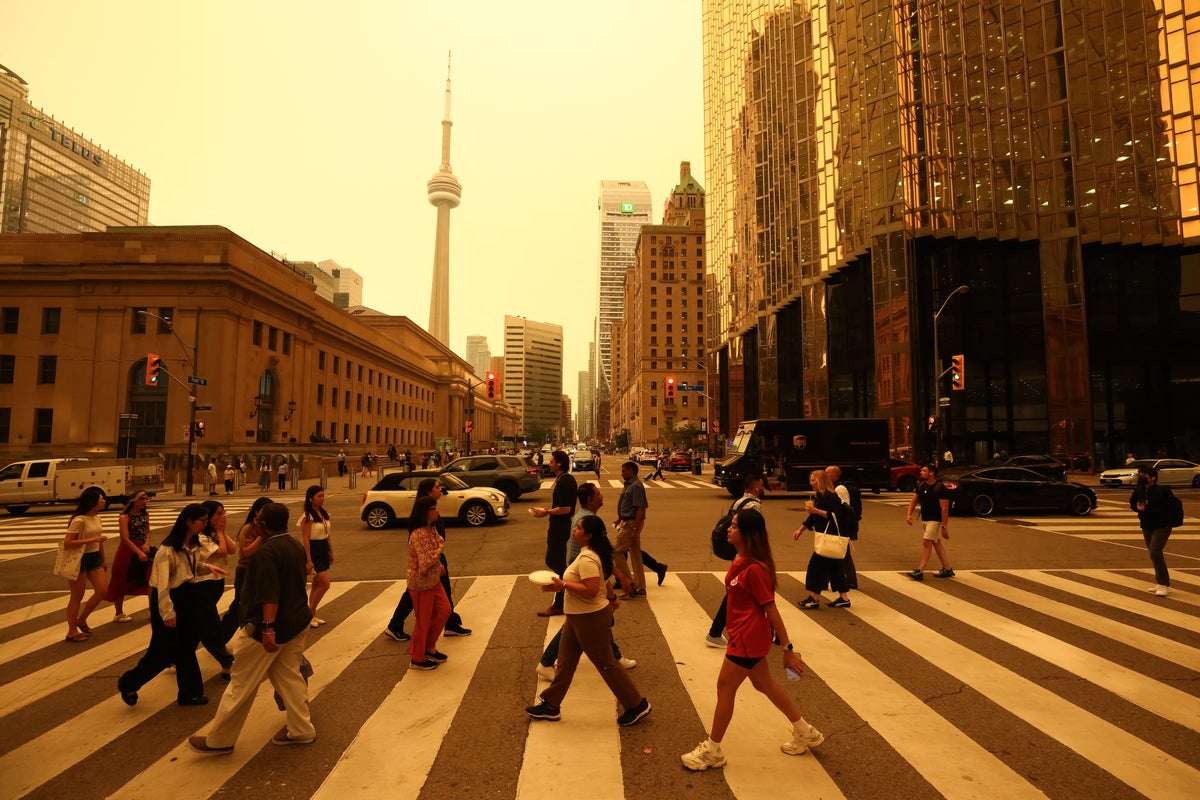
Torontos skies turn yellow as dangerous smoke from over 100 wildfires engulfs city Residents have been warned to stay indoors to avoid both the smoke and the extreme heat
independent · about 5 hours ago
Toronto engulfed by wildfire smoke as US cities threatened Monitor ranks Toronto as having the worst air quality on earth, surpassing Kinshasa, DR Congo, and New Delhi, India.
aljazeera · about 5 hours ago
Rook van bosbranden Canada verstikt Toronto en bedreigt New York, waar finale WK zondag wordt gespeeld
de morgen · about 6 hours ago
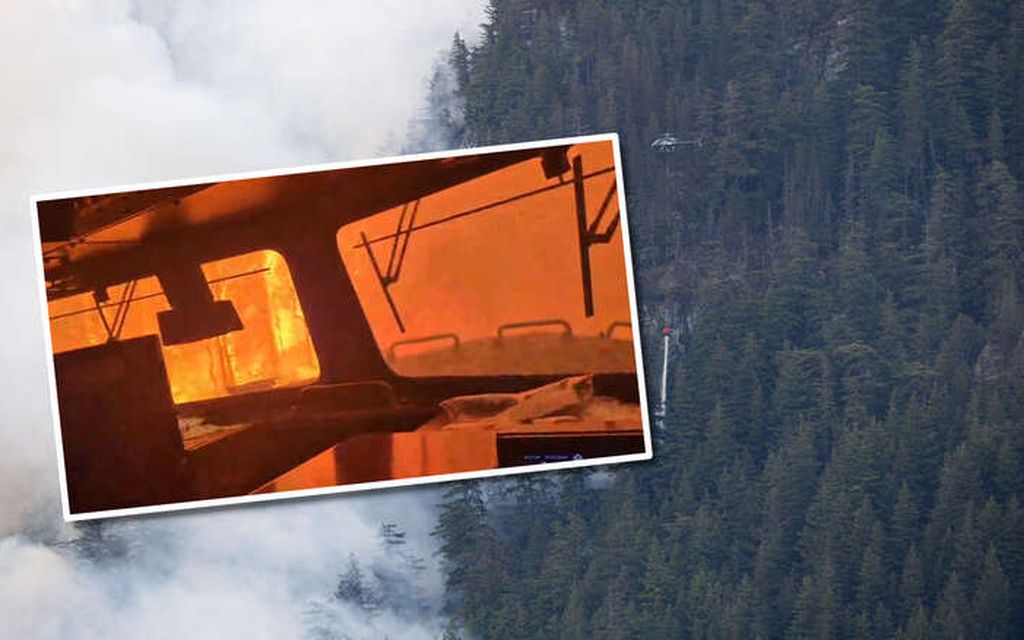
Teidän pitää todella kiirehtiä – Juna jäi maastopalon keskelle Kanadassa
iltalehti · about 7 hours ago
Au Canada, Toronto asphyxié par les fumées des feux de forêt et métropole la plus polluée au monde ce mercredi La ville la plus peuplée du Canada est également ce mercredi 15 juillet la métropole la plus polluée au monde, devant Kinshasa et Delhi, en raison de feux de forêt et dune vague de chaleur.
liberation · about 8 hours ago
The Northeast Is Being Blanketed in Canadian Wildfire Smoke Roughly 100 wildfires are raging out of control in Ontario, sending smoke streaming more than 1,000 miles to the south and east.
wired.com · about 8 hours ago