
Scientists revive Russian dandelion to solve global rubber shortage
Scientists have revived a wartime solution to avert a global rubber shortage by turning to the Russian dandelion, Taraxacum koksaghyz, a resilient plant whose roots yield a milky latex that can be processed into natural rubber. On Wednesday, 17 June 2026, researchers at the Guardian’s Plantwatch reported that the demand for natural rubber has surged as traditional rubber trees, Hevea brasiliensis, face mounting threats from a devastating fungal disease and increasingly erratic weather patterns linked to the climate crisis. During the Second World War, the Allies relied on the Russian dandelion after natural rubber supplies were cut off, but production reverted to tropical rubber trees once hostilities ceased. Now, with Hevea brasiliensis plantations struggling to meet demand, the dandelion is being reconsidered for its ability to thrive in temperate climates without pesticides or excessive water, and without contributing to the deforestation associated with tropical rubber cultivation .
The urgency of the situation is underscored by the dual pressures on the rubber industry: fungal pathogens such as South American leaf blight have devastated plantations across Southeast Asia, while extreme weather events—including prolonged droughts and floods—have disrupted harvests and reduced yields. In contrast, the Russian dandelion, native to Kazakhstan, can be cultivated in Europe and North America, offering a geographically diversified and climate-resilient alternative. “The dandelion’s latex content is sufficient to make natural rubber, and its cultivation requires minimal inputs,” said a spokesperson for the Royal Botanic Gardens, Kew, which is collaborating on trials to scale up production .
Industry analysts warn that without alternative sources, the global rubber shortage could disrupt supply chains for tyres, medical equipment, and industrial goods, with prices already climbing by up to 30% over the past year. The European Tyre and Rubber Manufacturers’ Association has called for accelerated investment in dandelion-based rubber, noting that pilot farms in Germany and Poland have demonstrated yields comparable to traditional rubber trees under optimal conditions. “We are at a critical juncture,” said Dr Elena Petrov, a plant biologist at Wageningen University. “The dandelion could be a game-changer, but scaling up will require coordinated policy support and subsidies to make it commercially viable” .
While the transition will take years, the revival of the Russian dandelion highlights a broader shift toward sustainable agriculture and supply chain resilience in the face of climate change. For now, researchers are focused on refining extraction techniques and increasing latex yields, with the first commercial batches of dandelion rubber expected to enter the market by 2028.
- 1
- 1
- 1
- 1
- 1
- 1
1 further source not geolocated
Articles

Unser Planet der Mikroben Jetzt anhören: Wie Mikroorganismen das Leben auf der Erde bestimmen
der standard · about 3 hours ago
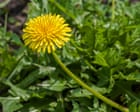
Plantwatch: Russian dandelion offers solution to global rubber shortage Scientists are returning to a wartime solution that may be more sustainable than the traditional rubber treeThere is a global shortage of natural rubber and dandelions may be coming to the rescue. In the second world war there was such a severe shortage of rubber that the Allies used the Russian dandelion, Taraxacum koksaghyz, from Kazakhstan. Soviet scientists found the dandelion roots produced enough white milky latex to make natural rubber, but when the war ended producers returned to the traditional rubber tree, Hevea brasiliensis.But the demand for rubber is now increasing, with rubber trees suffering from a fungal disease and the impacts of extreme weather caused by the climate crisis. So, scientists are looking again at using dandelions, with the added benefit that they grow in temperate climates, are a sustainable crop that do not need pesticides and lots of water, and dont lead to the deforestation common in tropical rubber tree plantations. Continue reading...
theguardian · about 3 hours ago

I dont like being stuck in an office: the young people helping plant a ring of trees around London London Tree Ring project aims to create corridors of plant and animal life around the city to strengthen its biodiversityHarry Ewing is heaping branches and foliage from the forest floor on to a dead hedge, reinforcing the protective circle around his newly planted trees in Hadley Wood, north London. He is in a glade created by a fallen oak that was previously overrun with thick bramble.I feel very happy – the trees are growing already. Its really nice seeing it when it starts, says Ewing. Continue reading...
theguardian · about 3 hours ago

Algerien im Jahr 2050: Wird in Algerien der Code der Wüste geknackt? Denkender Sand, unterirdische Netzwerke, die Luft nach Europa transportieren, Wüstenstürme, die Energie liefern – Utopien über die Kraft der Sahara. mehr...
taz.de · about 3 hours ago
:format(jpg)/f.elconfidencial.com%2Foriginal%2Fa8f%2F6c0%2F399%2Fa8f6c03994f29e54355766f5355dc140.jpg)
Barcelona apuesta por asfaltar sus calles con huesos de aceituna y madera: reducirá un 76 las emisiones de CO2 Barcelona transformará el pavimento de sus calles con un innovador asfalto sostenible fabricado a base de huesos de aceituna y madera, logrando reducir hasta un 76 las emisiones de CO2
el confidencial · about 3 hours ago
Paradoxul care uimește lumea: motivul pentru care o țară cu deșerturi uriașe importă nisip Arabia Saudită, țară care are unele dintre cele mai întinse deșerturi din lume, importă nisip pentru construcții din străinătate.
adevarul · about 3 hours ago
How can we know if plants or fungi have really gone extinct? AI is helping the Royal Botanic Gardens predict — and prevent — the demise of species
financial times · about 3 hours ago
Περιστέρης: Εντός του 2026 οι παρεμβάσεις στην Αττική Οδό
protothema · about 4 hours ago