 Thursday, May 21Thursday, May 21
The May 7 Scottish Parliament elections will see voters elect all 129 Members of the Scottish Parliament, with polling indicating a competitive race. The latest Ipsos poll (fieldwork: 01-04 May 2026) projects the Scottish National Party (SNP) leading with 26% of the proportional representation (PR) vote, though this represents a 3-point decline from late March. Reform UK is polling at 18%, a 2-point increase, while the Scottish Greens (SGP) hold 17%, up 1 point. Labour follows at 15%, with the Liberal Democrats at 11% (+2) and the Conservatives at 10% (-3) .
The same Ipsos poll shows Scottish public opinion on independence remains closely divided, with 52% opposing and 48% supporting a referendum, reflecting a 2-point shift toward "No" since late March . The election has also seen Reform UK gain traction in areas like Falkirk by capitalizing on anti-migrant sentiment, a shift from Scotland’s traditionally more welcoming stance on asylum seekers .
Analysts suggest these elections could be pivotal for Labour, which risks falling to third place in Scotland, potentially undermining Keir Starmer’s leadership. The outcome may also signal broader trends in UK politics, including the rise of smaller parties like Reform UK and the Greens . Reporting from Scotland highlights how young voters are engaging with the election, with discussions on national identity and political priorities shaping their choices .

How close is the United Kingdom to breaking up? The May 7 elections could see nationalist gains in Scotland and Wales, while Sinn Fein already leads in Northern Ireland. Is the UKs unity at risk?
deutsche welle europe · 15 days ago
UK elections: What does it mean to be Scottish today? As British voters head to the polls for local elections on May 7, Elena Pompei, a journalist with ENTRs English-language team, takes us to Scotland, where she has been reporting on how young people are feeling ahead of the vote. Scottish voters will also be casting ballots on Thursday to elect all 129 Members of the Scottish Parliament.
france24 · 15 days ago
UK (Wales), Survation: Welsh Parliament election PC (Greens/EFA): 30 (+2) REFORM (~NI): 28 (-2) LAB (S&D): 15 CON (~ECR): 10 GPEW (Greens/EFA): 7 (-3) LDEM (RE): 6 (+2) +/- vs. April 2026 Fieldwork: 01-06 May 2026 Sample size: 1,054 ➤ europeelects.eu/uk
telegram bot · 15 days ago
UK local elections: What does it mean to be Scottish today? As British voters head to the polls for local elections on May 7th, Elena Pompei, a journalist with ENTRs English-language team, takes us to Scotland, where she has been reporting on how young people are feeling ahead of the vote.
france24 · 15 days ago
UK (Scotland), Ipsos poll: Independence referendum No: 52 (+2) Yes: 48 (-2) +/- vs. 26-31 March 2026 Fieldwork: 01-04 May 2026 Sample size: 1,003 ➤ europeelects.eu/uk
telegram bot · 15 days ago
Looking ahead to the UKs local elections with British politics expert Colm Murphy British Prime Minister Keir Starmer is facing his biggest test yet as the UK heads to the polls on Thursday for local elections. Voters in England will be charged with picking their local councillors, while in Scotland and Wales, representatives of the devolved parliaments will be elected. Polls are already predicting the ruling Labour Party will suffer its worst results in decades, with Reform UK and the Green Party expected to make gains. We look ahead to the vote with Colm Murphy, senior lecturer in British politics at Queen Mary University.
france24 · 15 days ago
UK (Scotland), Ipsos poll: Scottish Parliament PR Vote election SNP (Greens/EFA): 26 (-3) REFORM (~NI): 18 (+2) SGP (Greens/EFA): 17 (+1) LAB (S&D): 15 LDEM (RE): 11 (+2) CON (~ECR): 10 (-3) +/- vs. 26-31 March 2026 Fieldwork: 01-04 May 2026 Sample size: 1,255 ➤ europeelects.eu/uk
telegram bot · 15 days ago

Scottish elections: Reform UK capitalizes on anti-migrant protests in Falkirk As regional elections take place on Thursday, May 7, in Scotland and Wales, far-right activists have managed to rally broad support around slogans hostile to asylum seekers in a region previously known for being welcoming.
le monde · 15 days ago
Vote 2026: The final countdown On the eve of a hugely significant set of local and national elections – who has the momentum and who is staring into an electoral abyss? Sam and Anne pore over the final voting intention polls before the elections – covering England, Scotland and Wales. Have the latest headlines for Reform and the Greens done […]
politico.eu · 15 days ago
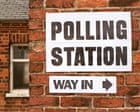
May elections: Whats at stake across England, Wales and Scotland? Will Reform take Sunderland, or the Greens take Hackney? Can Plaid Cymru take a historic victory in Wales, and will Labour be forced into third place in Scotland? We examine the possible outcomes for election nightThe Scottish, Welsh, and local English elections on Thursday 7 May are a huge test for all the main political parties – and may be existential for Keir Starmer as prime minister and Labour leader.The elections, two years into a Labour government, will see more than 30 million people across England, Wales and Scotland vote in the devolved administrations, in six mayoral races, and for more than 4,500 councillors in city and county councils. Continue reading...
theguardian · 15 days ago
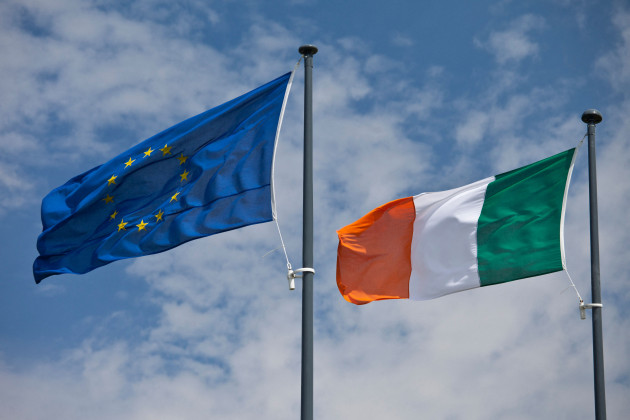
All Ireland poll shows cross-border support for Irish unity and EU membership The all-island poll looked at EU satisfaction, defence cooperation and relations with the US.
thejournal · 15 days ago