 Thursday, May 28Thursday, May 28
Trump-backed Republican candidates and redistricting efforts suffer key setbacks as primary battles intensify.
A federal court in Alabama blocked a Republican-drawn congressional map on Monday, ruling it would reduce Black-majority districts from two to one—a decision that directly challenges the Trump-aligned push to reshape electoral boundaries ahead of the 2026 midterms. The ruling follows a separate rejection last week by [South Carolina’s](en.wikipedia.org) Senate, which refused to advance a GOP-backed redistricting plan championed by former President Donald Trump, citing legal and procedural concerns .
The legal defeats underscore growing resistance to mid-decade redistricting efforts, which Republicans have framed as a critical tool to secure House control. In Florida, however, a state judge—appointed by Gov. Ron DeSantis—allowed a Republican-friendly map to proceed, despite lawsuits alleging partisan gerrymandering. The ruling, which could shift Florida’s delegation further toward the GOP, contrasts with setbacks in Alabama and South Carolina, where courts and lawmakers have pushed back against Trump’s influence over redistricting .
Meanwhile, Trump’s endorsement power faces scrutiny in Texas, where Attorney General Ken Paxton—backed by the former president—leads in the GOP Senate primary runoff against incumbent John Cornyn. Paxton’s campaign has been overshadowed by personal drama, including his ex-wife Angela’s public opposition, though early voting data suggests strong Republican turnout . Democrats, sensing vulnerability, are eyeing the race as a potential pickup opportunity.
The redistricting battles reflect a broader Republican strategy to lock in electoral advantages before November, but legal challenges and intraparty divisions threaten to blunt its impact. With courts poised to rule on additional cases in the coming months, the outcome could reshape the balance of power in Congress.

Boston Red Soxs TV network pulls ad of Senate candidate who criticized the team New England Sports Network removed Graham Platners 15-second ad midway through Red Sox game last week
independent · 2 days ago

Trump-led push to redraw Congress maps faces setbacks in Southern states State lawmakers reject a new map in South Carolina as judges strike down newly drawn US House districts one in Alabama.
aljazeera · 2 days ago

The House Democratic campaign arms unusual new target: Democratic candidates The Democratic Congressional Campaign Committee (DCCC) is employing an unusual tactic to blunt what they say is Republican meddling in their primaries:They have teamed up with the candidates they see as the "strongest" in key battleground districts, launching joint ad buys to squeeze out their Democratic primary opponents.Why it matters: This practice has infuriated parts of the party, particularly the progressive wing."If DCCC were a good judge of electability, then we wouldnt be in the mess were in," said Ravi Mangla, a spokesperson for the progressive Working Families Party, in a statement to Axios.DCCC spokesperson Viet Shelton said in a statement that "the stakes are incredibly high for the midterms" and it is "critical that Democrats have the strongest candidates possible in November to take back the House."Driving the news: The DCCC roiled certain corners of the party earlier this month by endorsing a slate of "Red to Blue" candidates in key battleground House districts that still had credible primary opponents.Jasmeet Bains, a California state Assembly member who is fighting with progressive political science professor Randy Villegas — who has led in fundraising and is neck-and-neck with Bains in polls — to take on Rep. David Valadao (R-Calif.).Bob Brooks, the president of the Pennsylvania Professional Firefighters Association, who dispatched three relatively well-funded opponents in his primary and will face off with Rep. Ryan Mackenzie (R-Pa.).Marlene Galán-Woods, a former TV news anchor in a primary field of five other candidates including former Arizona state Rep. Amish Shah, who defeated Galán-Woods in the 2024 primary for the same seat.Joe Baldacci, a Maine state senator whose primary opponents for retiring Rep. Jared Goldens (D-Maine) seat include state Auditor Matthew Dunlap and former House staffer Jordan Wood.Johnny Garcia, a sheriffs deputy in a runoff with therapist Maureen Galindo, who finished first in the March primary but has been widely disavowed by Democrats for antisemitic comments.Zoom in: The DCCC has now spent money in three of these primaries, launching joint ad buys with Bains, Brooks and Garcia, according to ad tracking firm AdImpact.They spent over $100,000 on an ad buy boosting Brooks, who says in the party-backed spot: "Theres a lot of politicians in Washington, not a lot of folks like us. ... D.C. is a dumpster fire and were going to put it out."They have put more than $45,000 into supporting Bains — roughly half of which was placed on Tuesday — with ads touting her as someone who will "stop the cruel cuts and do whats right." Most recently the DCCC placed $35,000 on an ad buy attacking Galindo for her comments and labeling her "MAGA Maureen."Between the lines: What these races have in common is that Democrats are accusing Republicans of meddling in each one.An obscure new group called Lead Left PAC spent over $1.2 million on ads attacking Brooks and supporting one of his opponents, Lamont McClure, and has put another $900,000 into ads supporting Galindo.The PACs website says it "stands against MAGA extremists who will infect our country with Donald Trumps agenda" but reportedly had a link to GOP fundraising platform WinRed in its metadata.While House Republicans have stayed quiet on whether they are behind Lead Left PAC, they have openly spent money trying to boost Villegas.The bottom line: "We believe our Red to Blue candidates represent the best chance to help Democrats win in the general election and why shady Republican groups have spent for Bains, Brooks, and Garcias primary opponents. They know it too," said Shelton, the DCCC spokesperson. To some progressive groups, that simply isnt enough justification: "Were seeing all over the country that voters want populist candidates who arent in the pocket of Big Tech and corporate elites," said Mangla.
axios · 2 days ago
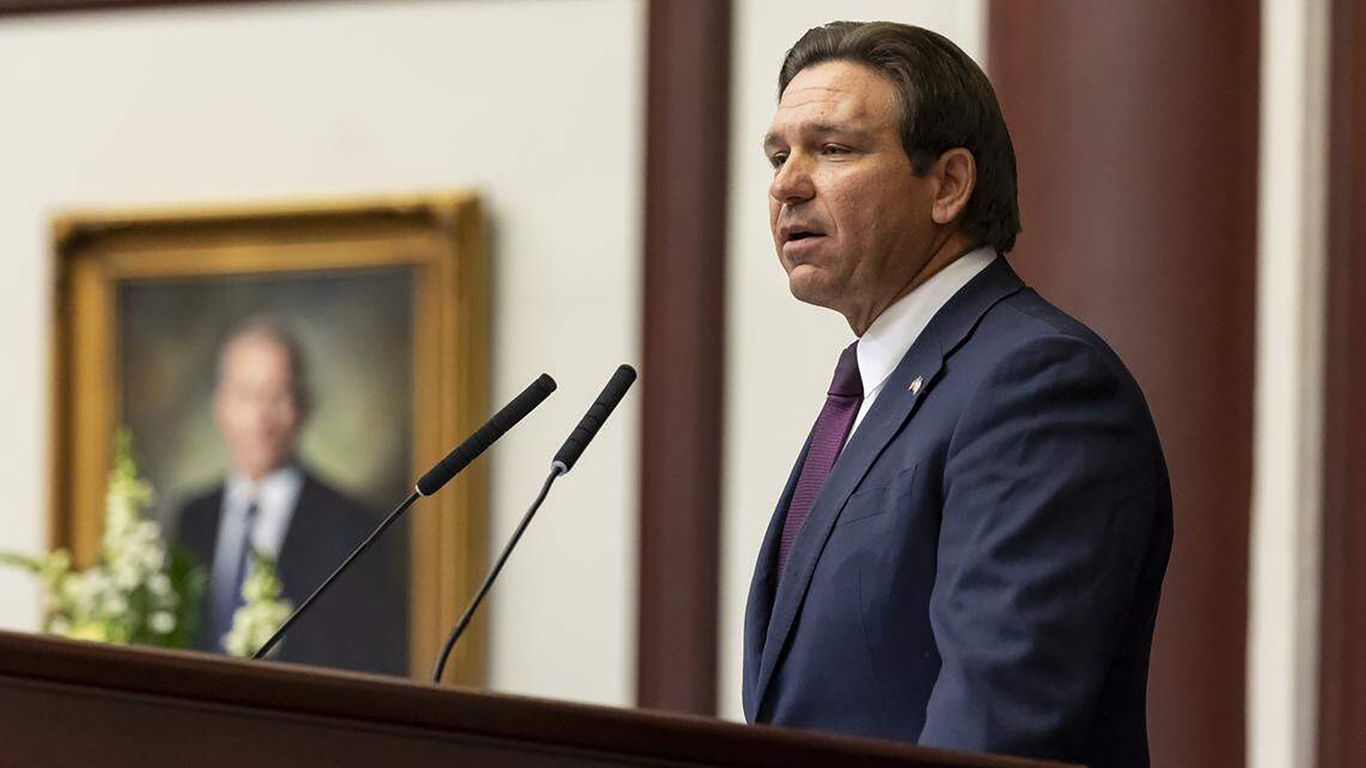
Florida congressional map survives first court test A Florida judge kept Gov. Ron DeSantis new congressional map alive Tuesday, allowing the state to implement a Republican-friendly plan while three state lawsuits continue.Why it matters: The national redistricting fight is a race to pre-write who controls Congress before voters ever see a ballot. Control of the U.S. House could turn on seats manufactured in state capitals as part of a mid-decade redistricting war started by President Trump.In 2010 nearly 63 of Florida voters approved a ban on partisan gerrymandering, but DeSantis general counsel told lawmakers the state doesnt have to abide by that ban.The latest: The ruling by Leon County Circuit Judge Joshua Hawkes, a DeSantis appointee, keeps DeSantis map in place while the lawsuits continue and election officials prepare for the 2026 races.The fight likely ends at the Florida Supreme Court, where DeSantis appointed six of seven justices and all seven were appointed by Republican governors.Hawkes found plaintiffs had not shown a substantial likelihood of success, writing that mapmaker Jason Poredas use of partisan data was circumstantial evidence, not direct proof of illegal intent.He said forcing Florida back to its 2022 map on a rushed record would be improper, especially with the states election machinery already underway and the primary less than three months away.The big picture: DeSantis map lands in a national redistricting fight that is moving fast and mostly in Republicans direction.The U.S. Supreme Court strengthened GOP arguments against race-conscious districts.Virginias pro-Democratic gerrymander was struck down by its state Supreme Court. Louisiana is expected to convert one of its two Black Democratic seats into a Republican seat. Tennessee has already eliminated its last Democratic, Black-majority seat. South Carolina is weighing doing the same.Flashback: DeSantis already remade Floridas congressional map once.In 2022, he vetoed the Legislatures map, pushed lawmakers to pass his own and helped produce a delegation of 20 Republicans and just eight Democrats.This year, his office drew the replacement map, sent it to lawmakers and provided Axios a version colored red and blue by partisan performance.Catch up quick: All three state lawsuits challenging DeSantis map have been consolidated before Hawkes.At Fridays hearing, plaintiffs leaned on DeSantis mapmaker Jason Poredas statements that he drew the map "not having to comply with the Fair Districts Amendment" and used "partisan data" for "every district."DeSantis first unveiled the map to Fox News by pointing to Floridas shift from a Democratic voter registration advantage "to a 1.5 million Republican advantage."GOP state Rep. Tom Fabricio posted on X: "Done correctly, this will strengthen Republican seats, help keep a GOP majority in Congress to advance solid policies and stand up to the woke left."The other side: The state argued the court has no power to block the map and that changing maps this close to an election would confuse voters.That timing argument has an obvious tension: The state is defending a map enacted months before the primary.Although the Fair Districts Amendment bans any districts "drawn to favor or disfavor" a political party, the state argued plaintiffs had to prove the Legislature, not just the person who drew the map, was biased.The state doesnt argue the map improved districts compactness or other requirements under the Fair Districts Amendments. But it says the map was roughly comparable on those metrics.Whats next: Plaintiffs are likely to appeal, and the lawsuits will continue to trial.Judge Hawkes wrote it was more likely a potential injunction would affect the 2028 or 2030 elections.The bottom line: DeSantis efforts to upend Florida Democrats districts looks likely to hold for at least the 2026 election.
axios · 2 days ago
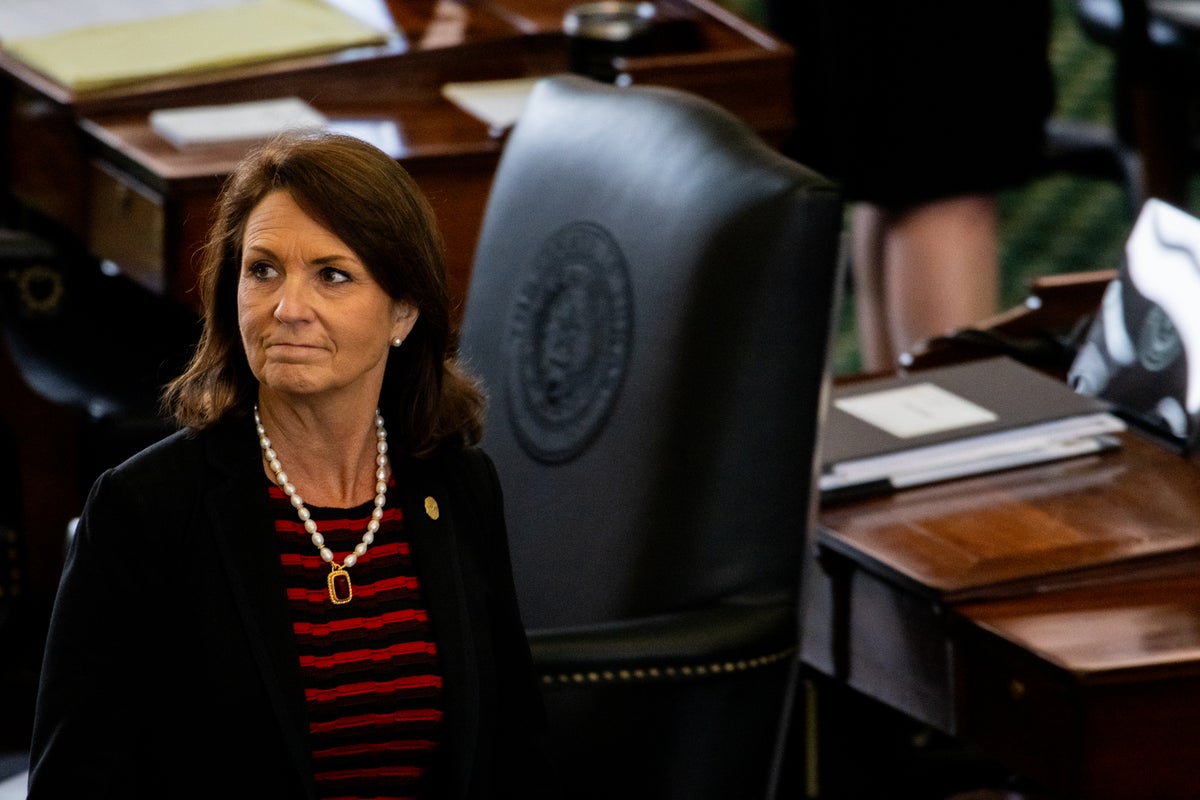
Trump-endorsed Texas Senate candidates ex, involved in biblical grounds divorce, delivers epic primary runoff snub He may not have ex-wife Angelas support, but Paxton is predicted to beat Sen. John Cornyn, which has Democrats thinking they can flip Texas
independent · 2 days ago
Ken Paxtons ex urges Texans to get out the vote — but not for Trump-backed former husband after biblical grounds split He may not have ex-wife Angelas support, but Paxton is predicted to beat Sen. John Cornyn, which has Democrats thinking they can flip Texas
independent · 2 days ago

South Carolina Senate rejects Trumps push to redraw congressional maps The political drama in South Carolina is part of a Republican strategy — propelled by Trump — to redraw voting districts to the GOPs advantage
independent · 2 days ago

South Carolina Senate rejects President Trumps call to redraw congressional maps
news.yahoo.com · 2 days ago

The immense progress that had been made in the 1960s tackling the problem of systemic racism within the electoral system has lost massive ground.
bluesky bot · 2 days ago

Early voting tally shows large turnout in Texas GOP Senate runoff, drop from March primary rate
news.yahoo.com · 2 days ago
Alabama: US-Gericht stoppt Wahlkreisreform zugunsten der Republikaner Ein US-Bundesgericht verhindert einen neuen Wahlkreiszuschnitt in Alabama. Es gäbe dann nur noch einen Bezirk mit schwarzer Mehrheit – das sei diskriminierend.
die zeit · 2 days ago

Wifes retort after husband says hes voting for Ken Paxton in Texas GOP race A wife fired back at her husband over his plans to vote for Ken Paxton during a TV interview in Texas.
independent · 2 days ago