
EU drafts emergency powers to seize control of Europes chip supply
Brussels moves to seize control of Europe’s chip supply as tech sovereignty push intensifies
The European Union is drafting emergency powers to override private contracts and redirect semiconductor supplies during crises, marking its most aggressive step yet to secure critical technology. Under a proposed revision of the EU Chips Act, Brussels would gain authority to compel chipmakers to prioritize European demand—particularly for AI and cloud infrastructure—over existing commercial agreements, according to a draft law seen by the *Financial Times* . The move reflects a strategic shift from boosting domestic production to actively shaping demand, with the Commission framing it as essential to Europe’s "tech sovereignty" amid global supply chain vulnerabilities.
The revised Chips Act, set to be unveiled next month, will also introduce demand-aggregation tools to consolidate European buyers’ purchasing power, officials said. This aligns with warnings from the International Energy Agency (IEA), whose chief Fatih Birol urged the EU to accelerate electrification to safeguard industrial competitiveness, calling it "the answer to save Europe’s industry" in an interview with *Euronews* . The IEA’s stance underscores the link between energy security and semiconductor supply, as chip production is energy-intensive.
Industry resistance is mounting on another front. Several EU member states, including heavyweights in steel, cement, and chemicals, are pushing back against the Commission’s plan to slash free emissions allowances under the EU Emissions Trading System (ETS). Countries argue the proposed cuts—aimed at accelerating decarbonization—ignore technological constraints and risk driving production abroad, *Euronews* reported . The dispute highlights the tension between climate goals and industrial competitiveness, a fault line that has deepened as energy costs remain volatile.
Meanwhile, Brussels is tightening trade defenses against China, with Industry Commissioner Stéphane Séjourné announcing plans to expand import quotas and tariffs on Chinese goods, particularly in chemicals, metals, and green technology. The measures, set for discussion at a Commission meeting on Friday, aim to "rebalance" trade rather than sever ties, Séjourné told the *Financial Times* . However, the initiative faces internal divisions: Spain has withdrawn support for a French-led push to toughen trade barriers, signaling fractures in the EU’s united front .
The Commission’s scrutiny of Chinese investments is also intensifying. On Thursday, it launched an in-depth probe into JD.com’s €2.6 billion takeover of German retailer Ceconomy, owner of MediaMarkt, over concerns the deal could distort competition and involve Chinese state subsidies. The investigation, announced by the Commission, follows similar moves to block foreign acquisitions in strategic sectors, including the Netherlands’ recent veto of a U.S. firm’s bid for Dutch cloud provider Solvinity sources .
Against this backdrop, Europe’s business community is undergoing a leadership transition. BusinessEurope, the continent’s largest industry lobby, elected Maciej Witucki as its new president on Friday, succeeding Fredrik Persson. Witucki, former head of Poland’s Lewiatan Confederation, will take office on July 1, positioning him to shape the EU’s response to these challenges . His tenure begins as the bloc grapples with balancing industrial policy, climate targets, and geopolitical risks—all while navigating internal dissent and external pressures.
Articles

EU wants crisis powers to seize control of chip supplies Draft law would enable Brussels to force chipmakers to override existing contracts
financial times · about 3 hours ago
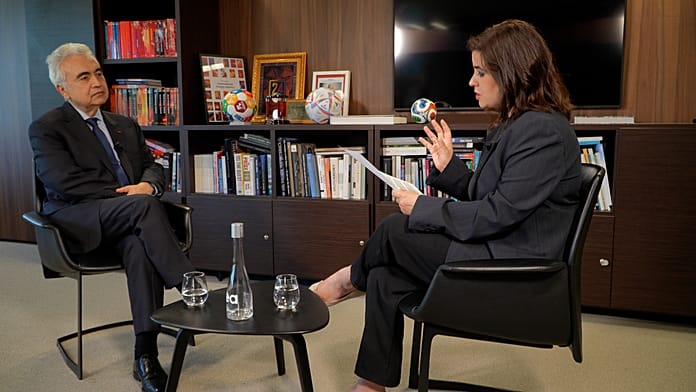
Electrification is the answer to save Europes industry, IEA tells Euronews The International Energy Agencys chief Fatih Birol told Euronews that the EU should embrace the age of electricity to boost industrial competitiveness.
euronews · about 3 hours ago

EU seeks to boost Europes chip demand in tech sovereignty bid The EUs revamped Chips Act shifts focus from supply to demand to boost European chip demand, especially for AI. The draft law covers demand aggregation and crisis tools, as part of a broader tech sovereignty push also covering cloud services and open source.
euronews · about 3 hours ago

Brussels faces backlash over carbon trading system as production costs soar Several EU countries argue that planned cuts to free emissions allowances under the EU Emissions Trading System are too severe and do not reflect the technological limits faced by sectors such as steel, cement, chemicals and aluminium.
euronews · about 3 hours ago
EU to broaden import quotas and tariffs against China Trade defences needed to combat existential threat to key sectors, industry commissioner Stéphane Séjourné says
financial times · about 4 hours ago
Spain distances itself from call for EU to get tougher on China Madrid is reversing its position on a French-led initiative to boost trade defenses against Beijing.
politico.eu · about 4 hours ago
The body representing Europes business community has elected a new head. This came during a meeting of BusinessEurope in Dublin on Friday. The organisation represents the business world at EU level. The Council of Presidents of BusinessEurope unanimously elected Maciej Witucki to succeed Fredrik Persson as President from 1 July. Witucki was, until recently, Chairman of the Main Council of Confederation Lewiatan, BusinessEuropes Polish member federation. […]
brussels morning · about 4 hours ago
![TechSpot: The Netherlands just blocked a US company from buying the app Dutch citizens use for everything. US enterprise services provider Kyndryl tried to acquire Dutch cloud specialist Solvinity, but The Hague has officially stopped the acquisition. Citing a potential security risk to the countrys public interest, State Secretary for Digital Economy Willemijn Aerdts recently confirmed the […]](https://media.mstdn.social/cache/preview_cards/images/101/989/429/original/af784ecbc3806cc6.jpeg)
TechSpot: The Netherlands just blocked a US company from buying the app Dutch citizens use for everything. US enterprise services provider Kyndryl tried to acquire Dutch cloud specialist Solvinity, but The Hague has officially stopped the acquisition. Citing a potential security risk to the countrys public interest, State Secretary for Digital Economy Willemijn Aerdts recently confirmed the […]
mastodon bot · about 4 hours ago

JD.coms $2.6 Billion Ceconomy Takeover Move Faces In-Depth EU Probe The European Commission, the EUs executive arm, said that the deal could potentially distort competition in the blocs internal market.
wsj · about 5 hours ago
EU Commission is discussing tariffs on Chinese goods The EU wants to protect sectors such as chemicals, metals, and green technology from unfair competition from China, according to EU Commissioner for Industry Stéphane Séjourné. The EU intends to increase import quotas and tariffs to achieve a real rebalancing rather than breaking ties with China. On Friday, the EU Commission will discuss a new […]
cphpost · about 5 hours ago
Brussel gaat onderzoeken of er sprake is van Chinese staatssteun bij de overname van MediaMarkt door JD.com De Europese Commissie heeft donderdag een diepgravend onderzoek ingesteld naar de overname van MediaMarkt-moederbedrijf Ceconomy door het Chinese JD.com. Centraal staat de vraag of dat laatste bedrijf profiteert van staatssteun.
nrc · about 6 hours ago
Bundespräsident Van der Bellen und Chinas Staatspräsident Xi Jinping tauschen Briefe aus [premium] Anlässlich 55 Jahre diplomatischer Beziehungen zwischen China und Österreich richten sich die Staatschefs in einem Briefwechsel Glückwünsche aus.
die presse · about 6 hours ago