 Sunday, June 7Sunday, June 7
Portugal is racing to approve a sixth legal amendment in two years to its foreigner law, this time to authorise the operation of new EU-mandated reception and screening centres before the bloc’s rules take effect on 12 June. The centres are already built and staffed, but the government’s draft decree—published on Friday—still lacks parliamentary approval, leaving Lisbon out of step with the rest of the EU as it prepares to implement the new screening regime.
Under the EU pact agreed in May, all member states must operate reception facilities where asylum seekers and irregular migrants are held for up to seven days while their identities, vulnerabilities and onward routes are assessed. Portugal’s centres in Lisbon, Porto and Faro are ready, but the legal framework to detain people—how long, under what conditions, and with what judicial oversight—has not yet cleared the Assembly of the Republic. Justice Minister António Costa e Silva told reporters on Friday that the bill would be fast-tracked through the summer session to avoid infringement proceedings.
The urgency reflects broader European shifts. On Wednesday, EU interior ministers reached a political accord on offshore return centres in third countries, a model Italy is already piloting with Albania, and Switzerland confirmed on Thursday that it will apply the same rules despite not being an EU member. Spain’s *El País* described the moment as “Europe enters the era of deportations,” while *La Vanguardia* reported that the bloc is preparing to open centres in North Africa and the Balkans to process rejected asylum seekers before they reach European soil.
Portugal’s delay is partly technical: the screening centres fall under the 2024 Foreigners Law, which has already been amended five times since 2024, most recently to tighten family reunification rules. The sixth change would add a new chapter on “reception and identification,” including provisions for legal aid, medical screening and the right to challenge detention within 48 hours. Ombudsman Maria Lúcia Amaral warned on Friday that without clear time limits, Portugal risks violating the European Convention on Human Rights.
Political analysts see the haste as a sign of Lisbon’s desire to position itself as a constructive partner ahead of the EU’s June 26–27 summit in Brussels, where leaders will review progress on the migration pact. “The centres are symbolic,” said migration expert Rui Tavares. “They show we can host EU solidarity measures without compromising our humanitarian standards.” Yet with far-right deputies already criticising the bill for being too lenient, the government must also navigate a razor-thin majority in parliament.
If the amendment fails, Portugal would be the only EU country unable to apply the screening rules from 12 June, potentially triggering infringement proceedings and complicating its presidency of the EU Council in the first half of 2027. The Assembly is expected to vote before the summer recess on 18 July.

Happy national day to all Swedes! 🇸🇪 Glad Nationaldag! On 6 June, 🇸🇪 celebrates its national day. The colours of the flag represents: 🔵 loyalty & justice 🟡 the Nordic cross, symbolising Swedens Christian heritage & its ties with the Nordic countries. link.europa.eu/CDkppm
bluesky bot · about 20 hours ago

La Belgique envisage dallonger le délai légal davortement à 14 semaines La ministre de la Justice, Annelies Verlinden (CD&V), a préparé un projet de loi visant à allonger le délai légal de lIVG de 12 à 14 semaines. ...
la libre · about 20 hours ago

Estelle och Oscars gulliga nationaldagshälsning Det kungliga nationaldagsfirandet är i gång. Första hälsningen kommer från prinsessan Estelle och prins Oscar – tillsammans med får.Men prinsessan missar firandet.
expressen · about 20 hours ago

Rache als Konsequenz der Auflösung von Ordnung Überall in Europa tragen Menschen ihre Wut auf die Straßen und in die Wahllokale. Es mag unzivilisiert wirken, aber es ist Ausdruck der Sehnsucht nach verlorener Zivilisation.
welt.de · about 20 hours ago
Aké dopravné predpisy, pokuty a pravidlá pre autoškoly sa menia od septembra? Parlament definitívne schválil rozsiahlu novelu zákona o cestnej premávke, nové dopravné predpisy, pravidlá parkovania a pre kurzy autoškoly majú začať platiť od septembra.
aktuality.sk · about 20 hours ago
Governo propõe sexta alteração à lei de estrangeiros em dois anos. Agora para centros de triagem Novas regras europeias para a triagem entram em vigor no dia 12, mas Portugal, apesar de ter os centros de triagem prontos a funcionar, ainda não aprovou o devido regime legal.
publico · about 20 hours ago
Nu får vi en tydlig väg in i Sverige Idag träder de nya medborgarskapsreglerna i kraft. Uppvärderingen av medborgarskapets status berättar implicit om den tidigare kravlösheten.
svenska dagbladet · about 20 hours ago
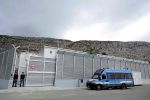
Italien setzt bei neuem EU-Asylpakt weiter auf Albanien-Zentren Die Regierung Melonis will im Zuge des neuen EU-Asyl- und Migrationspakts das umstrittene Modell von Migranteneinrichtungen auf albanischem Boden wiederbeleben
der standard · about 20 hours ago
European Union reaches initial agreement on new migration and deportation policy
gdeltproject.org · about 20 hours ago
Extra traffic and access restrictions in Tallinns Old Town during June 8 and 9 Traffic restrictions and a no-fly zone will be in effect in central Tallinn on June 8 and 9 during the Nordic-Baltic cooperation meeting, which is hosted by Estonia this year.
news.err · about 20 hours ago
Medborgarskap ska värderas lika Nya regler börjar idag gälla som förändrar förutsättningarna att vara svensk medborgare. Vissa människors tillhörighet blir alltid villkorad – det är en riskabel väg, skriver Fredrik Malmberg.
svenska dagbladet · about 21 hours ago
Vi firar allt som är värt att försvara Nationaldagen är en dag för fika, fest och glädje, men också för eftertanke. Vad vore vi om våra friheter togs ifrån oss och vi inte längre levde i fred?
svenska dagbladet · about 21 hours ago
Cykelbanor och yogabyxor – vilken röra De som flyttar hit har tröttnat på skatter, liberaler och myndigheter. Här finns också kyrkan som inte tycker att gifta kvinnor ska få rösta – och som har kommit mycket nära makten i Washington DC.
svenska dagbladet · about 21 hours ago
Skriv under på detta – bli svensk I dag, på Sveriges nationaldag, finns det ett ord vi måste göra upp med.
svenska dagbladet · about 21 hours ago
Konsten att skapa en överklass För exakt 400 år sedan förändrades den svenska adeln i grunden. Med riddarhusordningen den 6 juni 1626 skapades ett system där börd, rang och genealogisk prestige fixerades i en social ordning som skulle komma att prägla Sverige i århundraden.
svenska dagbladet · about 21 hours ago
Grattis Sverige, ska vi inte fira också? Grattis Sverige på nationaldagen! Idag firar vi. Eller gör vi det? Många är rådvilla. Men ska vi inte försöka enas om några nya festliga traditioner den 6 juni? Jag har några förslag.
svenska dagbladet · about 21 hours ago
Eurovision viewership drops after Israel boycott This years Eurovision final, held in Vienna on May 16, attracted 131 million viewers, which is 35 million fewer than last year. The final was won by Dara from Bulgaria with the song Bangaranga. The decline can likely be attributed to five countries—the Netherlands, Iceland, Spain, Ireland, and Slovenia—that chose to boycott this years show […]
cphpost · about 21 hours ago
Strengere asielregels verdelen ChristenUnie tot op het bot Er is gedoe in de gewoonlijk zo kalme ChristenUnie. Aanleiding voor de reuring is de strengere koers van de christelijke partij op het gebied van migratie. Die stuit een groep ChristenUnie-leden tegen de borst. Zij roepen juist op tot een humaner asielbeleid en benadrukken het belang van de medemenselijkheid. Vandaag komt de partij bijeen voor een congres in Harderwijk.
rtl nieuws · about 21 hours ago
„Hier ist wieder Bürokratie geschaffen worden, die eigentlich nicht akzeptabel ist In Baden-Württemberg gilt ein neues Rauchverbot an öffentlichen Orten wie Haltestellen. Unklar ist, ob schon das bloße Vorbeigehen mit Zigarette bereits strafbar ist. „Wieder vollkommene Unsicherheit darüber, was denn eigentlich gilt, sagt Tübingens Oberbürgermeister Boris Palmer.
welt.de · about 21 hours ago

Die neue Waffenflut auf Europas Straßen – und woher sie kommt Viele unregistrierte Pistolen stammen aus der Türkei, vom Balkan und womöglich bald aus der Ukraine: Ermittler sehen eine Bedrohung durch professionelle Netzwerke.
welt.de · about 21 hours ago