Loading…
 Saturday, August 29Saturday, August 29
2 months · 3 summary articles
U.S. strikes Iranian sites after tanker attack; Hormuz tensions escalate
US strikes Iranian targets after Strait of Hormuz ship attack: Iran retaliates
U.S. strikes Iranian targets after Strait of Hormuz vessel attack
US aircraft struck four Iranian targets on Friday night, including missile and drone storage sites along the southern coast and on Qeshm Island, after a Singapore-flagged cargo vessel was damaged by an Iranian drone in the Strait of Hormuz on Thursday, CENTCOM confirmed. President Donald Trump called the attack on the M/V Ever Lovely a “foolish violation” of the week-old ceasefire and warned Tehran against further provocations .
The strikes marked the most serious breach of the interim peace accord since it was signed in Islamabad on 17 June. Iran’s Revolutionary Guards immediately retaliated by attacking US-linked military sites in the Gulf, including a telecommunications mast in Sirik and positions in Bahrain, according to state media and Bahrain’s foreign ministry . A second projectile struck an oil tanker in Hormuz on Saturday morning, raising the threat level set by the UK’s maritime security agency.
Washington and Tehran each accused the other of violating the memorandum of understanding that ended four months of open warfare. The US said Iran’s drone strike on the M/V Ever Lovely endangered freedom of navigation through the world’s most critical chokepoint. Iran’s foreign ministry branded the American raids a “flagrant violation” of the UN Charter and the 17 June accord, vowing to defend its sovereignty and urging the UN Security Council to intervene .
Analysts warned the fragile truce is now at risk of collapse. “The protocol is showing fragility,” said Josef Kraus, a security analyst at Masaryk University. “Both sides are prepared to use force, and the tit-for-tat strikes risk unravelling the entire agreement.” Negotiations on a permanent peace deal, including Iran’s nuclear programme, were already under strain before the latest escalation .
US Vice-President JD Vance reiterated that Washington would respond to violence with force, while Iran’s Guards vowed their retaliation would be “rapid and decisive.” The exchange leaves the Strait of Hormuz—through which a fifth of the world’s seaborne oil passes—more volatile than at any point since the ceasefire was signed.
Follow us for live European news
2 further sources not geolocated

US aircraft strike Iran missile sites after Hormuz ship attack CENTCOM confirmed on Friday that US aircraft struck four targets along the Iranian coast and Qeshm island after a cargo vessel was damaged by a drone attack in the Strait of Hormuz, as President Donald Trump warned Tehran against further "foolish violations" of the ceasefire agreement.
yenisafak · 2 months ago
Bahrain condemns Iranian drone attack as blatant violation Bahrains Foreign Ministry announced Saturday that Iranian drones targeted the Gulf kingdom early in the day in what it called "a blatant violation" of sovereignty and international law, urging the UN Security Council to hold Tehran accountable as Washington confirmed fresh strikes on Iranian military sites.
yenisafak · 2 months ago
US launches strikes on Iran after Tehran attacks container ship Washington says unwarranted aggression against commercial shipping violated ceasefire between adversaries
financial times · 2 months ago
Iran condemns US strikes, says Washington violated peace deal The Iranian Foreign Ministry on Saturday condemned US strikes on its southern coastline as a violation of the UN Charter and a recently signed peace pact, vowing retaliatory action and urging Gulf states to deny aggressors access to their territory as the fragile 14-point agreement risks collapse.
yenisafak · 2 months ago
⚡️ The US military confirms that it attacked targets in the Strait of Hormuz area in response to an Iranian attack on ships 💧 Rainbet.com the #1 Non-KYC Crypto Casino & Sportsbook @rainbetcom +18
telegram bot · 2 months ago
🇮🇷⚠️- An unidentified projectile has impacted the command deck of a tanker in the Strait of Hormuz. This incident follows a similar event from a few days prior, wherein Iran struck the wheelhouse of a commercial vessel, an action which precipitated a U.S. retaliatory strike on Sirik, located in southern Iran, during the previous night.
telegram bot · 2 months ago
Iran slams US-GCC joint statement as provocative Iran has condemned a joint US-GCC statement as interventionist, irresponsible and provocative, accusing Gulf states of aligning with Washington and Israel against regional security. Tehran warned that the US military presence has become a source of insecurity and urged Gulf states to reconsider their positions.
yenisafak · 2 months ago
Fresh ship struck in Hormuz as Iran, US trade attacks in worst escalation since peace deal A tanker reported being struck by a projectile in the Strait of Hormuz on Saturday, Britains maritime security agency said, after the United States and Iran each launched strikes in the worst escalation since they signed their interim peace deal. The warring sides each accused the other of violating the agreement they reached two weeks […]
cyprus mail · 2 months ago
Iran-Krieg: Nach Angriffen am Golf wächst Sorge vor weiterer Eskalation Bahrain meldet einen iranischen Drohnenangriff – in der Straße von Hormus wird ein Tanker getroffen. Dabei gibt es zwischen den USA und dem Iran eigentlich ein Abkommen für ein Ende des Krieges.
handelsblatt · 2 months ago
Iran: Hormuz passage not guaranteed without Tehran coordination Iran has pushed back against the US-GCC call for free, unconditional navigation through the Strait of Hormuz, stating that safe passage cannot be guaranteed under ambiguous arrangements or parallel routes without Tehrans consent. Any credible framework must be based on coordination with Iran under Article 5 of the Islamabad memorandum.
yenisafak · 2 months ago
Trump slams Iran drone strikes as foolish ceasefire breach US President Donald Trump on Friday accused Iran of committing a "foolish violation" of the ceasefire agreement by launching drone attacks against vessels in the Strait of Hormuz, claiming American forces intercepted three projectiles but one struck a cargo ship.
yenisafak · 2 months ago
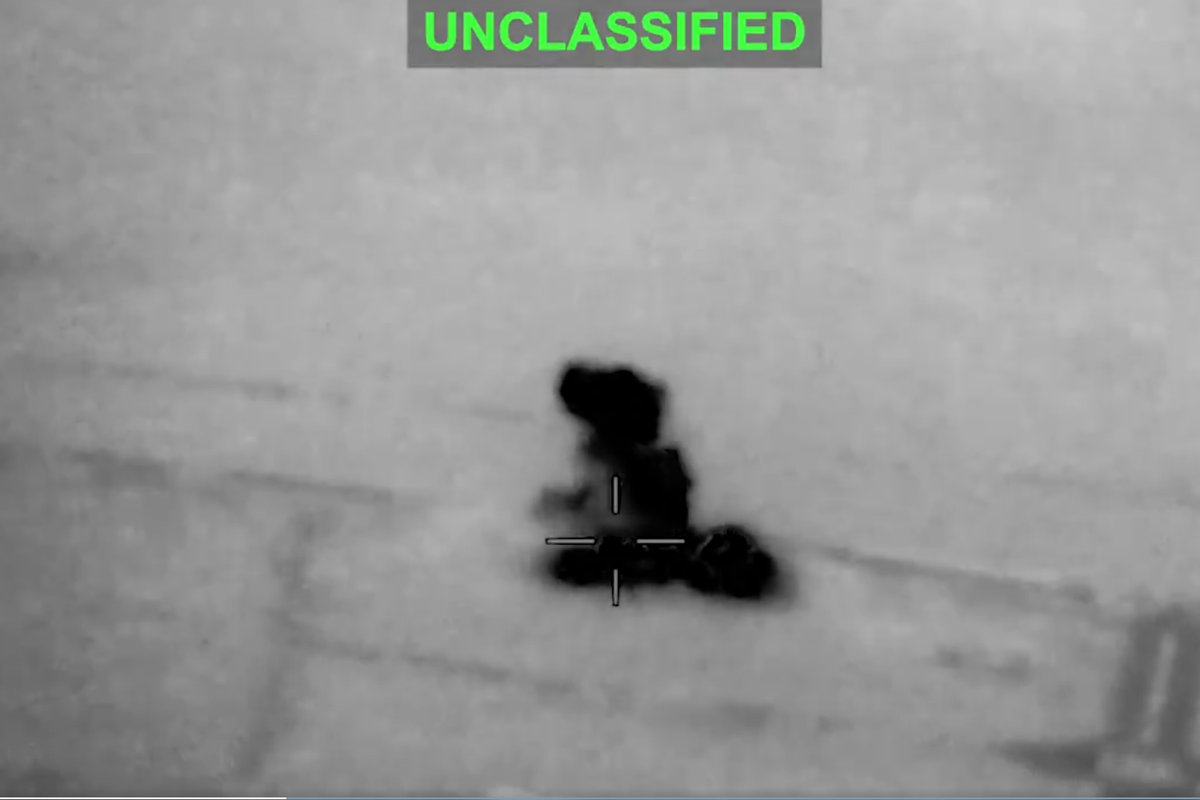
Iran-US war latest: Tehran targets US Navy after Trump strikes Iran over foolish ceasefire breach US strikes come after ships struck by drones in Strait of Hormuz
independent · 2 months ago
Iran en VS voeren opnieuw aanvallen uit na incident in Straat van Hormuz De Verenigde Staten en Iran hebben opnieuw aanvallen op elkaar uitgevoerd, amper een week na een voorlopig akkoord tussen beide landen. Volgens Washington begon de nieuwe escalatie nadat Iran een vrachtschip in de Straat van Hormuz had aangevallen.
nu.nl · 2 months ago
Iran turns back tankers over unauthorized Hormuz transit Iranian authorities said they turned back three foreign tankers attempting to transit through an unauthorized corridor in the Strait of Hormuz, declaring that alternative routes established without Tehrans coordination are illegal and pose serious security risks to maritime traffic.
yenisafak · 2 months ago
Iranian lawmaker warns US strikes during talks bring retreat and regret The head of Irans parliamentary National Security and Foreign Policy Commission said Saturday that US strikes on Iranian targets during ongoing negotiations expose Washingtons blatant disregard for diplomatic principles and ceasefire understandings, warning that such aggression would ultimately bring only "retreat and regret" for American forces.
yenisafak · 2 months ago
#Bahrain Bahrain condemned Iranian missile attacks on its territory, describing them as a violation of sovereignty and a threat to regional security. The country successfully intercepted several missiles launched by Iran during these attacks. Subscribe to @OSINTdefender Chat room
telegram bot · 2 months ago
UK maritime agency raises Strait of Hormuz threat level after oil tanker reports being struck It comes after the US military carried out strikes on Iran, which it said were in response to Iranian drone attacks on shipping in the Strait.
euronews · 2 months ago
#ME A tanker was attacked in the Strait of Hormuz. The British Maritime Trade Operations Center issued Warning No. 076-26, reporting that a tanker in the Strait of Hormuz was struck by a projectile of unknown origin, resulting in damage to the vessels bridge. Subscribe to @OSINTdefender Chat room
telegram bot · 2 months ago
US, Iran trade strikes: What to know, will it unravel the MoU? As the latest confrontations are aimed at control of the Strait of Hormuz, analysts say the deal is at risk of collapse.
aljazeera · 2 months ago

Iranian drones attack Bahrain and a ship is struck in the strait after US airstrikes on Iran
news.yahoo.com · 2 months ago
+++ Iran-Krieg +++: Britisches Militär meldet Angriff auf Tanker in Straße von Hormus Bahrain verurteilt iranische Drohnenangriffe auf eigenes Staatsgebiet +++ Iran meldet Angriffe auf US-Standorte +++ US-Vizepräsident Vance – „Gewalt wird mit Gewalt beantwortet +++ Der Newsblog.
handelsblatt · 2 months ago
Bahrain says it was targeted by Iranian drones after US strikes on Iran Iranian state media reported that strikes hit a telecommunications mast in the Sirik area of southern Iran.
euronews · 2 months ago
Gegenseitige Angriffe von USA und Iran Nach einem iranischen Drohnenangriff auf ein Frachtschiff in der Straße von Hormus hat das US-Militär am späten Freitagabend Ziele im Iran bombardiert. Beide Länder warfen einander gegenseitig vor, eine erst in der vergangenen Woche vereinbarte Waffenruhe gebrochen zu haben. Das US-Zentralkommando (CENTCOM) teilte mit, Kampfflugzeuge hätten Raketen- und Drohnenlager sowie Küstenradaranlagen angegriffen. Die iranische Revolutionsgarde erklärte daraufhin, die Marine des Landes habe als Vergeltung US-Militärziele in der Region attackiert.
orf.at · 2 months ago
A cargo ship in the Strait of Hormuz targeted by Iran The US military says it has carried out strikes on Iran in response to a drone attack on a cargo ship, after President Donald Trump blamed Tehran for the incident in the Strait of Hormuz and described it as a "foolish violation" of the ceasefire. The escalation comes at a particularly delicate moment, as Washington and Tehran continue negotiations aimed at securing an interim peace agreement. Caitlin Brown and Marion Meyer report.
france24 · 2 months ago
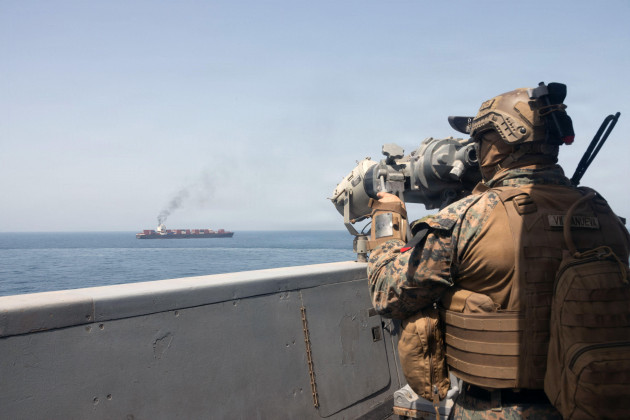
US and Iran trade strikes following drone attack on cargo ship in Strait of Hormuz Donald Trump described the alleged drone attack as a foolish violation of the ceasefire agreement.
thejournal · 2 months ago
Iran says it hits US-linked targets as Bahrain reports drone attack Iran said it struck targets linked to U.S. forces on Saturday in response to U.S. airstrikes on its southern coast, as each side continued to accuse the other of violating last weeks agreement meant to end the four-month-old war. Irans foreign ministry did not identify the locations of its defensive attacks, which it said were […]
cyprus mail · 2 months ago
+++ Nachrichten im Irankrieg +++: Bahrain meldet Drohnenangriffe Die USA beschuldigen den Iran, ein Schiff in der Straße von Hormus attackiert zu haben – und greifen Ziele im Iran an. Bahrain wirft Iran „Sabotage vor. mehr...
taz.de · 2 months ago
New Tension in Straits of Hormuz as US-Iran Ceasefire Violated US and Iran exchanged attacks in the Straits of Hormuz and accused one another of violating a ceasefire that was agreed on last week.
greek reporter · 2 months ago
Iran war day 120: Tehran condemns US strikes, says it violates MoU US says it targeted Iranian missile and drone storage locations while IRGC said it hit US military sites in the region.
aljazeera · 2 months ago
US launches strikes against Iran following drone attack on cargo ship Iranian state media reported that strikes hit a telecommunications mast in the Sirik area of southern Iran.
euronews · 2 months ago