 Monday, May 18Monday, May 18
Trump-Xi Summit: Taiwan, Iran, and Trade Tensions
During his visit to Beijing, U.S. President Donald Trump and Chinese President Xi Jinping engaged in high-stakes discussions centered on Taiwan, Iran, and trade. Xi issued stark warnings about Taiwan, describing it as the "most important issue" in China-U.S. relations and cautioning that mishandling the matter could lead to "clashes and even conflicts" between the two nations. Despite these tensions, Trump later described the talks as "extremely positive and productive," though Taiwan’s status remained a critical point of contention .
On Iran, Xi reportedly pledged that China would not provide military equipment to Tehran and offered assistance in reopening the Strait of Hormuz, a critical chokepoint for global oil shipments. A U.S. official later confirmed that China was being "pragmatic" about the Iran conflict, expressing confidence that Beijing would limit material support for Iran to avoid escalation. Trump claimed Xi had committed to keeping the strait open without military interference, aligning with U.S. interests in regional stability .
Trade discussions yielded mixed results. Trump touted "fantastic trade deals" and claimed the summit had "settled a lot of different problems," though markets showed little reaction to the announced agreements. Notably, semiconductor export controls—particularly U.S. restrictions on Nvidia’s advanced H200 chips to China—were not a major topic of discussion, despite Nvidia’s CEO joining Trump’s delegation. The lack of progress on this issue suggests ongoing friction in tech and trade relations . The summit concluded with warm rhetoric but unresolved tensions over Taiwan and limited tangible outcomes on trade.
> Background: **Trump and Xi meet in Beijing amid trade, Taiwan, and Iran tensions.** — *1 days ago*
More LFE coverage on this topic

Trump touts business wins as China airs Iran, Taiwan concerns US President Donald Trump entered his final talks with Xi Jinping on Friday touting economic wins that gave markets little to cheer, while Beijing warned Washington about mishandling Taiwan and said its war with Iran should never have started. FRANCE 24s Fraser Jackson reports from Washington DC.
france24 · 3 days ago
Trump leaves Beijing with few wins, many warm words for Xi US President Donald Trump departed China on Friday touting business deals that gave markets little to cheer, while Beijing warned Washington about mishandling Taiwan and said its war with Iran should never have started. Trumps visit to Americas main strategic and economic rival, the first by a US president since his last trip in 2017, had aimed for tangible results to beef up his dented approval ratings ahead of crucial midterm elections.
france24 · 3 days ago
Trump says fantastic trade deals made with Xi as they meet for final round of talks in Beijing The two leaders met on Friday at final talks of the superpower summit, which the US president said settled a lot of different problems. Xi described Trumps visit as a milestone visit.
euronews · 3 days ago
Trump and Xi hold high-stakes talks in Beijing US President Donald Trump and Chinese President Xi Jinping are meeting for a second day in Beijing.
aljazeera · 3 days ago
Trump China visit live: US president says a lot of problems settled, as he meets with Xi on final day of summit A US official said it is important for Xi Jinping to have the strait of Hormuz open and is confident China will try to limit material support for IranXi warns Trump of clashes and even conflicts with US over TaiwanAnalysis: For anxious Taiwan, Trumps silence after Xi talks is best possible outcomeJamieson Greer also said US export controls on semiconductor chips were not a major topic of discussions with Chinese officials in Beijing.The US trade representatives comments to Bloomberg on Friday suggest a breakthrough on selling Nvidias advanced H200 chips to China remains far away, Reuters is reporting, despite Nvidia chief Jensen Huangs last-minute invitation to Donald Trumps Beijing trip this week.This was not a major topic of discussion at the bilateral meeting. We did not talk about chip export controls at the meeting.First of all, its really important for China to have the strait of Hormuz open – no tolling, no military control. That was clear from the meeting, so we welcome that.With respect to Chinese involvement with Iran, our view is the Chinese are being very pragmatic – they dont want to be on the wrong side of this. They want to see peace in that area, President Trump wants to see peace in that area, so we have a lot of confidence that they will do what they can to limit any kind of material support for Iran. Continue reading...
theguardian · 3 days ago
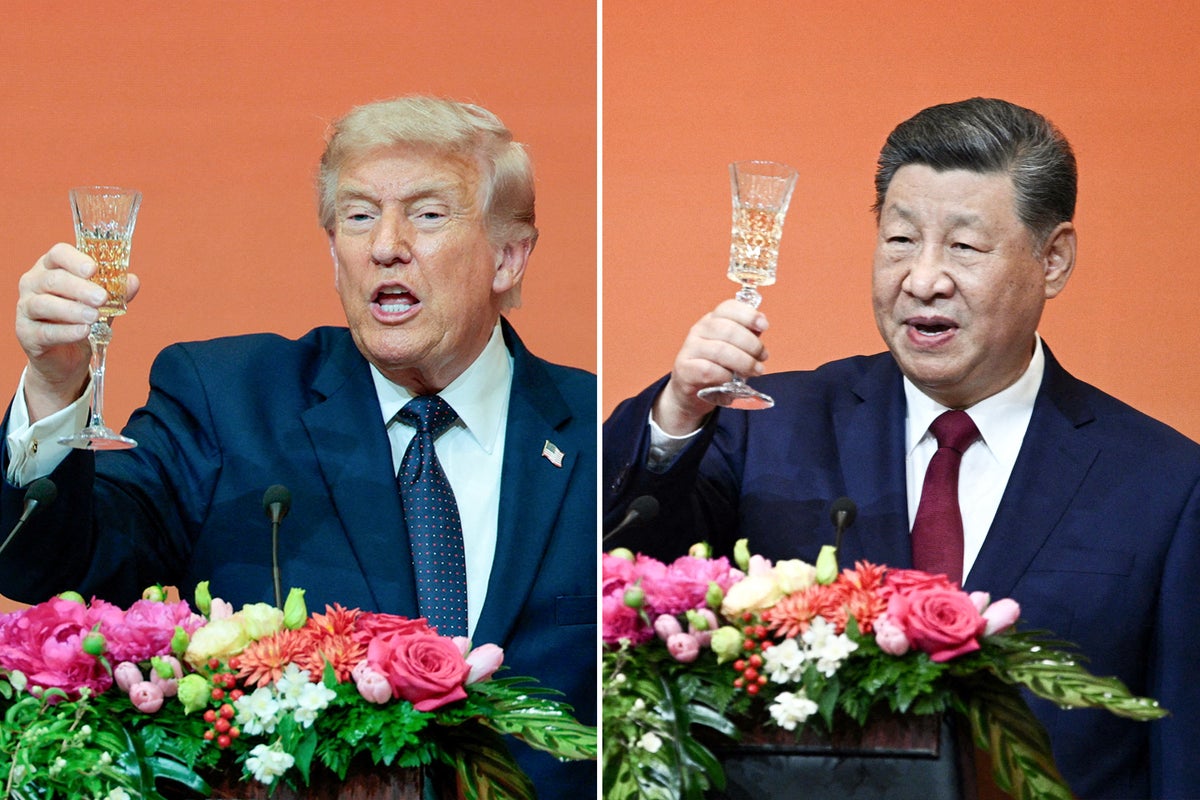
Trump and Xi begin final round of talks in Beijing after president brands meeting the G2 summit: Live updates The two-day summit in Beijing has also featured discussions about the ongoing war in Iran, according to the White House
independent · 3 days ago

Trump China visit live: Beijing being very pragmatic on Iran, says top US official US official says it is important for Xi Jinping to have the strait of Hormuz open and is confident China will try to limit material support for IranXi warns Trump of clashes and even conflicts with US over TaiwanAnalysis: For anxious Taiwan, Trumps silence after Xi talks is best possible outcomeReturning to US trade representative Jamieson Greer and the Iran war, he said the US was confident China would do whatever it could to limit material support for Tehran amid the war. Asked on Bloomberg TV on Friday if he thought Xi Jinping would pressure Tehran and help the US get the strait of Hormuz reopened, Greer said:First of all, its really important for China to have the strait of Hormuz open – no tolling, no military control. That was clear from the meeting, so we welcome that.With respect to Chinese involvement with Iran, our view is the Chinese are being very pragmatic – they dont want to be on the wrong side of this. They want to see peace in that area, President Trump wants to see peace in that area, so we have a lot of confidence that they will do what they can to limit any kind of material support for Iran. Continue reading...
theguardian · 3 days ago
Iran, Taiwan, and trade: Trumps high‑stakes return to Beijing As Trump meets Xi in Beijing for the first time in nine years, can trade war, Taiwan and Iran tensions be contained?
aljazeera · 3 days ago
Trump says Xi offered help to open Hormuz, vowed not to arm Iran US President Donald Trump on Thursday said President Xi Jinping had offered Chinas help to open the Strait of Hormuz and pledged not to send military equipment to aid Iran in its war against the US and Israel.
france24 · 3 days ago
Bessent discusses investment board, expanding US-China trade with Trump in Beijing President Donald Trump and Chinese President Xi Jinping met on Thursday and discussed topics ranging from market access for U.S. businesses in China to the Strait of Hormuz.
politico.eu · 3 days ago
Xi warns Trump of clashes and even conflicts with US over Taiwan Trump says Chinas president also pledged strongly not to send weapons to Iran, after two-hour meeting between the leadersTrump in Beijing – latest updatesFive key issues for Xi-Trump summitChinas president, Xi Jinping, has warned of clashes and even conflicts with the US over Taiwan after meeting Donald Trump in Beijing.Xis remarks, published by Chinas foreign ministry after his two-hour meeting with Trump on Thursday morning, said Taiwan was the most important issue in China-US relations. Continue reading...
theguardian · 3 days ago
Extremely positive and productive talks: Trump praises Xi meeting Chinese President Xi Jinping warned his US counterpart Donald Trump that missteps on Taiwan could push their two countries into conflict, a stark opening salvo as they met in Beijing on Thursday for a two-day summit. The Chinese Foreign ministry said the comments came in a closed-door meeting that lasted more than two hours. It was followed by a friendlier, opulent banquet during which Trump and Xi stressed the importance of working together. Story by Carys Garland.
france24 · 3 days ago