 Sunday, June 7Sunday, June 7
UK government rocked by leaked messages as Peter Mandelson’s scathing criticism of Keir Starmer’s team surfaces
Work and Pensions Secretary Pat McFadden has condemned as "embarrassing" a trove of newly released documents revealing former Labour grandee Peter Mandelson’s private attacks on Prime Minister Keir Starmer’s inner circle. The 1,500-page cache, published Monday, includes exchanges tied to Mandelson’s 2025 appointment as UK ambassador to the US, in which he derides Starmer’s advisers as "amateurish" and "out of their depth" on transatlantic diplomacy. McFadden, speaking to reporters Tuesday, called the disclosures "unhelpful" and urged focus on the government’s policy agenda, but stopped short of defending the prime minister’s team .
The leaks arrive as Starmer’s administration grapples with internal tensions over its post-Brexit cultural and diplomatic strategy. Mandelson, a key architect of New Labour’s pro-European stance, has long advocated for closer UK-EU alignment—a position at odds with Starmer’s cautious approach to re-engagement. Analysts suggest the messages could reignite Labour infighting, with Mandelson’s allies in the party’s centrist wing already pushing for a more assertive stance on cultural and economic ties with Brussels.
In a separate development, Romania’s parliament voted Tuesday to install a new leadership at the Romanian Cultural Institute (ICR), with the ruling Social Democratic Party (PSD) and the far-right Alliance for the Unity of Romanians (AUR) jointly backing candidates. PSD secured the institute’s presidency, while AUR gained a vice-presidential post, marking the latest in a series of collaborations between the two parties on cultural and media appointments. Senate President Mircea Abrudean (National Liberal Party) criticised the alliance as a "transactional partnership" that prioritises political control over cultural policy, warning it risks undermining the ICR’s independence .
The Romanian vote underscores broader European trends, where social-democratic parties increasingly rely on ad-hoc alliances with nationalist or populist factions to secure institutional influence. In Denmark, Mette Frederiksen’s Social Democrats formed a four-party coalition this week after protracted negotiations, but critics argue the platform lacks concrete funding for cultural initiatives, including arts subsidies and heritage preservation. Editorial boards across Denmark have flagged the omission as a missed opportunity to address post-pandemic cultural recovery, with *Politiken* calling the plan "a budgetary black box" .
Frederiksen, who secured her third term as prime minister Wednesday after presenting her government to King Frederik X, has pledged to prioritise "social cohesion" but faces pressure to clarify funding for cultural programmes. The coalition’s platform includes tax cuts and pension increases, but details on allocations for museums, libraries, and minority-language media remain vague. Observers note the contrast with Frederiksen’s 2019 government, which earmarked €200 million for cultural projects in its first year—a commitment absent from the current agreement .
The UK and Danish cases reflect a wider European dilemma: as social-democratic parties seek to rebuild electoral coalitions, they risk sidelining cultural policy in favour of economic or security priorities. In Romania, the PSD-AUR alliance at the ICR suggests a willingness to cede cultural institutions to nationalist agendas in exchange for parliamentary support—a trade-off that could reshape the country’s post-communist cultural identity. Meanwhile, Mandelson’s leaked messages serve as a reminder of the enduring tensions within centre-left parties over how to balance cultural diplomacy with domestic political realities.

UK minister calls newly released Mandelson messages embarrassing Work and Pensions Secretary Pat McFadden has described newly released messages linked to Peter Mandelsons appointment as UK ambassador to the US as embarrassing. Over 1,500 pages of documents were released Monday, including exchanges in which Mandelson criticised Prime Minister Keir Starmers team.
yenisafak · 4 days ago
Editors miss concrete funding in government platform In several places in the government platform presented on Tuesday, concrete financing is lacking, and it is unclear where the bill will land. This is the message from a number of editorial writers in the countrys newspapers on Wednesday. This comes after the platform for Denmarks future government was presented on Tuesday afternoon by the […]
cphpost · 4 days ago
Mette Frederiksen has no plans to step down early Mette Frederiksen (The Social Democrats) has been Prime Minister since 2019, and when the new four-party government officially sees the light of day on Wednesday, the Social Democratic leader will once again assume the office of Prime Minister. And her plan is to serve out the entire electoral term. At least I do not have […]
cphpost · 4 days ago
OVERVIEW: Tax cuts and higher pensions in new gov plan Two months and nine days after the general election, the government platform for the new government has been presented. This took place on Tuesday afternoon at a press conference attended by Mette Frederiksen (S), Pia Olsen Dyhr (SF), Lars Løkke Rasmussen (M), and Martin Lidegaard (R). It is precisely the Social Democrats, The Socialist Peoples […]
cphpost · 4 days ago
New government presented to the King Wednesday at 10 The new government will be presented to King Frederik at Amalienborg on Wednesday at 10:00. This was announced by the Prime Ministers Office in a press release on Tuesday evening. Following this, the future Prime Minister Mette Frederiksen (The Social Democrats) will step out in front of Amalienborg together with her new government, consisting of […]
cphpost · 4 days ago
GUNTER: Premier Smith juggling priorities on separatist referendum debate
gdeltproject.org · 4 days ago
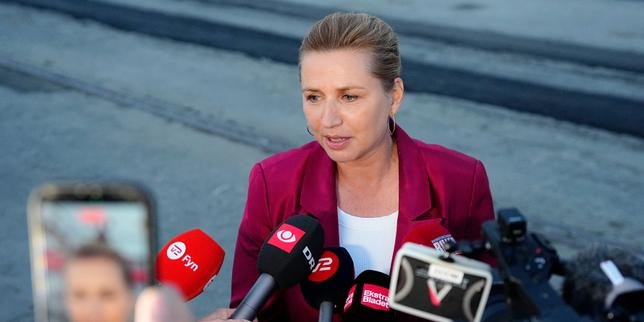
Denmarks Mette Frederiksen secures third term as prime minister After unusually lengthy negotiations, the leader of Denmarks Social Democrats has succeeded in forming a center-left coalition, bringing together four parties in a fragmented political landscape.
le monde · 4 days ago
Parlamentul a votat noua conducere a Institutului Cultural Român. PSD și AUR și-au susținut reciproc candidații PSD și AUR s-au aliat din nou în Parlament. De data aceasta pentru noua conducere a Institutului Cultural Român, unde președinția a fost preluată de propunerea PSD, iar un post de vicepreședinte a revenit AUR. Cele două partide și-au susținut reciproc candidații la audierile în comisii, iar votul final a fost dat în plenul Senatului marți seară.
digi24 · 4 days ago
Abrudean: AUR şi PSD au confirmat, încă o dată, că parteneriatul lor funcţionează în Parlament AUR şi PSD au confirmat, încă o dată, că parteneriatul lor funcţionează în Parlament, a transmis marți seară preşedintele Senatului, Mircea Abrudean (PNL), adăugând că aceste două partide lucrează împreună când e vorba de propriile interese, dar nu au venit cu nicio soluţie pentru guvernarea ţării.
digi24 · 4 days ago