 Saturday, June 13Saturday, June 13
A Czech man accused of setting multiple wildfires in the Bruntál region is set to stand trial next week, but investigators have uncovered a far graver charge: he is suspected of murdering a colleague by poisoning a drink. The Olomouc Regional Court will first hear the murder case, as prosecutors allege the suspect laced a beverage with a toxic substance that killed the victim. The fire-setting incidents, which scorched large swathes of forest, initially drew police attention, but forensic analysis linked the suspect to the poisoning. The accused, whose identity has not been disclosed, now faces two separate legal proceedings, with the murder charge taking legal precedence.
The revelation underscores the escalating complexity of the case, which spans environmental destruction and homicide. Czech authorities have not disclosed the substance used or the timeline of the poisoning, but court documents indicate the victim, a colleague of the accused, died in 2025. The fire-setting spree, which began in 2023, had already prompted a nationwide manhunt before investigators connected the dots to the poisoning. Legal experts suggest the case may set a precedent for how Czech courts handle multi-jurisdictional environmental and violent crimes.
Meanwhile, the accused’s legal team has not commented publicly, and no trial date has been set for the arson charges. The Olomouc court’s decision to prioritize the murder case reflects its severity, though the arson allegations could still result in decades-long sentences if convictions are secured. Environmental groups have called for stricter penalties for large-scale wildfire perpetrators, citing the ecological damage in the Beskydy Mountains, where some fires burned for weeks.
The case also raises questions about oversight in high-risk professions. The victim worked in a field that required close collaboration with the accused, highlighting potential vulnerabilities in workplace safety protocols. Czech police have not detailed how the poisoning occurred, but investigators are examining digital communications and financial records for further clues. The trial, expected to draw significant public attention, will be closely watched for its legal and environmental implications.

Influencerul Makaveli a fost reținut pentru 24 de ore, într-un dosar de evaziune fiscală, după ce a fost audiat mai multe ore (surse) Alexandru Zidaru, cunoscut sub numele de Makaveli, a fost reținut joi, pentru 24 de ore, într-un dosar de evaziune fiscală. Makaveli, cunoscut drept influencerul lui Călin Georgescu și al Dianei Șoșoacă, a fost audiat mai multe ore, în cadrul Operațiunii Jupiter, într-un caz în care el și alte trei persoane sunt acuzate că nu au declarat venituri de peste 3,3 milioane de lei din activitatea lor în calitate de creatori de conținut.
digi24 · 1 day ago
Justitie besluit agent die jongen (15) doodschoot na fatbikeroof in Capelle aan den IJssel niet te vervolgen De verdachte overleed na een schot in de borst door een agent. Het OM concludeert op grond van onderzoek van de Rijksrecherche dat het handelen van de politie gerechtvaardigd was.
nrc · 1 day ago
:format(jpg)/f.elconfidencial.com%2Foriginal%2Fa03%2F1aa%2F20e%2Fa031aa20ebbe6f9cb2d275a85d1e2948.jpg)
Hallan un cadáver en avanzado estado de descomposición en la playa de Cambriles (Granada) Al lugar han acudido para el rescate del cuerpo efectivos de Guardia Civil, junto con agentes de Policía Local y los servicios de emergencias del Servicio Andaluz de Salud
el confidencial · 1 day ago

Corée du Sud : amende historique pour le géant de le-commerce Coupang après une fuite de données Coupang, la première plateforme de commerce électronique coréenne, se voit infliger une amende record pour négligence en matière de cybersécurité et collecte illégale de données. En novembre, lentreprise a révélé quun ancien employé avait accédé aux informations de plus de 37 millions dutilisateurs, soit les deux tiers de la population du pays.
courrier international · 1 day ago

Une célèbre plage de Sardaigne interdit les parasols : On risque linsolation ! Le maire de Villasimius, ville située dans le sud-est de la Sardaigne, a décidé de mettre en œuvre une mesure singulière et qui fait jaser. Il a interdit aux personnes ayant entre 10 et 64 ans dapporter un parasol sur la plage de Punta Molentis, dans loptique de protéger cet écosystème fragile.
courrier international · 1 day ago

En Belgique, le mouvement de révolte des profs et des élèves laissera des traces Plusieurs jours durant, adolescents et professeurs ont manifesté contre des mesures déconomie dans lenseignement. Aux dégradations et départs de feu commis par certains, la police a répondu par une répression dont la violence a suscité une vive émotion. Au vu du jeune âge des manifestants, cette mobilisation pourrait signer un moment charnière.
courrier international · 1 day ago

Attentat de Bangkok de 2015 : les deux Ouïgours condamnés à mort clament leur innocence Plus de dix ans après lattentat qui a fait 20 morts et plus de 120 blessés dans le centre de Bangkok, les deux hommes condamnés à mort, des Ouïgours, clament leur innocence et sapprêtent à faire appel. Selon les Nations unies, ils sont victimes de mauvais traitements, de discrimination et de détention arbitraire.
courrier international · 1 day ago
Israël expulse la journaliste Alice Froussard : «Libération» condamne une atteinte inadmissible à la liberté de la presse Alice Froussard, journaliste notamment pour Radio France et RFI, ancienne correspondante de «Libération», a été expulsée mercredi dIsraël. La direction de la rédaction et la Société des journalistes et du personnel de «Libération» dénoncent une grave atteinte à la liberté de la presse.
liberation · 1 day ago
Violences sexuelles : les associations appellent à manifester chaque lundi et le 4 juillet Les associations féministes et de défense des enfants appellent à des rassemblements réguliers devant les tribunaux en France et devant le ministère de la Justice.
liberation · 1 day ago
Saint-Denis : la mairie de linsoumis Bagayoko va porter plainte contre une banderole raciste accrochée sur la basilique Laction ce jeudi 11 juin a été revendiquée par le groupe «Objectif Remigration», issu du groupe dextrême droite Les Natifs. Elle ciblait notamment la «Nouvelle France» de Jean-Luc Mélenchon, après son meeting ce week-end.
liberation · 1 day ago
«Cest un deuil de mon adolescence» : après la mise en examen de Patrick Bruel, ses fans restent divisés A la vue des poursuites judiciaires contre le chanteur, notamment pour viol et agression sexuelle, la «génération Bruel» semble partagée entre boycott et déni.
liberation · 1 day ago
Mort dElisa Pilarski : quatre ans de prison avec sursis pour son compagnon Christophe Ellul, le chien Curtis doit être euthanasié Lhomme de 51 ans a été condamné par le tribunal correctionnel de Soissons pour homicide involontaire. Lors du procès, il avait fini par reconnaître que Curtis, aujourdhui isolé dans un chenil en raison de sa dangerosité, était à lorigine de la mort de sa compagne en 2019.
liberation · 1 day ago

Condenado a tres años y medio de cárcel el lotero que se quedó la Primitiva de un cliente premiada con cinco millones de euros La Audiencia concluye que engañó al cliente haciéndole creer que el boleto no tenía premio y le obliga a devolver junto a Loterías los 4,7 millones de euros; su hermano, ex delegado provincial de Loterías, queda absuelto Leer
elmundo · 1 day ago

Una niña de 12 años, agredida sexualmente por varios compañeros de clase en Burgos Los presuntos agresores, de 11 y 12 años, son inimputables, de modo que la Policía Nacional les identificó y derivó el atestado a la Fiscalía de Menores Leer
elmundo · 1 day ago

El Supremo informa en contra de indultar a García Ortiz y recalca que su actuación delictiva afectó a la "institucionalidad" de la Fiscalía La Sala de lo Penal no ve razones de justicia, equidad o utilidad pública para conceder la medida de gracia. Leer
elmundo · 1 day ago

Un policier tué à Toronto lors dun raid lié à la fusillade du consulat américain Un policier a été tué par balle jeudi matin lors dune opération à Toronto, dans le cadre de lenquête sur la fusillade contre le consulat américain en mars dernier, a annoncé la police. ...
la libre · 1 day ago

El juez autoriza a la UCO el rastreo de las cuentas del novio de Ayuso y su entorno El juez de Madrid Antonio Viejo ha autorizado a la Unidad Central Operativa (UCO) de la Guardia Civil a rastrera las cuentas y el patrimonio de Alberto González Amador, pareja de la presidenta madrileña Isabel Díaz Ayuso, y de otras personas de su entorno desde el 1 de enero de 2014 hasta la actualidad, dentro de la causa que le investiga por corrupción en los negocios. Leer
expansion · 1 day ago

Meurtre de Noahm à Metz: la justice ouvre la piste homophobe Dans un communiqué, le procureur de la République de Metz, David Touvet, a annoncé jeudi avoir pris «un réquisitoire supplétif du chef dhomicide volontaire commis à raison de lorientation sexuelle ou de lidentité de genre de la victime».
mediapart · 1 day ago

Licenciements chez Nespresso: «On se sent insultés, cest une trahison» Nespresso a annoncé la suppression de 178 postes en France en 2027 et la fermeture de son site lyonnais, chargé de la relation client. Prévenus en visioconférence, les travailleurs et travailleuses sont sidérés.
mediapart · 1 day ago

Lyon: Aulas sous la menace après des révélations sur son «spin doctor» Une élue lyonnaise a porté plainte pour viol contre Roman Abreu, le conseiller stratégique de Jean-Michel Aulas. Alerté, lancien candidat à la mairie de Lyon a pourtant continué de travailler avec le directeur de campagne officieux. Il se défend auprès de «Rue89 Lyon». Sa place à la métropole est remise en question.
mediapart · 1 day ago

Violences sexuelles dans lEglise : les associations font part de leur circonspection devant Renaître, la nouvelle instance daccompagnement des victimes Le dispositif, décentralisé et piloté par les évêques de chaque diocèse, doit succéder en septembre à lInstance nationale indépendante de reconnaissance et de réparation. Les collectifs de victimes craignent des inégalités de traitement et une prise en charge dégradée.
le monde · 1 day ago
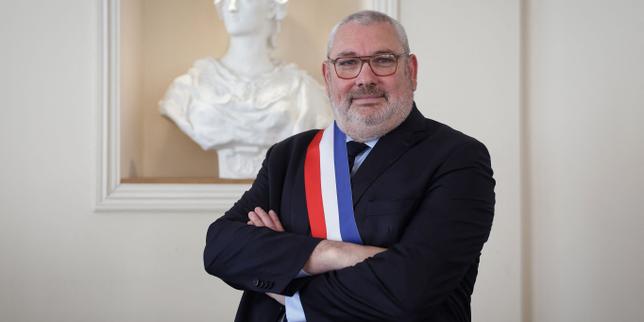
La mairie RN de Carcassonne refuse de prêter ses locaux pour le vote dAlgériens Le consulat dAlgérie avait sollicité la commune pour y installer des bureaux de vote destinés aux ressortissants algériens établis en France, appelés aux urnes pour les élections législatives du 2 juillet.
le monde · 1 day ago

Métropole de Lyon : Jean-Michel Aulas refuse de se mettre en retrait après la plainte pour viol contre un de ses proches conseillers La présidente (Les Républicains) de la Métropole de Lyon avait demandé, un peu plus tôt dans la journée, à lancien patron de lOlympique lyonnais de se mettre en retrait après la révélation dune plainte pour viol contre son directeur de la communication lors de la campagne des municipales.
le monde · 1 day ago

Boualem Sansal : Gallimard dénonce les accusations portées par lécrivain franco-algérien Dans « La Légende », sorti le 2 juin chez Grasset, lauteur de 81 ans se montre particulièrement sévère avec les dirigeants de Gallimard, quil met en cause pour leurs positions pendant et après sa détention en Algérie.
le monde · 1 day ago
Affaire Lyhanna : Jérôme Barella avait été signalé à la police française par un organisme antipédocriminalité américain Une activité en ligne suspecte de lhomme soupçonné davoir tué Lyhanna a été relevée par le NCMEC, un organisme de référence qui agrège les alertes collectées par les fournisseurs daccès à Internet, les géants du Web et les réseaux sociaux.
le monde · 1 day ago