
Weight-loss drugs slash breast cancer risk by 30 in new study
A new study has found that weight-loss drugs may reduce the risk of breast cancer by up to 30%, offering a potential breakthrough in cancer prevention as obesity rates rise globally. The research, published on Thursday, suggests that medications such as GLP-1 receptor agonists—including Eli Lilly’s Mounjaro and Novo Nordisk’s Wegovy—could have secondary health benefits beyond weight management.
The study, reported by Euronews, analyzed data from women using these drugs and found a significant correlation between their use and a lower incidence of breast cancer. While the exact mechanisms remain under investigation, researchers hypothesize that the metabolic changes induced by these medications may play a role in reducing cancer risk. The findings come at a time when obesity is increasingly recognized as a major risk factor for several cancers, including breast cancer.
In Switzerland, pharmaceutical companies are ramping up awareness campaigns around obesity, a condition now linked to rising cancer rates. On March 4, digital billboards in Zurich airport displayed the message *Adipositas ist nicht Ihre Schuld* (“Obesity is not your fault”), followed by Eli Lilly’s logo—one of the leading manufacturers of obesity treatments. Similar campaigns have since appeared across Europe, from France to India, raising questions about the role of drug advertising in public health messaging. Critics argue that while these campaigns promote awareness, they also serve commercial interests, blurring the line between education and promotion .
The potential cancer-preventive effects of weight-loss drugs add urgency to ongoing debates about access and affordability. In Europe, patients and advocates have long criticized delays in making approved medications available, citing bureaucratic hurdles as a barrier to treatment. Politico Europe recently highlighted this issue, noting that while science advances rapidly, healthcare systems struggle to translate approvals into real-world access .
Meanwhile, public health officials continue to grapple with broader environmental and lifestyle factors linked to cancer. The World Health Organization (WHO) has warned that contaminated food contributes to 1.5 million deaths annually, with children particularly vulnerable. In Finland, health authorities are pushing for a ban on energy drinks for under-18s, citing concerns over addiction and malnutrition among adolescents. Spain, too, has taken action, confirming 111 cases of a rare cancer linked to textured breast implants.
As research into weight-loss drugs and cancer prevention evolves, experts stress the need for balanced regulation. While the new findings offer hope, they also underscore the complex interplay between pharmaceutical innovation, public health policy, and commercial interests. For now, the study provides a promising lead—but the path from lab to clinic remains long.
- liberation
- hvg.hu
- irish times
- independent
- nltimes.nl
- courrier international
- swissinfo
- euronews
- elmundo
Articles

Drug use and drug trafficking are growing health and security threats that risk undermine our democracies. A new EU action plan against drug trafficking sets out key measures at both EU and national level for 2026-2030. Read the press release ➡️ link.europa.eu/98J7dw
bluesky bot · 3 days ago

Bemondta a WHO: ez okozza évi másfél millió ember halálát világszerte Évente másfél millió ember hal meg és további 866 millió megbetegszik az ellenőrizetlen forrásból származó, szennyezett élelmiszer fogyasztása miatt, a legnagyobb veszélyben pedig a kisgyerekek vannak – figyelmeztet az Egészségügyi Világszervezet (WHO).
hvg.hu · 3 days ago

Data centres energy use being managed appropriately by Government, Darragh OBrien says Minister for Energy and the Environment has responded to UN report that described Ireland as cautionary tale
irish times · 3 days ago
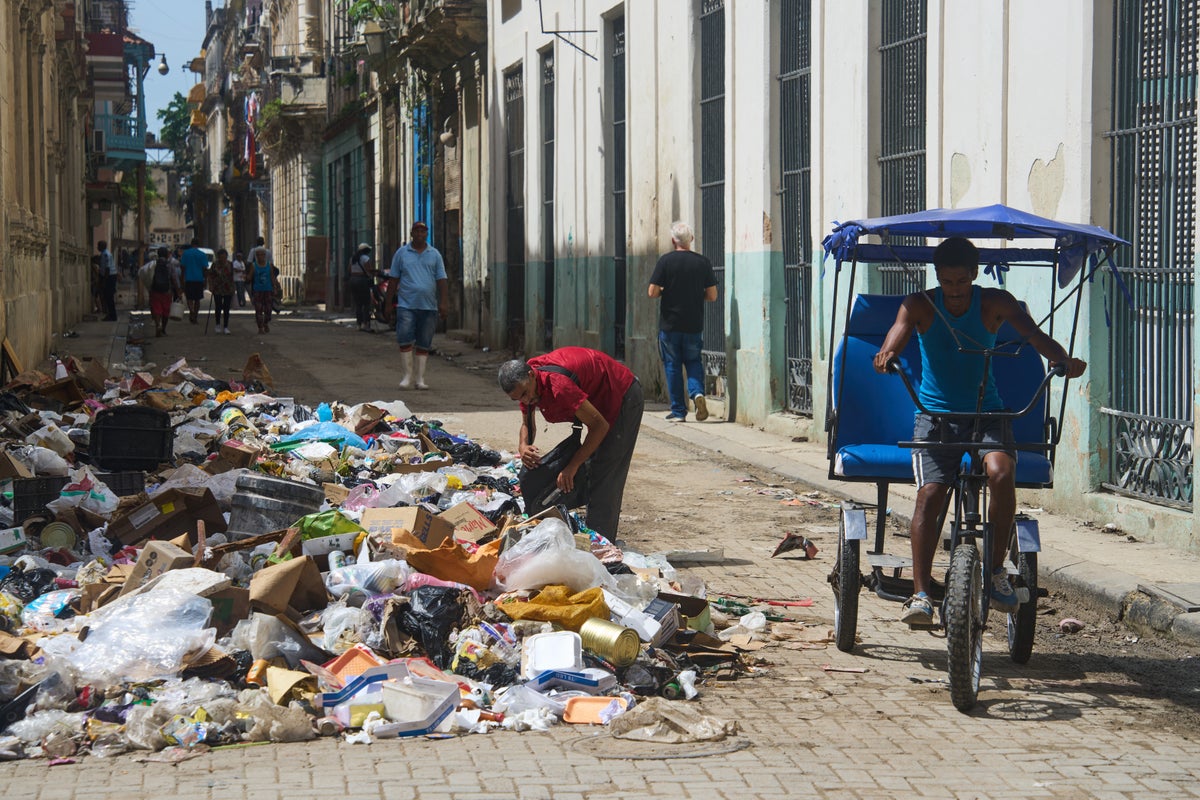
Rat, flies and rot: Havanas trash crisis spirals out of control For months, residents of Havana — home to 2 million of Cubas almost 10 million residents — have lived with piles of garbage accumulating on almost every street corner
independent · 3 days ago

Dutch health insurance to cover gastric reduction surgery for some teens with obesity Basic health insurance in the Netherlands will reimburse gastric reduction surgery for teenagers aged 13 and older with severe obesity, subject to strict conditions.
nltimes.nl · 3 days ago
Thursdays papers: Orpo invites influencers to lunch, THL wants energy drink ban for under-18s, and cottage costs are rising The prime minister hosted 11 female social media influencers for lunch earlier this week.
yle.fi · 3 days ago
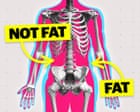
Ive lost my butt: how rapid weight loss can leave you with less muscle and more fat GLP-1 drugs such as Mounjaro are helping millions of people rapidly lose weight. But the changes happening inside the body go far beyond the number on the scale.Neelam Tailor investigates the growing debate around the possible risks of rapid weight loss from jabs and yo-yo dieting, which include loss of lean mass and consequences in older age. Experts say the debate isnt just about weight-loss drugs, but about how modern dieting culture has shaped our bodies for decades Continue reading...
theguardian · 3 days ago
Finnish health body calls for ban on energy drinks for under-18s The Finnish Institute for Health and Welfare urged lawmakers on Thursday to prohibit energy drink sales to individuals under 18, citing new data showing nearly 70 of adolescents consume the beverages regularly and warning that dependency is displacing proper nutrition and disrupting sleep cycles.
yenisafak · 3 days ago

Cancer du pancréas, percée de la Chine… Les temps forts du congrès américain sur le cancer Le congrès américain doncologie, qui réunit des dizaines de milliers de médecins du monde entier, sest achevé le 2 juin. Une édition mémorable, selon Stat News, marquée notamment par des résultats prometteurs dans le traitement du redouté cancer du pancréas.
courrier international · 3 days ago
Une proposition de loi prévoyant linterdiction de la vaisselle jetable dans les cantines scolaires examinée à lAssemblée nationale Le texte transpartisan présenté aux députés ce jeudi 4 juin veut préciser la notion de «contenants alimentaires», ces derniers étant déjà interdits sils sont en plastique.
liberation · 3 days ago

Consumo lanza a consulta pública el anteproyecto de ley que plantea prohibir la venta de bebidas energéticas a menores de 16 años Con casi un 40 de los jóvenes consumiendo estos productos, el Gobierno inicia el trámite para restringir su venta y blindar a los menores frente al marketing de las marcas Leer
elmundo · 3 days ago
Sperm quality in Swiss recruits remains stable Contrary to the global trend, the sperm quality of young Swiss men is stable. A new study shows that key measurements of sperm quality have not fallen any further since the period 2005 to 2017. + Get the most important news from Switzerland in your inbox The study by the University of Zurich and Zurich University Hospital, published in the June issue of the specialist journal New Microbes and New Infections, compares data from 194 army recruits from 2021 with data from 2,523 young men who were examined between 2005 and 2017. The researchers found that important measurements such as semen volume, total sperm count, sperm concentration and sperm motility remained relatively constant over the years. In 2021, 41 of men had at least one sperm count below the World Health Organisation standard. In the earlier study group, the figure was 62. However, according to the researchers, this seemingly positive trend could also be explained by a bias in the selection of participants. Translated ...
swissinfo · 3 days ago
Pharmas obesity campaigns juggle awareness and advertising Pharma giants are bankrolling obesity awareness campaigns globally. In an analysis, Swissinfo examines thorny questions about whether drug advertising bans are still enforceable – or even relevant. In early March, a digital billboard in the train station at Zurich airport caught my eye. It consisted of just a few words on a light green-blue screen: Adipositas ist nicht Ihre Schuld (obesity is not your fault) along with a website link, a QR code and a call to consult your doctor. A couple of seconds later, a slide in red appeared with the logo of the US firm Eli Lilly, one of the two major makers of obesity treatments. Over the next month my colleague spotted similar billboards in the French-speaking part of Switzerland, some of which were found next to ads for McDonalds. Company-sponsored posters, TV commercials and online campaigns on obesity have appeared in other countries from France to India. Its pretty unusual to see pharmaceutical company logos on advertising billboards ...
swissinfo · 3 days ago
Cocaine use continues to increase in Switzerland Cocaine use in Switzerland is on the rise. Men and young adults between the ages of 18 and 34 use the drug particularly frequently, an analysis by the non-profit foundation Addiction Switzerland reveals. + Get the most important news from Switzerland in your inbox Cocaine is the second-most commonly consumed illegal substance in Switzerland after cannabis. According to the latest Swiss Health Survey, dated 2022, around 1 of the population has used cocaine in the last 12 months, Addiction Switzerland said in a press release on Thursday. However, various data sources, including wastewater analyses, indicate that the extent of cocaine use among the population may be even higher. Cocaine use has found its way into large sections of society, the foundation said. A large proportion of users are socially integrated, well educated and gainfully employed. In addition to occasional users, there is a group that uses cocaine regularly or intensively and is at increased risk of health and ...
swissinfo · 3 days ago
Dutch companies imported €2 billion worth of dangerous designer drugs from India Dutch companies have ordered dangerous designer drugs from India with a street value of nearly €2 billion between 2019 and 2025,
nltimes.nl · 3 days ago
Podcast: the story behind data on hazardous chemicals In this episode of Eurostats podcast Stats in a Wrap, we take a closer look at hazardous chemicals. We are constantly surrounded by chemicals, from clothing to cleaning products, so its essential that we understand their potential dangers. How can we distinguish between useful chemicals and th...
eurostat · 3 days ago

La crémation par leau, pour des funérailles plus écologiques Début mars, le Parlement écossais a approuvé la légalisation de la crémation par leau, ou aquamation. Une première au Royaume-Uni, qui laisse espérer une réduction de limpact des funérailles sur lenvironnement.
courrier international · 3 days ago
Cancers, insuffisance rénale et fractures des os… Quels sont les effets toxiques avérés du cadmium sur la santé ? Alors que lAssemblée nationale a adopté dans la nuit de mercredi à jeudi la proposition de loi écologiste pour réduire le seuil autorisé de ce métal lourd dans les engrais, «Libé» fait le point sur les risques liés à lexposition massive via lalimentation.
liberation · 3 days ago
Le cancer frappe les riches comme les pauvres, mais plus durement les pauvres Il existe un lien «extrêmement fort» entre sociodémographie et maladie, selon une étude publiée ce jeudi 4 juin par la Drees. Le cancer est la première cause de mortalité en France avec plus de 160 000 morts chaque année et celui du poumon est surreprésenté chez les plus modestes.
liberation · 3 days ago

La hoja de ruta de la Comisión de Sanidad del Senado frente al suicidio: "La reducción de muertes es un objetivo alcanzable con voluntad política, inversión y un marco jurídico adecuado" Durante un año y medio los grupos parlamentarios han analizado el complejo fenómeno de la conducta suicida escuchando a profesionales y afectados. Éstas son sus conclusiones para reforzar la atención integral a personas en riesgo, familiares y avanzar en la concienciación social. Leer
elmundo · 3 days ago
Bern parliament approves naming feminicide in crime data The parliament of the canton of Bern has voted to include feminicide as a separate category in its annual crime statistics. Currently, no institution in Switzerland systematically documents this type of crime. + Get the most important news from Switzerland in your inbox On Wednesday evening, the Bernese parliament adopted in a 117-30 vote a motion put forward by Green Party member Manuel C. Widmer, which points out that violence against women is often seen as a private matter. The motions signatories, which included members of centre-right Radical-Liberals and the left-wing Social Democrats, among others, defined feminicide as the killing of women or girls in the context of patriarchal gender differences. For some members of the right-wing Swiss Peoples Party, however, the term feminicide is a militant political concept that has no place in official statistics. The Bernese government had previously said that in principle it supports the creation of a separate category in the ...
swissinfo · 3 days ago

Weight-loss drugs may cut breast cancer risk by up to 30, study finds Women on weight-loss medication may have a lower risk of developing breast cancer, according to a new study.
euronews · 3 days ago