
U.S. Defense Secretary warns Europe faces "invasion" by migrant flows
U.S. Defense Secretary Pete Hegseth on Saturday drew a provocative historical parallel, warning that Europe faces an “invasion” of dangerous ideologies arriving by sea and urging European capitals to act before it is too late. Speaking at the 82nd anniversary of the D-Day landings in Colleville-sur-Mer, where 160,000 Allied troops stormed Nazi-occupied Normandy on 6 June 1944, Hegseth framed contemporary migration flows as a modern-day assault on the continent’s shores.
“When will European capitals do something about that invasion?” Hegseth asked, his voice cutting through the solemn ceremonies at Omaha Beach. “Is it too late?” The Pentagon chief did not mince words, describing the arrival of migrants as an existential challenge that demands immediate, decisive action from EU governments already grappling with rising far-right sentiment and strained public services.
European reactions were swift and divided. German Defense Minister Boris Pistorius, addressing a separate military buildup announcement in Berlin on the same day, emphasized that Europe must strengthen its defenses—not only against external threats like Russia but also against what he called “internal fractures.” Pistorius revealed plans to accelerate procurement and expand the Bundeswehr to 460,000 personnel by 2039, positioning Germany as Europe’s strongest conventional force. “We cannot afford to be distracted,” he said, implicitly responding to Hegseth’s critique.
French officials, however, distanced themselves from the American defense secretary’s rhetoric. A spokesperson for President Emmanuel Macron’s office stated that France remains committed to humanitarian principles and EU solidarity, while acknowledging the need for better-controlled borders. “Migration is a shared challenge, not an invasion,” the spokesperson said, echoing statements from Brussels that stress legal pathways and burden-sharing.
Analysts see Hegseth’s speech as part of a broader U.S. push to realign transatlantic priorities under the current administration. His remarks came just days after NATO concluded its largest exercises in decades, involving 90,000 personnel across Europe, signaling renewed focus on collective defense. Yet the timing of his D-Day address—amid record migrant arrivals in Italy, Greece, and Spain—has reignited debates over sovereignty, identity, and the limits of European hospitality.
For a continent still reckoning with the legacy of 1944, the comparison stings. As one historian noted, “D-Day was liberation; today’s arrivals are not soldiers, but people fleeing war, poverty, and climate collapse.” Yet Hegseth’s blunt language reflects a growing conviction in Washington that Europe must choose between openness and order—or risk repeating the mistakes of the past.
U.S. Defense Secretary warns Europe faces "invasion" by migrant flows
- taz.de
- tagesspiegel
- 444.hu
- gazeta.pl
- independent
- hvg.hu
- digi24
- helsingin sanomat
- bbc
- irozhlas.cz
- adevarul
- hotnews.ro
- handelsblatt
Articles

Welterbetag: Unesco-Präsidentin mahnt Schutz von Welterbestätten an Deutschland hat 55 Welterbestätten. Sie stehen im Mittelpunkt an diesem Sonntag. Zum Welterbetag gibt es auch mahnende Worte.
tagesspiegel · about 4 hours ago
D-Day-Rede des US-Verteidigungsministers: Hegseth spricht von „Invasion an Europas Küsten Beim Gedenken an die Landung der Alliierten in der Normandie redet der Pentagon-Chef über Vieles. Ein Thema, mit dem er provoziert: Migration. mehr...
taz.de · about 4 hours ago
Hegseth a atacat Europa pentru „invazia migranţilor pe plajele sale, în discursul rostit la 82 de ani de la Debarcarea în Normandia Secretarul american al Apărării, Pete Hegseth, a criticat statele europene pentru politica lor privind migraţia, acuzându-le că permit ceea ce el a descris drept o „invazie pe ţărmurile lor, într-un discurs rostit în în Normandia, la 82 de ani după ce forţele aliate au debarcat pe plajele franceze pentru a elibera nord-vestul Europei ocupat de Germania nazistă în 1944, relatează BBC.
digi24 · about 4 hours ago
Yhdysvallat | Puolustusministeri Hegseth käytti Normandian maihinnousun muistopuhettaan Euroopan mätkimiseen Puolustusministeri Pete Hegseth kuvaili siirtolaisia maahantunkeutujina, jotka hyökkäävät Euroopan rannoille.
helsingin sanomat · about 4 hours ago
Hegseth attacks Europe over migration with beach invasion D-Day speech The US defence secretary was speaking in Normandy, 82 years after allied forces launched their operation to liberate Nazi-occupied north-western Europe.
bbc · about 4 hours ago
Racist mindsets: Congolese in Ireland feel fear in wake of Yves Sakilas death After a death in Dublin with echoes of George Floyd, people of colour sense rising hostilityWhen Kembetia Bissa fled the Democratic Republic of the Congo and moved to Ireland in 2003 he found not only sanctuary but beauty, friendship and a home.The asylum seeker settled in Bandon, west Cork, and found work as a landscaper. He opened an African dance school with Congolese drumming and taught local people the rhythms of his homeland. It was very positive, very welcoming. I felt like I was in my own country, Bissa, 55, said this week in Dublin. Continue reading...
theguardian · about 4 hours ago

U.S. Defense Secretary Pete Hegseth used a D-Day commemoration speech yesterday to warn Europe about an invasion of dangerous ideologies, urging the continent to act against mass immigration.
bluesky bot · about 4 hours ago
A normandiai partraszállás évfordulóján migrációs „invázióról beszélt és Európát bírálta az amerikai védelmi miniszter Hegseth szerint ma már veszélyes ideológiák ostromolják Európa partjait.
444.hu · about 4 hours ago
Zůna: karlovarské letiště má pod armádu přejít do konce roku. Miliardovou investici podle něj zajistí stát Letiště Karlovy Vary by mělo přejít pod Armádu ČR do konce roku, sdělil v sobotu ministr obrany Jaromír Zůna (SPD). Letiště v majetku Karlovarského kraje je v posledních letech ve ztrátě, pro zvýšení příjmů potřebuje zhruba miliardovou investici do prodloužení a rozšíření přistávací dráhy. Tu už by měl zajistit stát, doplnil Zůna.
irozhlas.cz · about 4 hours ago
Pentagon chief says Europe faces invasion of dangerous ideologies US Defense Secretary Pete Hegseth warned on Saturday that Europe is facing what he called an "invasion" of "dangerous ideologies" arriving by sea, likening contemporary migration flows to the historic D-Day landings during a ceremony in Normandy while challenging European capitals to take action.
yenisafak · about 4 hours ago
Germany vows faster military buildup over Russian threat Defense Minister Boris Pistorius said Saturday that Germany will accelerate military procurement and boost defense spending to counter what Berlin sees as an ongoing Russian threat, with the Bundeswehr targeting 460,000 personnel as part of a strategy to become Europes strongest conventional force by 2039.
yenisafak · about 4 hours ago
Șeful Pentagonului avertizează că Europa este „invadată de ideologii periculoase într-un discurs susținut la comemorarea Debarcării din Normandia Secretarul american de Război, Pete Hegseth, a folosit ceremonia de comemorare a Debarcării din Normandia pentru a avertiza asupra a ceea ce a numit o invazie a „ideologiilor periculoase în Europa și pentru a îndemna statele europene să adopte măsuri mai ferme în privința imigrației.
adevarul · about 4 hours ago

Szef Pentagonu uderzył w Europę. "Kiedy zrobią coś z tą inwazją?" Podczas obchodów rocznicy lądowania aliantów w Normandii szef Pentagonu Pete Hegseth porównał ówczesne wydarzenia historyczne do współczesnego zjawiska imigracji. Wezwał też kraje europejskie, by podjęły więcej działań na rzecz własnej obronności.
gazeta.pl · about 4 hours ago
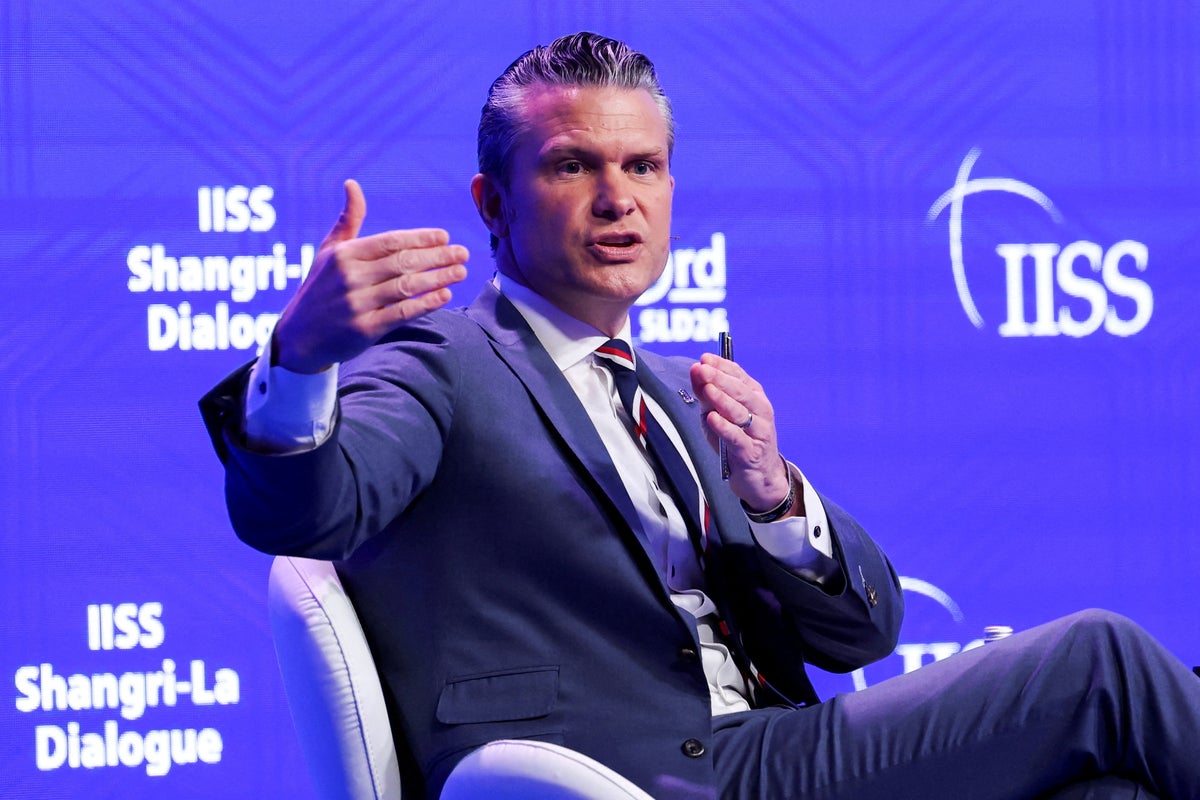
Hegseth says Europe faces invasion of dangerous ideologies while speaking at D-Day event Speaking at Normanday, Hegseth asked, When will European capitals do something about that invasion or is it too late?
independent · about 4 hours ago
Jagland: Europe is a Peace Continent - The Nordic Page
gdeltproject.org · about 4 hours ago
Șeful Pentagonului, atac la Europa pentru „invazia migranților pe plajele sale. „Când veți face ceva? Secretarul american al Apărării, Pete Hegseth, a criticat, într-un discurs ținut în Franța, statele europene pentru politica lor privind migraţia, acuzându-le că permit ceea ce el a descris drept o „invazie pe ţărmurile lor, relatează BBC. Declarațiile lui Pete Hegseth au fost rostite în Normandia, la 82 de ani după ce forţele aliate au debarcat …
hotnews.ro · about 5 hours ago
Migration: Hegseth spricht bei D-Day-Rede von „Invasion an Europas Küsten Bei einer Rede zum Gedenken an die Landung der Alliierten in der Normandie spannt US-Verteidigungsminister Hegseth einen großen Bogen – und schließt sich Kritik von US-Vize J.D. Vance an.
handelsblatt · about 5 hours ago

Európát támadó migránsinvázióról beszélt az amerikai védelmi miniszter a normandiai partraszállás emléknapján Nagyot migránsozott Pete Hegseth egy franciaországi ünnepi beszédében, a normandiai partraszálláshoz hasonlítva a menekültek érkezését.
hvg.hu · about 5 hours ago
Hegseth draws line between D-Day, migration at Normandy
gdeltproject.org · about 5 hours ago