
Taty Almeida, Argentine human rights icon, dies at 95
Taty Almeida, the iconic Argentine human rights activist and longtime leader of the Mothers of the Plaza de Mayo, died on Sunday at the age of 95, marking the end of a lifelong struggle for justice for the victims of the country’s 1976–1983 military dictatorship.
Born María Adelina Álvarez de Almeida in 1930, she became one of the most recognizable faces of the Mothers of the Plaza de Mayo, an association she joined in 1979 after her son, Alejandro Almeida, was forcibly disappeared by state security forces. For nearly five decades, she carried the demands of families of the *desaparecidos*—those who were abducted, tortured, and murdered during the dictatorship—into the public square, turning the weekly marches around Buenos Aires’ Plaza de Mayo into a global symbol of resistance against state violence.
Almeida’s death was confirmed on Sunday, 14 June 2026, according to multiple outlets including *Le Monde* and Dutch and Belgian newspapers . She had remained an active voice in human rights circles until her final years, advocating for the prosecution of former military officers and the continued search for the remains of the disappeared. Her leadership helped secure the release of thousands of political prisoners and kept international pressure on Argentina to address its darkest chapter.
The Mothers of the Plaza de Mayo, founded in 1977 by mothers searching for their missing children, became a cornerstone of Argentina’s human rights movement. Almeida’s role within the organization evolved from a grieving parent to a strategic leader, navigating political shifts from the dictatorship to democratic governments while maintaining the group’s uncompromising stance on accountability. Under her guidance, the Mothers expanded their work beyond protests to include legal advocacy, archival research, and international lobbying.
Tributes poured in on Monday as news of her death spread. Argentine President Javier Milei issued a statement acknowledging her “unwavering commitment to truth and justice,” while human rights organizations described her as a “tireless fighter” whose legacy would endure . The Plaza de Mayo was expected to host a public homage later this week, where thousands are likely to gather in her memory.
Almeida’s death comes at a time when Argentina’s human rights movement faces new challenges, including rising skepticism toward transitional justice efforts and political attempts to reinterpret the dictatorship’s crimes. Yet her life’s work remains a testament to the power of collective action. As she once said, “We did not choose this path—it chose us. But we will walk it until the last desaparecido is found.”
- 1
- 1
- 1
- 1
- 1
- 1
Articles

Boegbeeld van Dwaze Moeders, Taty Almeida, in Argentinië overleden
de morgen · about 2 hours ago
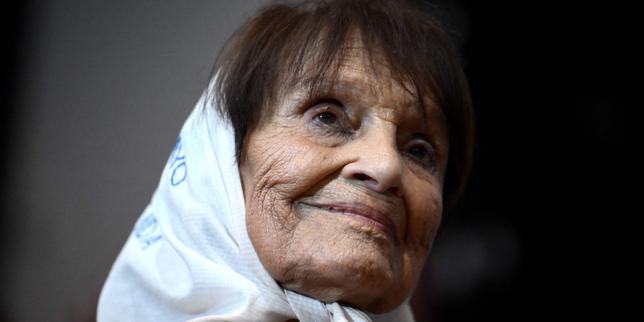
Mort de Taty Almeida, figure de la lutte pour les droits humains en Argentine A la tête de lassociation des Mères de la place de Mai, quelle avait rejointe en 1979, Taty Almeida a porté inlassablement les revendications des familles de « disparus » de la dictature argentine, jusquà sa mort dimanche, à lâge de 95 ans.
le monde · about 2 hours ago

Hun var Norges mest solgte forfattere, hvem? 1. Hun døde nylig som en av Norges mest solgte forfattere. Hvem skrev «Sønnavind»?
aftenposten · about 2 hours ago

Boegbeeld van Dwaze Moeders in Argentinië, Taty Almeida (95), overleden
de volkskrant · about 2 hours ago

João Pedro George e a gente branca Não me recordo de ter visto pessoas como Anizabela Amaral, Mamadou Ba, Pedro Schacht, Joacine Katar Moreira, Sandra Urceira e muitos, muitos outros activistas woke acusarem um negro de racismo.
observador · about 5 hours ago

Naomi Campbell. La fiera que se merendó la pasarela y engordó a los paparazzi Pertenece Naomi Campbell a la estirpe de las supermodelos de los 90, y de todas ellas es sin duda la más icónica por su belleza, su carácter y su biografía, casi mito a estas alturas Leer
elmundo · about 5 hours ago