 Sunday, June 21Sunday, June 21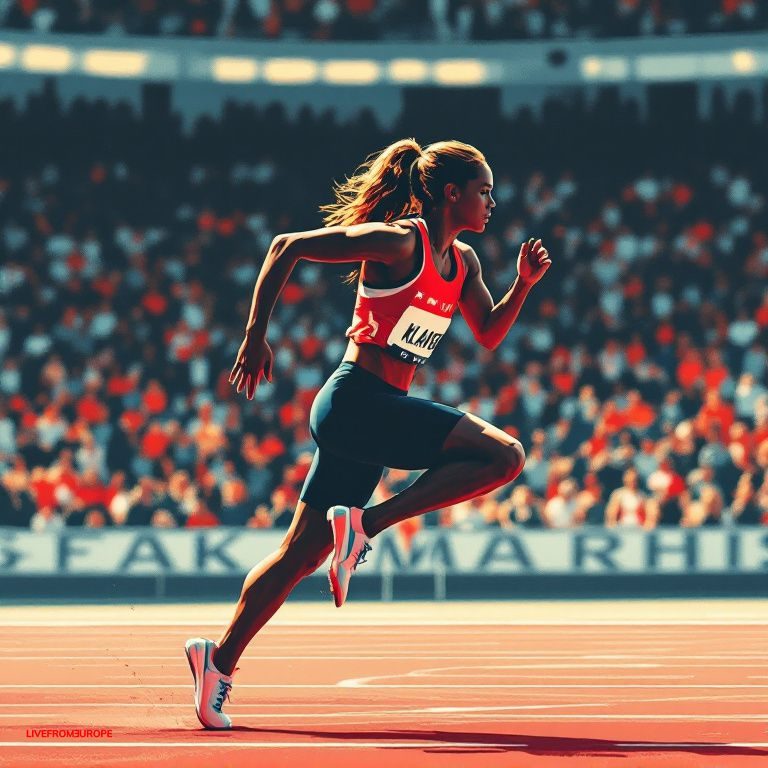
Lieke Klaver finished third in the women’s 400 metres at the FBK Games in Hengelo on Sunday, running 50.60 seconds to remain just outside the 50-second barrier she has repeatedly targeted. The Dutch sprinter, widely regarded as the Netherlands’ leading track athlete, was beaten by Egypt’s Bassant Hemida (50.10) and Ireland’s Sharlene Mawdsley (50.14) in a race staged on 21 June 2026 . Klaver’s time, though a season’s best, leaves her 0.60 seconds adrift of the 50-second mark she has repeatedly vowed to break.
The result underscores the depth of the women’s 400 m field in 2026. Hemida, who claimed gold in Hengelo, has emerged as a consistent threat to the established European order, while Mawdsley’s silver medal confirms her rapid progress since her breakthrough in 2025. Klaver, by contrast, has now finished third in three of her last four 400 m races, each time within striking distance of the podium but never quite reaching the summit.
Elsewhere at the FBK Games, Dutch hurdler Nadine Visser celebrated her tenth appearance at the Dutch Diamond League meeting by winning the women’s 100 m hurdles in 12.52 seconds, ahead of the United States’ Alia Armstrong (12.60) . The 31-year-old North Holland athlete, a former European champion, has made the event a personal showcase since her debut in 2017, and her victory on Sunday further cements her status as the meet’s most decorated performer.
The FBK Games, traditionally a key fixture in the European athletics calendar, continues to serve as both a proving ground for continental talent and a stage for established stars seeking championship form ahead of the world championships in Budapest this August. Klaver’s failure to dip below 50 seconds on Sunday will intensify scrutiny of her preparations for the global showpiece, where the 50-second barrier remains a psychological as well as a physical hurdle.
For Hemida and Mawdsley, the result offers a timely boost ahead of the African Championships and European Team Championships later this summer. Their performances in Hengelo suggest that the women’s 400 m may be entering a new phase of competitiveness, with multiple athletes capable of running under 50 seconds on any given day. Klaver, meanwhile, will return to training with the knowledge that the margin between podium and disappointment is now measured in fractions of a second.

BLOGI ⟩ Eesti kaotas EMi veerandfinaalis Ukrainale ning lõpetas turniiri 5. kohaga Vehklemise Euroopa meistrivõistlustel Prantsusmaal, Antonys, toimus täna naiste epee võistkonnavõistlus, kus Eestit esindasid Katrina Lehis, Julia Beljajeva, Irina Embrich ja Veronika Zuikova ning saavutati 5. koht. Postimees vahendab võistlust käesolevas uudises.
postimees · about 2 hours ago
Phijffers rent weer naar winst op 400 meter op FBK Games Jonas Phijffers heeft bij de FBK Games in Hengelo evenals vorig jaar de 400 meter gewonnen. De atleet uit Hellendoorn noteerde 44,84 seconden, zijn beste tijd van dit seizoen en in de buurt van zijn persoonlijk record van 44,71.
rtl nieuws · about 2 hours ago
GALERII ⟩ Eesti kettagolfaril ajas suurvõistlusel üks mure teist taga: tahtsin raja lõppu jõuda, ülejäänust oli suva Tallinna lauluväljakul toimunud kettagolfi slämmiturniiril võidutses soomlanna Eveliina Salonen. Mullu samal võistlusel kõrges mängus olnud eestlannad tegid tänavu tagasihoidliku esituse.
postimees · about 2 hours ago
Siim Raudla: EM-finaalturniiri pääsemine on Eesti 3x3 korvpalli jaoks väga suur saavutus Eesti 3x3 korvpallikoondis kindlustas eelmisel nädalal Bukarestis koha septembris Belgias peetavale Euroopa meistrivõistluste finaalturniirile. Peatreener Siim Raudla hinnangul on tegemist saavutusega, mille väärtust ei tasu alahinnata.
postimees · about 2 hours ago
Visser bekroont tiende FBK Games met zege op 100 meter horden Nadine Visser heeft haar tiende optreden op de FBK Games bekroond met de winst op de 100 meter horden. De 31-jarige Noord-Hollandse atlete klokte 12,52 seconden. De Amerikaanse Alia Armstrong werd tweede in 12,60.
rtl nieuws · about 2 hours ago
Atlete Klaver derde op 400 meter bij FBK Games Lieke Klaver is bij de FBK Games in Hengelo als derde geëindigd op de 400 meter. De Nederlandse sprinttroef moest de Egyptische Bassant Hemida en de Ierse Sharlene Mawdsley voor laten gaan. Klaver noteerde 50,60 seconden en slaagde er opnieuw niet in onder de grens van 50 seconden te duiken. Hemida won in 50,10, Mawdsley liep 50,14.
rtl nieuws · about 2 hours ago
BLOGI ⟩ Eesti kaotas EMi veerandfinaalis Ukrainale Vehklemise Euroopa meistrivõistlustel Prantsusmaal, Antonys on täna kavas naiste epee võistkonnavõistlus, kus Eestit esindab nelik Katrina Lehis, Julia Beljajeva, Irina Embrich, Veronika Zuikova. Postimees vahendab võistlust käesolevas uudises.
postimees · about 3 hours ago
Frisbeegolf | Eveliina Salonen voitti European Openin – täydensi major-voittojen sarjan Voitto tuli neljän heiton erolla seuraavaan.
helsingin sanomat · about 3 hours ago