
Hungary halts new non-EU work permits amid labour shortage warnings
Hungary’s new Prime Minister Péter Magyar on Sunday halted all new work-permit issuance for non-EU labour, fulfilling a central campaign pledge and reversing the Orban-era policy that had allowed thousands of workers from Ukraine, China, Vietnam and India to enter the Hungarian labour market. The abrupt policy shift, announced within weeks of Magyar’s April 2026 inauguration, immediately drew warnings from industry leaders that the country’s already strained workforce could face further shortages.
Magyar’s decree, published late Saturday, suspends the issuance of new permits “until further notice,” leaving the status of the roughly 45,000 existing non-EU workers in Hungary unresolved. The Ministry of Interior confirmed the move in a terse statement on Sunday morning, adding that existing permits would be reviewed on a case-by-case basis. “The government is prioritising Hungarian workers and ensuring fair wages,” said a ministry spokesperson .
Industry federations reacted with alarm. The Hungarian Chamber of Commerce and Industry (MKIK) warned that sectors such as manufacturing, agriculture and construction—already facing chronic labour shortages—could see output declines of up to 12% by year-end. “We need predictable rules, not sudden reversals,” said MKIK president Márta Demeter .
The policy U-turn comes as Magyar’s government also faces pressure over Hungary’s stance on the EU’s 2026 Migration Pact. On Sunday, Fidesz lawmakers reiterated calls for Hungary to opt out, but Magyar dismissed the criticism in a two-sentence statement: “Hungary will protect its borders and its citizens. We will not participate in mandatory relocation schemes” .
Across Europe, the Hungarian move reflects a broader tightening of third-country labour rules. In Switzerland, voters will decide on 14 June whether to cap permanent immigration at 10 million, a referendum that business groups warn could cost the economy up to 1.8% of GDP by 2030. Meanwhile, in the Central African Republic, officials confirmed negotiations with the United States to accept deportees from third countries, a development that has intensified debates over global deportation policy .
Back in Budapest, the Hungarian Association of Non-EU Workers announced plans to file a constitutional complaint, arguing that the permit freeze violates existing bilateral labour agreements. “We built families here, paid taxes, and now we are told to leave,” said association spokesman Nguyen Van Thang, a Vietnamese welder employed in Debrecen since 2023 .
Magyar’s government has not indicated when the freeze might be lifted, but Labour Minister Judit Varga told state media on Sunday that “Hungarian workers will be given priority training programmes” to fill the gap. The first cohort of 2,500 Hungarian trainees is scheduled to begin in September.
Articles

MARCUS EHASOO ⟩ Kärbime seni, kuni pole enam riiki, mida kaitsta On öö, heliseb telefon. Toru otsas on inimene, kes ei tea enam, kas ta tahab hommikut näha. Kõnele vastab Eluliini vabatahtlik, kelle võimuses ei ole muuta inimese majanduslikku olukorda, karjääri või eluviisi, küll saab ta teha midagi palju lihtsamat ja selles hetkes olulisemat: kuulata, püsida liinil ja aidata inimesel need tumedad minutid üle elada.
postimees · about 2 hours ago

+ Nebenaufmacher/PLUS, AB + „Wer in Deutschland drei oder vier Kinder hat, bekommt nicht mehr Anerkennung, sondern eher weniger Fast überall auf der Welt sinken die Geburtenraten, in Europa und Ostasien teils dramatisch. Demografie-Experte Martin Bujard sieht für Deutschland vor allem ein zentrales Problem – und schlägt eine Lösung vor.
welt.de · about 2 hours ago
Kurswechsel in Ungarn: Magyar stoppt Gastarbeiter-Regelung der Orban-Regierung Der neue ungarische Ministerpräsident setzt ein Wahlversprechen um: Die Beschäftigung von Gastarbeitern wird eingeschränkt. Die Industrie warnt vor Arbeitskräftemangel.
tagesspiegel · about 2 hours ago

Megérkezett Magyar Péter válasza a migrációs paktum miatti üzengetésben Két mondattal intézte el a miniszterelnök azt, hogy a Fidesz felszólította őt, maradjon ki Magyarország az uniós migrációs paktumból.
hvg.hu · about 2 hours ago
«Je ne pouvais pas enterrer mon père ici et ma mère là-bas» : pour les proches dimmigrés, le dilemme du lieu de la sépulture Lorsquon est immigré ou enfant dimmigrés, la question se pose inévitablement : se faire enterrer au pays, ou en France ? La question, délicate, charrie de multiples interrogations, au point de, parfois, déchirer les familles en deuil.
liberation · about 2 hours ago
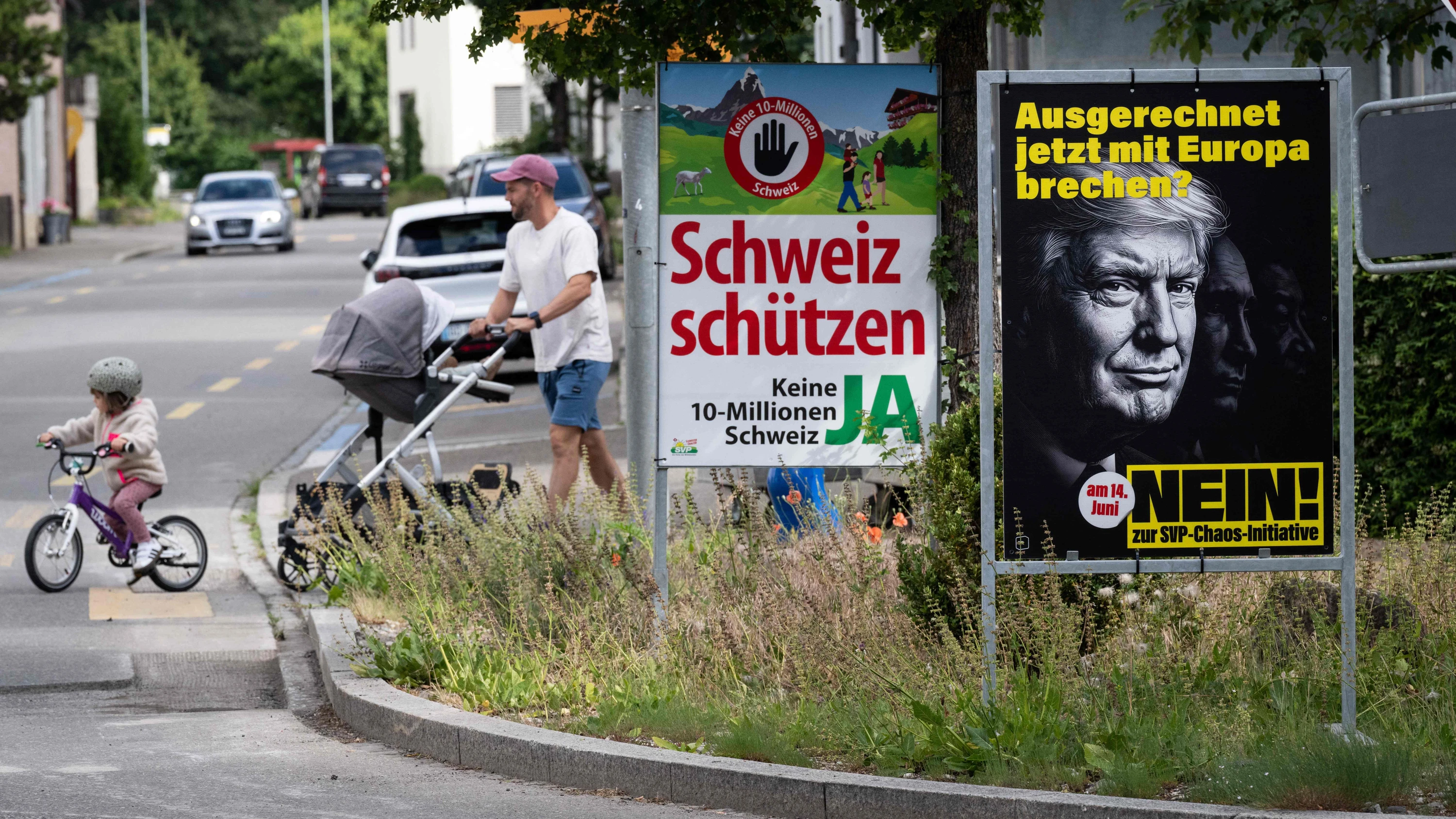
Abstimmung über Zuwanderung: Macht die Schweiz den Deckel zu? Die Abstimmung über eine Obergrenze der Bevölkerung von zehn Millionen lässt die Schweizer Wirtschaft zittern. Sie ist auf Arbeitskräfte aus dem Ausland angewiesen und fürchtet um den Zugang zum europäischen Binnenmarkt.
faz · about 2 hours ago
Swiss migration office cuts 100 jobs amid drop in asylum applications The Swiss State Secretariat for Migration (SEM) has announced it is cutting 108 jobs. Some of these were financed on a temporary basis, while other positions will fall victim to cost-cutting measures. + Get the most important news from Switzerland in your inbox The majority of the jobs that have been cut are temporary positions - these were awarded to the SEM on a temporary basis "in order to reduce the pending issues in the area of asylum", the SEM announced on Sunday in response to an enquiry from the Keystone-SDA news agency. As the reduction would be completed in a few months, the SEM would now have to "return" these posts. As a result of the relief package put together by the federal government and Parliament, individual permanent positions will also be cut, as the SEM confirmed a report in the Sonntags-Blick newspaper. The jobs that would have to be cut as a result of this and due to higher average personnel costs will be distributed across the entire State Secretariat. The ...
swissinfo · about 2 hours ago
International Deportation Policy: New Third-Country Deportation Agreement Sparks Global Debate Bangui 2026 BANGUI, Central African Republic, June 7 – Brussels Morning Newspaper — international deportation policy has become a major topic of discussion following reports that the Central African Republic may accept certain third-country deportees from the United States under a developing migration arrangement. The reported agreement has generated interest among policymakers, legal experts, immigration authorities, and international organizations seeking […]
brussels morning · about 2 hours ago
Brüssel lubas otsa vaadata ettepanekule Vene kodanike viisade väljastamist karmistada Euroopa Komisjon lubas karmistada viisade väljastamist Vene kodanikele pärast seda, kui 11 liikmesriiki pöörasid tähelepanu igal aastal sadu tuhandeid Vene turiste võõrustavale Prantsusmaale, Itaaliale ja Hispaaniale.
postimees · about 3 hours ago

Montenegro promete "condições" a quem ensina português fora Sindicalista recebeu Montenegro e Seguro, falando das mudanças no regime dos professores que ensinam português no estrangeiro.
observador · about 3 hours ago

Seguro pede português como opção curricular no Luxemburgo Para Seguro, ter dois países "não significa ter um coração dividido, significa ter um coração maior, onde cabem dois países e dois povos extraordinários".
observador · about 3 hours ago

„Sie wollen, dass wir verschwinden – Wo Bürger brutale Selbstjustiz gegen Migranten ausüben Sie machen Einwanderer für alle Probleme verantwortlich, terrorisieren und kontrollieren sie: In Südafrika gehen selbst ernannte Aktivisten gegen Migranten vor. Das erinnert an ein noch dunkleres Kapitel in dem Land.
welt.de · about 3 hours ago
Românii fug de agitația orașelor: șapte din 10 locuințe sunt construite la sat. Ce spun cei care s-au mutat deja la țară Tot mai mulți români își construesc locuințe la țară. Costurile tot mai mari ale vieții din orașe și dorința unui trai mai liniștit îi determină pe oameni să se mute în mediul rural. De altfel, și datele INS arată că, în aprilie, șapte din 10 locuințe noi autorizate în România au fost ridicate la sat.
digi24 · about 3 hours ago

Az egész régiónktól elmarad az, ahogyan a magyar munka termelékenysége nőtt 2010 óta 2015 és 2019 között sikerült érdemben előrelépnie Magyarországnak a termelékenységben, de a mögöttünk hagyott 16 év többi részében nem nagyon tudtuk tartani a lépést a környező országokkal.
hvg.hu · about 3 hours ago

Már idén életbe léphet a magyar-ukrán egyezség néhány pontja, ha az ukránok elég gyorsak Az oktatás, a nyelvhasználat és a szimbólumok kapcsán ért el igazi áttörést a magyar kormány - értékelte a tárgyalásokat a Kárpátaljai Magyar Kulturális Szövetség elnöke.
hvg.hu · about 3 hours ago
Magyar okamžite stopol lacnú pracovnú silu z tretích krajín. Zastavil Orbánov režim povolení pre cudzincov Nový maďarský premiér Péter Magyar okamžite stopol vydávanie nových povolení pre pracovníkov z krajín mimo EÚ. Splnil kľúčový sľub volebnej kampane.
aktuality.sk · about 3 hours ago
Montenegro promete garantir condições aos que ensinam português no estrangeiro Em causa está a possibilidade de redução dos períodos das comissões de serviço e a limitação do número de renovações, sobretudo se aplicadas com carácter retroactivo.
publico · about 3 hours ago

Oida auf Mandarin: Junge Chinesen suchen Anschluss in Europa Während China nach außen hin immer mächtiger wird, sehen viele junge Leute im Land keine Chancen. Einige wagen den Sprung nach Europa. Doch die Ankunft ist hart, wie ein Blick in die Communities in Berlin und Wien zeigt
der standard · about 3 hours ago

Neue Regierung in Ungarn schränkt Zuzug von Gastarbeitern ein Sie kommen aus der Ukraine, China, Vietnam oder Indien – die neue Regierung unter Péter Magyar will Gastarbeitern aus Nicht-EU-Ländern keine Aufenthaltsgenehmigungen mehr erteilen. Ob diejenigen, die bereits in dem Land sind, bleiben dürfen, ist offen.
welt.de · about 3 hours ago

Deutschland, das Auswanderungsland Immer mehr junge, gut ausgebildete und ambitionierte Deutsche verlassen ihre Heimat für immer. In den vergangenen zehn Jahren entsprach die Auswanderung der Einwohnerzahl von Frankfurt am Main. Der Aderlass verändert unser Land.
welt.de · about 3 hours ago
O treime dintre mamele din România se simt discriminate la job. De ce multe decid să pună cariera pe pauză: „Am ales să stau cu copiii Tot mai multe mame din România spun că statutul de părinte le influențează parcursul profesional. Un sondaj realizat recent de eJobs arată că aproape o treime dintre respondente s-au simțit discriminate la locul de muncă din cauza faptului că sunt mame, iar patru din zece ascund problemele legate de copii de teama să nu fie considerate angajate-problemă.
digi24 · about 3 hours ago