
Naomi Velissarious Sexodus reimagines Marilyn Monroes legacy as a feminist battleground at Theater Festival O.
**Theater Festival O. and Naomi Velissariou’s *Sexodus* place [Marilyn Monroe’s](en.wikipedia.org) legacy at the heart of a contemporary debate on female identity, as the Dutch stage explores the enduring pressures of beauty, motherhood, and rebellion.**
Naomi Velissariou’s performance *Sexodus* anchors this year’s Theater Festival O. in Amsterdam, where the Dutch director and actress confronts the "unrealistic beauty ideal" that defined Marilyn Monroe’s life—and continues to shape women’s experiences today. Velissariou’s work, described as a search for "a world in which gender no longer matters," draws explicit parallels to Monroe’s dual legacy as both a Hollywood sex symbol and a pioneer who "rewrote the rules for women in the industry," according to *NRC* . The festival’s program, which includes productions like *Club Satelliet* and *Club Gewalt*, stages mothers grappling with modern stressors, echoing Monroe’s own struggles with societal expectations .
The timing of the festival coincides with Monroe’s centennial on June 1, 2026, a milestone that has reignited global discussions about her intellectual depth and the "multifaceted phenomenon" she represented, as *ORF* notes . While retrospectives and exhibitions mark the anniversary, Velissariou’s *Sexodus* reframes Monroe’s story as a living question: Can women escape the roles imposed by history, or are they doomed to repeat them? The production’s pop-star charisma and raw interrogation of gender norms position it as a direct response to Monroe’s unresolved tension between glamour and rebellion.
Festival O. runs through June 15, with *Sexodus* scheduled for multiple performances at Amsterdam’s Frascati Theater. Velissariou’s work joins a broader cultural reckoning with Monroe’s image, including *The New York Times*’ examination of her complicated relationship with jewelry—a symbol of both her commodification and her defiance . As the festival unfolds, its focus on female agency offers a counterpoint to the male-dominated narratives that still dominate awards like Germany’s recent *Deutscher Filmpreis*, where "white old men" claimed the spotlight .
- taz.de
- orf.at
- courrier international
- nrc
- faz
Articles

Op theaterfestival O. ademt de moderne vrouw nog maar eens goed in Op theaterfestival O. staan bij zowel Club Satelliet als Club Gewalt moeders op het toneel te worstelen met de wereld. Duik je terug in klassieke rolpatronen of deal je op andere manieren met je stress?
nrc · 7 days ago
Ikone zwischen Glamour und Rebellion Norma Jeane Baker, besser bekannt als Marilyn Monroe, gilt als Ikone des 20. Jahrhunderts. Dass die Faszination mehr als 60 Jahre nach ihrem frühen Tod ungebrochen ist, liegt an der Vielschichtigkeit der Person und des Phänomens Monroe: Lange auf ihr Image als Sexsymbol reduziert, war sie zugleich Pionierin, die gegen Studios kämpfte, Hollywoods Regeln für Frauen neu schrieb – und als Intellektuelle unterschätzt wurde. Am 1. Juni 2026 wäre sie 100 Jahre alt geworden.
orf.at · 7 days ago
Sexodus van theatermaker Naomi Velissariou doet je verlangen naar een wereld waarin sekse geen betekenis meer heeft Hoe ontworstel je je, als vrouw, aan een onrealistisch schoonheidsideaal? Met het charisma van een popster zoekt theatermaker Naomi Velissariou in Sexodus naar een uitweg.
nrc · 7 days ago
Verleihung Deutscher Filmpreis: Die Moral hat sich nicht groß geändert Bei der Verleihung des Deutschen Filmpreises ging die Goldene Lola an Mascha Schilinski für „In die Sonne schauen. Der Abend gehörte aber den weißen alten Männern. mehr...
taz.de · 7 days ago

Marilyn Monroe : les diamants étaient ses meilleurs amis… au cinéma seulement Lactrice élevée au rang dicône hollywoodienne aurait eu 100 ans ce 1er juin 2026. Célébré lors dexpositions et de rétrospectives des deux côtés de lAtlantique, lanniversaire est loccasion pour The New York Times dinterroger le rapport de Marilyn Monroe aux bijoux.
courrier international · 7 days ago

Nacktszene Mit Kinski: Wenders macht das filmreif Wim Wenders äußert sich beim Deutschen Filmpreis zu der Bitte von Nastassja Kinski, Nacktszenen mit ihr im Alter von 13 Jahren aus dem Film „Falsche Bewegung zu entfernen. Was sagt der Regisseur? Er führt in die Irre.
faz · 7 days ago

Von Marilyn Monroe bis Jill Biden: Fünf Köpfe, auf die Sie diese Woche achten sollten Von Marilyn Monroe bis Jill Biden: Wer von Montag bis Sonntag eine Rolle spielt – und warum.
faz · 7 days ago
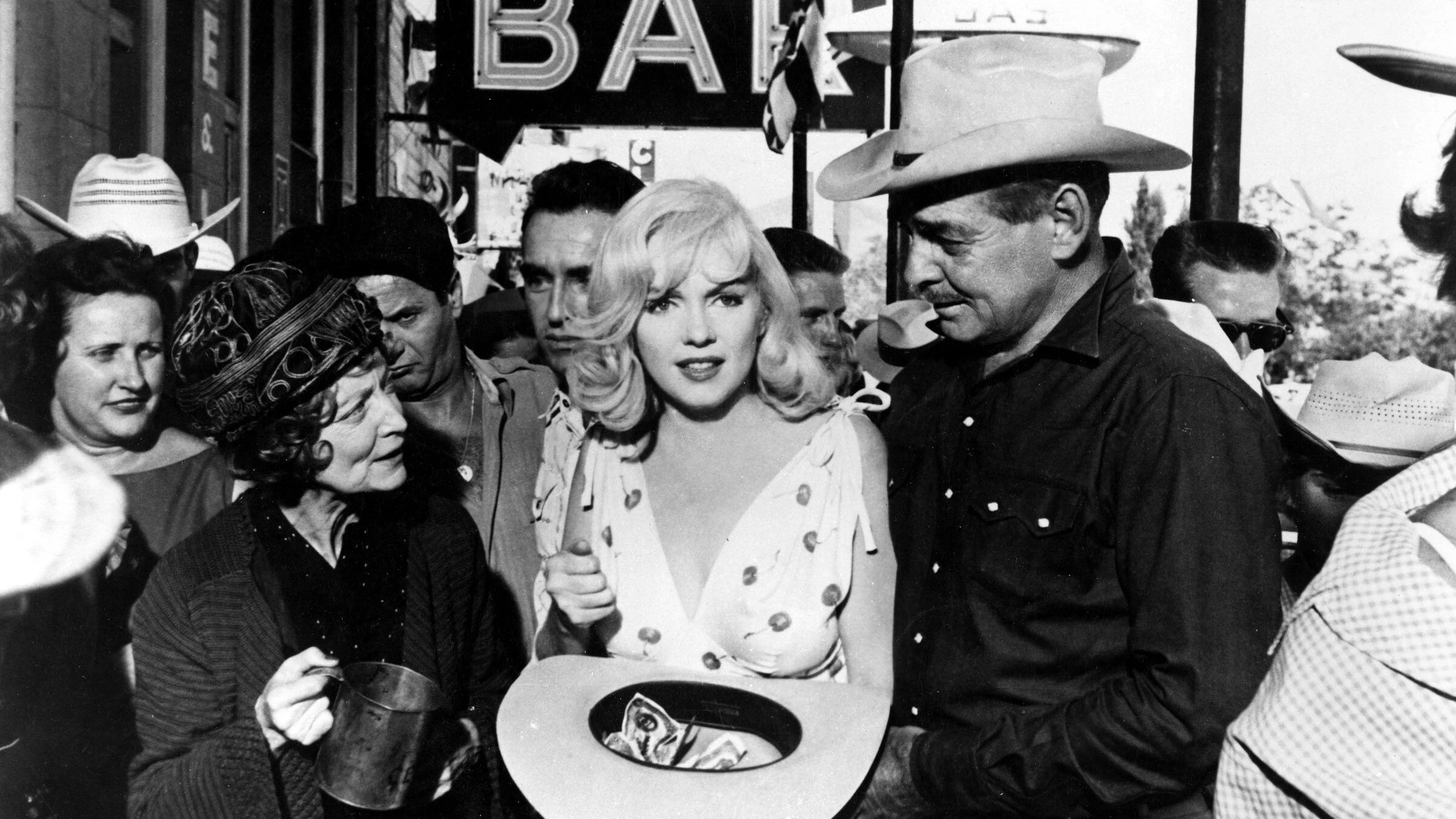
Marilyns letzter Film: Das Ende ihrer Legende In John Hustons „Misfits – Nicht gesellschaftsfähig von 1961 spielte Marilyn Monroe ihre letzte Filmrolle. Es hätte der Anfang einer neuen Karriere sein können – jenseits von Hollywood. Aber alles kam anders.
faz · 7 days ago