 Thursday, May 21Thursday, May 21
Norway has announced plans to reopen three old gas fields in the North Sea to boost Europe’s energy supply, reinforcing its position as the EU’s largest gas supplier. The government has also proposed 70 new offshore locations for oil and gas exploration, a move criticized by environmental activists who argue it prioritizes fossil fuel extraction over climate commitments despite geopolitical tensions like the wars in Ukraine and Iran .
Norwegian-backed companies, Northern Europe Energy Group and Vindr Baltics, are planning a €1 billion green hydrogen plant and data center in Pärnu County, Estonia, both powered by wind energy. The project aims to leverage Norway’s expertise in renewable energy infrastructure within the European market .
European automakers, including Volkswagen, Stellantis, Mercedes-Benz, and BMW Group, are deepening collaborations with Chinese companies to advance new energy vehicle (NEV) technologies. China’s leadership in NEV innovation is driving partnerships that support Europe’s green transition in the automotive sector .
Europe’s battery ecosystem is undergoing a revival after the collapse of Northvolt, once considered the continent’s best hope for competing with Chinese battery manufacturers. New initiatives are emerging to rebuild a homegrown supply chain, though challenges remain in matching China’s dominance in battery production . Meanwhile, China’s Huayou Cobalt has agreed to a $210 million takeover of Africa-focused Atlantic Lithium, securing critical lithium assets to strengthen its supply chain for electric vehicle batteries .

Elering weighs new Estonia-Latvia gas link on southeastern border Transmission system operator (TSO) Elering is weighing a possible new Estonia-Latvia gas interconnector near Värska to strengthen supply security as demand is set to rise.
news.err · 12 days ago
Energy security vs climate crisis: Norway reopens three old gas fields Norway has announced it plans to reopen three old gas fields in the North Sea in order to boost Europes supply. Already the largest supplier for the EU, Oslo also proposed 70 new offshore locations for oil and gas exploration. Environmental activists accuse the government of using geopolitical tensions and conflicts like the wars in Ukraine and Iran as an excuse to continue drilling for fossil fuels despite the climate crisis.
france24 · 12 days ago
Argentina Copper Mining Expansion Draws Major Global Investment in 2026 BUENOS AIRES, Argentina – May 8, 2026 – Brussels Morning Newspaper — Argentina copper mining projects are attracting growing international attention as major mining companies and investors continue expanding their focus on critical minerals needed for global electrification, renewable energy systems, and advanced technology infrastructure. Industry analysts say Argentina is rapidly emerging as one of the worlds most […]
brussels morning · 13 days ago
European automakers deepen ties with Chinese innovation By Liu Zhonghua, Xu Xin, Peoples Daily Chinas rapidly advancing new energy vehicle (NEV) sector is spearheading the global automotive industrys green transition, creating significant opportunities for collaboration between Chinese and European companies. According to statistics released by financial services firm UBS, since 2018, European automakers including Volkswagen, Stellantis, Mercedes-Benz, and BMW Group have established […]
cphpost · 13 days ago
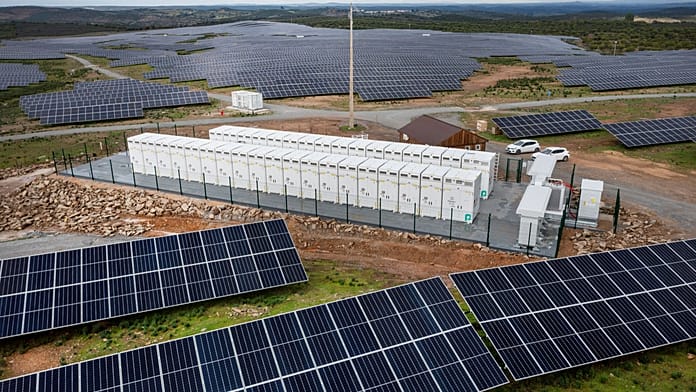
Europes electricity storage race: Which countries lead in battery capacity? Batteries are vital to using electricity from solar and wind efficiently. Battery capacities vary widely across European countries, with several planning significant expansion in their pipelines.
euronews · 13 days ago

Europes tech funding cools in April as investors grow more selective European startups raised €5.1B across 290 deals in April 2026, with cleantech leading investment activity and the UK remaining the top fundraiser, despite a drop in overall capital.Haberin devamını ok...
tech.eu · 13 days ago
European Tech.eu Pulse: key trends and investment in April (free report) At Tech.eu, we keep track of the investment landscape with data-driven insights. Our Tech.eu Insiders enjoy unlimited, exclusive access to all our content, including market-intelligence analysis, r...
tech.eu · 13 days ago
A share in the delight: the people investing in the UKs first community-owned solar battery Oxfordshires Ray Valley Solar already generates clean energy for 7,000 homes, and is now crowdfunding storage to marry daylight with evening demandTucked away among hedgerows on a large field between a motorway and the River Ray, one of the UKs largest community-owned solar parks is hard to spot from the surrounding country lanes.But the nearly 36,000 solar panels installed on the site are literally a shining example of what can be achieved when a renewable energy project is co-owned by local people. Continue reading...
theguardian · 13 days ago
Cameroon secures $206mn for Kribi refinery as fuel import reduction drive accelerates Cameroon has secured $206mn in bank financing for the CSTAR refinery project in Kribi, advancing plans to reduce dependence on imported fuel products while rebuilding domestic refining capacity after the prolonged shutdown of the SONARA refinery.
intellinews · 13 days ago
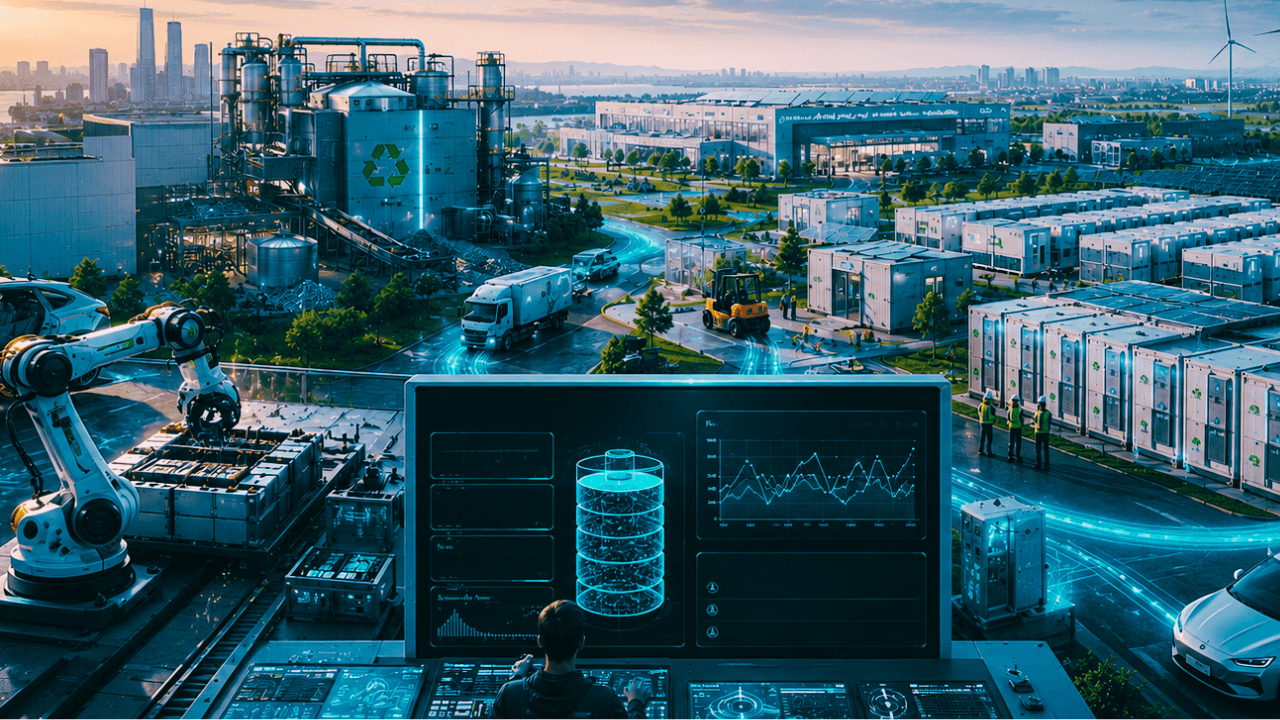
Europes second chance: The rise of a new battery ecosystem Europes battery ambitions took a major hit with the collapse of Northvolt, once seen as the continents best chance to rival Chinese competitors and build a homegrown supply chain. But since then, w...
tech.eu · 13 days ago
Norwegian companies are planning a billion‑euro hydrogen plant in Pärnu County Norwegian‑backed companies Northern Europe Energy Group and Vindr Baltics are planning to build a billion‑euro green hydrogen plant and a data center in Häädemeeste municipality in Pärnu County, both of which would use wind power.
news.err · 13 days ago
Africa-focused Atlantic Lithium agrees $210mn takeover by Chinas Huayou Cobalt Huayou Cobalt, a major Chinese battery materials producer, has been actively securing lithium, cobalt and nickel assets globally amid a domestic drive to strengthen supply chains for the electric vehicle sector.
intellinews · 13 days ago

Prediction: This Artificial Intelligence (AI) Stock Could 5X by 2030
news.yahoo.com · 5 months ago

London Eye architect proposes 14-mile tidal power station off Somerset coast West Somerset Lagoon would harness renewable energy for UKs AI boom – and create iconic arc around Bristol ChannelThe architect of the London Eye wants to build a vast tidal power station in a 14-mile arc off the coast of Somerset that could help Britain meet surging electricity demand to power artificial intelligence – and create a new race track to let cyclists skim over the Bristol Channel.Julia Barfield, who designed the Eye and the i360 observation tower in Brighton, is part of a team that has drawn up the £11bn proposal. It would curve from Minehead to Watchet and use 125 underwater turbines to harness the power of the second-highest tidal range in the world. Continue reading...
theguardian · 5 months ago
Europe is at a fork in the road between AI competition and climate, fund managers say As power-hungry infrastructure scales and demand for electricity surges, friction between competition and climate goals becomes harder to ignore.
cnbc · 5 months ago
New Years resolution: Lithuanian-made medicines to be tested in space in 2026 Though it is ony five years old, the Lithuanian life sciences start-up Delta Biosciences is already carrying out projects that others can only dream of. The company is currently preparing for a unique mission under which medicines developed in Lithuania for astronauts will be sent into Earth orbit for three years.
lrt · 5 months ago
Ripple XRP Banking and the Future of Global Payments Global banking is at a turning point. For decades, financial institutions relied on legacy systems designed in an era where transactions moved slowly and markets closed overnight. Today, commerce operates continuously across borders, time zones, and currencies. Businesses expect instant … Read more Continue reading Ripple XRP Banking and the Future of Global Payments at Brussels Morning.
brussels morning · 5 months ago
One year on from the UKs grand AI plan: has its infrastructure buildout been a success? Hefty financial commitments from tech giants are positive signals, but big challenges remain for the U.K. to fulfil its ambitions.
cnbc · 5 months ago
Lithuanian economy next year: cash boon followed by hard landing? Lithuanias economy is expected to continue growing next year and could expand by 3.2, according to the latest forecast by the Bank of Lithuania.
lrt · 5 months ago

Here are 5 ways AI transformed health care in Europe in 2025 Euronews Health homes in on five ways that AI has changed the medical field this year.
euronews · 5 months ago

Crypto ownership is on the rise in Europe: Whos investing the most? Crypto has had a rocky year in 2025, notably experiencing a major sell-off when US President Donald Trump threatened new tariffs on China in October. Looking at longer-term trends, ownership of these assets is — however — rising across Europe.
euronews · 5 months ago
Nexperia China eyes new wafer suppliers in 6 months amid legal fight with Dutch chipmaker Nexperia China, the estranged unit of the Dutch chipmaker, is pushing forward with efforts to secure new wafer suppliers in six months, as the firms Netherlands head office and mainland Chinese owner Wingtech Technology started direct talks last week. In its shareholders meeting in Shanghai on Friday, Wingtech said Nexperia Chinas plant in Dongguan, in southern Guangdong province, continued to operate amid a significant gap in wafer supply, reports from several state-backed media...
south china morning post · 5 months ago
Data centres turn to aircraft engines to avoid grid connection delays Supply chain shortages drive developers to use smaller and less efficient power sources to fuel AI power demand
financial times · 5 months ago