 Wednesday, June 10Wednesday, June 10
The German Football Association (DFB) has found itself at the centre of a political storm after its decision to relocate its financial headquarters from Frankfurt to Bad Homburg, a move defended by Hessian Finance Minister Thomas Schäfer as a purely administrative decision. The shift, which took effect this week, has drawn criticism from opposition politicians and raised questions about the DFB’s tax affairs amid long-standing tensions with Frankfurt’s tax authorities. Schäfer, speaking to the *Frankfurter Allgemeine Zeitung*’s *Rhein-Main Feierabendbriefing* podcast, dismissed allegations of political interference, stating that the relocation was driven by “bureaucratic efficiency” rather than any attempt to favour the DFB .
The controversy comes at a time of heightened scrutiny over Germany’s public finances, with Finance Minister Markus Marterbauer (SPÖ) delivering a 98-minute budget address on Wednesday that analysts described as lacking bold reforms. Marterbauer, who has faced criticism for his government’s cautious approach, defended the budget as a “step-by-step” solution to economic challenges, though Fiskalrat chief Christoph Badelt warned it would “simply not suffice” without deeper structural changes .
The DFB’s move has also reignited debates over tax exemptions for sports associations, with critics questioning whether the relocation was motivated by financial rather than logistical concerns. Hessian officials have denied any political bias, emphasising that the change was part of a broader reorganisation of tax offices in the region. The DFB, which has faced scrutiny over its financial dealings in the past, has yet to comment publicly on the relocation .
Meanwhile, Germany’s economic outlook remains fragile, with the government’s double budget facing scepticism from independent institutes. The WIFO and IHS research groups described the plan as “overstretched,” while the Fiskalrat’s Badelt called for “far-reaching and rapid decisions” on structural reforms . The political impasse has raised concerns about the coalition’s ability to deliver meaningful change, with former Hesse premier Roland Koch (CDU) warning that Germany’s future hinges on whether centrist parties can regain their footing .
As the DFB navigates the fallout from its relocation, the episode underscores broader tensions between fiscal prudence and political expediency in Germany’s current economic climate. With no clear resolution in sight, the affair risks becoming a symbol of the government’s struggle to balance competing priorities.

Fiskalratschef Badelt zum Budget: „Das wird schlicht nicht reichen Experten sehen keinen Puffer im Doppelbudget der Regierung und vermissen strukturelle Reformen.
die presse · about 5 hours ago
Weniger Geld für Museen, Film, Förderungen: Bablers „stabiles Kulturbudget [premium] Es geht nicht so radikal bergab wie angekündigt beim Kunst- und Kulturbudget. Vizekanzler Andreas Babler (SPÖ) ist stolz auf eine „Absicherung des „Kulturlandes. Aber wie weitsichtig ist sein ideologisches Motto?
die presse · about 5 hours ago
War das die Budgetrede einer SPÖ-Alleinregierung? [premium] Kein einziges positives Wort über Unternehmertum. Dieses Kunststück gelang Finanzminister Markus Marterbauer in seiner 98 Minuten langen Budgetrede mühelos. Die Botschaft ist klar: Rette sich, wer kann!
die presse · about 5 hours ago
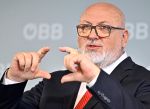
ÖBB steht vor größter Reform seit Jahren – doch die Koalition ist sich nicht einig ÖBB-Chef Matthä und Finanzchefin Waldner bekommen aller Voraussicht nach einen neuen Kollegen. Die Weichen für die große Reform werden aber später gestellt als geplant
der standard · about 5 hours ago
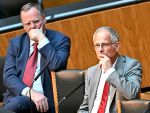
Warum das Budget besser ist als sein Ruf Nein, der große Wurf ist nicht dabei, die Koalition setzt auf viel Flickwerk zur Budgetsanierung. Das muss aber kein Fehler sein. Eine wichtige Chance wurde nicht genutzt
der standard · about 5 hours ago
„Verlässliche Politik in „ernsten Zeiten Finanzminister Markus Marterbauer (SPÖ) hat in seiner zweiten Budgetrede versucht, trotz schwieriger Umstände Zuversicht zu verbreiten. Die Regierung löse Schritt für Schritt die Probleme und treibe die notwendigen Reformen voran, sagte er in seiner mit 98 Minuten ungewöhnlich langen Ansprache am Mittwoch vor dem Nationalrat. „Ich werde Ihnen nichts vormachen, die Zeiten sind ernst, sagte der Finanzminister, der für eine „verlässliche Politik warb.
orf.at · about 5 hours ago
WIFO, IHS skeptisch zu Doppelbudget Skeptisch, dass das am Mittwoch präsentierte Doppelbudget auch hält, haben sich am Mittwoch die WIFO-Budgetexpertin Margit Schratzenstaller und IHS-Chef Holger Bonin gezeigt. Die angepeilte Budgetsanierung sei „auf Kante genäht, so ihre Einschätzung. Auch Fiskalratschef Christoph Badelt glaubt nicht, dass das Budget hält. Viel weitgehendere und schnellere Entscheidungen fordern sie bei überfälligen Strukturreformen.
orf.at · about 5 hours ago

Keine „Lex DFB: Finanzminister verteidigt Finanzamtwechsel des DFB Der Finanzamtwechsel des DFB nach Bad Homburg sorgte kürzlich für Verwunderung. Jetzt äußert sich Hessens Finanzministerium. Hintergrund sind langjährige Konflikte des Verbands mit den Frankfurter Behörden.
faz · about 5 hours ago

Klingbeils Finanzexperten: Neuer Beirat für nachhaltige Finanzen beginnt verspätet Das Thema Klima steht in der wirtschaftlichen Krise unter größerem Rechtfertigungsdruck. Ein Beirat für nachhaltige Finanzen wird nun dennoch wieder berufen.
faz · about 5 hours ago

Rhein-Main-Feierabendbriefing: Finanzminister verteidigt Finanzplatzwechsel des DFB Minister will Vorwurf staatlicher Voreingenommenheit ausräumen, Debatte um Zukunft der Apotheken, Koalitionsverhandlungen in Frankfurt und Ausweis für „Mann ohne Identität. Der F.A.Z.-Podcast Rhein-Main Feierabend-Briefing informiert über die Themen der Region.
faz · about 5 hours ago

Pfizer pulls out of summit with Germanys Merz over health care reform
news.yahoo.com · about 5 hours ago

O discurso de Seguro no 10 de Junho nas entrelinhas Seguro lembrou nos Açores "especiais deveres" nas Lajes, defendeu consensos com "palavras do meio" e deixou recados a Montenegro para que faça reformas ("interesse de longo prazo").
observador · about 5 hours ago
Finanzierung der 13. AHV-Rente – Das Absturzpotenzial bleibt Die Einigungskonferenz als Durchbruch? Mitnichten: Die Fronten bei der Finanzierung der «Dreizehnten» bleiben verhärtet.
srf.ch · about 5 hours ago
„Hängt nicht an Reformen, sondern an der Frage, ob die Parteien der Mitte noch handlungsfähig sind Beim Spitzentreffen von Kanzler, Koalition, Arbeitgebern und Gewerkschaften geht es um die wirtschaftliche Zukunft Deutschlands. Der Ruf nach Reformen wird immer lauter. „Wir haben all die Potenziale und müssen keinen Niedergang verwalten, sagt Hessens Ex-Ministerpäsident Roland Koch (CDU).
welt.de · about 5 hours ago

„Was fehlt, ist ein schlüssiges Reformkonzept – Gutachten fordert 30 Maßnahmen Wenige Stunden vor dem Gipfel von Arbeitgebervertretern und Gewerkschaften mit den Chefs der Regierungsparteien im Kanzleramt legt die Wirtschaft neue Forderungen vor. Eine Studie im Auftrag der Verbände zeigt: Die Pläne der Regierung gehen nicht weit genug.
welt.de · about 5 hours ago
„Nicht jede Aussage reflexhaft kommentieren: DFB-Präsident mahnt zur Zurückhaltung bei politischen Themen Der Job von Bernd Neuendorf war es mal, Antworten auf politische Fragen zu geben. Davon hält der DFB-Präsident nun nicht mehr so viel.
tagesspiegel · about 5 hours ago
Reformen: Bauverbände fordern mehr Tempo für Wohnungsbau Die Wohnungslücke wächst, Genehmigungen liegen brach: Welche Maßnahmen Bauverbände und Gewerkschaft vorschlagen, um die Bau-Konjunktur zu beleben.
tagesspiegel · about 5 hours ago
Pharmabranche: Pfizer-Chef sagt Merz ab und stellt Investitionen in Frage Die Kritik an Sparvorgaben für den Pharmasektor wächst: Nach zwei gestoppten Großinvestitionen in Deutschland stellt auch der US-Riese Pfizer Pläne auf den Prüfstand – und sagt dem Kanzler ab.
handelsblatt · about 5 hours ago