 Sunday, June 7Sunday, June 7
Thousands gather for free-party in France’s Hérault despite Natura 2000 protections
Since Friday evening, thousands of revellers have occupied a partially protected Natura 2000 site near Ferrières-les-Verreries in southern France’s Hérault department, defying environmental safeguards to celebrate an open-air electronic music event. Organisers claim they have installed a “perimeter of protection to safeguard local flora,” yet environmental campaigners and local authorities remain deeply concerned about potential damage to the sensitive habitat .
The gathering, which shows no sign of dispersing on Sunday, has drawn participants from across France and beyond, drawn by the promise of several days of uninterrupted music. Ferrières-les-Verreries, a commune of fewer than 600 inhabitants, lies within the Haut-Languedoc Regional Nature Park and includes areas designated under the EU’s Natura 2000 network for their biodiversity value. The terrain hosts protected plant species and fragile ecosystems that conservationists warn could be trampled or polluted by the large-scale event.
Local officials have yet to confirm whether any formal complaints or sanctions have been issued, but the prefecture’s environmental unit is monitoring the situation closely. A spokesperson for the Hérault departmental council told reporters that while the organisers had pledged to limit impact, “the sheer scale of attendance makes full protection extremely difficult.” The council has not yet responded to requests for comment on whether additional patrols or clean-up measures will be deployed.
Natura 2000 sites are legally protected under the EU Habitats Directive, designed to conserve Europe’s most valuable and threatened species and habitats. France hosts more than 1,700 such sites, covering roughly 13% of its land and sea territory. The Ferrières-les-Verreries location is not among the most strictly protected zones, but ecologists stress that even partial protection requires strict adherence to environmental protocols.
Environmental NGOs have criticised the event’s organisers for downplaying risks. “A free-party of this magnitude in a Natura 2000 area is a gamble with biodiversity,” said Marine Dubois of France Nature Environnement. “Even with a ‘protection perimeter,’ waste, noise, and human presence can have long-term consequences.”
Organisers, who operate under the name “14_und_natura_alee_lhrault,” have not disclosed the exact number of attendees but describe the event as “peaceful and self-organised.” Social media posts show makeshift stages, sound systems, and clusters of tents scattered across the landscape. Local residents report increased traffic on rural roads and a rise in litter, though no major incidents have been reported.
As the event enters its third day, authorities are weighing their options. Options under consideration include requesting the organisers to scale down operations or, in a worst-case scenario, intervening to disperse the crowd. For now, the music continues, and the delicate balance between cultural expression and environmental stewardship remains precariously unresolved.

Předloni to byla svatyně druida, teď kameníkův dům. Keltský skanzen Nasavrky se nadále rozšiřuje Keltský skanzen u Nasavrk na Chrudimsku se rozrůstá o další objekt. Spolek Boii, který areál v duchu dobových staveb vybudoval, dokončuje dům kameníka. Bude zázemím pro řemeslné aktivity během školních programů, ale třeba i pro workshopy pro dospělé, potvrdil to předseda spolku Ondřej Vojtíšek.
irozhlas.cz · about 3 hours ago
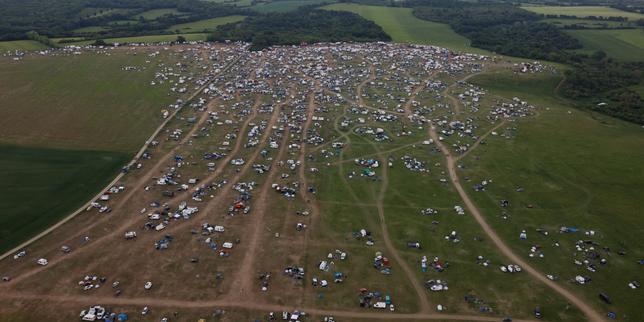
Une free-party dans lHérault réunit toujours des milliers de personnes dans une zone Natura 2000 Depuis vendredi soir, des fêtards sont rassemblés à Ferrières-les-Verreries, dans lHérault, sur un terrain partiellement classé en zone Natura 2000. Les organisateurs annoncent quun « périmètre de protection pour protéger la flore a été installé ».
le monde · about 3 hours ago
Festivals: Schlamm und kreatives Feiern: Rocken am Ring und im Park Schlamm, kreative Spiele und lange Wartezeiten: Die Festivals Rock am Ring und Rock im Park fordern von Fans vollen Einsatz – und sorgen für besondere Momente auf und neben der Bühne.
tagesspiegel · about 3 hours ago
Spargelzeit: Rund 64.000 Besucher bei Spargelfest in Beelitz Tausende kamen an den drei Festtagen in die Kleinstadt im Berliner Speckgürtel. Auf dem Programm standen Konzerte, Tanzvorführungen und mehr.
tagesspiegel · about 3 hours ago
O que fazer? Segunda é dia de ver barcos e peças de artesanato O International Boat Show, exposições que celebram tradições e evocam cenas de guerra, um tributo a Simon & Garfunkel. Estas são algumas das notas que abrem a semana.
publico · about 3 hours ago
Causas, cores políticas e muitas estórias nos autocolantes de Pacheco Pereira A exposição Autocolante: Iconografia da Liberdade está no Mude – Museu do Design para mostrar estes símbolos de pertença colados ao corpo cuja popularidade explodiu com o 25 de Abril.
publico · about 3 hours ago
Kaupunkisuunnittelu | Aleksanterin teatterin hotellihanke etenee tanssijoiden vastustuksesta huolimatta Osa Aleksanterin teatterista muuttuu hotelliksi. Tiloissa harjoittelevat tanssijat ovat vastustaneet uudistusta.
helsingin sanomat · about 3 hours ago

Sky Run in Frankfurt: Mehr als 1200 Treppenläufer erklimmen den Messeturm Profis, Hobbyläufer und Feuerwehrleute laufen die rund 1200 Stufen und 213 Meter des Messeturms hoch. Einer von ihnen ist der 85 Jahre alte Jürgen Frei.
faz · about 3 hours ago
SUUR GALERII ⟩ 45. Tartu Rattaralli tõi kokku mitu tuhat sõitjat. Leia piltidelt end ja sõpru! Täna sõidetakse 45. korda Tartu Rattaralli, mis tõi taaskord starti mitu tuhat jalgratturit. Leia Postimehe fotodelt end ja sõpru.
postimees · about 4 hours ago
Desítky lidí ve Zdenicích na Prachaticku vzpomínaly na učitele Aleše Záveského. Letos by oslavil 100 let Bývalí žáci, kolegové i přátelé přírody si ve Zdenicích u Prachatic připomněli odkaz učitele a průkopníka ekologické výchovy Aleše Záveského. Ten by tento týden oslavil sté narozeniny. Slavnostně také odhalili novou lavičku, která nese jeho jméno. Pokřtili ji netradičně – společnou fotografií několika generací studentů, které během svého života vedl.
irozhlas.cz · about 4 hours ago
Matcha gegen Ziegenkäse: Ist bei dem Wetter auch voll nice hier Der Isemarkt in Hamburg-Eppendorf ist bei jungen Menschen beliebt, seine Foodtrucks gehen auf Tiktok viral. Dem Bezirksamt gefällt das nicht. mehr...
taz.de · about 4 hours ago
Weitere Proteste auf Venedig Biennale: Es wird geächzt Nachdem die Jury der diesjährigen Venedig Biennale zurückgetreten war, wurde kurzerhand ein Publikumspreis erfunden. Doch der wird nun ebenfalls boykottiert. mehr...
taz.de · about 4 hours ago
Regál se všemi svazky by měl 10 kilometrů. Opavský zemský archiv zve na prohlídky místa, slaví 125 let Zemskému archivu v Opavě je letos 125 let. Výročí si připomíná mimořádnými prohlídkami pro veřejnost, které se uskuteční v neděli, ale i v pondělí. Jde o třetí nejstarší a třetí největší archivní institucí v Česku, hned po těch v Praze a Brně. Sídlí poblíž Dolního náměstí v opavské Sněmovní ulici.
irozhlas.cz · about 4 hours ago
Do Lukova dorazily stovky věřících na děkovnou mši za blahoslavené Jana Bulu a Václava Drbolu Víc než patnáct stovek lidí se v Lukově sešlo na děkovnou mši za blahoslavené Jana Bulu a Václava Drbolu. Vesnice u Moravských Budějovic má asi 4 stovky obyvatel. Narodil se tam jeden z mučených a popravených kněží Jan Bula. A oslavit konec víc než dvacet let trvajícího procesu beatifikace mohli i jeho příbuzní.
irozhlas.cz · about 4 hours ago
Alpines Schmetterlingsparadies – 3800 Falterarten: Unterwegs im Schmetterlingsparadies Grindelwald In der Schweiz gibt es 3800 Falterarten. Hans-Peter Wymann kennt sie fast alle. Unterwegs im Talkessel von Grindelwald.
srf.ch · about 4 hours ago
Zum Vatertag – Schweizer Statuen mit Babys im Tragetuch Über Nacht sind hierzulande Männer-Denkmäler neu in Erscheinung getreten. Hinter der Aktion steht die Operation Libero.
srf.ch · about 4 hours ago

"BETON", le spectacle qui mélange danse et skateboard Dans sa nouvelle création BETON, le danseur et chorégraphe Julien Carlier allie breakdance et skate, deux arts urbains. Un spectacle qui défie les lois de la gravité, à voir gratuitement au skatepark des Ursulines du 11 au 13 juin. ...
la libre · about 4 hours ago

Un groupe country américain en tête daffiche des festivités du 250e anniversaire des États-Unis Lambassade des États-Unis en Belgique a annoncé la présence dun groupe country américain en tête daffiche des festivités organisées à Bruxelles pour le 250e anniversaire de lindépendance américaine. ...
la libre · about 4 hours ago
Blooming wild yellow flowers blanket rural village in eastern Türkiye A high-altitude rural village surrounded by rolling meadows completely covered in blooming wild yellow flowers is seen following the late melting of winter snow in the eastern province of Ağrı, Türkiye on June 5, 2026. The vibrant landscape showcases the regions natural beauty after the seasonal transition.
yenisafak · about 4 hours ago

Rooftop Day: Auf den Dächern von Frankfurt An zahlreichen Standorten in Frankfurt haben am Samstag Dachterrassen ihre Türen für Besucher geöffnet und ihnen besondere Blicke über die Stadt ermöglicht.
faz · about 4 hours ago
Vsetín má opět nejnižší produkci směsného odpadu mezi většími městy Zlínského kraje Vsetín obhájil loňské prvenství v krajské soutěži zaměřené na odpadové hospodářství a získal ocenění za nejnižší produkci směsného komunálního odpadu ve své kategorii. Výsledky jubilejního dvacátého ročníku soutěže O keramickou popelnici vyhlásili organizátoři v Čiperově vile ve Zlíně.
irozhlas.cz · about 5 hours ago