
Romanian customs workers escalate protests over pay reform, threaten nationwide strike
Romanian customs workers launch "excessive zeal" protests Thursday, threatening nationwide strike over pay reform
Romanian customs officials will begin a work-to-rule protest on Thursday, 28 May, applying "strict and rigorous" controls at all border crossings and internal checkpoints, the *Sindicatul Național Meridian* (SNM) announced. The union, representing workers at the *Autoritatea Vamală Română*, warns the action could trigger "significant delays" for goods and travelers, escalating to a full strike if demands over the proposed unified pay law (*legea salarizării unitare*) are not met .
The protest follows a wave of labor unrest across Romania’s public sector. Penitentiary police, organized under the *Federația Sindicatelor din Administrația Națională a Penitenciarelor* (FSANP), have already filed a complaint with the *Avocatul Poporului* (Ombudsman), urging the Constitutional Court to block the same pay reform, which they argue was drafted by the outgoing government without consultation . Meanwhile, railway unions warn of an "unprecedented crisis" in the sector, citing stalled budget negotiations for *CFR SA* and potential workforce reductions .
International strike actions intensify In Spain, Madrid’s public school teachers will begin an indefinite strike at the start of the next academic year, demanding reduced teaching loads, smaller class sizes, and pay parity with other regions . Portugal’s *AIMA* (Agency for Migration and Asylum) faces a four-day strike from 1–3 and 5 June, with workers protesting deteriorating conditions and increased workloads . In Germany, *Postbank* employees in eastern states have joined warning strikes over pay disputes, while French unions prepare for sector-wide negotiations after 70% of collective bargaining agreements were found to pay below the new *Smic* (minimum wage), set to rise 2.41% on 1 June .
Context: Pay reforms and public sector tensions The Romanian protests center on the government’s draft *legea salarizării unitare*, which unions claim fails to address wage disparities and could lead to pay cuts for some workers. The law, part of broader austerity measures, has drawn criticism from multiple sectors, including healthcare, where 177,000 doctors are already mobilizing against Spain’s proposed *Estatuto Marco* (framework law) for medical professionals . In Madrid, the regional government’s approval of 8,143 new public sector jobs—44% in healthcare and 30% in education—has done little to quell teacher unrest, with unions dismissing the hires as insufficient to meet long-term demands .
Articles

Sindicaliștii din vămi vor protesta de joi, prin exces de zel, nemulțumiți de proiectul legii salarizării unitare, și amenință cu greva Sindicatul Național Meridian, organizație reprezentativă la nivelul Autorității Vamale Române, anunță declanșarea unor acțiuni de protest, începând de joi, 28 mai, de către angajații acestei instituții și ai structurilor vamale subordonate, prin „aplicarea strictă și riguroasă a tuturor procedurilor de control vamal, inclusiv efectuarea de controale amănunțite asupra documentelor și mărfurilor prezentate atât la frontieră dar și la interior, potrivit unui comunicat de presă. Excesul de zel al vameșilor poate duce la creșterea timpilor de așteptare în vămi.
digi24 · about 22 hours ago
Sindicaliștii avertizează că sistemul feroviar se apropie de o criză fără precedent Federaţia Naţională Feroviară Mişcare Comercial Vagoane avertizează că infrastructura feroviară din România se apropie de un punct critic, în contextul blocării Bugetului de Venituri şi Cheltuieli al CNCF CFR SA pentru anul 2026 şi al discuţiilor privind reducerea programului de lucru pentru angajaţi.
digi24 · about 24 hours ago
Kinderbetreuung: Einigung auf mehr Personal für Kinderbetreuung im Land
die zeit · 1 day ago
:format(jpg)/f.elconfidencial.com%2Foriginal%2F2c3%2F3b7%2F79f%2F2c33b779f8c7565e56e28a251cf10eb5.jpg)
Los profesores madrileños comenzarán en huelga indefinida el próximo curso Exigen mejoras, que pasan por la reducción de carga lectiva, bajada de ratios que permitan una atención adecuada al alumnado o la equiparación salarial con otras comunidades
el confidencial · 1 day ago
Los profesores de la Comunidad de Madrid comenzarán en huelga indefinida el próximo curso Exigen mejoras, que pasan por la reducción de carga lectiva, bajada de ratios que permitan una atención adecuada al alumnado o la equiparación salarial con otras comunidades autónomas
el confidencial · 1 day ago
Tarifkonflikt: Warnstreiks bei der Postbank treffen auch Ost-Länder
die zeit · 1 day ago
Anunciada greve de quatro dias para a próxima semana na AIMA A greve está marcada para os dias 1,2,3 e 5 de Junho, refere o pré-aviso. Em causa está a crescente degradação das condições de trabalho e o aumento da pressão sobre os trabalhadores.
publico · 1 day ago
Polițiștii din penitenciare se revoltă: Au sesizat Avocatul Poporului și cer ca CCR să oprească legea salarizării Federația Sindicatelor din Administrația Națională a Penitenciarelor (FSANP) a sesizat Avocatul Poporului, acuzând Guvernul demis că încearcă să elaboreze și să promoveze o nouă lege a salarizării pentru personalul plătit din fonduri publice.
adevarul · 1 day ago
Après la revalorisation du Smic, 70 des branches auront une grille salariale débutant sous le salaire minimum Le ministère du Travail a indiqué ce mercredi que ces secteurs doivent lancer des négociations avec les partenaires sociaux dans les 45 jours pour se mettre en conformité. Lundi 1er juin, le Smic augmentera de 2,41 , soit dun peu moins de 35 euros net par mois.
liberation · 1 day ago

Mónica García busca luz verde al Estatuto Marco en el próximo Consejo de Ministros con los médicos en pie de guerra Sin nuevas citas con el Comité de Huelga que representa a los 177.000 médicos, el Ministerio de Sanidad dará el primer paso para tramitar el anteproyecto de la ley básica que rige la actividad de los profesionales sanitarios Leer
elmundo · 1 day ago
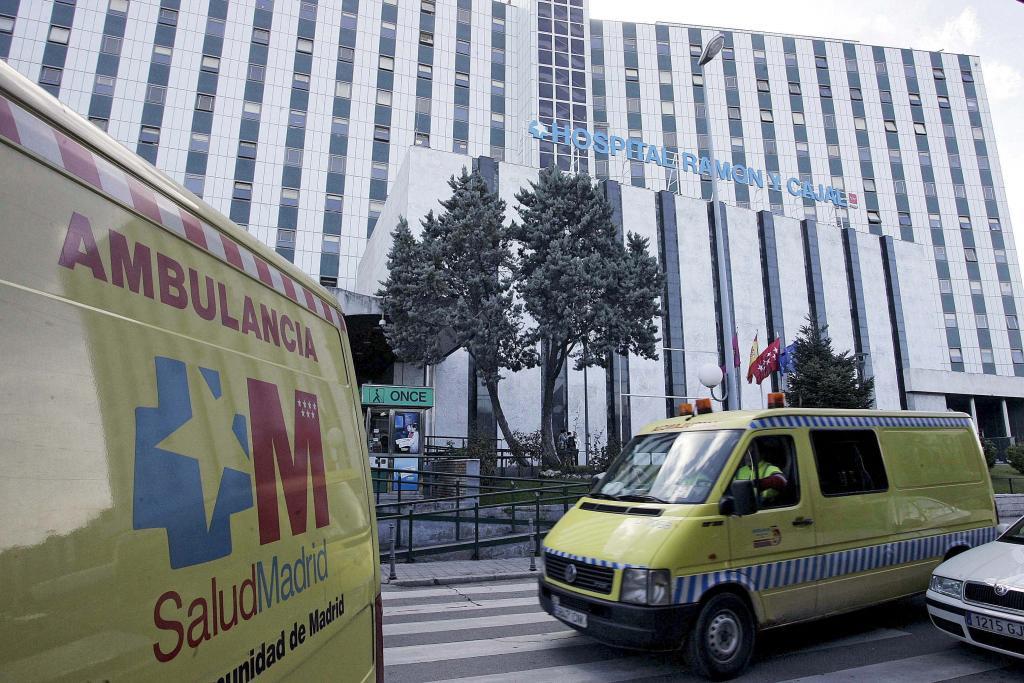
La Comunidad de Madrid aprueba su Oferta de Empleo Público de 2026, con 8.143 plazas El 44 (3.611) están destinadas al sector sanitario y otras 2.484 (el 30 ), a la docencia no universitaria Leer
elmundo · 1 day ago