 Sunday, June 7Sunday, June 7
Flemish nationalist party N-VA has reignited a political storm by openly promoting a purely Flemish mutual health insurance system, a move critics say undermines Belgium’s solidarity-based healthcare model. Speaking in Brussels on Sunday, Flemish Minister-President Matthias Diependaele argued that the role of intermediary bodies such as mutualities should be “limited,” signaling a shift toward greater regional autonomy in social policy.
Diependaele’s comments, reported by *La Libre Belgique* , come amid rising tensions over healthcare funding and the distribution of social benefits between Flanders and Wallonia. The N-VA, which has long advocated for greater Flemish self-determination, now appears to be pushing for a parallel mutual insurance system that would operate independently of Belgium’s national mutualities. Such a system could allow Flanders to redirect contributions toward policies tailored to its own priorities, including education and family allowances, rather than pooling resources across the country.
The proposal has drawn sharp criticism from federalists and healthcare advocates, who warn it could fragment Belgium’s healthcare system and leave Wallonia and Brussels with fewer resources. “Mutualities are a cornerstone of Belgian solidarity,” said a spokesperson for the Socialist Mutuality, one of the country’s largest health insurers. “Any move to regionalize them risks creating a two-tier system where access to care depends on where you live.”
Diependaele defended the idea as a way to “restore trust” in social institutions by giving Flemish citizens more control over their contributions. “People should see where their money goes,” he told reporters. “If we can demonstrate that a Flemish system delivers better results, support will follow.” The N-VA has not yet released detailed plans for how such a system would function, but Diependaele suggested it could be modeled on existing regional welfare programs.
Political analysts see the move as part of a broader strategy by the N-VA to test the limits of Belgium’s federal structure ahead of next year’s regional elections. “This is less about healthcare and more about sovereignty,” said Brussels-based political scientist Sophie Devroe. “The N-VA is signaling that it’s willing to challenge the status quo, even if it means reopening old debates about Belgium’s future.”
The proposal also coincides with growing frustration among young Europeans over intergenerational inequities in social spending. In Germany, the Junge Union (JU) has criticized recent pension increases while cutting allowances for students and parents, arguing that the current system “burdens those who will sustain the country for decades to come” . Similar debates are playing out in Flanders, where Diependaele’s mutuality plan could redirect funds away from national solidarity toward regional priorities.
With Belgium’s federal government already grappling with budgetary constraints, the N-VA’s initiative risks deepening divisions. Whether it gains traction remains uncertain, but one thing is clear: the debate over healthcare—and who controls it—is far from over.

El templo invertido de Dios Intentar querer describir la Sagrada Família es como intentar resumir un espejo
la vanguardia · about 4 hours ago

Formel 1 in Monaco: „Müssen aufpassen: Teamchef warnt Antonelli vor Übermut Der erstaunliche Formel-1-Teenager Kimi Antonelli glänzt auch in Monaco. Dem Mercedes-Teamchef wird das langsam unheimlich.
tagesspiegel · about 4 hours ago
Kommentar: Wer die junge Generation nur zahlen lässt, verspielt Vertrauen Bei Bafög, Elterngeld, Mieten und Sozialbeiträgen trifft es wieder jene, die dieses Land noch jahrzehntelang stützen sollen. Das kann man machen, muss dann aber an entscheidender Stelle handeln.
handelsblatt · about 4 hours ago
Când poți închide balconul fără autorizație și în ce situații este obligatorie o aprobare oficială Închiderea balconului este una dintre cele mai întâlnite modificări realizate de proprietarii de apartamente care doresc să extindă spațiul utilizabil al locuinței sau să îmbunătățească nivelul de confort
digi24 · about 4 hours ago

Tíz nap haladékot kapott a Mol a szerb olajcég felvásárlására A Mol szerint az újabb tíz napos haladék elég lesz arra, hogy véglegesítsék az üzletet. Nemrég még arról szóltak a hírek, hogy 30 napra volna szükség.
hvg.hu · about 4 hours ago
Synnytykset | Synnytyksen jälkeen myös vanhempi tarvitsee huolenpitoa Synnytyksen jälkeinen aika on vain yksi esimerkki väliaikaisesta vaiheesta, jolloin aikuinen ihminen tarvitsisi jonkun huolehtimaan itsestään – ei vain vauvasta.
helsingin sanomat · about 4 hours ago

Pro & Kontra: Filme im Flieger schauen Lieber ein Film auf einem kleinen Bildschirm als gar keine Unterhaltung, meint der eine. Für den anderen ist das Verhalten der Mitreisenden Entertainment genug
der standard · about 4 hours ago
THC-Wert: Cannabisunfälle sollen in amtliche Statistik einfließen Schwere Unfälle unter Cannabiseinfluss sollen künftig erfasst werden. So will das Verkehrsministerium Folgen der Legalisierung besser bewerten.
die zeit · about 4 hours ago
Weibliches Immunsystem: Vorteil XX Den Vorteil hat die Wissenschaft lange ignoriert – schön blöd, wie wir inzwischen wissen. Doch es gibt auch eine Schattenseite. Sie heißt: Autoimmunerkrankungen.
die zeit · about 4 hours ago
Meigikunstnik ja drag-aktivist Paul Holmberg: kui maksame samu makse, siis miks ei ole meil samad õigused? Viljandis vikerkaarelipu üle puhkenud vaidlus ei puuduta tegelikult ühte sümbolit, vaid palju laiemat küsimust, kas Eesti on päriselt kõigi oma inimeste riik. Meigikunstnik ja drag-aktivist Paul Holmberg leiab, et demokraatlikus ühiskonnas ei saa põhiõigused sõltuda populaarsusest ega enamuse heakskiidust. Tema sõnul peab riik, kus inimesed täidavad samu kohustusi ja maksavad samu makse, tagama kõigile võrdsed õigused.
postimees · about 4 hours ago

La N-VA naime pas les mutuelles, mais fait la pub dune mutualité purement flamande Le ministre-Président flamand, Matthias Diependaele, estime que le rôle des corps intermédiaires doit être limité. ...
la libre · about 4 hours ago

Ce fruit riche en fibres mis en avant pour ses bienfaits a quelques défauts : Cela peut occasionner de la diarrhée Un célèbre fruit, à la peau ridée, a souvent été délaissé par les consommateurs belges. Pourtant, il comporte certains bienfaits, mais il doit être consommé avec modération. ...
la libre · about 4 hours ago

Ce jeune entrepreneur préfère encore arrêter de travailler en Belgique, plutôt que de payer ce que lui réclame louvrier quil a viré Au tribunal du travail de Charleroi, une illustration de la situation précaire des petits indépendants. Louvrier licencié a cependant des arguments à faire valoir. Il refuse la conciliation. ...
la libre · about 4 hours ago
DGB fordert verpflichtende Betriebsrente als zusätzliche Altersvorsorge für Beschäftigte Der Deutsche Gewerkschaftsbund fordert eine verpflichtende Betriebsrente. DGB-Chefin Yasmin Fahimi schlägt vor, dass Arbeitgeber die zusätzliche Altersvorsorge mitfinanzieren, um mehr Beschäftigte abzusichern.
welt.de · about 4 hours ago

„Diskussion um AfD-Verbot ist in schweres Fahrwasser geraten Gibt es eine Alternative zur „Brandmauer gegen die AfD? Staatsrechtler Möllers sagt, politisch vermittelbar sei eine Kehrtwende nicht. Es fehle eine „politische Auseinandersetzung mit der Partei. „Demokratie-Verteidigungsprosa wie von Steinmeier reiche nicht.
welt.de · about 4 hours ago

"On a besoin de ce métro": à Bruxelles, un député PS assure que le métro 3 nest pas enterré Le député de la majorité Ibrahim Dönmez (PS) refuse de parler dabandon du métro 3. Selon le Schaerbeekois, ces trois années de mandature doivent être activement utilisées pour étudier les financements et les techniques. On nabandonnera pas un projet aussi important. ...
la libre · about 5 hours ago
Dire grazie a Lea: raccolta firme per chiedere di assegnare il contributo della legge Bacchelli a Melandri A Lea Melandri, scrittrice, intellettuale e femminista, è dedicata la raccolta firme Dire grazie a Lea per chiedere che le venga assegnato il contributo economico vitalizio previsto dalla Legge Bacchelli a favore di persone che si sono distinte per meriti eccezionali nei campi della cultura, delle arti, della ricerca scientifica e dellinnovazione ma si trovano […] Larticolo Dire grazie a Lea: raccolta firme per chiedere di assegnare il contributo della legge Bacchelli a Melandri proviene da Il Fatto Quotidiano.
il fatto quotidiano · about 5 hours ago
Carenza pediatri, per far partire la riforma Schillaci ne servono 4mila: Irrealistico Se la riforma Schillaci andasse in porto così come prevede al momento la bozza del ministero della Salute, per mantenere il rapporto ottimale di 850 bambini assistiti per ogni pediatra servirebbero 4mila professionisti in più. Difficile immaginare dove possano essere trovati, considerando che già oggi ne mancano circa 500 (l80 dei quali in Lombardia, Piemonte […] Larticolo Carenza pediatri, per far partire la riforma Schillaci ne servono 4mila: Irrealistico proviene da Il Fatto Quotidiano.
il fatto quotidiano · about 5 hours ago

JU-Vorsitzender forderte geringere Rentenerhöhung zugunsten von Bafög und Elterngeld Während die Renten erhöht werden, wird beim Elterngeld gekürzt. Auch für BaföG ist in Zeiten klammer Kassen kaum etwas übrig. Johannes Winkel von der Jungen Union findet das unfair – und fordert, diese Verteilung umzukehren.
welt.de · about 5 hours ago

„Wir müssen aufpassen, dass er nicht Ikarus wird, warnt der Mercedes-Teamchef Kimi Antonelli fährt in der Formel 1 aktuell in seiner eigenen Liga. Auch beim Großen Preis von Monaco. Trotz der überragenden Leistungen warnt Mercedes-Teamchef Toto Wolff.
welt.de · about 5 hours ago
Bekifft am Steuer: Unfälle unter Cannabis-Einfluss sollen genauer erfasst werden Die Teil-Freigabe von Cannabis gilt seit gut zwei Jahren. Dazu gehört ähnlich wie bei Alkohol ein Grenzwert fürs Autofahren. Aber was ist mit Daten, um Folgen für die Verkehrssicherheit zu erkennen?
tagesspiegel · about 5 hours ago
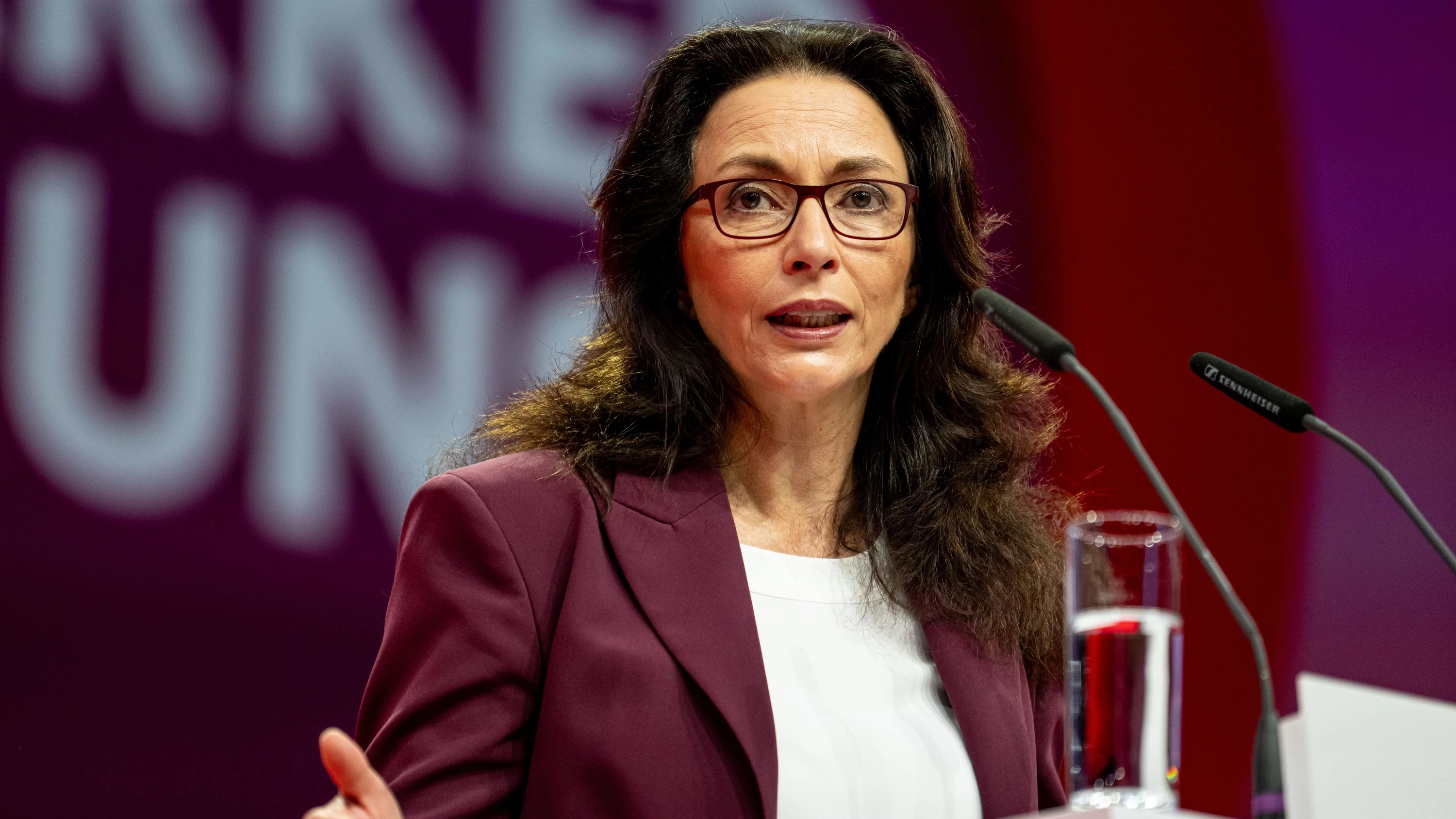
Deutschland-Liveblog: DGB-Chefin Fahimi für verpflichtende Betriebsrente Fahimi: Von den Arbeitgebern mindestens mitfinanziert +++ JU-Vorsitzender für geringere Rentenerhöhung zugunsten von Bafög-Verbesserung +++ Pistorius lobt Bürgerinteresse an Tag der Bundeswehr +++ alle Entwicklungen im Liveblog
faz · about 5 hours ago

Wie eine Lücke im Innovationssystem geschlossen werden soll Deutschland steckt Milliarden in Forschung – doch der Weg zum marktreifen Produkt bleibt oft blockiert. Ein neues Fondsmodell soll genau diese Lücke schließen und Innovationen endlich aus dem Labor in den Markt bringen.
welt.de · about 5 hours ago