 Thursday, June 18Thursday, June 18
Cuban communists on Thursday approved the most sweeping economic reforms in decades, opening the island’s economy to private capital, slashing state payrolls and pledging to end chronic shortages under a package backed by President Miguel Díaz-Canel and former leader Raúl Castro. The vote in the National Assembly, convened in Havana on 18 June 2026, marks the first time since the 1959 revolution that Cuba’s ruling party has formally endorsed wholesale liberalisation measures, according to a report by Aktuality.sk .
Lawmakers endorsed a raft of measures that will allow foreign and domestic private investors to operate in sectors previously reserved for state monopolies, including retail, transport and small-scale manufacturing. The reforms also mandate the elimination of at least 200,000 public-sector jobs within twelve months, a move intended to reduce the state’s wage bill by an estimated 1.2 billion Cuban pesos annually. “This is not a retreat from socialism,” Díaz-Canel told deputies, “but a strategic retreat to save socialism.” The assembly simultaneously approved a constitutional amendment that removes the ban on private property in Article 22, clearing the way for the sale of state assets and the creation of a formal land market.
The announcement follows weeks of closed-door negotiations between the Communist Party, the military-run conglomerates that dominate Cuba’s economy, and representatives of the island’s emerging private sector. Reuters reported on Wednesday that the reforms had been drafted under the supervision of Raúl Castro, who remains a powerful figure in the party hierarchy despite stepping down as president in 2021 . The measures come as Cuba faces its worst economic crisis since the 1990s, with chronic fuel and food shortages exacerbated by tighter US sanctions and the collapse of Venezuelan oil subsidies.
Analysts warn that the success of the reforms hinges on the government’s ability to implement them without triggering social unrest. Cuba’s state payroll currently employs 2.8 million people, roughly half the country’s workforce, and the planned layoffs risk deepening poverty in a nation already struggling with inflation above 50 per cent. “The state cannot simply shed workers without creating alternatives,” said economist Pavel Vidal, a former Cuban central-bank adviser now at the Pontifical Xavierian University in Bogotá. “If private enterprise does not expand fast enough, the social cost could be severe.”
The reforms also include a pledge to end the island’s perennial shortages by allowing private wholesalers to import goods directly, bypassing the state distribution network that has long been blamed for bottlenecks. The government has promised to publish a detailed implementation timetable within thirty days, with the first wave of privatisations expected to begin in the fourth quarter of 2026.
3 further sources not geolocated

Cuban lawmakers to vote on Castro-backed economic reforms amid US stranglehold reut.rs/4etygPA
bluesky bot · about 2 hours ago

Kubánski komunisti odklepli prelom. Ekonomiku otvoria súkromníkom, štát čaká veľké zoštíhľovanie Kubánski komunisti schválili najväčšie ekonomické zmeny za roky. Otvárajú dvere súkromnému kapitálu, škrtajú štát a sľubujú koniec kolapsu zásobovania.
aktuality.sk · about 2 hours ago
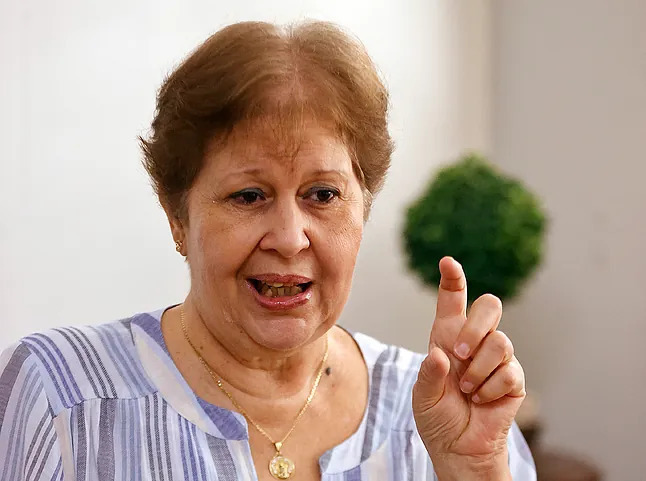
El régimen cubano detiene a la disidente Alina Bárbara López La académica es una de las activistas más vocales y opositoras en la isla Leer
elmundo · about 2 hours ago
Jupiter Fund Management RNS Announcements | JUP RNS Announcements
gdeltproject.org · about 2 hours ago
Dividend Declaration | Company Announcement
gdeltproject.org · about 2 hours ago
Result of AGM | Company Announcement
gdeltproject.org · about 2 hours ago
Poste Italiane, via libera allaumento di capitale per lOpas su Tim LAssemblea straordinaria ha attribuito al cda la delega ad aumentare il capitale sociale a pagamento per un numero massimo di azioni pari a 371.986.879
il sole 24 ore · about 2 hours ago
Cuban economy needs urgent changes as US blockade deepens crisis, says president Miguel Díaz-Canel cites China and Vietnam as possible models for opening up the countrys economyCubas economy needs urgent changes to overcome a crisis intensified by a US oil blockade, the president, Miguel Díaz-Canel, has said in a speech to Communist party leaders.The situation calls for urgent and necessary changes, Díaz-Canel told the partys politburo in his frankest admission yet of the need to overhaul the countrys communist model. Continue reading...
theguardian · about 2 hours ago