 Thursday, May 28Thursday, May 28
Deadly gas explosion in China coalmine kills 90, marking country’s worst mining disaster in 17 years
A gas explosion at the Liushenyu coalmine in China’s northern Shanxi province has killed at least 90 workers, officials confirmed, making it the country’s deadliest mining accident since 2009. The blast occurred at 7:29 p.m. local time on Friday (12:29 p.m. BST) while 247 miners were underground in Qinyuan county, according to state media agency Xinhua . President Xi Jinping has ordered authorities to "spare no effort" in rescue operations, though no survivors have been reported.
Survivors described smelling sulfur in the aftermath, a telltale sign of a gas ignition, *Frankfurter Allgemeine Zeitung* reported . Safety concerns had been raised at the mine for months prior to the disaster, despite recent government efforts to tighten workplace regulations in high-risk industries.
The Liushenyu mine, like many in Shanxi—a province critical to China’s coal production—has faced scrutiny over lax enforcement of safety protocols. The explosion underscores persistent risks in the sector, where methane and coal dust ignitions remain a leading cause of fatalities. China’s last mining disaster of comparable scale occurred in 2009, when 108 workers died in a gas blast in Heilongjiang province.
Authorities have launched an investigation into the cause of the explosion, though no official findings have been released. The tragedy comes as China continues to rely on coal to meet energy demands, even as it expands renewable energy capacity. Shanxi, home to some of the country’s largest coal reserves, has been a focal point for both production and safety reforms.
> Background: **TRENDING — Deadliest China coal mine gas explosion in 17 years kills 90** — *10 hours ago*
More LFE coverage on this topic

You cant control everything: the rise in plastic surgeons asked to create AI face Growing numbers of people are seeking improbable cosmetic surgery based on chatbots recommendationsPlastic surgeons are increasingly concerned about the rise of AI face, as more and more clients arrive in their offices with unrealistic AI-generated visions of what they want to look like.Dr Nora Nugent, a cosmetic surgeon from Tunbridge Wells, has seen this first hand. Clients have started coming to her office with photos of themselves beautified by AI and a false expectation that those results are achievable with surgery. She is also the president of the British Association of Aesthetic Plastic Surgeons, and says many colleagues are having similar experiences. Continue reading...
theguardian · 5 days ago

¿Cómo murieron los submarinistas italianos en Maldivas? El túnel trampa, la ilusión óptica y las dudas sobre las botellas, cuerdas y permisos ¿Qué ocurrió en la cueva donde murieron los submarinistas? Los cuerpos ya han sido repatriados a Italia. Incautados ordenadores y teléfonos móviles Leer
elmundo · 5 days ago

Neighborhood watch programs are fading in the age of Ring and Nextdoor Americas classic neighborhood watch programs are fading as AI-powered apps turn neighborhoods into digital watch zones.Why it matters: The automation of neighborhood safety with tools like Amazons Ring and the Nextdoor app is quietly dismantling one of the countrys most basic forms of civic life: neighbors who actually know each other.Whats replacing it is faster, smarter — and far more detached.Shared videos of suspicious strangers and wildlife alerts are in; out are block captains, porch meetings and See Something, Say Something signs.Zoom in: Ring doorbells stream constant footage, allowing users to post it all on an app as alerts.Nextdoor posts flag suspicious strangers and lets users shame dog walkers who dont pick up poop.License plate readers are cropping up in thousands of communities, alarming privacy advocates.Meanwhile, as surveillance technology spreads, neighborhood watch programs are being dismantled.Ann Arbor, Michigan removed more than 600 neighborhood watch signs this year after officials said they encouraged racial profiling and made some residents feel unwelcome.The decline has been quieter in other places. Law enforcement officials say many programs simply fade as volunteer participation dries up and younger residents opt out.What theyre saying: Scant data exists on the programs demise, but National Sheriffs Association executive director Justin Smith tells Axios the drop is real, as neighbors switch from actively watching out for each other to watching screens. We actually lose communication, and we lose that sense of community, Mary Dodge, professor of criminal justice at the University of Colorado Denver School of Public Affairs, tells Axios.Neighborhood watch once depended on what researchers call collective efficacy — people knowing each other well enough to act together. Now, Dodge said, people dont need to know their neighbors at all. Zoom out: The decline of the neighborhood watch comes as Americans spend more time at home, even as they become strangers to their neighbors.In 2012, 51 of young Americans regularly engaged with neighbors, according to an AEI report reviewed by Axios Josephine Walker. That number has plummeted to 25 today.By contrast, 56 of seniors socialize with neighbors, a seven-point drop since 2012.Flashback: Neighborhood watch programs emerged in the late 1960s as part of a push toward community policing — the idea that crime prevention depends on residents working with police.The National Sheriffs Association formalized the program in 1972, and it spread nationwide as a low-cost way to deter crime.Yes, but: The new system is better at catching crime — and worse at building trust.Smith said law enforcement can gather all the data collected by apps and analyze it by using AI to crack cases that used to take months, if not years, to solve. At the same time, law enforcement is losing its human intelligence on the ground.Friction point: The old neighborhood watch had its own problems, like racial profiling and suspicion of outsiders. The new version hasnt solved that, and may have scaled it.I saw a person of color walking through my neighborhood, and I dont like it. That is not reliable information, said Dodge, who has studied Nextdoor.Apps like Nextdoor often amplify those kinds of posts, mixing legitimate safety concerns with bias, misinformation and, at times, outright hostility, she said.Nextdoor did not immediately respond to Axios. The bottom line: In the past, solving a neighborhood crime meant talking to the person on the porch. Now it means pulling footage, scanning data — and letting AI connect the dots.
axios · 5 days ago

Incendiu la CET Vest din Capitală, după ce un transformator a luat foc. Un mesaj RO-Alert a fost emis, iar energia electrică a fost întreruptă Un incendiu puternic a izbucnit sâmbătă, 23 mai, la CET Vest din București, după ce un transformator a luat foc în incinta centralei. Degajările mari de fum au fost observate de la distanță.
adevarul · 5 days ago
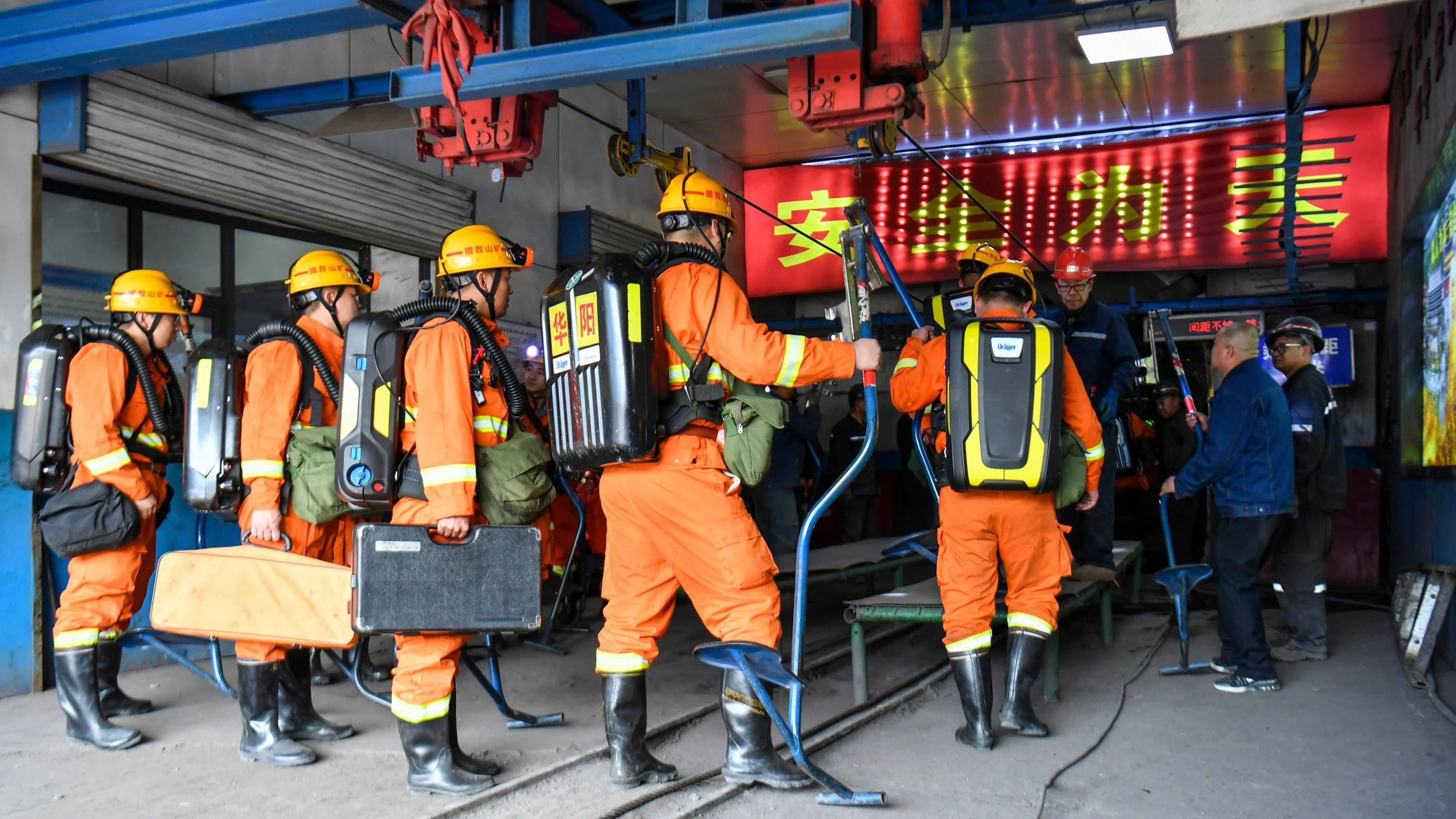
Minenunglück in China: „Ich roch Schwefel, wie nach einer Sprengung Beim schwersten Grubenunglück seit Jahren sterben in China mindestens 90 Bergleute durch Gas. Die Regierung hatte den Arbeitsschutz zwar verschärft – aber Sicherheitsbedenken gab es in der Mine schon seit Monaten.
faz · 5 days ago
SpaceX rocket bursts into flames during Indian Ocean landing – video SpaceX launched its biggest, most powerful Starship yet on a test flight on Friday. It was an upgraded version of the spacecraft Nasa is counting on to land astronauts on the moon. It blasted off from the southern tip of Texas, carrying 20 mock Starlink satellites that were released midway through the hour-long flight that stretched halfway around the world. Despite some engine trouble, the spacecraft reached its final destination in the Indian Ocean where it erupted into flames on impact. The fire was not unexpected, according to SpaceXSpaceX launches its biggest rocket yet in test flight from Texas Continue reading...
theguardian · 5 days ago

SpaceX launches test flight of the rocket Elon Musk is building to transport people to Mars The spacecraft is an upgraded version of the Starship that Nasa is counting on to land astronauts on the moon.
thejournal · 5 days ago
Copac uriaș căzut peste o alee din parcul Kiseleff. Zona rămâne sub monitorizare Un copac uriaș s-a prăbușit sâmbătă dimineață în centrul Capitalei, în parcul Kiseleff, și a căzut peste o alee intens circulată, fără a provoca victime, autoritățile declanșând verificări la fața locului.
adevarul · 5 days ago

China mine death toll rises to 90 after gas blast Xi Jinping urges authorities to spare no effort in rescue operation after explosion in northern Shanxi provinceAt least 90 people have been killed in a gas explosion at a coalmine in northern Chinas Shanxi province, in the countrys worst mining disaster in 17 years.The explosion happened on Friday at 7.29pm (12.29 BST) while 247 workers were underground at the Liushenyu coalmine in Qinyuan county, the state media agency Xinhua reported. Continue reading...
theguardian · 5 days ago
Un complex chimic din Rusia a fost lovit de drone la peste 1.600 km de front: nori negri de fum ridicați deasupra instalației Un complex chimic din regiunea Perm, Rusia, a fost ținta unui atac cu drone, în urma căruia au fost raportate incendii și posibile explozii.
adevarul · 5 days ago

If something goes wrong, you cant simply surface: Maldives tragedy shines light on dangers of cave diving Experts warn about the risks of cave diving without proper training, planning and specialised equipment after deaths in Vaavu atollThe diving tragedy in the Maldives – which claimed the lives of four Italian divers inside an underwater cave, followed by the death of a Maldivian navy diver – has renewed warnings from experts about the risks of cave diving without proper training, planning and specialised equipment.On Thursday, the Divers Alert Network (DAN), which coordinated the complex search and recovery operation at the Dhekunu Kandu dive site in Vaavu atoll, announced all the divers dead bodies had been recovered. Continue reading...
theguardian · 5 days ago
China mine blast death toll rises to 90 after gas blast Xi Jinping urges authorities to spare no effort in rescue operation after explosion in northern Shanxi provinceAt least 90 people have been killed in a gas explosion at a coalmine in Chinas northern Shanxi province, making it the countrys deadliest mining accident since at least 2009.The gas explosion occurred late on Friday at the Liushenyu coalmine in Qinyuan county, with 247 workers on duty underground, the state news agency Xinhua reported. Continue reading...
theguardian · 5 days ago