
Macron makes first Western visit to Damascus since Assad fall as twin blasts hit near French delegation
Story Timeline
1 day · 2 summary articles
Macron makes first Western visit to Damascus since Assad fall as twin blasts hit near French delegation
Explosions rock Damascus as French President Macron visits Syria in historic first
revised 2×
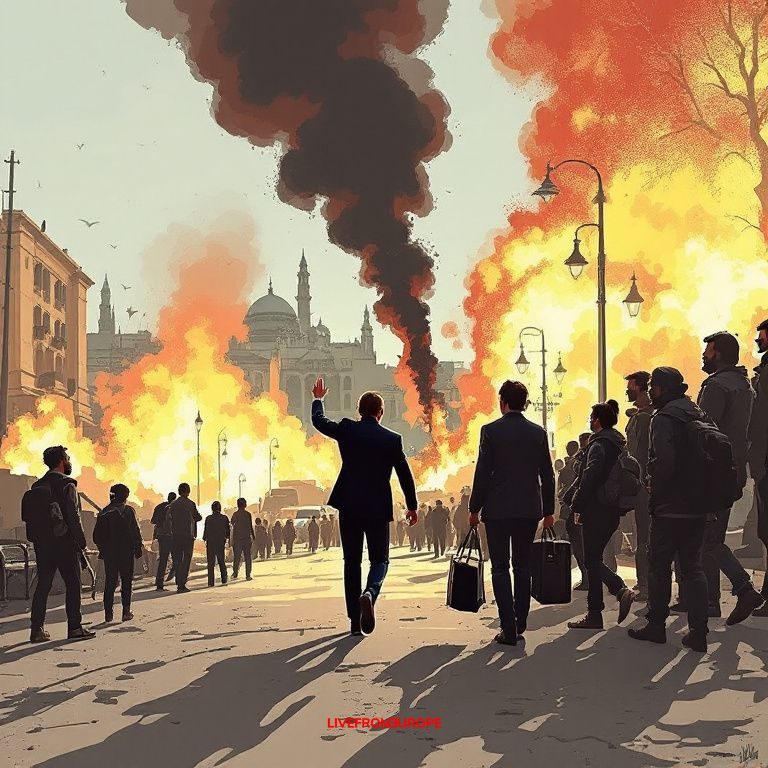
French President Emmanuel Macron on Tuesday became the first Western leader to visit Damascus since the fall of Bashar al-Assad’s regime in December 2024, meeting Syria’s new President Ahmad al-Sharaa in a landmark encounter overshadowed by twin bomb blasts that injured 18 people near the French delegation’s hotel. The explosions—one hidden in a trash bin, the other in a parked car—occurred within meters of the Four Seasons Hotel where Macron had stayed the previous night, forcing the French leader to cut short his visit hours after it began. Authorities reported no casualties among Macron’s entourage, but the blasts underscored the fragility of Syria’s post-Assad transition as Paris seeks to re-engage with Damascus.
Macron and al-Sharaa signed several bilateral agreements during their meeting at the People’s Palace, including a French pledge to return more than €50 million in assets seized from the Assad family to the Syrian people . Syrian Foreign Minister Asaad al-Shaibani and his French counterpart Jean-Noël Barrot formalized the deal, marking a concrete step toward recovering funds allegedly embezzled by Rifaat al-Assad, the late uncle of the former president . Macron also announced France’s readiness to support Syria’s economic reconstruction, including the banking sector, telling reporters the country was “open for business” despite ongoing security risks .
The visit, which followed al-Sharaa’s official trip to Paris in May 2025, signals France’s bid to position itself at the forefront of Western engagement with Syria’s new leadership. Analysts interpret Macron’s presence as both a political endorsement of al-Sharaa’s administration and a strategic move to secure French economic interests in a country where regional powers—Saudi Arabia, Qatar, the UAE, and Turkey—have already pledged $28 billion in investments since December 2024 . “Despite all challenges, Syria is currently probably the world’s most attractive frontier market,” said Wa’el Alzayat, CEO of the US-Syria Business Council, in April, though European firms remain cautious .
The blasts, which Macron’s delegation narrowly avoided, were claimed by no group but immediately drew condemnation from European capitals. Le Figaro reported that the explosions occurred as Macron was en route to the Umayyad Mosque, where he and al-Sharaa posed for photographs before signing the guestbook . The timing—just hours after Macron’s arrival—raised questions about the government’s ability to ensure security, even as Damascus seeks to project stability to attract foreign investment.
Macron’s delegation included French business leaders eyeing opportunities in healthcare, infrastructure, and technology, with the Franco-Syrian Business Council hosting a reception for officials and investors on Monday . Syria’s investment authority has touted projects ranging from start-ups to national databases, though critics warn that without deeper institutional reforms, economic gains may prove unsustainable. The World Bank estimates Syria’s economy shrank by 83% during the war, leaving 90% of the population—22.5 million people—living on less than €2 per day .
As Macron departed for the NATO summit in Turkey, the visit left unresolved tensions between France’s ambition to shape Syria’s future and the persistent risks of a country still grappling with the legacies of dictatorship and civil war. The €50 million asset return, while symbolic, offers a rare point of consensus between Paris and Damascus—one that may yet prove pivotal if Syria is to emerge from its decade of isolation.
Follow us for live European news
- 4
- 1
- 1
- 1
- 1
- 1
- 1
- 1
2 further sources not geolocated
Articles
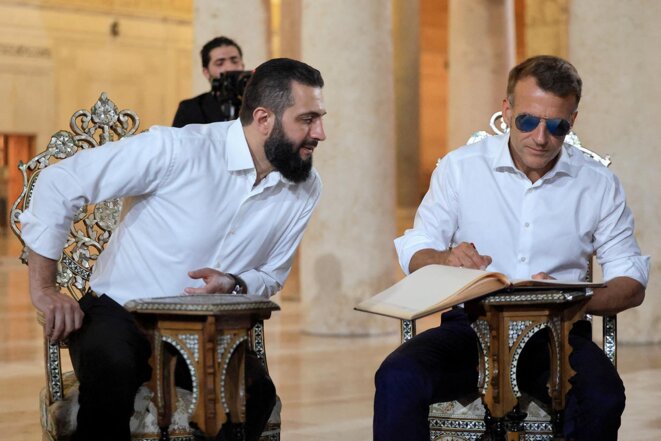
Emmanuel Macron à Damas affiche son soutien au président al-Charaa La visite surprise du président français en Syrie, avant son déplacement en Turquie pour le sommet de lOtan, doit se lire comme un appui au nouveau régime, et aussi une volonté de faire partie de la recomposition en cours au Moyen-Orient.
mediapart · about 11 hours ago

Două explozii la Damasc, lângă hotelul unde a fost cazat președintele Franței, Emmanuel Macron, aflat în vizită de stat Două explozii s-au produs marți la Damasc, în momentul în care președintele francez Emmanuel Macron se află la prima vizită a unui lider al unei puteri occidentale în Siria de la venirea la putere a unei coaliții islamiste, scrie Le Figaro.
digi24 · about 11 hours ago
En Syrie, Emmanuel Macron veut inaugurer «un partenariat global» conditionné par un «Etat de droit» Le président était en visite dans la capitale syrienne ce mardi 7 juillet pour ouvrir une «nouvelle page» avec Damas. Deux explosions près de lhôtel où il résidait sont venues rappeler la fragilité du pays, et les risques dune normalisation accélérée.
liberation · about 11 hours ago
Undeterred by blasts, Macron says France ready to help rebuild Syrias economy A daily update on the latest business and economic news.
france24 · about 11 hours ago
Μακρόν: Η Γαλλία θα επιστρέψει στη Δαμασκό περισσότερα από 50 εκατ. ευρώ που είχε κατασχέσει από την οικογένεια Άσαντ
protothema · about 12 hours ago

⚡ NEWSDamascus blasts and Macron-Syria diplomatic meetingExplosions in Damascus have injured several people. Concurrently, French President Emmanuel Macron is meeting with Syrian opposition figure Ahmed al-Sharaa, highlighting ongoing diplomatic engagement amidst security instability in Syria.📰 #Military #EU #Geopolitics #GeoWire
mastodon bot · about 12 hours ago
Twee explosies in Damascus onderstrepen de instabiliteit in Syrië Bij een aanslag in de Syrische hoofdstad Damascus raakten vandaag 18 mensen gewond, een teken dat de veiligheidssituatie in het land nog altijd instabiel is. Er vonden twee explosies plaats, en dat tijdens een bezoek van de Franse president Macron.
rtl nieuws · about 12 hours ago
Siria va primi peste 50 de milioane de euro din Franța, confiscați anterior de la familia Assad. Anunțul lui Macron Preşedintele francez Emmanuel Macron a anunţat marţi că ţara sa va restitui populaţiei siriene peste 50 de milioane de euro provenite din confiscarea de către justiţia franceză a bunurilor obţinute în mod ilicit de familia Assad, relatează AFP.
digi24 · about 12 hours ago
Optimistic tone of Macrons visit doesnt hide precariousness of Syrias security At least 18 people have been wounded after a bomb went off near the Four Seasons in Damascus, the attack targeting the hotel where French president was staying, but had already left. A year after al-Sharaas visit to Paris, the two leaders are eager to boost economic ties.
france24 · about 12 hours ago
Syrias reconstruction and economic policy will rely on Europe and Turkey French President Emmanuel Macron is the first Western European leader to have met with Syrian President Ahmed al-Sharaa in Damascus, in a landmark visit for the countrys post-Assad era. A question is at the centre of the visit: How can Syria build itself back after years of wars? Marc Pierini, Visiting Scholar and former EU ambassador to Syria and Turkey speaks to FRANCE 24 from Brussels.
france24 · about 12 hours ago
Several hurt in Damascus blasts as Macron meets Syrias Sharaa
aljazeera · about 12 hours ago
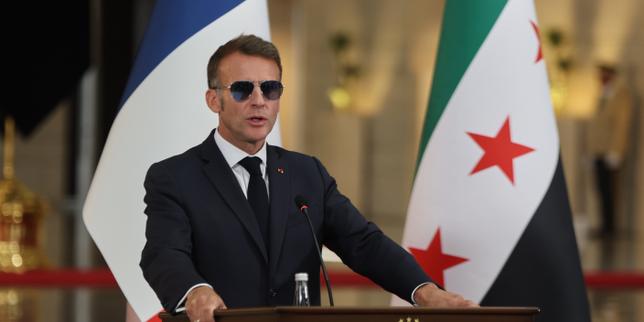
Syrie : la France va restituer « au peuple syrien » plus de 50 millions deuros saisis à loncle de Bachar Al-Assad Ces avoirs ont été confisqués de Rifaat Al-Assad, oncle du président déchu, surnommé le « boucher de Hama » en raison de son rôle dans la sanglante répression dune insurrection des Frères musulmans dans cette ville en 1982.
le monde · about 12 hours ago
Syria, France to sign agreements during Macrons Damascus visit Syrian President Ahmad al-Sharaa said France will contribute to infrastructure and financial sector development during Emmanuel Macrons visit to Damascus, marking the first trip by a Western leader to Syria since the Assad regimes ouster.
yenisafak · about 12 hours ago
Two explosions hit Syrian capital Two improvised explosive devices detonated in the Syrian capital Damascus on Tuesday, prompting security forces to launch a search operation to identify those responsible, though state media reported no immediate details on casualties or damage and no group has claimed responsibility for the blasts.
yenisafak · about 12 hours ago
French President Macron meets al-Sharaa in Damascus French President Emmanuel Macron met with his Syrian counterpart Ahmad al-Sharaa at the Presidential Palace in Damascus on Tuesday, marking the first visit by a Western leader since the fall of the Assad regime in December 2024 as Paris seeks to deepen political and economic ties.
yenisafak · about 12 hours ago
Syria, France sign deal on return of Rifaat al-Assad assets Syrian Foreign Minister Asaad al-Shaibani and his French counterpart Jean-Noel Barrot signed the declaration at the Presidential Palace in Damascus during French President Emmanuel Macrons visit, marking a step toward recovering funds allegedly embezzled by the late uncle of former ruler Bashar al-Assad.
yenisafak · about 12 hours ago
Macron auf Staatsbesuch in Syrien: Hoffen auf lukrative Deals Der Besuch des französischen Präsidenten in Damaskus ist kein business as usual. Er entkommt einem Anschlag. Seine Delegation will Geschäfte machen. mehr...
taz.de · about 12 hours ago
Macron in Syrien: Strategischer Weitblick Als erster europäischer Staatschef besucht Macron Damaskus. Er hat erkannt, dass das „neue Syrien der natürliche Partner für Europa ist. mehr...
taz.de · about 12 hours ago
Kansainväliset suhteet | Macron avaa ovea Syyriaan, vaikka autoseurueen jäljessä räjähtivät pommit Macron otti Syyriaan mukaan myös ranskalaista yritysjohtoa, mikä kielii maan kiinnostuksesta Syyrian jälleenrakennukseen.
helsingin sanomat · about 12 hours ago

French shipping group CMA CGM signs deal with Syria reut.rs/4vMoWO7
bluesky_Reuters · about 12 hours ago