
US blocks citizens from Congo return over Ebola risk: 21-day travel ban imposed

Story Timeline
1 month · 2 summary articles
US blocks citizens from Congo return over Ebola risk: 21-day travel ban imposed
WHO warns travel bans could worsen Ebola surge in Congo and Uganda
Follow-up
The US government has blocked US citizens from immediate travel home from the Democratic Republic of Congo due to the ongoing Ebola outbreak. According to a representative of the White House, US citizens who are in Congo or have recently left the country will be placed on a flight ban list. They will only be allowed to travel to the US after a 21-day waiting period in a third country.
The measure affects around two dozen Americans who were planning to fly to the US on Tuesday. The US Department of State has assured support for those affected during the waiting period. US Health Secretary Robert F. Kennedy Jr. justified the order by citing the increased risk of Ebola. The disease continues to spread in the Democratic Republic of Congo and has reached areas just a few hours away from the capital, Kinshasa. As of Sunday, the number of confirmed Ebola cases nationwide has risen to 1,926, with 702 deaths.
The Ebola outbreak has also led to complications in treatment efforts. Dozens of workers at an Ebola treatment center in northeast Congo have gone on strike over unpaid salaries and bonuses. The strike has further strained the response to the rapidly spreading epidemic.
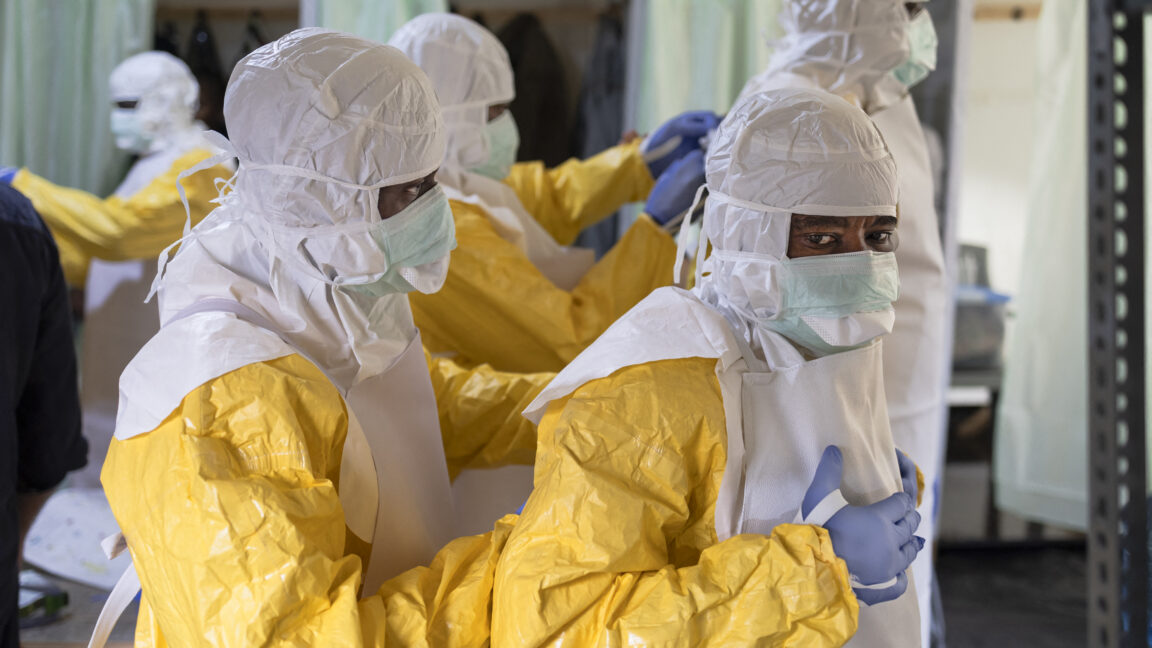
In addition, a US citizen doing humanitarian work in Congo has tested positive for Ebola, marking the second American infected amid the outbreak. The patient has been sent to Germany for treatment, following the protocol established for such cases.
The World Health Organization (WHO) has been actively involved in managing the outbreak. WHO Director-General Tedros Adhanom Ghebreyesus stated that the organization is working intensively with local, national, and international partners to bring the outbreak under control as quickly as possible.
The Ebola outbreak in Congo is the third largest on record and continues to grow. The situation is exacerbated by the lack of approved treatments or vaccines for the specific strain of Ebola causing the outbreak.
The US has adopted a seemingly isolationist approach to the outbreak, implementing stringent travel restrictions and blocking the repatriation of citizens exposed to or infected with the virus. This is despite the US having facilities designed to safely monitor and provide care for Ebola patients.
The strike at the Ebola treatment center in Ituri province has highlighted additional challenges. Workers, including epidemiologists, case finders, drivers, and burial service employees, have closed the hospital and blocked access roads to protest unpaid wages. The Congolese health minister, Roger Kamba, acknowledged issues with the payment lists and assured that the government is working to ensure payments reach the correct individuals.
The outbreak has also had indirect consequences, such as a doubling of maternal mortality rates in the affected zones as mothers avoid hospitals. An estimated 63,000 pregnant women are due to give birth in the country, which already has one of the world's highest maternal mortality rates.
The international community continues to monitor the situation closely, with efforts ongoing to curb the spread of the virus and provide necessary medical care to those affected.
Follow us for live European news
- 3
- 3
- 1
- 1
- 1
- 1
- 1
- 1
- 1
- 1
- 1
- 1
- 1
- 1
- 1
4 further sources not geolocated
Articles

Βρέθηκε ο προμηθευτής των ύποπτων κοτόπουλων για τα κρούσματα σαλμονέλας στη Λαμία: Έρευνες για να εντοπιστεί ο ενδιάμεσος και η μονάδα εκτροφής
protothema · about 16 hours ago

THL: Suomen salmonellaepidemia on ohi
iltalehti · about 16 hours ago
Štrajk v epicentre eboly v Kongu: Desiatky zdravotníkov zastavili liečbu pre nevyplatené mzdy Boj s ebolou v Kongu komplikuje štrajk zdravotníkov pre nevyplatené výplaty. Zatvorená nemocnica a blokáda ciest ohrozujú starostlivosť o nakazených ľudí.
aktuality.sk · about 16 hours ago
USA stoppen Einreise eigener Bürger aus Ebola-Gebiet im Kongo Die USA verschärfen ihre Einreiseregeln wegen des Ebola-Ausbruchs in der Demokratischen Republik Kongo. US-Bürger dürfen nur noch nach einer 21-tägigen Wartezeit in einem Drittland in ihre Heimat zurückkehren.
die presse · about 16 hours ago
MSF charity urges evacuation of Greek migrant camps
gdeltproject.org · about 16 hours ago
Aus Sorge vor Ebola-Gefahr: USA lassen eigene Bürger aus dem Kongo vorerst nicht einreisen Die USA haben eine Einreisesperre für Staatsbürger verhängt, die aus der Demokratischen Republik Kongo zurückreisen. Zwei Dutzend Amerikaner, die Dienstag ausreisen wollten, stehen auf der Flugverbotsliste.
tagesspiegel · about 16 hours ago
Macron tout European initiative to evacuate Africans trapped in Libya
gdeltproject.org · about 16 hours ago
Maternal mortality doubles in Ebola outbreak zone as mothers avoid hospitals An estimated 63,000 pregnant women are due to give birth in a country that already has one of the worlds highest maternal mortality rates
telegraph · about 16 hours ago

O corte com Inglaterra (independência americana 2) A revolução americana nasce porque os colonos dizem-se discriminados e ingleses sem direitos políticos. Mas terá sido mesmo assim? Este é o segundo de quatro programas sobre a independência dos EUA
observador · about 16 hours ago

Deutsche Krankenhausgesellschaft warnt vor neuer Insolvenzwelle Die Deutsche Krankenhausgesellschaft warnt vor einer neuen Insolvenzwelle. Demnach könnte jede dritte Klinik das neue Gesundheits-Sparpaket nicht überleben. Seit 2022 hätten bundesweit schon 85 Krankenhäuser mit 102 Standorten Insolvenz angemeldet.
welt.de · about 16 hours ago

De opmars van illegale injecteerbare peptiden: Vitamines hielpen niet, dit wel
de morgen · about 16 hours ago

Michigan cases of intestinal disease from parasite soar to over 2,600 reut.rs/4vopuZz
bluesky_Reuters · about 17 hours ago
How Kenyan volunteers hunt polios hidden trail Community health volunteers travel across remote northern Kenya to detect poliovirus before it can spread.
aljazeera · about 17 hours ago
USA wegen Ebola verhängen Einreisesperre für eigene Bürger aus DR Kongo Personen, die sich im Kongo aufgehalten haben dürfen erst nach 21 Tagen Aufenthalt in einem Drittland in die USA einreisen
der standard · about 17 hours ago
Ebola: US-Einreisesperre für eigene Bürger aus DR Kongo
orf.at · about 17 hours ago
Dozens at Ebola treatment center in northeast Congo strike over unpaid salaries Dozens of workers at an Ebola treatment center in northeast Congo have gone on strike over unpaid salaries and bonuses
abcnews · about 17 hours ago

As ilhas continuam à espera Os direitos constitucionais não entram de férias. Também não deveriam entrar em lista de espera.
observador · about 17 hours ago
Soedanese rechtbank veroordeelt paramilitaire RSF-leider Dagalo tot doodstraf voor oorlogsmisdaden Een Soedanese rechtbank heeft Mohamed Hamdan Dagalo, de leider van de paramilitaire Rapid Support Forces (RSF), bij verstek ter dood veroordeeld. Nog 15 andere hoge RSF-leden werden door de rechtbank in Port Sudan, een stad die onder controle staat van het Soedanese leger, veroordeeld.
rtl nieuws · about 17 hours ago

„Ein Drittel der Kliniken droht zu verschwinden – Neues Krankenhaussterben befürchtet Die Deutsche Krankenhausgesellschaft glaubt an eine neue Insolvenzwelle. Jede dritte Klinik könnte das von der schwarz-roten Koalition beschlossene Krankenkassen-Sparpaket nicht überleben.
welt.de · about 17 hours ago
Mercenarii Wagner ai defunctului Prigojin, rămași în Africa, au construit un adevărat imperiu al drogurilor (WSJ) Mercenarii din cadrul companiei militare private Wagner care au rămas în Republica Centrafricană au creat un imperiu al drogurilor, specializat în contrabanda și vânzarea de tramadol, scrie The Wall Street Journal.
digi24 · about 17 hours ago
Cyprus is a model for thalassaemia care, says patient advocate Cyprus offers thalassaemia patients an outstanding level of care that is among the worlds best, according to Maria Hadjidemetriou, an American-Cypriot patient. Hadjidemetriou is an advocate who lived in Cyprus for three years and regularly visits the island. When she visits, she has her transfusions at the Thalassaemia Centre in Nicosia. Cyprus has one of […]
in-cyprus · about 17 hours ago
Hotel workers union links Xylophagou brawl to illegal labour subletting The Federation of Hotel, Catering and Leisure Centre Employees (OYXEKA-SEK) says the recent unrest in Xylophagou is the clearest proof yet of what it has been warning about for years: illegal practices of subletting workers through agencies and intermediary bodies. The statement comes as the government has already begun revoking the status of Syrian nationals […]
in-cyprus · about 18 hours ago

Ils ne veulent pas de nous : deux amies ghanéennes racontent leur vie dans lAfrique du Sud xénophobe Elles se font appeler Esther et Shalom. Installées en Afrique du Sud, ces deux Ghanéennes ont vécu la lente montée de la vague antimigrants qui a plongé le pays dans une psychose xénophobe. Elles reviennent pour The Christian Science Monitor sur leur rêve sud-africain qui a tourné au cauchemar éveillé.
courrier international · about 18 hours ago
Gefährliche Krankheit: Experte: Ebola-Ausbruch könnte bis nächstes Jahr andauern Der gerade wegen Ebola in Deutschland behandelte US-Bürger steckte sich im Kongo an: Dort steigt die Zahl der Fälle weiter stark an. Fachleute sehen kein Ende des Ausbruchs.
tagesspiegel · about 18 hours ago

Explainer: What to know about the US outbreak of intestinal illness cyclosporiasis reut.rs/4fxbHv4
bluesky_Reuters · about 19 hours ago
US continues to shun Ebola-infected citizens; second American sent to Germany The man is said to be doing well in a Frankfurt hospital.
ars technica · about 19 hours ago
Venezuela quake death toll climbs to 4,490 National Assembly head Jorge Rodriguez said Sunday that the death toll from Venezuelas twin earthquakes has reached 4,490, with 16,740 people injured and authorities establishing 108 temporary camps while distributing thousands of tons of food to families displaced by the June 24 disaster.
yenisafak · about 19 hours ago
Nach Zeckenbissen: MV verlässt Spitzengruppe bei Borreliose-Fällen
die zeit · about 19 hours ago

EXCLUSIVE: US to block citizens in Congo from immediate travel home, citing Ebola reut.rs/4yh0iH6
bluesky_Reuters · about 19 hours ago
Why the fastest-growing Ebola outbreak in history is becoming more challenging The Ebola outbreak in eastern Congo is now the fastest-growing one in history, and new challenges keep emerging even as work begins on a study of two badly…
japantoday · about 20 hours ago