
SpaceXs Starship V3 achieves orbital flight in debut test ahead of IPO
SpaceX’s Starship V3, the most powerful rocket ever built, successfully completed its debut test flight on Friday, marking a critical milestone just days before the company’s historic initial public offering (IPO). The 120-meter-tall mega-rocket lifted off from Starbase, Texas, at 8:25 a.m. local time, carrying 20 mock Starlink satellites that were deployed midway through the hour-long flight, which traced a trajectory halfway around the globe before splashing down in the Indian Ocean.
While the spacecraft reached its intended destination, it erupted into flames upon impact, a failure SpaceX acknowledged as expected. "The vehicle’s structural integrity held through re-entry, but the heat shield and landing systems will require further refinement," a company spokesperson said. Despite the fiery conclusion, SpaceX declared the mission a success, citing the rocket’s ability to achieve orbital velocity and deploy payloads—a first for the Starship program in its third iteration.
The launch comes two days after Elon Musk announced SpaceX’s plans to go public, a move analysts say hinges on demonstrating the viability of Starship, the vehicle NASA has selected to land astronauts on the moon under the Artemis program. The U.S. space agency has awarded SpaceX a $2.9 billion contract to develop a lunar variant of Starship, with the first crewed moon landing targeted for 2026. "This test flight validates the core architecture NASA is betting on," said a senior agency official, though they cautioned that "multiple successful flights" would be required before human-rated certification.
Starship V3 represents a significant upgrade over its predecessors, boasting 33 Raptor 3 engines—each generating 250 tons of thrust—and a payload capacity of up to 150 metric tons to low Earth orbit. The rocket’s stainless-steel body and fully reusable design are central to Musk’s vision of making interplanetary travel routine, with Mars colonization as the ultimate goal. "This is the first step toward a self-sustaining city on Mars," Musk tweeted after the launch, though he tempered expectations, noting that "many more flights" would be needed to achieve reliability.
The timing of the test flight is no coincidence. SpaceX’s IPO, slated for June 10, is poised to be the largest in history, with a projected valuation of $1.5 trillion. Investors have closely watched the Starship program, which has faced repeated setbacks, including two explosive failures in 2023. Friday’s launch—broadcast live to millions—was designed to reassure markets. "The symbolic value of this test cannot be overstated," said a financial analyst at Morgan Stanley. "SpaceX needed to show it could execute before going public."
Still, challenges remain. The Federal Aviation Administration (FAA) is reviewing the flight’s data, and further regulatory hurdles await before Starship can carry humans. Meanwhile, competitors like Blue Origin and China’s state-backed space program are accelerating their own heavy-lift rocket development. For now, SpaceX holds a commanding lead, but as one industry insider put it, "The race to Mars is a marathon, not a sprint—and the finish line is still decades away."
Articles
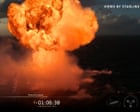
SpaceX rocket bursts into flames during Indian Ocean landing – video SpaceX launched its biggest, most powerful Starship yet on a test flight on Friday. It was an upgraded version of the spacecraft Nasa is counting on to land astronauts on the moon. It blasted off from the southern tip of Texas, carrying 20 mock Starlink satellites that were released midway through the hour-long flight that stretched halfway around the world. Despite some engine trouble, the spacecraft reached its final destination in the Indian Ocean where it erupted into flames on impact. The fire was not unexpected, according to SpaceXSpaceX launches its biggest rocket yet in test flight from Texas Continue reading...
theguardian · 5 days ago
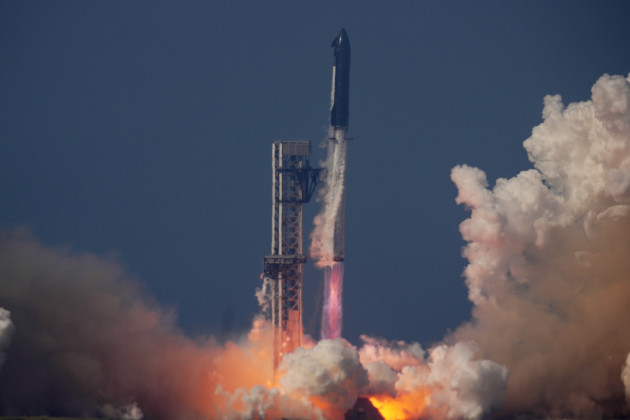
SpaceX launches test flight of the rocket Elon Musk is building to transport people to Mars The spacecraft is an upgraded version of the Starship that Nasa is counting on to land astronauts on the moon.
thejournal · 5 days ago

SpaceX launches massive Starship V3 rocket on test flight
news.yahoo.com · 6 days ago

Raumfahrt: Space-X gelingt Testflug neuer Starship-Version vor Börsengang Es klappt fast alles: Space-X hat „Starship V3 in Texas getestet – wenige Wochen vor dem geplanten Rekord-Börsengang dürfte das auch eine symbolische Wirkung haben.
sueddeutsche · 6 days ago
SpaceX launches redesigned Starship in successful pre-IPO test Elon Musks company demonstrates the technology at the heart of the biggest initial public offering in history
financial times · 6 days ago
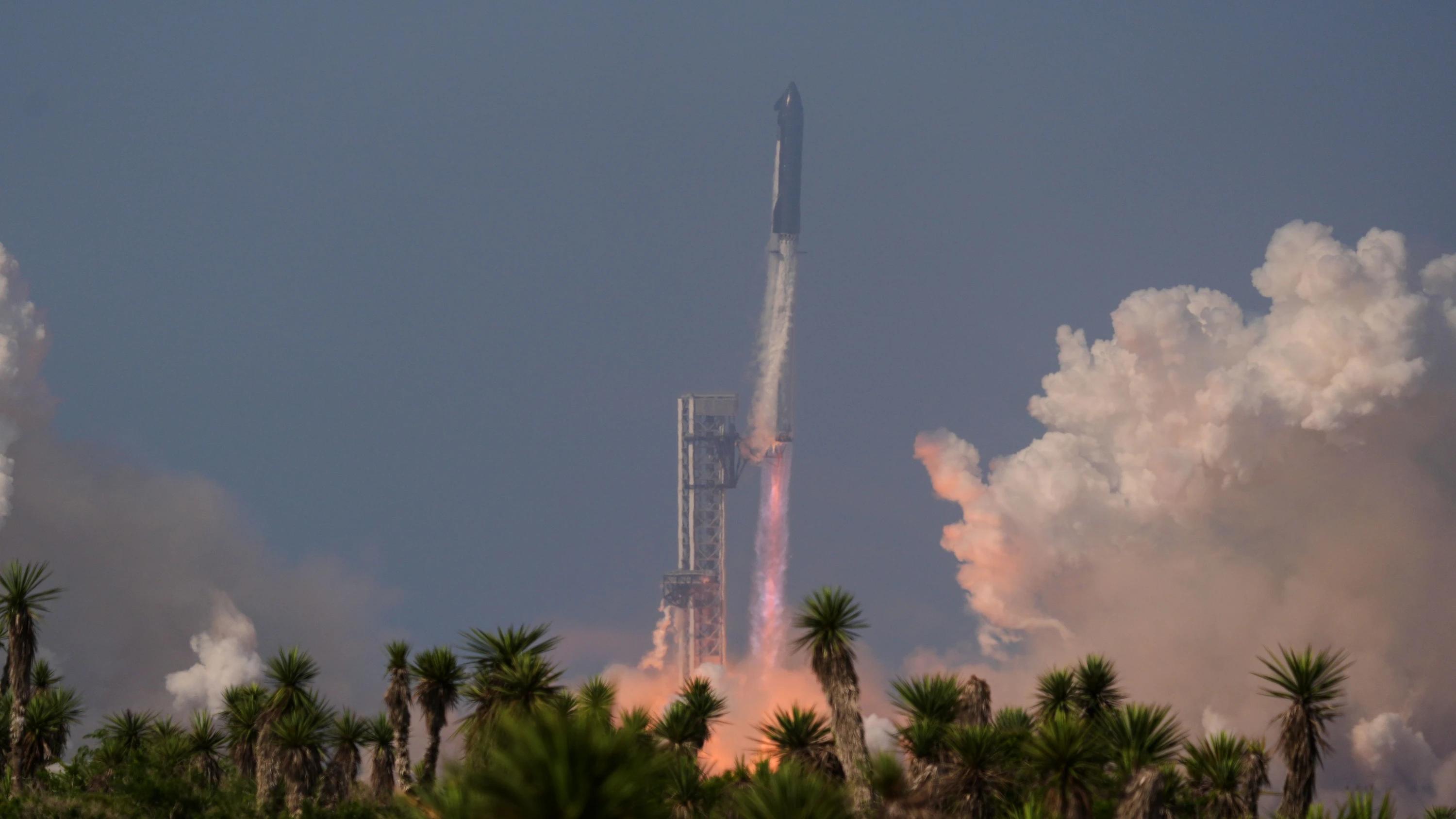
Kurz vor Börsengang: SpaceX absolviert erfolgreichen Starship-Test Kurz vor dem Börsengang lässt Elon Musks Raumfahrtunternehmen eine neue Version seiner Rakete abheben. Sie ist für SpaceX von enormer Bedeutung.
faz · 6 days ago
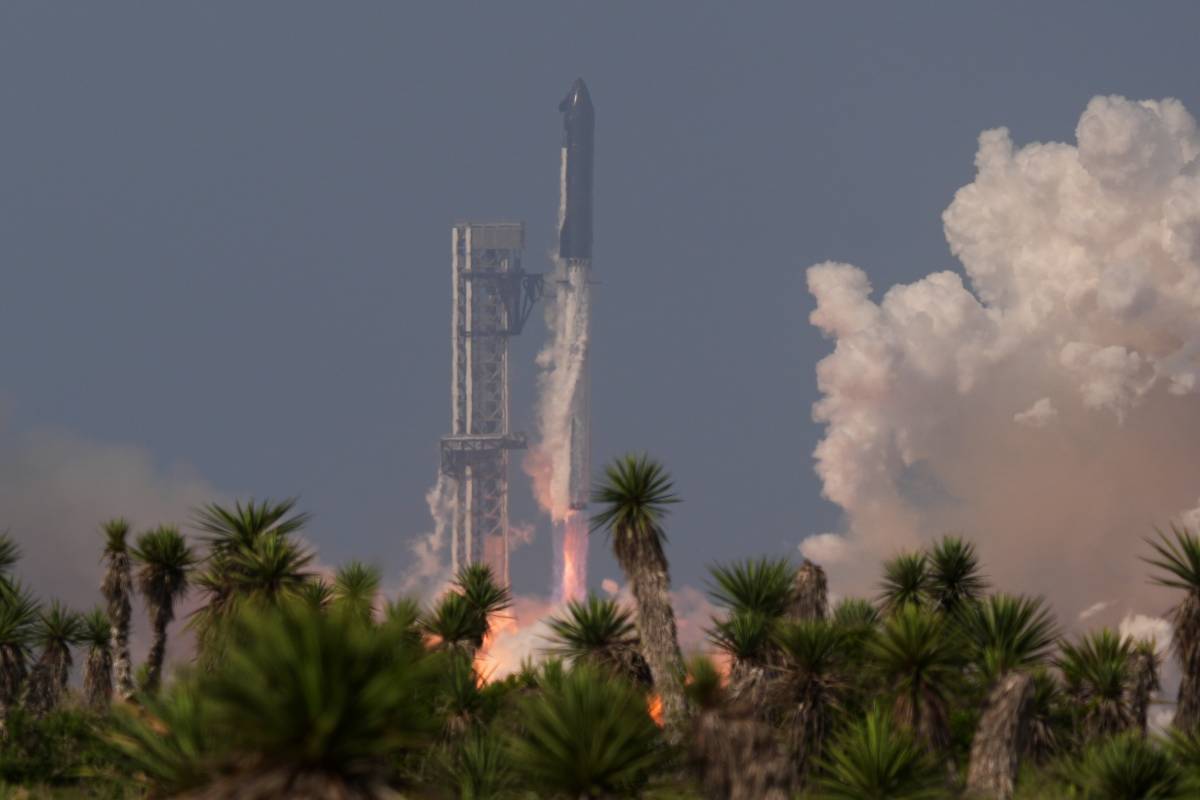
SpaceX lanza con éxito el Starship V3 tras un intento fallido en Texas El despegue marca el primer vuelo de prueba de la nave más grande y potente desarrollada por la empresa del magnate Elon Musk Leer
elmundo · 6 days ago

SpaceXs upgraded Starship V3 blasts off in debut test flight from Texas
news.yahoo.com · 6 days ago
SpaceX launches its biggest rocket yet in test flight from Texas The launch is the 12th test flight of the mega-rocket that CEO Elon Musk is building to get people to Mars one daySpaceX launched its biggest, most powerful Starship yet on a test flight Friday, an upgraded version that Nasa is counting on to land astronauts on the moon.The redesigned mega-rocket made its debut two days after SpaceX CEO Elon Musk announced hes taking the company public. It blasted off from the southern tip of Texas, carrying 20 mock Starlink satellites for release halfway around the world. Continue reading...
theguardian · 6 days ago
Börsengang: Anleger sollten sich den Einstieg bei SpaceX gut überlegen Elon Musk bringt mit SpaceX einen Superlativ an die Börse. Wer bei Megabörsengängen früh einsteigt, kauft oft zum Höchstpreis.
faz · 6 days ago