 Sunday, June 7Sunday, June 7
Tallinn scraps €3 million hospital design contract amid funding uncertainty
Tallinn has abruptly terminated design work on its planned Lasnamäe medical campus after spending nearly €3 million, citing the Estonian state’s failure to secure clear funding for the project. The decision, confirmed on Thursday, 4 June 2026, leaves the city without a finalised architectural plan for a facility intended to serve the eastern district, where demand for healthcare services continues to rise.
City officials confirmed that the design contract, awarded to a consortium of Estonian and international architects, was cancelled due to “insufficient state guarantees” for the project’s long-term financing. “Without a stable funding framework, we cannot responsibly proceed with construction,” a spokesperson for the Tallinn City Government said. The abrupt halt follows months of design work that had already produced detailed plans for the 12,000-square-metre campus, including outpatient clinics, emergency care units, and diagnostic facilities.
The cancellation comes as a setback for Tallinn’s healthcare infrastructure ambitions. The Lasnamäe medical campus was slated to replace ageing facilities in the district, where residents currently rely on overstretched services. Health authorities had projected the new centre would reduce patient wait times by up to 40% in its first year of operation. Now, with the design phase abandoned, the timeline for the project remains uncertain, and no new completion date has been announced.
Critics have questioned the city’s handling of the procurement process. Opposition councillors in Tallinn’s city council have called for an independent audit into how the €3 million was spent, noting that the funds were allocated without a binding commitment from the national government. “This is a classic case of putting the cart before the horse,” said Reform Party councillor Kalle Kütt. “We cannot keep pouring money into projects that lack secure financing.”
The Estonian Ministry of Social Affairs, which is responsible for healthcare infrastructure, has not publicly commented on the cancellation. However, ministry officials have previously emphasised the need for regional cooperation to fund large-scale medical projects. Tallinn’s mayor, Mihhail Kõlvart, has pledged to seek alternative financing models, including public-private partnerships, but no concrete proposals have been presented.
In the meantime, residents in Lasnamäe will continue to rely on existing healthcare facilities, which have faced criticism for overcrowding and outdated equipment. The city has not ruled out restarting the design process once funding is secured, but for now, the €3 million investment stands as a cautionary tale of how political and financial uncertainties can derail even the most carefully planned urban projects.

„Salvăm apă, salvăm PET-uri. Încă un aeroport important din țară intră pe lista celor care oferă pasagerilor apă potabilă gratuită Pasagerii care ajung la Cluj-Napoca au de acum acces la apă potabilă gratuită, după ce în aeroport au fost amplasate mai multe stații de hidratare, unde oamenii își pot umple propriile recipiente. Măsura este apreciată de călători, mai ales că sunt și comercianți care vând apa îmbuteliată de 0,5 litri chiar și cu 25 de lei. Aeroportul din Cluj a fost, de altfel, primul din țară care a eliminat limita de 100 de mililitri de lichide din bagaj.
digi24 · 3 days ago
Bucureștiul vrea să renunțe la ghenele de gunoi din blocuri până în 2033. Ce prevede noua strategie de salubrizare a Capitalei Primăria Capitalei a pus în dezbatere publică o nouă strategie privind serviciile de salubrizare, care prevede schimbări majore în modul în care vor fi colectate deșeurile și curățate străzile din București. Planul include desființarea ghenelor de gunoi din blocuri, colectarea unei părți din deșeuri pe timpul nopții, introducerea aspiratoarelor stradale moderne și aplicarea sistemului „plătești cât arunci.
digi24 · 3 days ago
Ciprian Ciucu a primit acordul Consiliului General pentru preluarea ELCEN de la Ministerul Energiei Consiliul General al Municipiului București a mandatat primarul general, Ciprian Ciucu, să gestioneze procedurile pentru preluarea ELCEN de la Ministerul Energiei. Primăria Capitalei susține că transferul ar permite coordonarea unitară a producției și distribuției agentului termic și ar facilita investițiile în rețeaua de termoficare.
digi24 · 3 days ago
Nové podozrenia o Kaliňákovej nemocnici: tentoraz súvisia s pozemkami Progresívne Slovensko tvrdí, že štát pri prevode časti pozemkov pod novou nemocnicou v Prešove dvakrát porušil zákon. Ide o parcelu, ktorá pôvodne nebola súčasťou areálu nemocnice.
aktuality.sk · 3 days ago
Rezort zdravotníctva vyhlásil výberové konanie na post šéfa NÚDCH a Pinelovej nemocnice v Pezinku Na čelo Národného ústavu detských chorôb v Bratislave má prísť nový riaditeľ. Ministerstvo vyhlásilo výberové konanie a prihlášky prijíma do 25. júna.
aktuality.sk · 3 days ago
Verksamheter kan bli ännu trevligare Det avskaffade matkravet gör alkoholservering möjlig i fler sammanhang. Det kan göra att fler butiker och näringsverksamheter blir attraktiva mötesplatser.
svenska dagbladet · 3 days ago
Hyresrättens framtid är hotad Inför höstens val skräms hyresgäster med chockhöjda hyror om bostadspolitiken ses över. Men dessa hot om marknadshyror blockerar viktiga reformer och blir istället främst ett hot mot hyresrättens framtid, skriver Fastighetsägarna.
svenska dagbladet · 3 days ago
Imagini cu lucrările pe Autostrada Sibiu-Pitești. CNAIR susține că tronsonul Tigveni-Curtea de Argeș ar putea fi deschis mai devreme Lucrările pe secțiunea 4 Tigveni–Curtea de Argeș a Autostrăzii Sibiu–Pitești avansează într-un ritm susținut, iar circulația ar putea fi deschisă cu aproximativ șase luni înainte de termenul contractual, potrivit autorităților.
adevarul · 3 days ago
Glosse: Das Streiflicht: Eine männliche Politesse? Ach, alles ist so kompliziert Die Stadt München weiß zwar nicht, wie sie den Parkraum fachgerecht bewirtschaften soll, findet aber immer die richtigen Worte in der Kundenansprache.
sueddeutsche · 3 days ago

Twenty-nine houses built without planning permission must be removed, High Court rules Judge notes unbelievable chutzpah of developers who ignored warning letters and intensified construction at south Dublin site
irish times · 3 days ago
Ciprian Ciucu vrea să schimbe la față Capitala: „Aducem în centrul Bucureștiului conceptul de oraș-parc Primarul General al Capitalei, Ciprian Ciucu, a anunțat demararea lucrărilor de reabilitare a zonei Piața Națiunile Unite și a Bulevardului Națiunile Unite, promițând o transformare radicală a uneia dintre cele mai circulate zone centrale ale Bucureștiului.
adevarul · 3 days ago
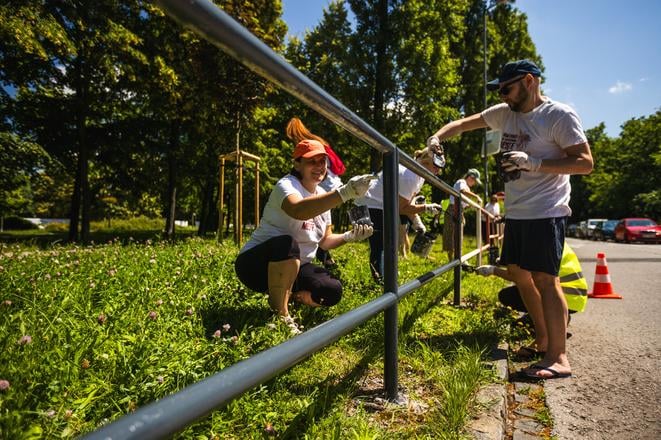
Nearly 7,000 volunteers to improve towns and cities across Slovakia Schools, shelters, nonprofits and community organisations will receive help during the 20th edition of Naše Mesto on Friday, June 5.
spectator.sme.sk · 3 days ago
Tallinn scraps hospital design contract after spending €3 million Design work on the planned Lasnamäe medical campus has been terminated at a cost of almost €3 million, with a lack of clear funding from the state cited as the reason.
news.err · 3 days ago
The focus of this years Tallinn Architecture Biennale is Linnahall The eighth Tallinn Architecture Biennale will take place from September 9 to November 30. In addition to the curated main program, the festival also features a satellite program that extends beyond Tallinn to Tartu and Kuressaare.
news.err · 3 days ago
A început golirea laculului Herăstrău. Cât timp vor fi suspendate pescuitul și sporturile nautice Lacul Herăstrău a început să sece, dar există o explicație - Primăria Capitalei îi scoate apa ca să-l curețe și să-i repare malurile distruse. Lucrarea mută peștii mici, rațele și țestoasele în lacul Floreasca din vecinătate.
digi24 · 3 days ago
Avans pe Autostrada Sibiu–Pitești: șeful CNAIR anunță că un tronson ar putea fi deschis cu șase luni înainte de termen Directorul general al Companiei Naţionale de Administrare a Infrastructurii Rutiere (CNAIR), Cristian Pistol, anunţă că secţiunea 4 (Tigveni - Curtea de Argeş) de pe Autostrada Sibiu-Piteşti ar putea să fie deschisă cu aproximativ şase luni mai devreme faţă de termenul contractual. Conform contractului, termenul de finalizare a lucrărilor este februarie 2027.
digi24 · 3 days ago
Újjáépítik végre az egyre rozzantabb K-hidat, a Sziget idejére leáll a munka Megkezdődik a Hajógyári-sziget és Óbuda közötti K-híd teljes körű rekonstrukciója 2026 őszén. A munkálatok várhatóan 2027 végére fejeződnek be, a cél, hogy a hídon úgy alakítsanak ki biztonságosabb és szélesebb útpályát, hogy közben megőrizzék jellegzetes arculatát.
hvg.hu · 3 days ago
Cum faci schimbări în decor fără să pierzi coerența spațiului Schimbările în amenajare sunt inevitabile. Gusturile evoluează, nevoile se transformă, iar spațiul în care trăim trebuie să țină pasul cu noi. Totuși, între dorința de a aduce ceva nou și riscul de a crea un decor fragmentat, există o linie fină.
adevarul · 3 days ago
High Above the Harbor: 6 Spectacular Greek Choras You Need to See One of the most fascinating aspects of island architecture in Greece is the Chora (Χώρα), which literally means main town or capital. On almost every Aegean island, you will find it perched precariously on a jagged mountain peak, cliffside, or steep hilltop, miles away from the main port. Today, these towns are postcard-perfect labyrinths of […]
greek reporter · 3 days ago