
Putin expands military powers as Russias war in Ukraine stalls amid heavy losses.
Russian Military and Political Developments in the Ukraine War
Russia’s parliament has passed legislation granting President Vladimir Putin expanded authority to order military interventions in foreign countries, a move widely interpreted as a legal framework to justify further aggression, including potential escalation in Ukraine . Meanwhile, the Kremlin continues to face internal criticism over its handling of the war, with even pro-war military bloggers questioning military mismanagement and warning of potential Russian defeat. The conflict has stalled on multiple fronts, with Russia suffering an estimated 1.3 million troops killed or wounded, while territorial gains remain minimal. Analysts suggest the war, initially framed as a swift victory, is now threatening Putin’s political stability, with growing discontent among supporters and economic strain on ordinary Russians .
Casualties and Veterans’ Integration The Kremlin is attempting to mitigate the war’s domestic fallout by repurposing disabled veterans into the defense-industrial sector. Putin has directed government agencies and corporate executives to absorb wounded soldiers into defense plants and other industries, framing the initiative as critical to Russia’s "technological sovereignty." By late 2024, an estimated 376,000 Russian soldiers had sustained severe injuries leading to permanent disabilities, with casualties continuing to rise. U.S. Secretary of State Marco Rubio reported in May 2026 that Russia is losing 15,000–20,000 soldiers killed monthly, while Ukrainian forces are described as Europe’s strongest due to combat experience and Western support. The Kremlin has also sought to address law enforcement shortages by recruiting veterans, following warnings of a 212,000-personnel deficit in 2025 .
Kremlin’s Militarization and Regional Control Putin has reinforced his grip on Russia’s border regions by appointing a decorated army general and a former official from occupied Ukraine to govern Belgorod and Bryansk. Analysts view these appointments as part of a broader strategy to militarize regional elites and tighten control over areas vulnerable to Ukrainian cross-border raids . Meanwhile, Russian rhetoric on peace negotiations has clashed with battlefield realities, as Moscow continues large-scale missile and drone strikes on Ukrainian cities. Western leaders, including French President Emmanuel Macron and German Chancellor Friedrich Merz, have condemned these attacks, accusing Russia of undermining diplomatic efforts. Merz explicitly rejected Moscow’s proposal to appoint a former German leader as a negotiator, asserting that Europe would determine its own representatives .
Ukraine’s Strategic Position and Western Support Ukraine’s resilience has shifted the war’s dynamics, with Finnish President Alexander Stubb stating that Kyiv now "holds all the cards" in negotiations due to Russia’s weakening position. Stubb highlighted Russia’s economic strain, high casualties, and limited territorial gains as factors eroding its leverage . NATO has also intensified calls for increased financial and military support, with the alliance’s chief advocating for contributions exceeding those of some member states’ economies . Analysts warn that the war’s outcome will have broader implications for European security, with the Kremlin’s aggression posing a direct threat to liberal democracy and NATO’s eastern flank .
> Background: **Putin touts new nuclear missile as Ukraine war talks stall with no end in sight.** — *1 days ago*
More LFE coverage on this topic
Follow us for live European news
- 2
- 1
- 1
- 1
- 1
4 further sources not geolocated
Articles

Russias parliament passes bill allowing Vladimir Putin to invade foreign countries
gdeltproject.org · 5 months ago
Ukraine holds all the cards in Russia talks, says Finnish president Ukraine is in a strong position for talks with Moscow as Russia becomes increasingly weakened by the war, Finlands President, Alexander Stubb, has said in an interview with the news portal 15min.
lrt · 5 months ago
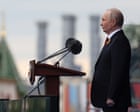
After four bloody years, the war on Ukraine might be turning into Putins undoing | Rajan Menon A battered economy, huge numbers of casualties and very little territorial gain – its no wonder even stalwart Putin supporters are showing signs of disquietRajan Menon is professor emeritus of international relations at Powell School, City University of New YorkOn 9 May, Russia held its iconic annual Victory Day parade to honour the sacrifices of its soldiers and civilians during its four-year war against Nazi Germany. When the president, Vladimir Putin, invaded Ukraine on 24 February 2022, he didnt anticipate a fight that would last longer than the Red Armys epic struggle against the Wehrmacht. But his war drags on. Worse, its failing and threatening his grip on power.Despite Putins boasts about Russian troops advancing on every front, even pro-war military bloggers are criticising military mismanagement. Some say the momentum favours Ukraine and at least one warns that Russia could lose. With the frontline stalled, an estimated 1.3 million Russian troops dead or wounded, and ordinary Russians under increasing economic pressure, the war Putin believed would produce his crowning achievement may prove to be his undoing.Rajan Menon is professor emeritus of international relations at Powell School, City University of New York, and senior research fellow at Columbia Universitys Saltzman Institute of War and Peace Studies Continue reading...
theguardian · 5 months ago

Putin Peace Language Collides With Ukraine Battlefield Reality
gdelt bot · 5 months ago

Is the tide starting to turn against Putin in Ukraine? ANALYSIS
news.yahoo.com · 5 months ago
Opinion: The future of the China-US-Russia triangle after Pelosis visit to Taiwan Since February 24, 2022, the international communitys focus was concentrated entirely on the war in Ukraine and the growing Russia – West confrontation. It seemed that nothing could change the situation until the end of hostilities in Ukraine. However, on August 2 and 3, almost everyones attention shifted from Ukraine to Taiwan. As the Speaker of the US House of Representatives, Nancy Pelosi, stated her intention to visit Taiwan, up to half a million people were watching the trajectory of her plane on air flight tracking sites. The negative reaction of China, including the warning of President Xi during his conversation with President Biden that those who played with fire would be perished by it, created hype around this visit. Many were discussing the possibility of Chinese military jets closing the airspace over Taiwan and preventing Pelosis plane from landing in Taiwan, while some enthusiasts were even contemplating the possibility of a US-China direct military clash. As Pelosi landed in Taiwan and met with the Taiwanese President, the global social media was full of amateur assessments about the strategic victory of the US and the confirmation of the US global hegemony. However, as the dust settles down, and information noise and manipulation eventually decreases, a more serious assessment is needed to understand the real consequences of this visit.
commonspace · 5 months ago
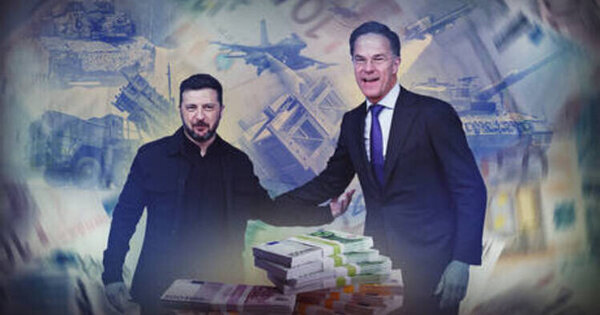
How much ? NATO chief calls for Ukraine tax bigger than member economies
gdelt bot · 5 months ago
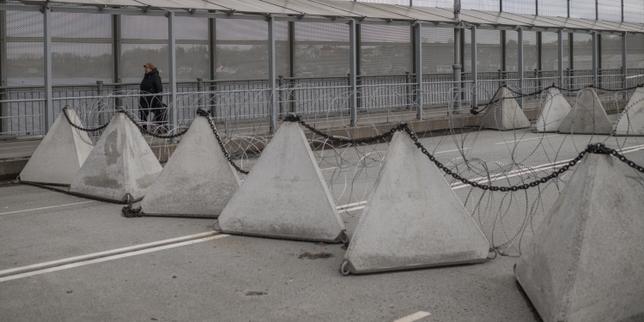
Military researcher Céline Marangé on the Ukraine war: What is truly in danger is the future of European liberal democracy In an interview with Le Monde, the political scientist places the conflict in Ukraine within the long history of Russian imperialism and assesses the threat that the Kremlin poses to NATO and EU countries.
le monde · 5 months ago
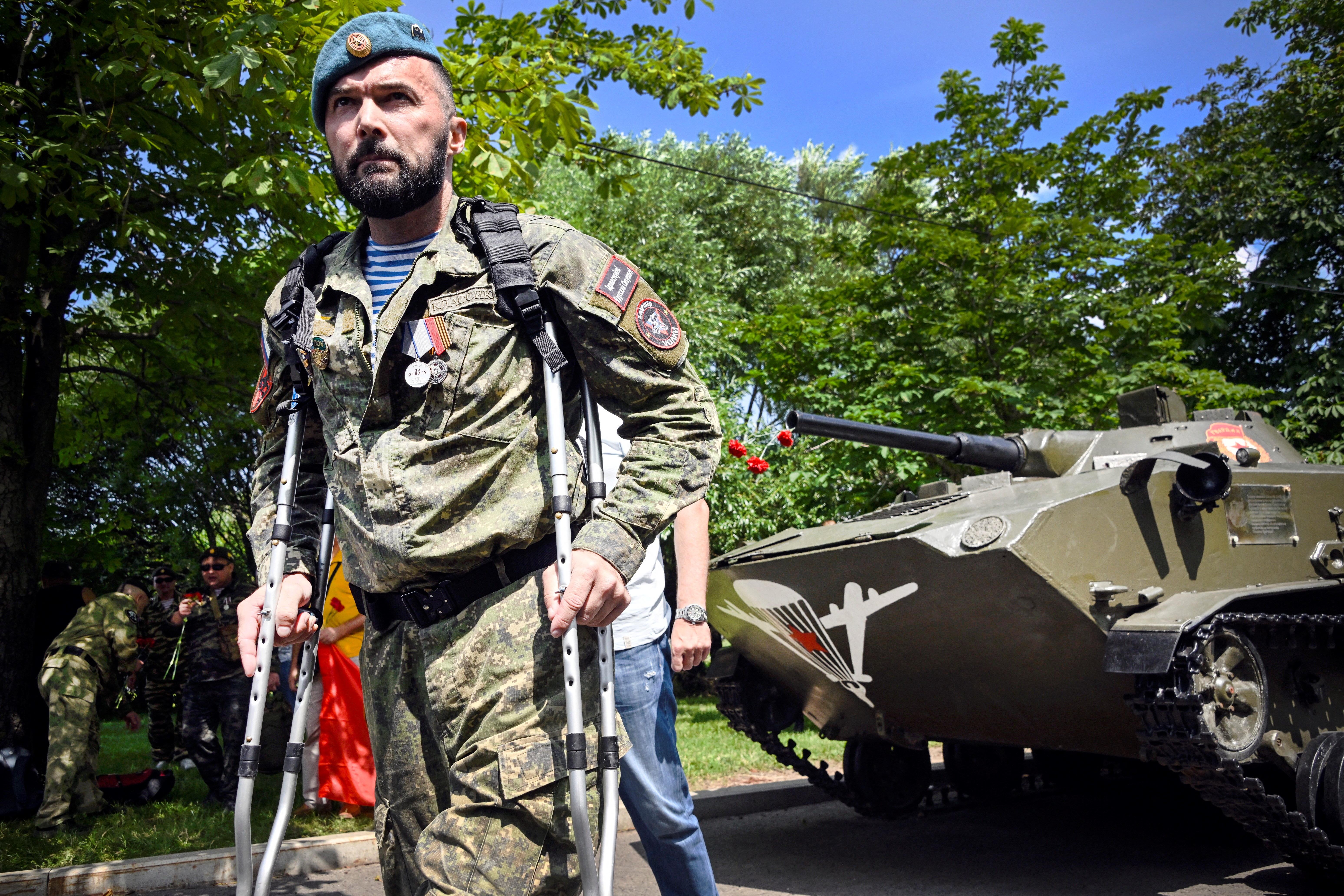
Putin Calls for Disabled Russian Veterans to Be Placed in Defense Plants Russian leader Vladimir Putin called for wounded and disabled veterans of Russias war against Ukraine to be placed in defense plants and other industrial sectors, The Moscow Times reported on May 14.Speaking at the 10th Congress of the Union of Machine Builders of Russia, Putin instructed the government, line ministries, and corporate executives to channel returning fighters into the defense-industrial complex. He also called for their placement in other industrial branches.Yes, the guys are fighting, they are proving themselves, but they need to be supported. We need to look for talented ones; there are many talented people there, Putin said.He framed the move as essential to reinforcing Russias technological sovereignty, securing domestic production of critically important products, and accelerating innovation across the sector.I ask the government, the relevant ministries, and company executives to facilitate in the most active way the arrival of such people in the domestic defense-industrial complex and other industrial sectors, Putin stated. The directive targets a growing group of Russian soldiers returning from the front with severe wounds and permanent disabilities. By the end of 2024, roughly 376,000 Russians had sustained severe battlefield wounds resulting in disability, according to estimates by the International Institute for Strategic Studies. Those casualty figures continue to climb. US Secretary of State Marco Rubio stated on May 14 that Russia is losing an estimated 15,000 to 20,000 soldiers killed each month. Speaking during a foreign policy hearing, he described Ukraines army as the strongest and most powerful in Europe, citing its combat experience and sustained Western support.Read moreLatest newsWhat Keeps Putin Awake at Night? Veterans Returning From Ukraine Oct 07, 2025 20:01 A senior Russian official familiar with the data previously stated that roughly half of the severely wounded had undergone limb amputations.The drive to absorb veterans into industry follows a parallel Kremlin effort earlier this year targeting Russias depleted law enforcement apparatus. On March 4, Putin ordered the Ministry of Internal Affairs to address severe personnel shortages by recruiting veterans of the war against Ukraine. The directive followed warnings from Interior Minister Vladimir Kolokoltsev, who reported a shortfall of 212,000 personnel in 2025.The shortage has already hit key branches of Russian law enforcement, including patrol services, criminal investigations, district policing, and investigative bodies. Kolokoltsev attributed the decline to low wages and excessive workloads, which he stated continue to drive resignations across the ministry. Related articles Alcohol Abuse and Violence—Russian Troops Face Moral Collapse on Kupiansk Front Latest news Apr 14, 2026 11:34 Russian Soldiers Turn to Opioids as Troop Morale Rapidly Declines Latest news Feb 01, 2026 12:37 Over 600 Russian Soldiers Died Off the Battlefield in 2025—A Surge in Suicide and Drug Use Latest news Nov 10, 2025 11:48
united24media · 5 months ago
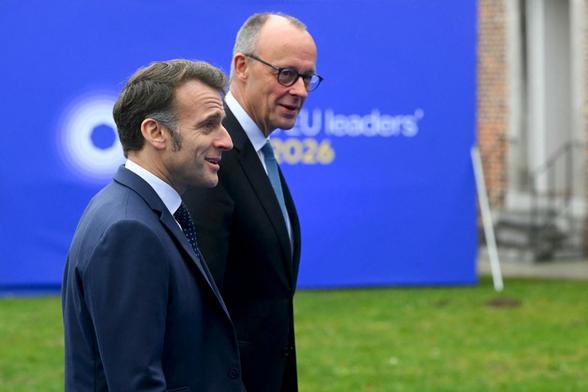
KYIV POST: Merz, Macron Issue Solidarity Statements After Major Kyiv Attack French President Emmanuel Macron and German Chancellor Friedrich Merz condemned Russias record drone and missile assault against Ukraine on Thursday, saying it undermined peace efforts and raised doubts about Moscows willingness to negotiate while civilians remained under attack. #Europe
mastodon bot · 5 months ago
Governor Reshuffle in Border Regions Shows How Kremlin Is Militarizing Russias Elites, Experts Say Putin has named a highly decorated army general and a former official in occupied Ukraine to lead the Belgorod and Bryansk regions.
themoscowtimes · 5 months ago
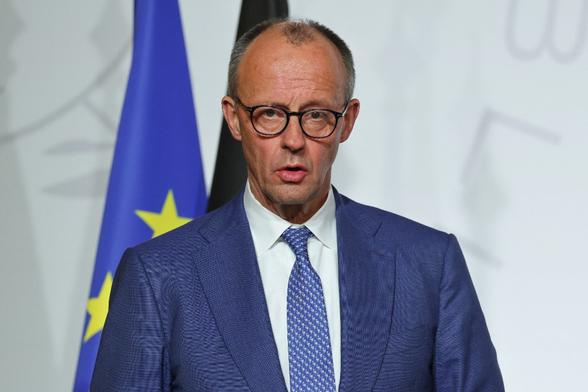
KYIV POST: We Decide Who Speaks for Us – Merz Rebuffs Putins Negotiator Proposal German Chancellor Friedrich Merz issued a message of solidarity with Kyiv following Russias Thursday attacks, adding that Europe would decide on its negotiator and rebuffing Moscows nomination of a former German leader. #Europe
mastodon bot · 5 months ago