
Fossils in southern Turkey show modern humans, Neanderthals shared culture for millennia

A groundbreaking discovery in southern Turkey has rewritten the narrative of human evolution, revealing that modern humans and Neanderthals shared not just territory but culture for over 20,000 years. Archaeologists excavating the Üçağızlı II cave in southern Turkey uncovered rare fossils and tools that provide the first conclusive evidence of a shared symbolic language and cultural practices between the two species between 40,000 and 60,000 years ago. The findings, published Friday, challenge long-held assumptions about the relationship between Neanderthals and Homo sapiens, suggesting a far more integrated coexistence than previously recognized.
An international research team led by the University of Bordeaux analyzed sediment layers in Üçağızlı II, uncovering artifacts that link the site to early migrations out of Africa. "This is not just about sharing tools—it’s about sharing meaning," said Dr. Elif Genç, lead archaeologist on the project. "The presence of symbolic objects, including engraved bones and ochre pigments, indicates a shared cultural framework that persisted for millennia." The cave’s stratigraphy reveals layers where Neanderthal and modern human tools coexisted, with no evidence of violent conflict over the period.
The discovery follows decades of debate over whether Neanderthals possessed symbolic thought. Previous evidence, such as the 64,000-year-old cave paintings in Spain, suggested limited Neanderthal creativity, but Üçağızlı II provides the first direct proof of cultural exchange. "We’re seeing a cultural continuum, not just coexistence," said Prof. Jean-Jacques Hublin of the Max Planck Institute for Evolutionary Anthropology. "This changes everything we thought we knew about the cognitive abilities of Neanderthals."
The implications extend beyond anthropology. Genetic studies have already confirmed interbreeding between the species, but this discovery suggests cultural transmission as well. "If they were sharing symbols, they were likely sharing ideas, stories, and possibly even language," said Dr. Genç. The team plans further excavations to determine whether other sites in the region show similar patterns.
Meanwhile, a separate study published Friday offers new insights into the preservation of ancient human brains, solving a long-standing archaeological mystery. Researchers led by Alexandra Morton-Hayward recreated burial conditions in a controlled experiment, burying mice in wet, low-oxygen environments to simulate ancient burial sites. After six months, they found that key brain proteins remained intact in oxygen-poor conditions, explaining why over 4,400 preserved human brains dating back 12,000 years have been discovered worldwide. "The brain is one of the first organs to decay, yet these findings show how specific environmental conditions can halt decomposition at the molecular level," said Morton-Hayward. The study, published in *Nature*, could aid forensic science and the study of neurological diseases.
Back in Australia, the first confirmed case of H5N1 bird flu in a native seabird has raised concerns about the virus’s spread. A greater crested tern found dead in Robe, South Australia, tested positive for the strain, marking a shift from previous detections in migratory birds. "This is a paradigm shift," said Chris Purnell, BirdLife Australia’s wetland program manager. "It suggests the virus is now transmitting within local wildlife, not just arriving with migrants." The federal government has urged poultry producers to enhance biosecurity measures, though the risk to humans remains low.
Follow us for live European news
- 2
- 1
- 1
- 1
- 1
- 1
- 1
4 further sources not geolocated
Articles

Deadly H5 bird flu found in local Australian seabird for first time
bluesky_The Guardian · about 3 hours ago

Επανεμφάνιση του αλυτρωτισμού και οικειοποίηση της ελληνικής ιστορίας στα σημερινά Βαλκάνια Το πρόσφατο άρθρο στο protothema.gr για τη Μοσχόπολη είχε πολύ μεγάλη απήχηση και εκτός του σάιτ. Αν και, ιδιαίτερα οι Βλάχοι, από όλες τις γωνιές του πλανήτη εκφράζονταν στο facebook με άκρως κολακευτικά σχόλια για το άρθρο υπήρχαν και κάποιοι που ενοχλήθηκαν...
protothema · about 3 hours ago
Πέθανε η γηραιότερη γυναίκα που ταξίδεψε ποτέ στο διάστημα σε ηλικία 87 ετών Πρόκειται για την Μέρι Γουάλας η οποία βρέθηκε στο διάστημα το 2021 με την Blue Origin του Τζεφ Μπέζος
protothema · about 3 hours ago
Koopaleiud näitavad neandertallaste ja nüüdisinmeste ühise mineviku kohta midagi ootamatut Lõuna-Türgis tehtud arheoloogiline avastus muudab põhjalikult meie arusaama inimkonna ajaloost. Üçağızlı II koopast leitud haruldased fossiilid ja tööriistad paljastavad, et kümneid tuhandeid aastaid tagasi ei jaganud nüüdisinimesed ja neandertallased vaid ühist elupaika, vaid neil oli enam kui 20 000 aasta vältel ka ühine kultuur ning sümbolite keel.
postimees · about 3 hours ago
Vegetarianism in Ancient Greek and Roman Philosophy Some ancient Greek and Roman philosophers supported vegetarianism. Sextius believed that killing animals for pleasure causes people to develop the habit of cruelty. Pythagoras believed that each soul passed from one body to another after death. So, when your parent dies, for example, their soul might move into the body of an animal. By Matthew […]
greek reporter · about 3 hours ago

Em Carenque conseguiu-se o que nunca achámos possível Há tão pouca informação geológica na net (ao contrário da biológica), que a IA está sempre a enganar-se, refere o paleontólogo Mário Cachão, que deixa dicas de geomonumentos a visitar este verão
observador · about 3 hours ago
Scientists Solve the Mystery of Why Ancient Human Brains Survive for Thousands of Years A new study sheds light on ancient brain preservation, revealing why some human brains survive for thousands of years while the rest of the body disappears. Researchers found that brains buried in wet, low-oxygen environments follow a unique chemical process that protects parts of the tissue instead of allowing it to fully decay. The findings […]
greek reporter · about 3 hours ago
VIDEO: ⟩ Teadlased arvutasid välja, millal sureb Maal viimane taim Inimesed, kelle hoole all näivad potitaimed alati välja surevat, võivad lohutust leida teadmisest, et taimestik tervikuna elab tõenäoliselt veel väga kaua.
postimees · about 3 hours ago
Για πρώτη φορά ανθρωποειδή ρομπότ μπαίνουν στο χειρουργείο – Μελέτη στο Nature
protothema · about 4 hours ago

King and Queen visit penguins at zoo — and other news in pictures
bluesky_The Times · about 4 hours ago
Tijdreizen met artificiële intelligentie: Ik creëer een soort digitaal museum
de morgen · about 4 hours ago
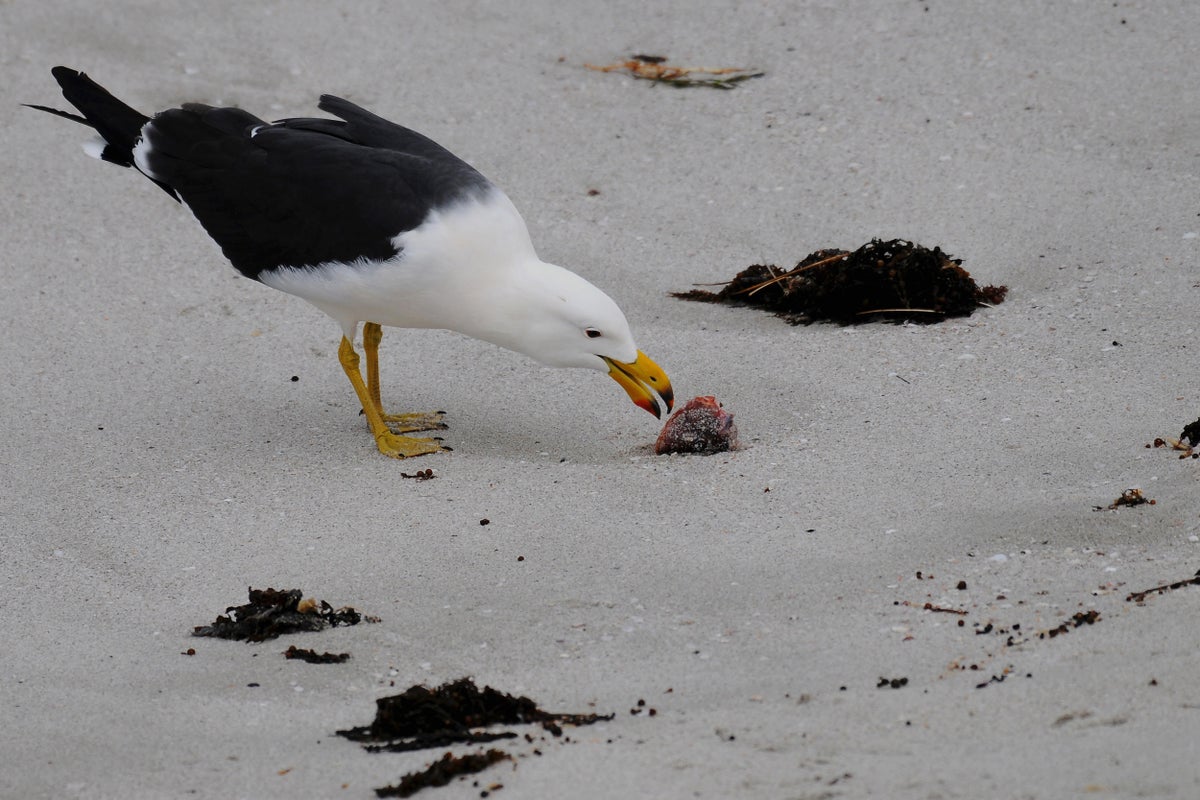
First case of deadly H5N1 confirmed in Australian seabird It may not be possible to eradicate flu if it becomes established in wildlife, scientists warn
independent · about 4 hours ago
Scientists Capture the Ocean Floor Splitting Apart for the First Time Scientists have captured, for the first time, a real-time recording of the ocean floor as it splits apart along a deep-sea ridge, triggering a massive lava flow and reshaping a stretch of seafloor within about two weeks. The discovery, published in the journal Nature, gives researchers a rare look at how new ocean crust forms […]
greek reporter · about 4 hours ago
Η NASA αποκαλύπτει ότι έχει καταγράψει εικόνες με UFO, ο επικεφαλής της αναγνωρίζει ότι «υπάρχει ζωή παντού» Ο Τζάρετ Άιζακμαν μιλά για ανεξήγητες εικόνες από το Διάστημα και εκτιμά ότι η ανθρωπότητα ίσως ανακαλύψει εξωγήινη ζωή μέσα στις επόμενες δεκαετίες
protothema · about 5 hours ago
Lost African Kingdom in South Africa Holds Clues to a Powerful Medieval State The stone ruins of the forgotten African Thulamela, hidden within South Africas Kruger National Park, may represent one of the most significant ancient kingdoms, according to new research. Researchers say decades of incomplete analysis have left the sites true importance largely overlooked, despite evidence of royal authority, skilled craftsmanship and long-distance trade. The study, published […]
greek reporter · about 5 hours ago
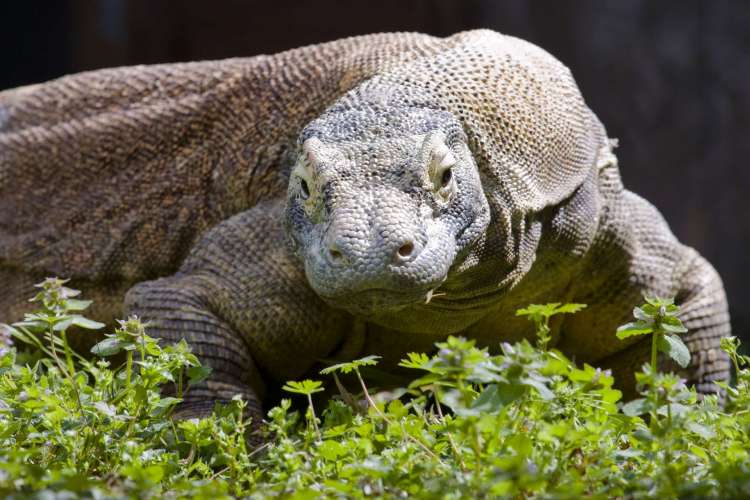
Flores Hobbits eating habits offer clues about their evolutionary past If Homo floresiensis wasnt a fire-using hunter, its origins could be different than we thought.
ars technica · about 5 hours ago
Stralsunder Pelikan: Zoodirektor: «Von Nordhessen nach Vorpommern machbar»
die zeit · about 5 hours ago
Pflanzenwelten: Neue Ausstellung zeigt NRW als Heimat urzeitlicher Giganten
die zeit · about 6 hours ago
Lasten tiedekysymykset | Miksi lähtiessä sanotaan hei hei, mutta tavatessa vain hei? Pohdimme myös, miten vesilinnut pysyvät kuivina ja millaisia olivat ensimmäiset asumukset. Entä voiko elämää olla Maan ulkopuolella?
helsingin sanomat · about 7 hours ago
Small Cap Watch: Krakatoa, Lightning Minerals and Variscan advance exploration plans
gdeltproject.org · about 7 hours ago
450-Million-Year-Old Sea Lily Fossil Preserves Soft Tissue Against the Odds A rare ancient fossil of a sea lily discovered by researchers at the University of Oklahoma is providing an unprecedented look at one of the earliest animals to thrive in Earths oceans more than 450 million years ago. The fossil belongs to an ancient crinoid, an early relative of modern starfish and sea urchins. Often […]
greek reporter · about 8 hours ago