
Stubb pushes EU mediation in Ukraine talks but demands ceasefire first
Finnish President Alexander Stubb positions himself as EU mediator in Russia-Ukraine talks, but sets ceasefire as precondition for negotiations.
Finnish President Alexander Stubb has offered to represent the European Union in potential ceasefire negotiations with Russia, stepping into a role vacated by the United States, according to reports . Stubb, however, has ruled out any talks unless Moscow first agrees to a ceasefire, a demand that dims immediate prospects for dialogue. The move underscores the EU’s growing diplomatic isolation in the conflict as it seeks to assert itself as a neutral broker.
In Brussels, the EU and Albania are set to enter a new phase of accession negotiations, with the 8th Intergovernmental Conference scheduled for 26 May. The Committee of Permanent Representatives (COREPER) approved the meeting on Friday, signaling progress in Albania’s long-stalled EU integration process . The conference will focus on aligning Albania’s legislation with EU standards, particularly in justice and fundamental rights.
Meanwhile, the European Economic and Social Committee (EESC) is debating a European Citizens’ Initiative (ECI) aimed at protecting the rights of video gamers across the bloc. The proposal, discussed at a recent session, seeks to address issues like loot boxes, data privacy, and labor conditions in the gaming industry . If successful, the ECI could force the European Commission to propose legislation on the matter.
The EU’s strategic partnerships face fresh scrutiny as tensions emerge in its relationship with India. While European Commission President Ursula von der Leyen hailed a "dynamic new era" during Indian Prime Minister Narendra Modi’s visit to Sweden, critics note the absence of a legally binding investment agreement—the cornerstone of deeper economic ties. India’s continued reliance on Russian oil further complicates the EU’s efforts to align its energy security with geopolitical goals .
In the Arctic, Northern Norway’s space ambitions clash with the EU’s regulatory framework. The European Commission’s upcoming Arctic policy update, expected this autumn, will prioritize regional cooperation, but industry leaders warn that existing EU space regulations could stifle innovation and launch capabilities in the High North . The policy shift reflects the EU’s broader push to balance climate goals with economic competitiveness in its northern periphery.
Ukraine, meanwhile, is leveraging its ties with Africa to bolster its EU integration efforts. Kyiv’s foreign ministry has identified the continent as a strategic partner, framing joint economic and security initiatives with the EU as a pathway to closer alignment with Brussels . The move comes as Ukraine seeks to diversify its diplomatic alliances amid stalled accession talks.
Articles

The hunt for a European mediator in Russia-Ukraine talks continues, but no talks are likely yet Finnish President Alexander Stubb has put himself forward to represent the EU in possible ceasefire talks with Russia now the US has fully withdrawn from the process, but immediately ruled out any talks starting unless Russia agreed to a ceasefire.
intellinews · 3 days ago
20 May 2026 - Armenia Election Monitor - The role of electoral observer missions in Armenia ahead of the parliamentary elections
commonspace · 3 days ago
EESC debates ECI that protects rights of Europes video gamers Continue reading EESC debates ECI that protects rights of Europes video gamers at The European Sting - Critical News & Insights on European Politics, Economy, Foreign Affairs, Business & Technology - europeansting.com.
european sting · 3 days ago
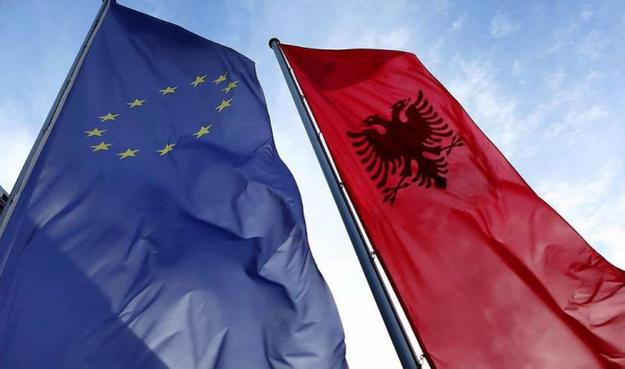
Intergovernmental Conference Albania-EU, Government: We Enter a New Phase of Negotiations"On May 26, the 8th Intergovernmental Conference between Albania and the European Union will be held in Brussels. The Committee of Permanent Representatives of the Member States of the European Union (COREPER) approved this Friday the holding of the 8th Albania-European Union Intergovernmental Conference." #EU #Albania #Balkans #Europe
mastodon bot · 3 days ago
Sigură, puternică și competitivă, mereu în interesul cetățenilor ei: viitorul UE este viitorul nostru Uniunea Europeană este, dincolo de orice îndoială, cel mai fericit proiect împlinit din istoria politică și economică a Europei. Nu doar ca proiect al păcii, evitând noi războaie între țările membre, UE a confirmat speranțele fondatorilor.
adevarul · 3 days ago
Autism Spectrum Disorders in Global Health: Awareness, Early Diagnosis, and Inclusive Care Continue reading Autism Spectrum Disorders in Global Health: Awareness, Early Diagnosis, and Inclusive Care at The European Sting - Critical News & Insights on European Politics, Economy, Foreign Affairs, Business & Technology - europeansting.com.
european sting · 3 days ago
@solarkater And more recent: 11 November 2025, New York - Statement on behalf of the European Union* by Mr. Thomas Ramopoulos, Counsellor, Legal Officer, European Union Delegation to the United Nations, at the 80th Session of the UN General Assembly on the Agenda item 74: Report of the International Criminal Court Basically, nothing but hot air from the #eu a member of #AxisofEvil
mastodon bot · 3 days ago

What the EU-India new era is actually missingIndia just became Europes newest strategic partner. Its also Russias biggest oil customer. Both things are true - and that tension is the entire story.Von der Leyen declared a dynamic new era while admitting the investment agreement - the legally binding core of real economic partnership - is still missing. #EuropeanSecurity #EU #India #Russia
mastodon bot · 3 days ago
Africa important for Ukraines European integration efforts – Foreign Ministry Ukraine views Africa as a strategic direction not only for strengthening its international standing and partnerships, but also as an important element of its European integration through participation in joint economic and security initiatives with the European Union.
ukrinform · 3 days ago
8 May 2026 - Armenia Election Monitor - Europeans rally around Pashinyan, but the Russians are not amused
commonspace · 3 days ago
13 May 2026 - Armenia Election Monitor - As Armenias election campaign starts, parties compete over rival visions for the countrys future
commonspace · 3 days ago
Northern Norway is ready to launch. EU Space Regulation — and its new Arctic policy – is not. The European Commission is currently updating its Arctic policy, with a new policy statement expected this coming autumn. Unlike the latest policy from 2021, the update will place greater emphasis […] The post Northern Norway is ready to launch. EU Space Regulation — and its new Arctic policy – is not. appeared first on SpaceNews.
spacenews · 3 days ago