
AfD surges to 28 as German voters reject reform restrictions
Story Timeline
2 months · 4 summary articles
The Alternative for Germany (AfD) party has reached a new record in polling, nearing the 30% mark with 28% support according to the latest "Politbarometer" survey. This comes as the party continues to gain traction amid growing skepticism towards the government's reform agenda.
The survey, conducted by the ZDF-Politbarometer, reveals that nearly three-quarters of voters are not willing to accept personal restrictions for reforms. This broad skepticism has contributed to the AfD's rising popularity, as the party continues to attract voters disillusioned with the current government's policies .
The AfD's surge in support comes at a time when the government is struggling to push through its reform agenda. Bert Rürup, an economist, argues that the search for consensus is not a viable reform strategy. He suggests that the government must take the lead on reforms while it still has a majority in the Bundestag .
Meanwhile, the Social Democratic Party (SPD) has shown a willingness to overcome blockades in coalition negotiations on key issues such as pensions, the labor market, and taxes. This move indicates a potential shift in the political landscape as parties attempt to address the growing discontent among voters .
The AfD's rising support and the government's struggles with reform highlight the challenges facing the current administration. As the AfD continues to gain ground, the government must navigate the complex political landscape to address the concerns of voters and implement necessary reforms.
The Alternative for Germany (AfD) party has seen a steady rise in support over the past few years, capitalizing on voter discontent with traditional parties and the government's handling of issues such as immigration, economic policy, and social reforms. The party's popularity has been bolstered by its stance on issues that resonate with a significant portion of the electorate, including opposition to immigration and skepticism towards European integration.
The latest polling data from the ZDF-Politbarometer shows the AfD at 28%, a significant increase from previous levels and a clear indication of the party's growing influence. This surge in support comes as the party continues to attract voters who feel disenfranchised by the established political parties and their policies.
The government's reform agenda has faced considerable opposition from voters, with nearly three-quarters expressing unwillingness to accept personal restrictions for reforms. This skepticism has played into the hands of the AfD, which has positioned itself as a voice for those dissatisfied with the status quo.
Bert Rürup's comments on the need for the government to take the lead on reforms underscore the challenges facing the current administration. Rürup argues that the search for consensus is not a viable strategy for implementing much-needed reforms. Instead, he suggests that the government must take decisive action while it still has a majority in the Bundestag.
The SPD's willingness to overcome blockades in coalition negotiations on key issues such as pensions, the labor market, and taxes indicates a potential shift in the political landscape. This move could be seen as an attempt by the SPD to address the growing discontent among voters and regain some of the support that has been lost to the AfD.
However, the road ahead is fraught with challenges. The government must navigate the complex political landscape to address the concerns of voters and implement necessary reforms. The rising support for the AfD is a clear indication of the need for the government to take decisive action and address the issues that are most important to voters.
In conclusion, the AfD's rising support and the government's struggles with reform highlight the challenges facing the current administration. As the AfD continues to gain ground, the government must navigate the complex political landscape to address the concerns of voters and implement necessary reforms. The coming months will be crucial in determining the direction of German politics and the future of the government's reform agenda.
Follow us for live European news
- 5
- 3
- 2
- 2
- 1
- 1
- 1
- 1
- 1
- 1
Articles

Fast drei Viertel nicht bereit für persönliche Einschränkungen bei Reformen – AfD holt neuen Rekord Die Reformagenda der Bundesregierung trifft auf breite Skepsis bei den Wahlberechtigten. Während nur wenige Einschränkungen akzeptieren, wächst der Zuspruch für die AfD im ZDF-Politbarometer auf einen Rekordwert.
welt.de · 2 months ago

Was tun, wenn die AfD regiert?: „Aber hier leben, nein danke Michel Friedman, die AfD und die Überlegung, Deutschland zu verlassen, wenn die AfD einmal das Land regieren sollte.
tagesspiegel · 2 months ago
Editorial: Deutschland diskutiert, wie ein Digitalminister KI nutzen darf – und übersieht den eigentlichen Schock Nie zuvor haben wir den technologischen Imperialismus der USA so zu spüren bekommen wie in dieser Woche. Die breite Öffentlichkeit führt eine andere Debatte – das zeigt das wahre Problem.
handelsblatt · 2 months ago
Künstliche Intelligenz: Was Deutschland gegen den KI-Abstieg tun muss Politik und Wirtschaft halten mit dem Tempo der KI-Revolution nicht Schritt. Ausgerechnet der Mittelstand hat noch einen Vorsprung – könnte ihn jedoch verspielen. Was hilft? Ein Gastbeitrag.
handelsblatt · 2 months ago
Bert Rürup: Die Suche nach Konsens ist keine Reformstrategie Die Sozialpartner sind zu schwach, um große politische Reformen mitzutragen. Daher muss die Regierung die Führung übernehmen – solange es für Reformen noch Mehrheiten im Bundestag gibt.
handelsblatt · 2 months ago
Bundesparteitag: Die Linke und die Fabel von den drei Schweinchen Die Linkspartei steht in den Umfragen bundesweit gut da und hat Zehntausende neue Mitglieder. Wollen alle in dieselbe Richtung? Gut 500 Delegierte beraten bis Sonntag in Potsdam.
handelsblatt · 2 months ago
Landtagswahl in Sachsen-Anhalt: Der dicke braune Balken Die AfD wird laut Umfragen stärkste Partei bei der Landtagswahl in Sachsen-Anhalt. Selbst eine absolute Mehrheit ist nicht ausgeschlossen. Alle Grafiken zur Wahl. mehr...
taz.de · 2 months ago
Consiliul Naţional al PNL, convocat astăzi, pentru a stabili detaliile Congresului extraordinar de pe 21 iunie Consiliul Naţional al PNL se întruneşte astăzi, de la ora 17:00, pentru a stabili detaliile Congresului extraordinar de duminică, 21 iunie. Şedinţa, care va avea loc online, se desfăşoară în contextul contestărilor în instanţă care vizează deciziile de sancţionare a celor care ar susţine Guvernul Veştea, dar şi al anchetei DNA care îl vizează pe Ciprian Ciucu, singurul prim-vicepreşedinte liberal care îl sprijină pe liderul formaţiunii, premierul interimar Ilie Bolojan. La rândul său, premierul desemnat Adrian Veştea, care ar putea fi exclus din partid, şi-a anunţat intenţia de a contracandida împotriva Bolojan la şefia partidului, dar a cerut schimbarea datei Congresului pentru 28 iunie.
digi24 · 2 months ago
Irineu Darău spune că Dominic Fritz va rămâne președintele USR cel puțin până în 2029: „Sistemul s-a speriat, i-ar pune talpă oricând Dominic Fritz va conduce USR cel puţin până în 2029, atât cât are mandatul dat de toţi membrii partidului prin vot universal, a declarat, vineri, preşedintele USR Braşov, Irineu Darău, care a menţionat că primarul Timişoarei „a unit USR şi l-a transformat în bine în doar un an de preşedinţie, de aceea „sistemul s-a speriat şi i-ar pune talpă oricând şi oricum.
digi24 · 2 months ago
Mesajul lui Adrian Veștea după întâlnirea cu Alexandru Nazare: „Nu voi promite o schimbare de 180 de grade Premierul desemnat, Adrian Veştea, anunţă că a discutat cu Alexandru Nazare, „actualul şi viitorul ministru al Finanţelor, despre execuţia bugetară de până acum, despre perspectivele următoarelor luni, dar şi despre „măsurile concrete pe care le vom include în programul de guvernare. „Această stare de incertitudine la nivel guvernamental este de natură să provoace daune şi mai mari dacă nu reuşim să ieşim din zodia haosului, susţine Veştea, care anunţă că nu va face „o schimbare de 180 de grade faţă de politica Guvernului de până acum.
digi24 · 2 months ago

Éveken belül már több vizet fog fogyasztani az AI, mint az emberiség Többször és több okból is megkongatták már a vészharangot a mesterséges intelligenciával kapcsolatban. Az ENSZ új jelentése is meglehetősen ijesztő: miközben számszerűsíti az AI környezeti költségeit, egy már jól ismert paradoxonra is felhívja a figyelmet.
hvg.hu · 2 months ago
O novo RJIES e o futuro da democracia universitária A questão decisiva é saber que tipo de autonomia este novo RJIES promove. Uma autonomia democrática, ou uma autonomia sobretudo gerencial? A revisão contém sinais contraditórios.
publico · 2 months ago
O custo humano da polarização: quando a política toca nas relações pessoais Amizades terminam por causa de votos. Famílias evitam determinados temas à mesa. Relações deterioram-se por divergências sobre aquilo que deveria fazer o Governo. Crónica de André Rodrigues
publico · 2 months ago
Gir språk til erfaringer som fremdeles kan være vanskelige å snakke om I en tid der mange er enige om at skeivhet er fint – men hvor debatten om Pride fortsatt er betent – gir skeiv…
aftenposten · 2 months ago
Staten tapte, men vil ikke stanse ulovlig gruvedumping: – Staten skal følge landets lover Staten tapte slaget om Førdefjorden, men mener gruvedriften kan fortsette som før.
aftenposten · 2 months ago
Kullgren – ta kampen för strömmingen Forskarna förutspår nu ökningar i bestånden av både strömming och skarpsill i Östersjön. Men istället för att öka fiskekvoterna behöver Peter Kullgren kämpa för att bestånden får en riktig chans till återhämtning, skriver debattörer.
svenska dagbladet · 2 months ago
Coronacommissie verhoort topambtenaar Marina Eckenhausen en Bianca Buurman, voorvrouw van zorgmedewerkers. Wie zijn ze? Deze vrijdag staan de laatste verhoren van de parlementaire enquêtecommissie corona op het programma die handelen over de impact van het virus (en beleid) op de zorg – het…
nrc · 2 months ago
Een schimmenspel met AI in de journalistiek. Schrijft de mens of de machine? Altijd fijn als er ook wat te lachen valt bij een principiële discussie over kunstmatige intelligentie. En dat is de Duitse pers (nou niet smalen) wel toevertrouwd. Tussen grote Duitse kranten is een fel debat losgebrand over het gebruik van AI in de journalistiek – met pijnlijke onthullingen, vileine commentaren en gesneuvelde reputaties. En met een chatbot die er een scherp hoofdredactioneel commentaar over schreef.
nrc · 2 months ago
„Was ist in drei Jahren? Ich kann es nicht sagen: Minister Totschnig windet sich in der „ZiB 2 beim Thema Klima [premium] Wird Österreich die Klimaziele für 2030 erreichen? Darauf erhält ORF-Moderator Martin Thür von Minister Norbert Totschnig keine Antwort. Jedenfalls müssten „alle mithelfen.
die presse · 2 months ago

Zwischen Einigkeit und Misstrauen: Länder beraten über Reformpartnerschaft Bei der Landeshauptleutekonferenz in Innsbruck soll am Freitag eine Position zu Gesundheit, Bildung und Verwaltung festgezurrt werden
der standard · 2 months ago
Beamtenprivilegien: Was passieren würde, wenn man Beamten ihre Privilegien nähme Beamten in die gesetzlichen Kassen einzahlen lassen? Das fänden viele richtig. Nur sind die Konsequenzen nicht allen klar. Das Beispiel eines Lehrers – und eine Rechnung
die zeit · 2 months ago
ZDF-»Politbarometer«: Mehrheit der Deutschen glaubt nicht an Reformen bis zum Sommer Fast drei Viertel der Menschen in Deutschland glauben nicht an den Zeitplan der Regierung für ein Reformpaket. Und nur wenige sind bereit, Einschränkungen hinzunehmen.
die zeit · 2 months ago

Widmo referendum w Gliwicach. O losach prezydentki mógł zaważyć jeden głos Gliwiccy radni podczas czwartkowej sesji nie udzielili Katarzynie Kuczyńskiej-Budce wotum zaufania. Wymaganej większości nie uzyskała jednak uchwała o nieudzieleniu prezydentce absolutorium z wykonania budżetu za 2025 r.
gazeta.pl · 2 months ago
Wenn KI-Umfragen echte Menschen ersetzen Der Boom rund um künstliche Intelligenz (KI) hat nun auch die Meinungsforschung erreicht. Mit Hilfe von synthetischen Stichproben, also KI-generierten Antworten auf Umfragen, sollen ansonsten schwer zu erreichende Gruppen besser abgebildet werden. Doch Fachleute sehen darin derzeit „höchst fahrlässige Quacksalberei.
orf.at · 2 months ago
INTERVIU Tomac povestește cum președintele Nicușor Dan și el și-au dat seama că nu se vor strânge voturile din cauza „poziției inflexibile a PNL. Cum a fost ales Veștea „după câteva ore HotNews a avut un dialog amplu cu Eugen Tomac, premierul desemnat care și-a depus mandatul: despre situația la zi, despre afacerile imobiliare ale lui Adrian Veștea, despre chemarea lui Ciucu la DNA și despre decizia Tribunalului Ilfov în cazul PNL. -Domnule Eugen Tomac, cum este văzută la Cotroceni apropierea lui Adrian Veștea de AUR? …
hotnews.ro · 2 months ago
Adrian Veștea, fotografie cu Nazare, „actualul și viitorul ministru al Finanțelor: la masă la birou, lucrând Premierul desemnat Adrian Veștea anunță vineri, pe pagina sa de Facebook, că s-a întâlnit cu ministrul interimar al Finanțelor, Alexandru Nazare, cu care a vorbit despre măsurile „concrete pe care vrea să le includă în programul de guvernare. „Am avut o întâlnire de lucru cu actualul și viitorul ministru al Finanțelor, Alexandru Nazare. Mi-am dorit …
hotnews.ro · 2 months ago
Cum s-au topit promisiunile „fără AUR ale lui Nicușor Dan și Sorin Grindeanu, în fața matematicii din Parlament. Ce arată cele mai noi calcule pentru Guvernul Veștea Votul pentru învestirea Guvernului Veștea s-a mutat pe săptămâna viitoare. Premierul desemnat nu a reușit să strângă cele 233 necesare, iar în fața scutului făcut de majoritatea liberalilor în jurul lui Ilie Bolojan, în acest moment, diferența poate veni doar de la AUR. Întrebați direct dacă acceptă acest scenariu, atât președintele Nicușor Dan, cât și …
hotnews.ro · 2 months ago
VS staakt cruciale metingen van Golfstroom toch niet na protest in Senaat De Amerikaanse regering komt terug van haar beslissing om het systeem te ontmantelen waarmee de VS onder meer de Golfstroom monitort. Democraten en Republikeinen in de Senaat noemden het een "illegale" ingreep en vrezen voor de gevolgen voor kustgemeenschappen.
nu.nl · 2 months ago
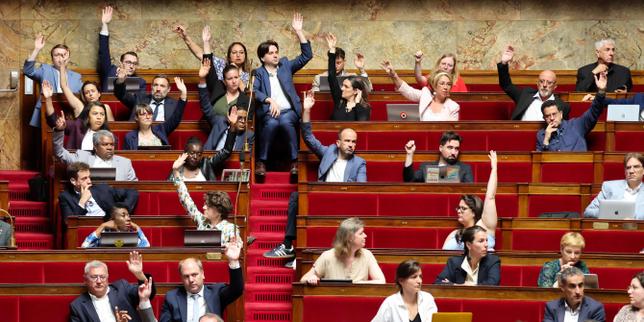
Les ambiguïtés de la mémoire française de lesclavage Si le Code noir a été enfin officiellement abrogé le 28 mai, il ne faut pas oublier que lesclavage, dans les colonies, a vécu son apogée au moment précis où se diffusaient en France les idéaux universalistes des Lumières, analyse le journaliste Jérôme Gautheret.
le monde · 2 months ago
Wahlumfragen: „Politbarometer sieht AfD bei 28 Prozent Die AfD nähert der 30-Prozent-Marke. Nicht zum ersten Mal zieht sie damit in der Sonntagsfrage an der Kanzlerpartei vorbei.
handelsblatt · 2 months ago