
Yemeni government strikes Sanaa airport to block Iranian plane landing amid Houthi-Saudi tensions
Story Timeline
2 months · 3 summary articles
Houthi rebels impose naval blockade on Saudi Arabia in retaliation for Sanaa airport attack
Houthi rebels strike Saudi Arabias Abha airport after Sanaa runway attack halts Iranian plane
ContinuationYemeni government strikes Sanaa airport to block Iranian plane landing amid Houthi-Saudi tensions
Yemen’s internationally recognised government said on Monday its forces had carried out an attack on Sanaa airport to prevent an Iranian aircraft from landing, escalating tensions in the long-running conflict. The strike on the Houthi-controlled airport marks a significant development in the proxy war between Saudi Arabia and Iran, which has been fought largely on Yemeni soil.
The Yemeni Defence Ministry confirmed that it had targeted the runway at Sanaa International Airport to prevent the Iranian plane from landing. In a statement, the ministry accused the Houthis of violating Yemeni sovereignty by allowing the Iranian aircraft to enter its airspace. The ministry had earlier warned civilians, workers, diplomatic missions, and humanitarian organisations to immediately evacuate the airport and its surroundings until further notice.
The Iran-aligned Houthi movement, which controls much of northern Yemen, including the capital Sanaa, accused Saudi Arabia of launching the airstrikes. Houthi military spokesman Yahya Saree called the attacks "blatant aggression" and warned that they would not go unanswered. "This aggression will not go unpunished and will not pass without a response," Saree said in a statement.
The Houthis claimed that the Iranian aircraft, which was carrying a delegation back from Tehran, had landed in Al Hudaydah on the Red Sea coast instead of Sanaa. Houthi broadcaster al-Masirah quoted the group’s transport minister as saying the plane was carrying medical patients and stranded citizens, accompanied by an official delegation of the Republic of Yemen.
The United Nations Special Envoy for Yemen, Hans Grundberg, expressed concern over the developments involving the country's airports and warned of the risks of a wider escalation. In a statement, Grundberg said he was closely monitoring developments related to Yemeni airspace and airports and that his office was conducting intensive contacts with all parties, including military representatives from various sides.
Grundberg urged all parties to de-escalate and refrain from taking any steps that could lead to a new round of violence in the country. He called on Yemeni parties to engage in dialogue and negotiations under UN auspices to preserve the relative calm that has prevailed in Yemen since 2022 and to make progress toward a sustainable end to the conflict.
Tensions have been rising since the Houthis accused Saudi Arabia earlier this month of attacking an Iranian plane that landed in Sanaa and then took off carrying a Houthi delegation. The rebels had threatened to hit Saudi airports and vital assets should Riyadh violate its airspace or attempt to attack it again.
The latest escalation raises the spectre of renewed Houthi attacks on Saudi Arabia after a United Nations-backed ceasefire largely froze the conflict. The ceasefire, which has been in place since 2022, has been credited with reducing violence and allowing for some humanitarian access, but the underlying tensions have remained.
The conflict in Yemen has been ongoing since 2014, when the Houthis seized control of Sanaa and other parts of the country, prompting a military intervention by a Saudi-led coalition in 2015. The war has resulted in one of the world's worst humanitarian crises, with millions of people displaced and in need of aid.
The international community has repeatedly called for a peaceful resolution to the conflict, but efforts to broker a lasting peace deal have so far been unsuccessful. The latest developments suggest that the fragile calm may be unravelling, with the potential for further violence and instability in the region.
As the situation continues to evolve, the focus will be on whether the parties involved can heed the UN's call for de-escalation and return to the negotiating table, or if the cycle of violence will continue to spiral.
Follow us for live European news
- 1
- 1
- 1
- 1
7 further sources not geolocated
Articles

UN envoy for Yemen calls for de-escalation after Sanaa airport strike
news.yahoo.com · 2 months ago

Yemen government says its forces attacked Sanaa airport Govt says its forces struck Sanaa airport to prevent an Iranian aircraft from landing there.
aljazeera · 2 months ago
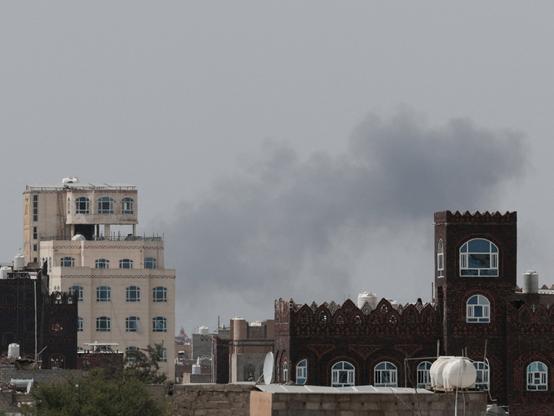
⚡ NEWSYemen government claims strike on Sanaa airport to block Iranian aircraftThe Yemeni government announced that its forces conducted a military strike on Sanaa airport. The operation was carried out specifically to prevent an aircraft linked to Iran from landing, highlighting ongoing tensions and military interventions in the region.📰 #Military #Geopolitics #GeoWire
mastodon bot · 2 months ago
🇾🇪🇾🇪❌🇸🇦 — Yemens Defense Ministry has issued an immediate evacuation order for Sanaa Airport.
telegram_Intel Slava · 2 months ago
🇸🇦❌🇾🇪 — BREAKING: Saudi airstrikes targets Sanaa International Airport, according to Houthi-owned Al-Masirah. @IntelSlava
telegram_Intel Slava · 2 months ago
#Yemen #KSA The Houthis have accused Saudi Arabia of attacking Sanaa airport, claiming it was a response to a dispute over an Iranian plane carrying a Houthi delegation. They vowed retaliation for what they termed Saudi aggression. Subscribe to @OSINTdefender Chat room
telegram_OSINTdefender · 2 months ago
🇮🇷❌🇦🇪🇺🇸🇮🇱- The UAE Ministry of Defense: A fire broke out in one of the warehouses at Zayed Military City.
telegram_GeoPWatch · 2 months ago
🇸🇦❌🇾🇪 – Footage of the strikes on the Sanaa International Airport. @GeoPWatch
telegram_GeoPWatch · 2 months ago
Houthis accuse Saudi Arabia of striking Sanaa airport, vow retaliation The Iran-aligned Houthi movement that controls northern Yemen accused Saudi Arabia on Monday of launching airstrikes against the international airport in Sanaa, and vowed to retaliate. Houthi military spokesperson Yahya Saree called the attacks blatant aggression and said they had ended a period of de-escalation in the long-running conflict. He said Saudi Arabia would bear […]
cyprus mail · 2 months ago
Yemen strikes Sanaa airport runway to block Iranian plane landing Yemens Defense Ministry has confirmed it struck the runway at Houthi-controlled Sanaa International Airport to prevent an Iranian aircraft from landing. The ministry accused the Houthis of violating Yemeni sovereignty by allowing the Iranian plane to enter its airspace.
yenisafak · 2 months ago
Existenzen in Trümmern: Dokumentation der Zerstörung im Libanon Trotz Waffenruhe bleibt die israelische Armee im Südlibanon. Satellitenbilder, internationale Organisationen und Augenzeuginnen zeigen das Ausmaß der Verwüstung und Vertreibung
der standard · 2 months ago
ASEAN ministers demand concrete actions to end Myanmar violence Top diplomats from the Association of Southeast Asian Nations called for concrete steps to reduce violence in Myanmar during their first meeting with the countrys military-appointed foreign minister since the 2021 coup, as Manila warned that ending hostilities would require incremental progress.
yenisafak · 2 months ago
Yemen, scontro tra Iran e sauditi. Houthi sequestrano volo della Croce Rossa, piloti in ostaggio Si riaccende il conflitto dopo che il governo ha bombardato laeroporto di Sanaa per impedire latterraggio di un aereo di Teheran, alleata dei ribelli. I quali accusano Riad e rispondono con unazione contro lorganizzazione umanitaria
corriere · 2 months ago

Myanmar 2026: China vs India for Ore and PortsChina and India courted Myanmars junta in 2026 — but armed groups hold the ports and rare-earth mines that feed Chinas magnet supply chain. #WorldNews #ForeignPolicy
mastodon bot · 2 months ago

Yemeni military targets Sanaa airport runway to stop Iranian plane landing, defence ministry says reut.rs/4vqbrCG
bluesky_Reuters · 2 months ago
🇸🇦❌🇾🇪🇾🇪 — Saudi-led coalition strikes have targeted both runways at Sanaa International Airport. @IntelSlava
telegram_Intel Slava · 2 months ago
🇸🇦❌🇾🇪🇾🇪 — First-moment footage of the Saudi strike on Sanaa International Airport.
telegram_Intel Slava · 2 months ago
🇾🇪🇾🇪❌🇸🇦 — Ansar Allahs military spokesman warns of retaliation after Saudi airstrikes on Sanaa International Airport. ➡️ The spokesman condemned the strikes as an "unjust and brazen aggression," declaring the attack has ended the de-escalation phase. ➡️ Ansar Allah states the aggression "will not pass without a response and punishment." @IntelSlava
telegram_Intel Slava · 2 months ago
🇮🇷🇾🇪❌🇸🇦 — An Iranian Mahan Air civilian aircraft carrying an Ansar Allah delegation landed at Hodeidah International Airport following Saudi airstrikes on Sanaa International Airport. @IntelSlava
telegram_Intel Slava · 2 months ago
🇮🇷🇾🇪❌🇸🇦 — Footage captures the moment Saudi Arabian airstrikes struck Sanaa International Airport in Yemen. @IntelSlava
telegram_Intel Slava · 2 months ago
#Yemen A cargo vessel in the Red Sea reported coming under attack, as confirmed by the United Kingdom Maritime Trade Operations Centre (UKMTO). The incident occurred southwest of Yemens Al Hudaydah port, and authorities are currently investigating. Subscribe to @OSINTdefender Chat room
telegram_OSINTdefender · 2 months ago
#BREAKING 🇸🇦❌🇾🇪 – Saudi airstrikes on Sanaa international Airport according to Saba News Agency. @GeoPWatch
telegram_GeoPWatch · 2 months ago
🇸🇦❌🇾🇪– Additional airstrikes on landing and takeoff runways. @GeoPWatch
telegram_GeoPWatch · 2 months ago
🇸🇦❌🇾🇪– The military spokesperson for the Iran-backed Houthi movement in Yemen, Yahya Saree, stated the following: "In an act of unjust and ruthless aggression, the criminal Saudi enemy has targeted Sanaa International Airport with a series of airstrikes. By doing so, they have ended the de-escalation phase and must now bear the consequences of their aggression. We affirm that this aggression will not go unpunished and will not pass without a response." @GeoPWatch
telegram_GeoPWatch · 2 months ago
In response to the blatant and unjustified attacks directed against us by Middle East Spectator, we affirm our legitimate right to respond to any campaign of threats, defamation, or malicious incitement targeting our ranks. We further condemn the baseless allegationm, which serve only to mislead public opinion and fuel unnecessary discord. Such reckless conduct will not deter us from our principles, nor will it weaken our resolve.
telegram_GeoPWatch · 2 months ago