 Sunday, June 7Sunday, June 7
Australian biosecurity authorities have dismantled an illegal breeding operation in Bathurst, New South Wales, seizing more than 100,000 live exotic cockroaches in the largest such bust on record. Inspectors from the NSW Department of Primary Industries and Local Land Services raided a commercial facility on Wednesday, discovering dubia and Madagascar hissing cockroaches—species that cannot be legally imported, bred, or sold in Australia . The haul, valued at up to A$200,000, included insects measuring up to 10 centimetres, prompting authorities to warn of potential disease risks and ecological disruption.
The operation follows a pattern of increasingly brazen attempts to supply the exotic pet trade, which has driven demand for live feeder insects. Madagascar hissing cockroaches, known for their size and distinctive sound, are particularly sought after by reptile owners. NSW Biosecurity Director Andrew Cupitt confirmed the insects would be euthanised to prevent any accidental release . “This is not just a breach of quarantine laws—it’s a potential biosecurity catastrophe,” Cupitt said. The case echoes a 2024 record seizure in the same region, where 100,000 exotic insects were confiscated from another breeder .
Experts warn that even a single escaped specimen could establish an invasive population, given Australia’s fragile ecosystems. Dr. Jane Wilson, an entomologist at the University of Sydney, noted that Madagascar hissing cockroaches thrive in warm, humid conditions similar to parts of northern Australia. “If these insects were to establish themselves, they could outcompete native species and spread pathogens,” Wilson told local media .
The bust underscores the challenges facing Australia’s biosecurity regime, which has tightened controls in recent years amid rising smuggling attempts. Last month, federal authorities intercepted a shipment of live reptiles concealed in luggage at Sydney Airport, highlighting the sophistication of illegal wildlife traders. The NSW government has pledged to increase unannounced inspections of pet breeding facilities, with penalties for illegal breeding now including fines of up to A$1.1 million and five years imprisonment.
While the insects will be destroyed, the case raises broader questions about the exotic pet trade’s role in driving biosecurity risks. Animal welfare groups argue that stricter licensing and public education are needed to curb demand for species that pose no threat in their natural habitats but could wreak havoc if introduced elsewhere. For now, Bathurst’s illegal cockroach farm serves as a stark reminder of the hidden costs of the global pet trade.
Australian authorities seize record 100,000 illegal exotic cockroaches in Bathurst bust

Dutch Cocaine Kingpin Sheltering in Sierra Leone Allegedly Organized Shipment Seized in Record Bust www.occrp.org/en/news/dutc...
bluesky bot · 1 day ago

En Australie, découverte dun élevage de 100 000 blattes, un véritable cafardnahüm Certaines espèces, notamment la «blatte siffleuse» de Madagascar, peuvent atteindre 10 centimètres. Les insectes sont promis à leuthanasie.
liberation · 1 day ago
Primul caz de infestare cu musca viermilor din ultimii 60 de ani, semnalat în SUA. Pierderi de zeci de milioane de dolari, în trecut Musca viermilor de carne din Lumea Nouă ameninţă industria bovină americană, evaluată la 113 miliarde de dolari, pentru prima dată în mai bine de jumătate de secol, după ce s-a confirmat o infestare cu larvele sale carnivore în sudul Texasului, scrie AP.
digi24 · 1 day ago
Mais de 100 mil baratas contrabandeadas apreendidas na Austrália Foram encontradas baratas de Madagáscar, também conhecidas como baratas sibilantes, bem como baratas Dubia, criadas para serem consumidas por lagartos de estimação.
publico · 1 day ago
«Le Poids des os» : Shih-Li Kow et linsoutenable légèreté du squelette Des nouvelles de lautrice malaisienne née en 1968.
liberation · 1 day ago
Australien: 100.000 Kakerlaken beschlagnahmt
orf.at · 1 day ago
Gallery: Historic Estonian flag smuggled out in 1944 returns from Australia Hidden in Australia for decades, an Estonian presidential flag saved from Soviet forces in 1944 returned home and was handed over to the Estonian National Museum (ERM).
news.err · 1 day ago
Following the first confirmation of screwworm on a US farm in decades, officials have fanned out in South Texas, where a calf was found infested this week. Phillip Kaufman, head of the entomology department at Texas A&M University spoke to Reuters about a potential solution reut.rs/49DqS2z
bluesky bot · 2 days ago

En Australie, saisie de 100 000 cafards exotiques de la taille de la paume de la main Les autorités australiennes ont découvert un élevage illégal de blattes, probablement destinées à nourrir des reptiles animaux de compagnie. Elles mettent en garde contre un risque de propagation de maladies.
courrier international · 2 days ago
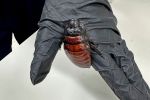
Rekordfund in Australien: 100.000 Kakerlaken beschlagnahmt Die illegal gehaltenen Tiere haben einen geschätzten Wert von etwa 120.000 Euro und sollen nun vernichtet werden
der standard · 2 days ago
New BLM Grazing Rules Eliminate Tribal Buffalo From Public Lands
gdeltproject.org · 2 days ago
Australia to buy Lockheed aircraft amid mounting tensions with China
gdeltproject.org · 2 days ago
Over half of Australias bookshops closed within a decade. Should the government help?
gdeltproject.org · 2 days ago
Australian authorities seize more than 100,000 live exotic cockroaches in huge bug bust The seizure included dubia cockroaches and Madagascar hissing cockroaches, both of which cannot be legally imported into Australia or kept, bred, or sold.
euronews · 2 days ago