 Thursday, May 28Thursday, May 28
EU and Mexico sign landmark trade deal to cut US dependence, slash tariffs
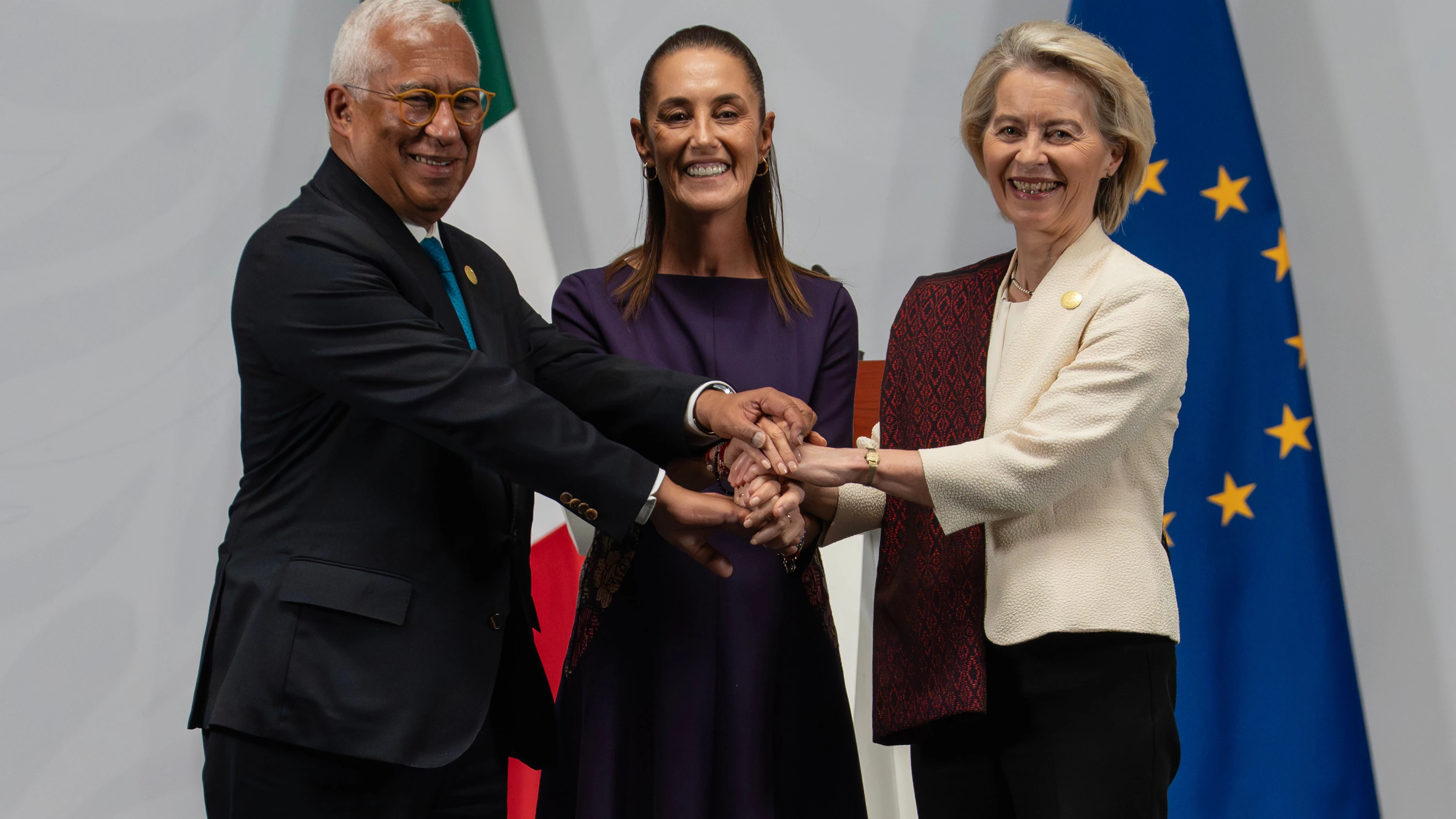
The European Union and Mexico finalized a long-delayed free trade agreement on Friday, marking a strategic shift to reduce reliance on the US amid rising geopolitical tensions. The deal, signed in Mexico City by EU Commission President Ursula von der Leyen and European Council President António Costa, eliminates tariffs on nearly all goods and strengthens economic ties between the two regions for the first time in two decades.
Under the agreement, European exports—including Bavarian beer, Parmesan ham, and Tyrolean bacon—will gain duty-free access to Mexico, while Mexican producers will benefit from reduced barriers in sectors like automotive, engineering, and pharmaceuticals. The pact also includes a €4 million fund to support indigenous women’s empowerment, reflecting broader political cooperation beyond trade .
Officials framed the deal as a direct response to US protectionism, particularly former President Donald Trump’s tariff policies. "This agreement insulates both sides from unilateral trade measures and diversifies our economic partnerships," von der Leyen said, as reported by *Euronews* . The EU and Mexico aim to counterbalance US and Chinese dominance in global trade, with the deal expected to boost EU exports to Mexico by up to 30% in key sectors .
Negotiations for the updated agreement began in 2016 but stalled over disputes on agricultural standards and intellectual property. The final text includes stricter protections for European geographical indications—such as Champagne and Roquefort—while Mexico secures expanded access for its industrial goods. Analysts note the deal aligns with the EU’s broader push to deepen Latin American ties, following similar agreements with Mercosur and Chile.
With ratification expected by 2027, the pact positions Mexico as the EU’s second-largest trading partner in Latin America after Brazil, offering a critical alternative to US supply chains. However, critics warn that implementation challenges—including Mexico’s regulatory hurdles and EU concerns over labor standards—could delay full benefits.

Mexico, EU sign stalled trade deal as they aim to diversify from US Mexico and the European Union signed a long-stalled free trade agreement on Friday as they seek to decrease dependence on the U.S. and partially insulate themselves from U.S. President Donald Trumps tariffs.
france24 · 5 days ago
Why Europe and Mexico are strengthening our partnership
gdeltproject.org · 6 days ago

Elbit signs deal with German submarine manufacturer TMKS to expand ties between Israel, Germany
news.yahoo.com · 6 days ago
Signal an USA: EU und Mexiko stärken Partnerschaft mit neuem Abkommen Parmaschinken, Bayerisches Bier und Tiroler Speck: Das modernisierte Handelsabkommen schützt europäische Spezialitäten und baut Zölle ab. Es geht aber nicht nur um Handel.
faz · 6 days ago
Por qué Europa y México estrechan su relación Leer
elmundo · 6 days ago
Handel: EU und Mexiko unterzeichnen Freihandelsabkommen Das neue Abkommen zwischen Mexiko und der EU sieht für fast alle Waren zollfreien Zugang vor und soll beide Seiten auch gegen die Zollpolitik von US-Präsident Trump absichern.
sueddeutsche · 6 days ago
EU und Mexiko unterzeichnen Handelsabkommen
orf.at · 6 days ago
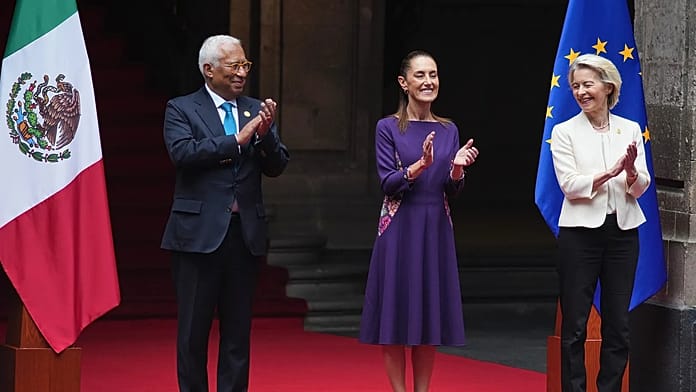
EU clinches new trade deal with Mexico to bolster its foothold in Latin America EU Commission President Ursula von der Leyen and European Council President António Costa signed an updated trade deal with Mexico on Friday, two decades after the original agreement, as both parties seek to reduce their dependence on the US and China amid rising geopolitical tensions.
euronews · 6 days ago
EU-Mexico agreement officially signed: lower tariffs and greater geopolitical cooperation Sottotitolo: The agreement—signed today in Mexico City—will reduce tariffs on European products across several sectors. The greatest benefits will be felt in the agri-food, engineering, automotive, and pharmaceutical sectors. Political commitments are also included, such as a 4 million peso fund for the empowerment of indigenous women
eunews.it · 6 days ago
Committee calls for double-majority approval of Swiss–EU accords The package of bilateral agreements being finalised between Switzerland and the EU must be anchored in the Federal Constitution through a transitional provision, a parliamentary committee says. +Get the most important news from Switzerland in your inbox The House of Representatives Committee of Political Institutions backs a proposal from a parallel Senate committee that calls for approval by a double majority of Swiss voters and cantons. The lower chamber committee backed the proposal by 15 votes to 10, parliamentary services announced on Friday. Submitting the Swiss-EU agreement package to both voters and the cantons is justified by its importance and constitutional nature. At the same time, the committee believes a simpler solution could be a sui generis one-of-a-kind referendum. By 16 votes to 9, it has asked for this option to be examined in greater detail. A minority of parliamentarians opposes the proposal, arguing that a constitutional amendment would prevent the ...
swissinfo · 6 days ago
Macron calls for US-style trade powers to protect strategic EU sectors French president calls on EU to imitate U.S. law that foresees tariffs in response to trade discrimination.
politico.eu · 6 days ago